All Gates Open Soundtrack Review: Blood Incantation’s “Movie Music” Flex


 See more Architeg Prints stories on Google.
All Gates Open Soundtrack Review: Blood Incantation’s “Movie Music” Flex
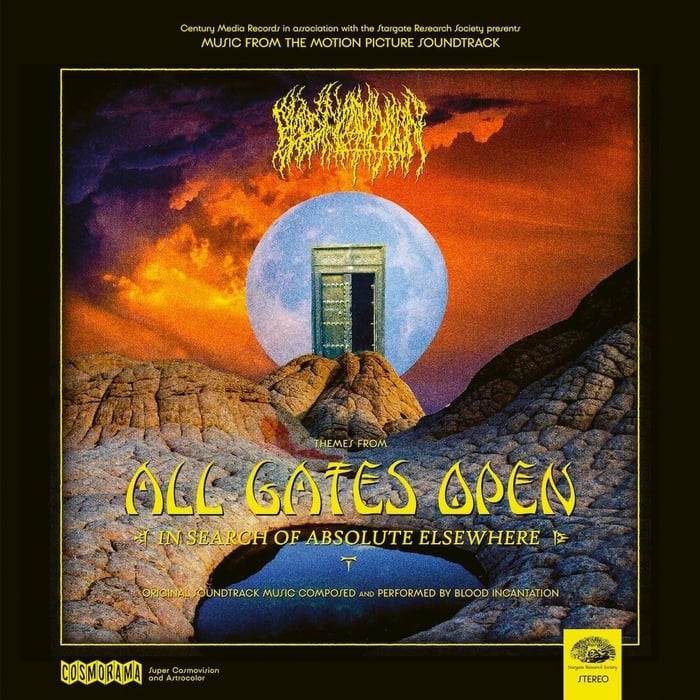
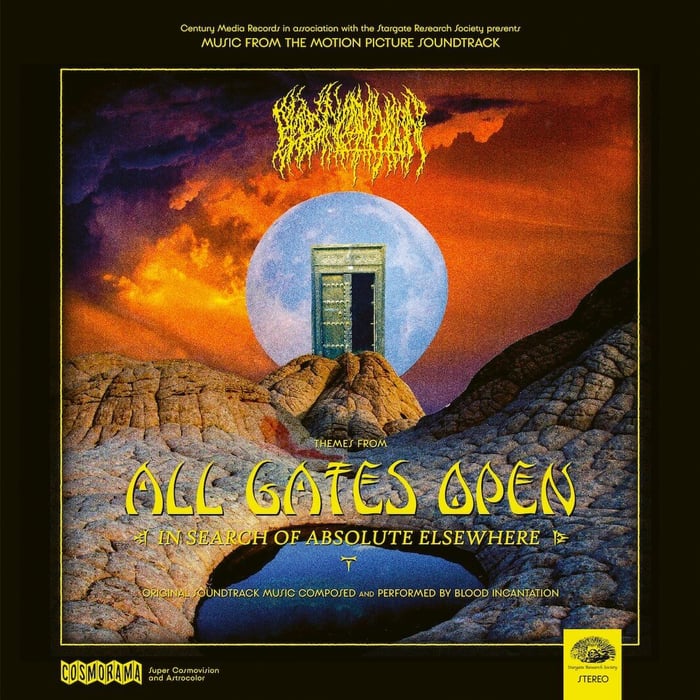
Blood Incantation’s All Gates Open soundtrack offers a four-track cosmic journey, blending synth-led soundscapes with cinematic grandeur that expands the world of their acclaimed album Absolute Elsewhere. This release highlights the band’s prog influences and forward-thinking approach, delivering a meditative, immersive experience.
This isn’t a side dish—it’s the band telling you what mattered
Blood Incantation didn’t get all that extra attention around Absolute Elsewhere by “going mainstream.” They got it by sounding like a band with the nerve to treat death metal like an intelligence test. Even when they’re blasting, they’re thinking three moves ahead—arrangement, pacing, atmosphere, the long game. That forward-leaning impulse is the real story.
So when All Gates Open (Original Motion Picture Soundtrack) shows up 18 months later, it doesn’t feel like a bonus scrap bucket. It feels like them tightening their grip on the Absolute Elsewhere era—basically saying: you’re not done with this world yet, and neither are we.
The documentary framing is the excuse; the music is the point
This soundtrack exists because there’s a documentary chronicling the making of Absolute Elsewhere. But the funny part is: the “soundtrack” label almost undersells what’s happening. These are four original pieces that behave like their own self-contained trip, whether you ever see a second of film or not.
Apparently, this music (and the documentary) used to be tied to a special edition of Absolute Elsewhere. Now it’s being released on its own, which honestly makes sense—locking this kind of material behind a collector wall always felt a little precious. Putting the album, the documentary, and this soundtrack next to each other turns the whole era into a neat little exhibit: here’s the artifact, here’s the process, here’s the afterglow.
And yes, it’s also kind of a power move.
Four synth soundscapes, and they’re bigger than they’re admitting
The entire All Gates Open soundtrack is four synth-led soundscapes. No riffs barging in to prove a point. No harsh vocals turning it into a “real” Blood Incantation release for the gatekeepers. Just atmosphere—and not the flimsy “ambient interlude” kind either. These pieces have that “epic grandeur” thing going on where your brain starts imagining scenes even if you’re sitting in your kitchen doing nothing.
I kept expecting the spell to break—like, okay, here comes the part where it drifts into expensive screensaver music. And… it mostly doesn’t. The structures feel intentional, like they’re guiding you through rooms rather than dumping you into fog and calling it depth.
One arguable take: this soundtrack is almost too good at feeling monumental. It can make regular life feel under-lit, like you should be walking in slow motion toward a glowing doorway just to justify the vibe.
“Balance” starts delicate, then quietly decides to swallow you
The opening track, “Balance,” is vast but not cold. Beautiful, delicate, and patient—like the music is trying to earn your trust before it does anything dramatic. It grows freely, but it isn’t aimless. There’s a sense of something expanding behind your shoulder.
Then it reaches this pulsating climax that doesn’t feel like a “drop” so much as a system coming online. On first listen, I honestly thought it might stay fragile the whole way through. On second listen, I realized the point is the transformation—how smoothly it moves from gentle to consuming without sounding like it panicked and reached for a bigger synth patch.
If you want to argue with me, here’s the argument: “Balance” is the most emotionally direct thing on the record. Not because it’s sad or happy—because it actually commits to its arc.
“Flight” is brooding at first, then turns the lights on
“Flight” begins in a brooding posture, like it’s about to tell you something ominous. At first, I read it as “darker” than “Balance,” a pivot into tension. But it doesn’t stay clenched. It morphs into something more spacious and warm, and by the time it’s nearing the end, it turns completely sublime—the kind of sublimity that’s annoying to describe because it sounds like you’re exaggerating, but your ears know what they heard.
This is where the soundtrack starts to feel like it could score real-life moments, not just footage of studio gear and late-night conversations. There’s something about the warmth that feels chosen, not accidental—like the band is intentionally stepping away from the harshness people expect from them.
A claim you can fight me on: “Flight” is Blood Incantation showing they understand comfort can be just as intense as violence. That’s not a normal death metal lesson, but they’re not acting normal here.
“Dawn” brings in the organ and suddenly it’s a cathedral
Then “Dawn” arrives, organ-led and celestial. The organ is such a loaded instrument—instant gravity, instant “bigger than you” mood—and they use it without turning it into kitsch. It doesn’t feel like a gothic costume. It feels like a deliberate shift into something sacred, or at least something that wants to sound sacred.
I’m not totally sure if “Dawn” is meant to be hopeful, or if it’s meant to be that trick where brightness is just another kind of intimidation. Either way, it works because it doesn’t beg for your attention. It just stands there, glowing, like it knows you’ll look eventually.
One mild criticism, though: the organ’s grandeur is so strong that it risks flattening the track’s smaller details. I wanted a little more grit in the corners—something to keep it from feeling too pristine.
“Rain” ends in haze, and that’s the whole point
The closing piece, “Rain,” is hazy and moving, and it’s the one that made me stop thinking about “soundtrack” as a concept. It feels like the conclusion to a long internal monologue—less about resolving melodies and more about letting the air settle after something big happened.
By the end, it’s hard not to think: they could score basically anything if they wanted to. Not because they can do every style, but because they understand cinematic scale—how to suggest a world without spelling it out. That’s the grand, film-ready quality that keeps coming back across these four tracks.
Hot take: “Rain” is the emotional thesis of this release, and it’s almost rude that it’s saved for last. It makes the earlier tracks feel like they were warming up the room.
The prog influence is obvious—but they’re not cosplaying their heroes
Like Absolute Elsewhere, this soundtrack wears its progressive rock DNA on the sleeve. You can feel that lineage of bands who treated electronics and repetition like storytelling tools—Tangerine Dream, Can, King Crimson—hovering around the edges.
There’s even that web of connections that feels like Blood Incantation being nerdy on purpose: Tangerine Dream’s Thorsten Quaeschning appears on Absolute Elsewhere track “The Stargate [Tablet II]”; “All Gates Open” is also the title of a biography of Can; and King Crimson drummer Bill Bruford played in a band literally named Absolute Elsewhere. If that sounds like obsessive trivia, yeah—because it is. And I don’t think it’s accidental. This band likes building a little mythos out of references, like they’re mapping a private constellation and daring you to follow.
But here’s the important part: All Gates Open doesn’t feel like prog worship. It feels like Blood Incantation using those influences as permission to do things their way—long arcs, patient builds, tone as narrative—without turning into a tribute act.
Arguable statement: the prog influence is less about sounding like prog, and more about adopting prog’s confidence. This music isn’t trying to impress you with chops; it’s trying to control your sense of time.
As a standalone release, it works. As an epilogue, it hits harder
Taken alone, All Gates Open (Original Motion Picture Soundtrack) stands on its own as a set of immersive pieces—four tracks that feel bigger than their runtime because they’re paced like chapters. But paired mentally with Absolute Elsewhere and the idea of watching its creation, it gains an extra dimension. It stops being “ambient Blood Incantation” and starts feeling like a final turn of the key in the same lock.
It’s also a smart way to conclude what they kicked off with Absolute Elsewhere—not with a louder finale, but with something that implies the world is still expanding even after the “main” album ends.
And even though I’m clearly sold on the experience, I’ll admit this: I can’t tell if everyone will connect with it without the context. Some listeners are going to want a little more friction, a little more danger. This soundtrack is confident enough to be gentle, and not everyone trusts gentleness from a band with this reputation.
Release details (yes, the practical stuff still matters)
- Release date: June 5
- Label: Century Media
- Format/structure: four-track original soundtrack release tied to the All Gates Open documentary about making Absolute Elsewhere
- Notable note: the documentary includes a screening in London on May 29
If you forced me to slap a number on it, I’d land around 8/10—mostly because it nails what it’s trying to do without turning into background mush.
Conclusion
All Gates Open feels like Blood Incantation widening the frame around Absolute Elsewhere—not rewriting the story, just showing you the weather system around it. It’s patient, grand, and weirdly intimate for something this cinematic, like the band is letting you hear what they hear when they stop pretending they’re “just” a death metal band.
Our verdict: People who like their heavy music with a side obsession for synth tone, long-form builds, and prog-minded pacing will actually love this album. People who want Blood Incantation to “get to the point” will not—and they’ll probably call it background music while it quietly rearranges the furniture in their head.
FAQ
- Is All Gates Open a full Blood Incantation album or more of a companion piece?
It plays like a standalone four-track release, but it clearly lives in the Absolute Elsewhere universe and hits harder if you’re already in that headspace. - Does it include death metal vocals or heavy riffing?
No—this is synth-led, cinematic soundscape territory. The intensity comes from scale and motion, not aggression. - What are the track highlights?
“Balance” for the slow expansion into a pulse-driven peak, and “Flight” for the shift from brooding to warm and genuinely sublime. - Is the documentary required to enjoy it?
Not required, but it changes how you hear the soundtrack—like you’re hearing the afterimage of the album’s creation rather than just “ambient tracks.” - Where does prog rock show up in the sound?
In the long arcs, the patience, and the confidence to let atmosphere do the talking—plus the clear lineage from bands like Tangerine Dream, Can, and King Crimson.
If this soundtrack gets you staring at the cover like it’s a portal, you can always grab a favorite album-cover poster for your wall over at Architeg Prints—a nice way to keep the “all gates open” mood hanging around.
 | DISCOUNTGET 30% OFF*Use code on your next order:
|
* This post may contain affiliate links, meaning we earn a commission if you make a purchase through these links, at no additional cost to you.