doPE’s No Country: Chuck D & Densmore Make Aging Sound Dangerous


 See more Architeg Prints stories on Google.
doPE’s No Country: Chuck D & Densmore Make Aging Sound Dangerous
No Country isn’t a nostalgia lap—it’s a tense argument about who gets to keep speaking after 60, and why the industry would rather you whisper.
This isn’t “aging gracefully”—it’s aging loudly
Rap after 60 usually shows up wearing one of two costumes: the dignified legend hovering above the room, or the cranky uncle turning the mic into a lecture. I went into No Country expecting one of those. For about thirty seconds, I even thought it might lean into that soft-focus “legacy” vibe—then it immediately swerves and starts naming the machinery behind the myth.
That’s the real move here: this album doesn’t want you to respect it. It wants you to notice the trap doors under “respect.”
The opener tells you the trick: philosophy, then a receipt
“every tick tick tick” starts like it’s about mortality in the abstract—time, memory, the big cosmic stuff. Chuck comes in with that sandpaper rasp and drops a line that sounds like a fortune cookie with teeth: past is memory, future is imagination. Clean, almost solemn.
Then, two bars later, he drags the whole scene into fluorescent reality with a studio-side detail about being signed—specifically, signed by Rick—while driving a Buick. And that’s the point. He inserts an industry receipt into what’s “supposed” to be a meditation on aging. Not because he can’t stay poetic, but because he’s refusing the polite lie that older artists exist outside economics.
By the end of that track, the subject stops being “I’m getting older” and turns into something sharper: who is allowed to age in public. When he lands on “ageism, sexism, racism” as the future’s lane, it doesn’t feel like a checklist—it feels like the moment the song admits it was never only about his body clock. It’s about whose mortality gets airtime, whose decline is treated as “wise,” and whose is treated as “embarrassing.”
That is not the behavior of a comfortable legacy record.
The duo’s backstory hangs over everything like a delayed package
The collaboration itself feels like a slow-cooked decision. Chuck D and John Densmore first crossed paths at a Record Store Day panel in Los Angeles back in April 2014. Chuck floated the duo idea by email in 2015. Densmore basically shelved it. And then—nothing, for years.
That long quiet matters because No Country sounds like it’s been waiting in a drawer, not fermenting in a spa. When Chuck mutters near the end of “every tick tick tick” that he’s trying to live every second today, I couldn’t help hearing the subtext: sometimes “today” takes eleven years to arrive.
And to be blunt, this doesn’t feel like a meeting of equals in the romantic sense. It feels like two men whose cultural fingerprints got separated from their ownership a long time ago—two careers absorbed by the kind of label control that turns humans into catalog items. The delay starts to sound less like scheduling and more like a quiet argument: is there still something worth saying that isn’t just commemorative merchandise?
This record’s answer is: yes, but only if you’re willing to be a little impolite about it.
“The Bones of My Father” is where the album stops performing and starts testifying
Then the album does something that most rap records—especially “event” rap records—would never dare: it steps aside.
“The bones of my father by etheridge knight” isn’t Chuck showing off. It’s Chuck lowering his voice from rapper to lectern and delivering Etheridge Knight’s poem “The Bones of My Father,” written while Knight was incarcerated in the late 1960s. The poem survived because Gwendolyn Brooks visited him and helped get the work out into the world, proof-of-life turned into publication (later collected as Broadside Ballads out of Detroit).
And you can hear the respect in the delivery—not “respect” as in polite applause, but respect as in don’t touch the furniture. When Tallahatchie gets named—plainly, without dramatic underscoring—the air changes. It’s one of those moments where a single proper noun does more than a whole verse of explanations. The poem moves from that history to stoops where young Black men dream of the father’s bones, and it doesn’t feel like Chuck “using” literature; it feels like Chuck returning something intact.
“We glide sideways like crabs across the sand.” — Etheridge Knight
A lot of rappers quote poets like they’re collecting rare sneakers. This doesn’t do that. It’s deference instead of flexing, which is rarer than it should be.
The title track splits pride and warning like it’s filing paperwork
On “no country for old men,” Chuck keeps two impulses in different hands: the boast and the warning. One bar he’s taking up space—“I’ve been your age, y’all ain’t never been mine”—and the next bar he’s cutting the knees out from under the whole topic: not everybody gets elder.
That line lands because it drags the conversation away from “elder statesman” branding and back to the raw math: living long enough is not evenly distributed. When he follows it with something like you can’t buy what he’s talking about, it’s not a motivational poster—it’s a threat, almost. Not in a violent way. In a time will collect you way.
The track also name-checks cultural figures in a way that doesn’t feel like trivia night. Spike Lee opens the third stanza by name, then two more figures get stacked right after, like the album has been keeping a “future elders” list since track one. It’s less a roster than a will. And when Belafonte gets named last, it feels intentional—like the endcap on a shelf labeled legacy, but make it accountable.
A reasonable listener could call that corny. I think it’s the opposite: it’s Chuck building a lineage not to impress you, but to remind you the lineage isn’t imaginary.
“ops3ssion” turns a hook into a rotating panic attack
“ops3ssion” runs on a five-verb chant that’s almost mechanical in how it keeps restarting:
Open me up, close me up, shut me up, get me up, fuck me up.
It cycles like a medicine schedule you can’t escape. The verses keep circling pills—depression, wrong address, “United State of the pill,” big pharma turning volume into product. Each pass through the chant shifts Chuck’s posture: sometimes cornered, sometimes accusing, sometimes numb. The perspective rotates, but the room stays the same.
I kept waiting for the song to “resolve,” to pick a single stance and plant a flag. It refuses. And when the word “obsession” gets split into “suicides and homicides,” the hook stops feeling like a chorus and starts sounding like a private prayer someone his age “shouldn’t” be making—at least not without turning sentimental.
What surprised me is that he doesn’t soften it. He goes straight through it. And honestly, I’m not sure many other emcees in that age bracket would even attempt that chant without winking. Chuck doesn’t wink. That’s why it works.
“doomsay” is where the album trips over its own seriousness
Here’s where I’ll be a little mean, because the album earns it: “doomsay” tries to carry the weight of the world and ends up carrying it like a grocery list.
The grievances stack up at the same height—Putin, Vietnam napalm, the UN’s failed shot, “two hundred sixteen nuclear nations,” climate boiling. And the more it piles on, the more it flattens. The song can’t decide whether everything is an emergency or nothing is.
When you make every threat equal, you accidentally make them equivalent. And equivalence turns urgency into sermon. That’s the central problem: the track wants outrage, but it keeps ironing the wrinkles out of its own anger.
Later, “Saydoom (dub)” returns the idea in a stripped-down, ambient form—“We on the floor / Got nothing on / You know what they say / Definitely”—and weirdly, that version lands better. The dub treats collapse like atmosphere instead of argument. By the end, the repeated “bomb” starts to go soft in the mouth, thinning into sound rather than meaning.
On first listen I thought “doomsay” was the album’s thesis. On second listen, it felt like six minutes the record could’ve used to breathe instead of scold.
“i love that i don’t love” refuses the relevance tax
“i love that i don’t love” is Chuck opting out of the performative struggle to seem current. Older rappers are always forced into that awkward fork: either chase the kids loudly, or refuse the kids loudly. This track chooses a third lane: do what you like and don’t apologize, but don’t cosplay youth either.
He says it plainly—he digs what he digs, likes what he likes, and points to “fifty years” of New Yorkers on the mic like it’s not a brag, just a fact of weather. Then he draws the line he refuses to cross: he’s not going to be seen screaming next to a teen. It’s funny because it’s calm. He delivers it like he’s declining an invitation to a loud restaurant.
That posture echoes Densmore’s own history on the other side of the booth: he once turned down a massive luxury-car sync back in 1968 out of respect for a late bandmate’s wishes, then later wrote about that fight in a 2013 book. You can hear the shared principle: some money isn’t worth the aftertaste.
The track ends with Chuck muttering “I love dope,” and the duo’s name-pun folds into the last syllable like an inside joke that knows it’s being archived.
“everybody dies” closes the loop—and admits what this is really about
The closer, “everybody dies,” doesn’t pretend this duo is timeless. It does the opposite: it counts the years out loud. Chuck rasps a line about “dope being a sexagenarian,” already placing Densmore as the septuagenarian and clocking himself as the soon-to-be octogenarian. It’s morbid, sure, but it’s also practical—like labeling the boxes before you move out.
Then it turns into a compact elegy that doubles as a salute to every rapper who outlived a decade. One couplet compresses lineage into a quick handoff—from Stones to Grandmaster Flash—and it’s not saying they’re the same thing. It’s saying time doesn’t care about genre borders.
The heaviest borrowing comes near the end, when Chuck recites Morrison’s words—“This is the end, beautiful friend”—which hits differently knowing there was once pressure to lease those words out for luxury branding. Here, it’s not an ad. It’s a goodbye spoken by someone who waited eleven years after the initial handshake to finally put this record in your hands.
I’m not entirely sure if the ending is meant to feel comforting or confrontational. Some days it plays like closure. Other days it plays like Chuck staring straight at the listener and asking: So, what are you doing with your minutes?
Conclusion: No Country isn’t polite—and that’s the whole point
No Country doesn’t beg for reverence. It argues with the listener, argues with the industry, and occasionally argues with itself. When it’s sharp—like the opener’s economic swerve, the title track’s warning, or the poem delivery—it doesn’t sound like “older artists proving they still got it.” It sounds like artists refusing to be turned into furniture.
And when it stumbles (“doomsay,” mostly), it’s not because it lacks conviction. It’s because conviction alone doesn’t automatically create shape.
Still, I’d rather hear a record risk being too direct than one that politely embalms its own legacy.
Our verdict: People who like their hip-hop grown, skeptical, and unafraid of awkward truths will actually like this album—especially if you’re tired of “timeless” as a synonym for “harmless.” If you want hooks that sparkle, or you believe every political bar should come with perfect nuance and pacing, this will test your patience (and not apologize).
FAQ
- What is the core idea behind No Country?
No Country treats aging as a power struggle—who gets to keep speaking, who gets ignored, and who gets monetized on the way out. - Is John Densmore just a guest presence here?
It doesn’t feel like a cameo. His history with licensing and legacy hangs over the project, shaping the album’s stubborn refusal to be “content.” - Why does the album include “The Bones of My Father”?
That track shifts the album from rap performance into literary testimony, letting Etheridge Knight’s words carry history without being remixed into a flex. - What’s the most divisive track on the record?
“doomsay.” It throws a lot of global crises into one pile, and the result can feel more like a flattened sermon than a focused punch. - Where should I start if I’m sampling this album first?
Start with “every tick tick tick,” then the title track “no country for old men,” and finish with “everybody dies” to feel the album’s full arc.
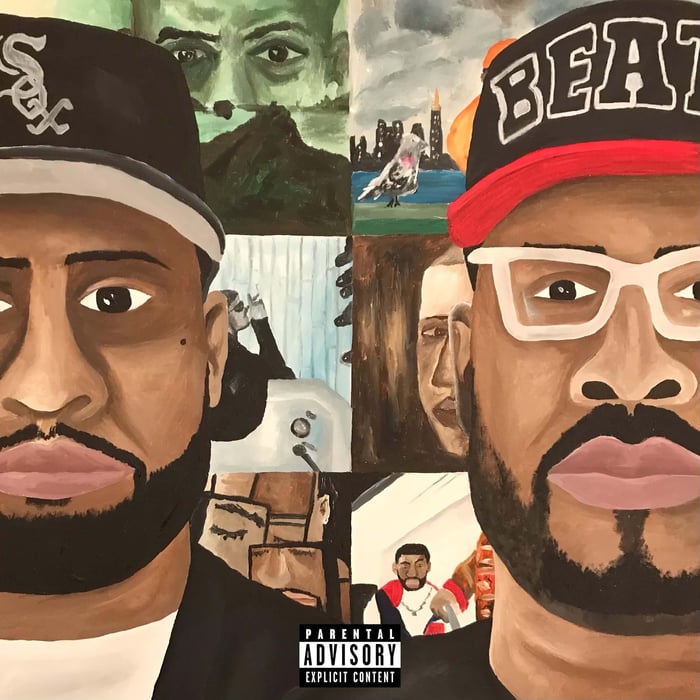
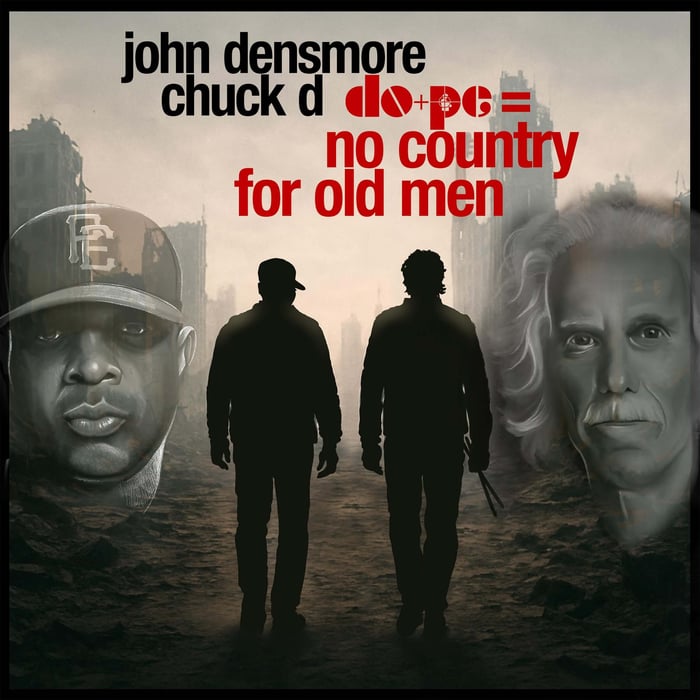
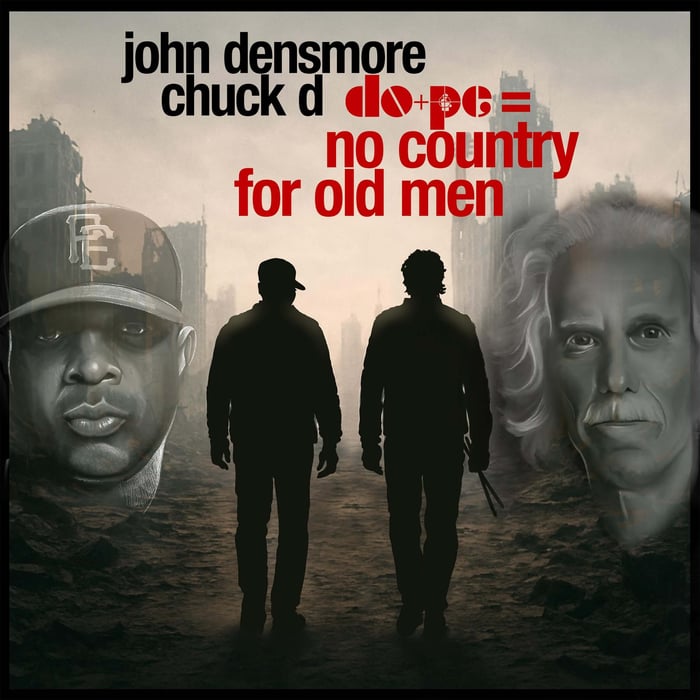
If the cover’s stuck in your head the way the closer sticks in your throat, you can always grab a favorite album-cover poster for your wall at our store—it fits this record’s whole “live with the artifact” mood.
 | DISCOUNTGET 30% OFF*Use code on your next order:
|
* This post may contain affiliate links, meaning we earn a commission if you make a purchase through these links, at no additional cost to you.