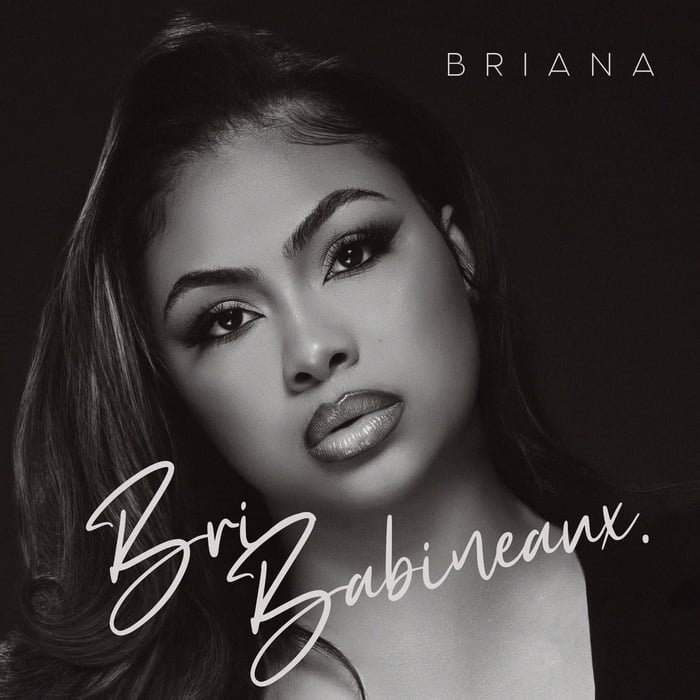
Briana Album Review: Bri Babineaux Turns Gospel Into a Sneaky Slow Jam


 See more Architeg Prints stories on Google.
Album Review: Briana by Bri Babineaux
This review explores how Bri Babineaux’s album Briana fuses gospel devotion with R&B phrasing, delivering emotional honesty and a fresh approach to worship music.

Courtesy of Bri Babineaux Music, LLC/Tyscot Records, LLC.
She’s Not Blending Genres—She’s Collapsing Rooms
Most gospel albums want you to enter a sanctuary. Briana keeps dragging the sanctuary into a place with dimmer lights and a steadier groove. That’s the actual move here.
Black women in American gospel have been writing to God using love-song language forever, and Briana doesn’t act like it’s inventing that wheel. It just spins it with a grin. The trick is how Bri Babineaux keeps the address holy while the cadence sounds like it came from an R&B session. A lot of artists attempt this and end up sounding like they’re watering down worship to chase playlists. This album sounds like the opposite: like she’s insisting devotion can be intimate without getting sanitized.
That’s my read, anyway. I’m not totally sure if she’s trying to provoke anybody… but she’s definitely not trying to behave.
“Make Me Feel” Opens With a Line That Knows Exactly What It’s Doing
Here’s where the album makes its first unapologetic play. On “Make Me Feel,” she sings, “When I think about it, I love the way You make, You make me feel… It’s so amazing, I can’t explain the way You make me feel.”
Those couplets could sit on basically any R&B record since the late ‘90s without anyone blinking. The only giveaway is the capital “You”—the divine “You”—but the delivery belongs to a different room. And that’s the bet Briana keeps placing: the room can stay the same, the phrasing can stay the same, and the meaning will still travel.
An arguable take: this is more daring than most “crossover” gospel because it doesn’t announce itself as crossover. It just talks like that and expects you to keep up.
“Grace” Starts With a Talking Intro—And It’s Not Small Talk
The album shifts into something more specific before “Grace” even begins. Babineaux talks first, not to “set the scene” like a scripted interlude, but like she needs to clear her throat emotionally.
She says, plainly, that as women people forget the emotional load they’re carrying—and she ties it to being a new mother with a “fresh baby boy.” Then the music arrives and the song does something gospel radio usually avoids: it describes fatigue like it’s not a temporary obstacle but an actual daily environment.
“Every morning / Gives us a new day, a blank slate,” she sings—and instead of triumph, you get a request: “So go easy on me… ‘Cause I had all I can take… Wear my heart out on my sleeve… Give me some grace.”
The sly twist is who she’s asking. Most worship songs beg God for mercy. “Grace” begs the listener for mercy. That’s not a theological statement as much as it’s a social one: she’s treating the audience as the first courtroom she has to survive.
Arguable statement: “Grace” is more emotionally honest than a lot of big-chorus worship because it doesn’t rush to the victory speech.
“Love Me, Love Me Not” Pulls the Old Switcheroo—And It Actually Lands
“Love Me, Love Me Not” is where Babineaux leans hardest into double meaning, and it’s almost funny how calmly she does it. She opens addressing a man—waiting, wanting something real after the thrill and toxicity fade. It’s direct: she wants to be loved loudly, “a million ways.”
Then she pivots mid-thought toward God: “When I’m feeling lonely, God’s got me / I won’t worry ‘cause it gets better.” And the title question—“Do you love me… or not?”—suddenly hits two targets at once.
The song keeps the man in frame for another stretch, asking if he can handle her heart, asking him to show it, asking if he can “cover” her the way God covers her. Then she turns the knife gently at the end: “Don’t judge me, I’m only human / And we need love too.”
I’ll admit it: on first listen, I thought this track might be cute-but-shallow, like a concept that runs out of oxygen. On second listen, it felt more like a confession she refused to clean up. She’s not pretending romantic need disappears when faith is strong. She’s saying it out loud and letting the contradiction sit in the room.
Arguable statement: this song is braver than a lot of “relationship with God” metaphors because she doesn’t hide the actual relationship part.
“All” Lets Anger Into the Second Verse (Yes, the Second Verse)
“All” opens with a line that most worship records don’t even want near their studio calendar: “Life sucked for a minute.” And she doesn’t dress it up. She talks about the rain showing up right when her face is dry, mornings becoming a menace, waking up already heavy.
Then she goes further—this is the real line in the sand: “If I’m honest, I’m angry… I’m a little confused… Wish I didn’t hurt sometimes following You.”
That’s the stuff mainstream gospel usually edits out, or relocates to a vague “we’ve all been through something” pre-chorus. Here, it’s explicit and it’s aimed upward. The anger doesn’t get exorcised. It gets parked right beside love and left there, like two chairs at the same kitchen table.
And then she does the second half of the song’s argument: “If anybody loves me, I know You love me… You won’t ever let me fall… You stay with me through it all.” The surrender lands after the protest: “Take it all… Every goal, every dream, I’ll surrender everything.”
Arguable statement: “All” works because it refuses to rush; the faith feels earned specifically because the confusion is allowed to stay audible.
“Serve You” Sounds Like Pure R&B—And the Lyrics Have to Hustle
“Serve You” is produced by Troy Taylor and Johnta Austin, and it sits so deep inside mainstream R&B framing that the lyric has to do extra lifting to make sure the intention reads as worship.
Babineaux even opens with a shout-out: “Troy Taylor, you the GOAT.” Then she runs through the opening lines: noticing a change, feeling the vibe, soothed pain, removed tears, new directions, lessons, calling herself a student. She never really specifies what the change is, what the pain was, or where the direction leads.
And that’s where the song slightly loses me. Not because vagueness is always bad—sometimes it’s a doorway. Here it plays more like a protective blur. The phrase “I just wanna serve you” is meant to lock the meaning in place, and the production basically carries the conviction that the pen doesn’t fully cash.
Mild criticism, but real: when you borrow this much R&B language, you can’t rely on vibes alone. This track leans hard on atmosphere to sell what the writing only sketches.
Arguable statement: “Serve You” is one of the album’s best sounds and one of its least specific statements, and that mismatch is noticeable.
“The Real One” Brings in Anike—and Names the Source Out Loud
“The Real One” adds a guest verse from Anike, and she comes in doing something very particular: she cites scripture by chapter number inside the bar.
She raps: it’s written in Job 42:2, then frames it as evidence—God’s purpose can’t be blocked—and she makes the praise audible “for all them prodigals,” talking about mess becoming masterpiece.
What’s interesting is the contrast inside the same song. Babineaux’s own verse is already moving with a different kind of specificity: “He took the pain, all the shame and confusion / He put in work, gave me worth and it’s proven.” Anike names the source by digits; Babineaux names the action and the effect.
Neither approach is “better,” but together they show what the album keeps doing: switching between testimony that sounds like life and testimony that sounds like text. That tension is intentional, I think. If the album has a quiet thesis, it’s that faith can be felt and footnoted without needing to pick a lane.
Arguable statement: Anike’s chapter-number drop is a flex, but Babineaux’s plain language hits harder because it sounds like it happened yesterday.
“I Will Wait” and “Faithful” Play It Straight—Almost Too Straight
After some of the album’s more jagged emotional choices, “I Will Wait” and “Faithful” settle into the central grammar of the traditional gospel ballad.
“I Will Wait” leans into patience as a daily struggle: the world gets you down, you try to stand on faith, answers feel missing. “Faithful” is even more direct: “I know You to be faithful / It’s always You and me no matter what.”
These songs are well-made, competent, and honestly comforting—yet they’re also the moments where Briana sounds like it’s doing what gospel radio has been doing for a long time. That’s not a sin. It’s just a choice. And on an album that elsewhere likes to blur rooms and scramble expectations, these two tracks feel like she briefly decides to stand still and prove she can do the traditional thing in her sleep.
I kept waiting for one left turn—a lyrical detail, a rhythmic surprise, something that complicates the message the way “All” does. It mostly doesn’t arrive.
Arguable statement: these are the “most correct” songs on the album, and that’s exactly why they’re less interesting.
“Confident” Is a Brag, a Brace, and a Dare
The album opens with “Confident,” and it’s basically Babineaux walking in with her shoulders squared. She acknowledges the noise being loud, but she insists she won’t stay down. Then she frames the entire glow-up as blameable—“blame it on His grace… His favor… my Savior.”
And the outro pushes it into something bolder: “Flexin’ on ‘em like Jesus… Miracles in my life, I shine His light, I know you see it.” There’s a specific kind of gospel confidence that’s actually a disguise for insecurity. This isn’t that. This is her daring you to be uncomfortable with her being blessed out loud.
I didn’t love that line the first time—it almost sounded like she was trying too hard to coin a caption. But after hearing the rest of the album, it reads more like a mission statement: she refuses to shrink her wins so other people can feel spiritually tidy.
Arguable statement: “Confident” isn’t humility-free; it’s apology-free, and those are different things.
Conclusion
Briana doesn’t spend its energy proving Bri Babineaux can sing or write—she treats that like a given. The album’s real agenda is subtler and more confrontational: it keeps using romantic language, mother-life exhaustion, and even anger to show that devotion isn’t neat, and it definitely isn’t always “church voice.” Sometimes it’s the same voice you’d use when you want someone to stay.
Our verdict: People who like gospel that borrows R&B phrasing without asking permission will actually enjoy this album—and they’ll replay “Grace,” “All,” and “Love Me, Love Me Not” like they’re private journal entries. If you only want worship that keeps emotions polite and edges sanded down, Briana is going to feel a little too human… which is kind of the point.
FAQ
- What is the core idea behind this Briana album review?
This Briana album review argues the album’s main move is keeping R&B-style love language while clearly aiming it at God—and refusing to hide messy emotions. - Which songs show the most emotional honesty on the album?
“Grace” (asking the listener for grace), “All” (admitting anger and confusion), and “Love Me, Love Me Not” (holding romance and faith in the same sentence). - Is “Serve You” a worship song or an R&B song?
It sounds built from mainstream R&B materials, and the lyric has to steer the meaning toward worship. The vibe is the engine; the writing is the signpost. - Does the album stick to traditional gospel ballads at all?
Yes—“I Will Wait” and “Faithful” lean into familiar ballad structure and themes, more in line with what gospel radio has normalized. - Who is featured on the album, and what do they add?
Anike appears on “The Real One” and brings a scripture citation (Job 42:2) right into the verse, contrasting Babineaux’s more action-based testimony.
If this album’s cover is already stuck in your head the way a good gospel hook gets stuck in your chest, you can always grab a favorite album-cover poster for your wall at our shop: https://www.architeg-prints.com.
 | DISCOUNTGET 30% OFF*Use code on your next order:
|
* This post may contain affiliate links, meaning we earn a commission if you make a purchase through these links, at no additional cost to you.