Circa 01 Album Review: Two Kids Time-Travel, Then Swing Back Hard


 See more Architeg Prints stories on Google.
Circa 01 Album Review: Two Kids Time-Travel, Then Swing Back Hard
Circa 01 sounds like discipline dressed up as nostalgia—and it still bites when you get close.
The album opens by telling you to sit up straight
The first thing I hear on “Intro (Kingdom Kome)” isn’t even a bar—it’s JAŸ-Z lecturing through a spoken-word sample about discipline. Foundation. Structure. The warning is basically: if you don’t build the frame first, your whole project spills everywhere.
And that’s the trick: the album starts by pre-emptively defending itself against mess. It’s like Kastaway and Backpack Beatz are saying, “Yeah, we know what an unfocused rap album sounds like. That’s not the point here.”
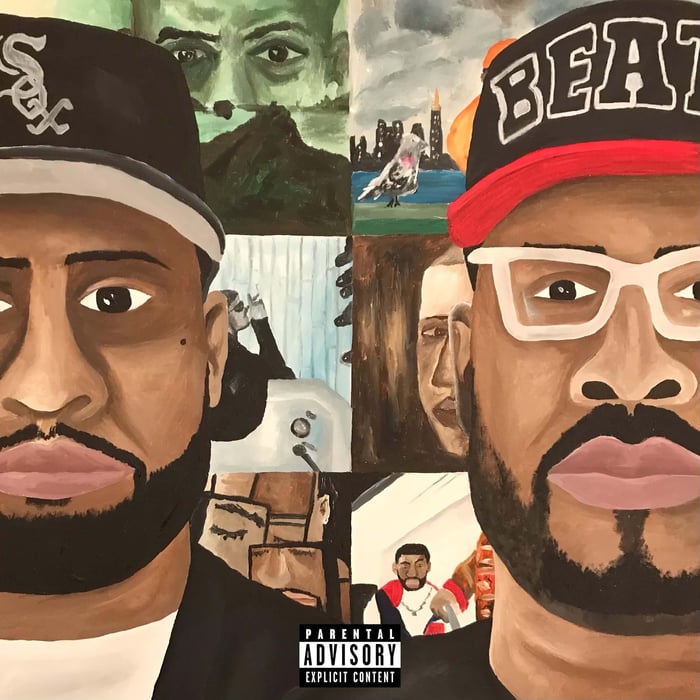
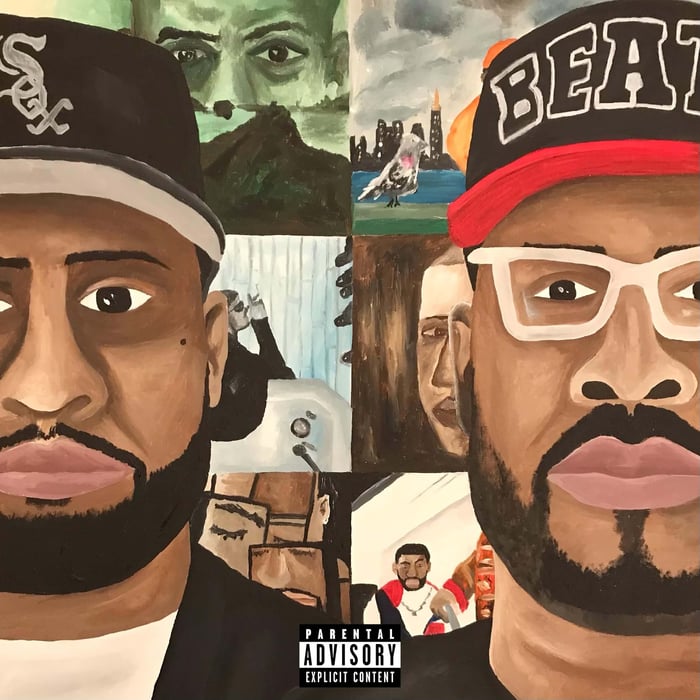
What surprised me is how personal the “structure” talk becomes almost immediately. These two weren’t grown when the year on the cover actually happened—Kastaway and Backpack Beatz were thirteen and eleven around that time—yet the record doesn’t play like kids pretending to be older. It plays like adults still arguing with what raised them.
Kastaway’s origin snapshots come quick: writing rhymes at his grandmother’s house; Backpack Beatz pulling The Blueprint out of a cabinet at basketball camp and, apparently, never returning it. That detail matters because it’s not cute nostalgia—it’s a quiet admission of obsession. The album isn’t “remembering” 2001. It’s claiming it.
And then Kastaway drops a line on “Miyagi (On Our Way)” that doesn’t land like a flex at all:
“I came out the womb neglected with lack of effort… Mom said I was a gift, her mama questioned my presence.”That’s not memoir for memoir’s sake. That’s him explaining why the album needs structure in the first place—because his life didn’t hand him much.
“Piece of My Heart” isn’t sentimental—it’s inventory
From there, the record slides into “Piece of My Heart” and something changes: Kastaway goes lower, calmer, almost like he’s trying not to spook himself. The soul sample does a lot of the emotional lifting, and the percussion stays steady and laid-back, like it refuses to panic.
He raps:
“I’m a 19th and Trumbull baby, that’s where I got my start / Lawndale got a piece of my heart.”
Here’s what I think he’s doing: he gives you the address first because the address is the argument. He doesn’t deliver a neat “and that’s why I am who I am” verdict. He just drops coordinates and lets you feel the weight.
Then he pivots—sharp, no warning—to a child watching a man die. The adult he calls for help answers with something that feels almost cruel in its casualness: more exposure, more death, another body. The line that sticks in my throat is the one that admits how arbitrary survival can feel:
“I probably wouldn’t have seen that murder if I had fairer skin…”
I’m not totally sure whether I’m supposed to hear that as resignation or accusation. Maybe it’s both. Either way, the song refuses the usual rap move of turning trauma into toughness. It turns trauma into anxiety with a memory.
Arguable take: this is the real “heart” of the album, not the faith tracks, not the nostalgia—this song is where he proves he’s not going to glamorize his own scars.
“Books and Bricks” uses features like a crowbar
The transition into “Books and Bricks” is heavy-footed on purpose. The beat walks in like boots on a hallway floor. And A.M. Early Morning rides the downbeats so tightly it’s like he’s stapling syllables to the kick drum:
“Sloppy-ass work never be the plan / Detroit’s a book son of bricks.”
That verse matters because it creates cold space for Kastaway to enter without throat-clearing. Kastaway doesn’t need to introduce himself here—A.M. already turned the room into winter.
Then that counting cue hits—
“One, two / Now he comin’ for you / Three, four / And we kickin’ in your door”—and suddenly the song becomes a Detroit-to-Chicago handoff that feels physical, like a baton slam into a palm.
Kastaway’s lines land like confessions that don’t want your sympathy:
“The block was my dorm room ’cause I ain’t go away for college…”
and then the one that basically summarizes his whole internal split:
“’Til they find this manicure, I’m borderline psychotic / The other half is a prophet.”
That’s not just a clever contrast. It’s the album admitting it’s built from contradiction: damage and calling, violence and conscience, the urge to ruin things and the urge to fix them. Reasonable listeners can disagree, but I think the album’s “structure” is literally that split—it’s not neatness, it’s tension held in place.
If I’m nitpicking, the counting bit risks feeling a little on-the-nose, like a stage prop that doesn’t need to be there. But it also gives the track a grim momentum, so I’ll allow it.
“Still We Pray” is where the day-job stops being a side note
The record doesn’t fully show its hand until “Still We Pray.” This is the only time Kastaway moves into third person, and it’s not a stylistic flex—it’s a distancing technique. He traces a twelve-year-old boy with teachers “complaining they struggle with controlling him,” a dad in and out, a mom who never tries counseling.
The kid is a composite of the kids Kastaway works with through his restorative justice day-job in Chicago, and you can hear that job bleeding into the bars. The details aren’t dramatic in a cinematic way—they’re administrative and grim: stealing cars, two months in county. The kind of timeline that sounds like paperwork until you remember it’s a child.
Then the song flips the diagnosis midstream:
“But what they don’t understand is he really his own man / ’Cause according to mom and pop, he wasn’t in they plans.”
That couplet is nasty because it reframes “behavior problems” as existential abandonment. It’s not “he’s out of control.” It’s “he was never claimed.”
And under all of this, Roy McGrath’s melancholic saxophone winds through thumping drums like a bruise blooming in slow motion.
The closing hits like a door shutting: past the last bars, the boy is already dead at twelve. Kastaway prays around the body:
“Pray for the shorty who just got his first Glock / Pray for the day that nobody getting shot / And still we pray.”
Arguable take: this is the album’s most devastating moment, because it doesn’t ask you to feel sad—it shows you how normal the tragedy has become.
“God Is Love” refuses both preachiness and apology
Faith rap usually collapses into one of two modes: tidy piety or anxious bargaining. “God Is Love” does neither. It routes the whole issue through something more adult and less performative: therapy.
“After church, I go to therapy / Anxious about the hell being prepared for me…”
That’s the song’s real thesis: belief as something you wrestle, not something you market. Then he asks the questions that plenty of people think but won’t say out loud in a churchy rap song:
“Does God hate me for not hating who you hate? / Does God hate me for not dissing other faiths?”
This is where I revised my first impression of the album. Early on, with the discipline talk and the “circa” nostalgia framing, I thought I was getting a clean, almost formal throwback exercise—good raps, proper beats, a respectful nod to an era. But this song makes it obvious the project isn’t trying to re-create anything. It’s trying to survive inside inherited rules without becoming cruel.
And the resolution doesn’t come as a sermon. It comes through people: his Puerto Rican godfather “who taught me God is love and still somebody not to play with,” and then “calling Pastor Derrick to cosign on my prayers.”
Arguable take: the best “faith” choice here is that he doesn’t pretend he solved faith. He just admits he’s building a support system and calling that spiritual practice.
“Grateful” sneaks medical history into the thank-you notes
By the time “Grateful” hits, the album is already heavy. So instead of piling on, the track floats up into a higher register—helped by Jeremy Claybourn and Jocelyn Hart—and Kastaway does something quietly bold: he drops serious medical history like it’s another line item, not a dramatic centerpiece.
“When I got the brain surgery, I cut off my hair…”
No big drum stop. No “listen closely.” It lands between thanks and prayer like a parent mentioning something scary at dinner because it’s true and it happened and life kept moving.
Then he keeps going—blood, “upper stomach had a bleed,” something that he thought would last weeks stretching into years. Eye pain shows up the same way, just another clause. The song’s point isn’t “look what I survived.” The point is: even this didn’t get to own me.
Backpack Beatz opens the track with a spoken intro thanking anyone who’s made it this far, and he calls the whole album “Circle One.” That phrase is doing work. It makes the record feel like a first full loop around a life—not the beginning of the story, but the first time the story got shaped into something listenable.
Arguable take: this song is more convincing than most “gratitude” rap tracks because it refuses to sound healed. It sounds functional. That’s closer to real gratitude anyway.
“Circa 01” (title track) is a porch, not a museum
The title track “Circa 01” opens with a Busta Rhymes spoken sample about flow, which could’ve been corny in the wrong hands. Here it feels like a little ignition spark before Kastaway grounds everything in place.
“My rhyme recital remind you of circa ’01 / Playing Beans vs Jada on the porch where I am from…”
That line is basically the whole aesthetic in one breath: rap as argument, rap as neighborhood ritual, rap as the soundtrack to kids ranking legends like it matters because it does.
And then he lands his signature couplet:
“Rappers want their flowers from rhymes, I flora the flow / That’s from the concrete where we see no roses’ll grow.”
That’s the album’s core flex, and it’s not actually about being better than other rappers. It’s about being from the kind of ground that doesn’t reward beauty, and making it anyway. Two kids on a stoop, the radio catching up late, the dirt still on their sneakers—he’s not romanticizing it. He’s saying the conditions never left.
I kept waiting for the title track to explode into a big “this is the concept” moment, but it doesn’t. It just sits there, confident. Maybe that’s the point: the porch scene doesn’t need decoration. It’s already a world.
Arguable take: the album’s nostalgia isn’t the hook; it’s the camouflage. The real subject is what those years still cost.
Favorite moments (and the part that almost lost me)
To keep it simple, these are the tracks that actually stick to my ribs afterward:
- “Piece of My Heart” — for the way it refuses to turn trauma into theater
- “Still We Pray” — for making restorative justice feel like grief with a timecard
- “Grateful” — for saying “thank you” without pretending that fixes anything
And yeah, I think the album is great in the plain sense: it works, it lands, it stays coherent even when it’s carrying too much.
If there’s a weak spot, it’s that the record occasionally leans on spoken bits and cues that flirt with being a little too explanatory—like it doesn’t trust the listener to follow the emotional logic. That said, the writing is strong enough that I stop caring once the verses start moving.
Conclusion
Kastaway and Backpack Beatz made Circa 01 feel like a disciplined rap record that’s secretly a running tab: addresses, bodies, therapy, faith, work, and whatever the mind does when it’s trying to keep all of that in one piece. The nostalgia is there, but it’s not warm—it’s structural. It’s the frame holding the present up.
Our verdict: People who like rap that tells the truth without doing a TED Talk will actually like this album—especially if you care about verses that sound lived-in, not “content.” If you want escapism, shiny hooks, or a faith song that wraps everything in a bow, you’re going to bounce off this and call it “too heavy,” then go listen to something that lies to you more politely.
FAQ
- What is the core idea behind Circa 01?
It uses Circa 01 nostalgia as a frame, but the real focus is how trauma, faith, and community responsibility collide in the present. - Which track hits the hardest emotionally?
“Still We Pray” because it follows a twelve-year-old to a brutal ending and refuses to turn that into entertainment. - Does the album feel preachy about religion?
Not really—“God Is Love” sounds more like therapy-informed questioning than preaching. - Is this more about lyrics or production?
The writing drives, but the beats and samples are chosen to keep the mood controlled—structure first, always. - Where should I start if I’m only playing three songs?
Start with “Piece of My Heart,” then “Still We Pray,” then “Grateful” for the full emotional range.
If this album’s porch-scene nostalgia stuck with you, a clean album-cover poster is a nice way to keep that mood on the wall without replaying your own memories too loud. You can browse prints at our store: https://www.architeg-prints.com/
 | DISCOUNTGET 30% OFF*Use code on your next order:
|
* This post may contain affiliate links, meaning we earn a commission if you make a purchase through these links, at no additional cost to you.