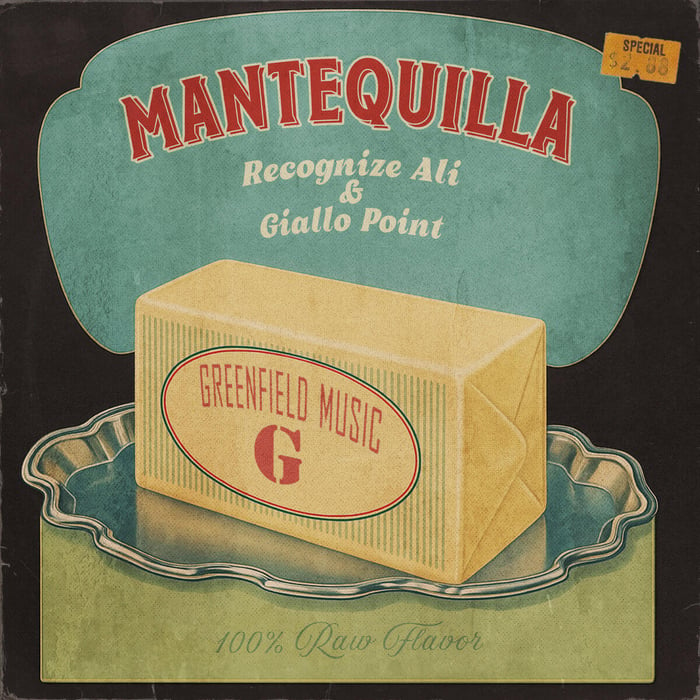
Mantequilla Album Review: Butter-Smooth Brags With One Weird Confession


 See more Architeg Prints stories on Google.
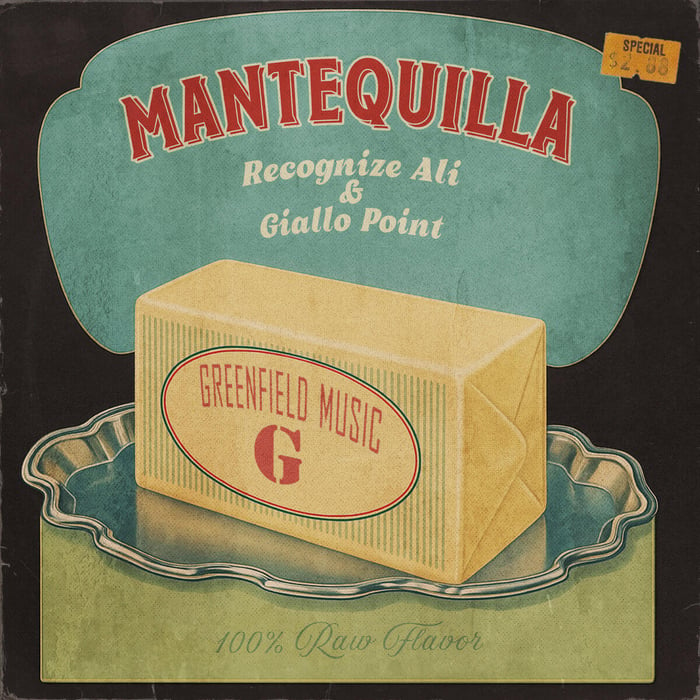
Album Review: Mantequilla by Recognize Ali & Giallo Point
The Mantequilla album runs on dusty pianos and ego talk—until a few bars quietly expose the whole point.
The trick: it shouldn’t hold you this long, but it does
Eleven tracks of lyrical-supremacy talk over dusty piano loops should blur into wallpaper. That’s the setup: giant talk, executioner talk, “I’m the real one” talk, bread-for-the-fakers talk. And yeah—on paper, it’s the kind of rap record you throw on, nod twice, then forget which track you’re on.
But the Mantequilla album doesn’t fade out like it’s supposed to. It keeps pulling focus, not because the bragging is novel (it isn’t), but because the record keeps hinting that the bragging is a costume—something Recognize Ali puts on to move through the world without getting touched.
I’m not even saying every bar is special. Plenty of them are standard “try me and die” dispatches. Yet the album holds attention because it feels deliberately repetitive, like it’s trying to hypnotize you long enough to sneak something personal past your guard.
And it does.
Those dusty piano loops are a cage—and Ali likes it there
Here’s the blunt truth: the production is narrow on purpose. Giallo Point parks the whole album in that gritty, dust-in-the-air piano pocket and refuses to decorate it for your comfort. No big “look what I can do” beat switches. No neon synths. No dramatic tempo acrobatics.
At first, I thought that limitation was going to be the album’s problem. On my first run, I kept waiting for a beat to open up, for some obvious escalation—something that screams “album moment.” It mostly doesn’t happen.
On second listen, the restraint started to read differently: the loopiness is a pressure tactic. These beats don’t “support” the rapper so much as they trap him in the same room over and over, forcing him to argue his case from every angle—threat, swagger, faith, lust, street math, legacy—until the arguments start contradicting each other. That contradiction isn’t a flaw. It’s the content.
A lot of rappers use dusty loops to cosplay as “real hip-hop.” This feels more like Giallo Point using dusty loops to take the exits away. If Ali wants to impress you, fine—he has to do it with voice, breath, and timing.
The supremacy claims are constant… and that’s the point
Ali spends most of the album insisting on dominance in a dozen costumes. On “Mics I Smoke,” he straight-up calls his work “audio coke,” and he doesn’t say it like a joke—it’s a business plan:
- the music is the product
- the listener becomes the fiend
- the rapper becomes the supplier
Later, the metaphor flips cleanly into confession: hip-hop itself turns into the drug, and he’s the addict. That’s what makes the Mantequilla album stickier than it looks—he’s not only selling power; he’s showing you he can’t stop selling it. The boasting is compulsive, like he’s trying to talk himself into being untouchable.
Even when he slides into slicker lines—like the title track’s “It’s funny they ain’t heard of me, but all these bitches know me”—the bar doesn’t land as a simple flex. It lands like a weary punchline delivered by somebody who’s already done too many laps around the same argument. You can hear the weight of a long catalog in how quickly he says it and keeps moving.
And that’s where the chemistry with Giallo Point matters: the beats don’t react to the bars. They keep their face straight. It’s like rapping in front of a judge who refuses to nod.
“Defy Death” quietly hijacks the whole record
This is where the album tells on itself.
“Defy Death” is built around survival instead of dominance, and it opens with a kung-fu sample about some strange new swordsman—exactly the kind of mythmaking framing Ali usually likes. So you think you’re getting more legend-building.
Then six bars in, the track tilts sideways, and the rest of the album never completely recovers.
Ali drops a Praise Allah line in the kitchen with “Shalom,” and then—immediately—he follows it with a sex boast that rhymes with “salaam,” turning the prayer posture into a punchline about women on their knees. Two bars back-to-back, and they’re in direct moral conflict.
A safer rapper would’ve cut one of those bars. A more polished rapper would’ve separated them, added distance, pretended it wasn’t messy. Ali leaves them stacked like dirty plates. And that’s the confession: not the religious reference, but the unwillingness to clean up the clash. He’s a Ghanaian Muslim MC using the exact thing hip-hop was built for—saying the quiet part out loud, then refusing to apologize for how human it sounds.
Earlier in the same track, he’ll brag about being Shakespeare on the page and then throw a SARS-and-Lamar punchline right after, like he can’t decide whether he wants the library or the street to love him more. That indecision is the most honest thing on the record.
I can’t fully tell if “Defy Death” is meant to be the centerpiece or if it just accidentally becomes one because it’s the only time the album stops posing. Either way, it’s the track that makes the rest of the boasting feel like defense, not celebration.
“These Streets” proves the album actually needs guest voices
“These Streets” is where the guest feature isn’t just decoration—it’s structural.
Tru Trilla slides in over a crying piano loop and stays in close third-person detail: late-night cooking, fourth floor, the pot, the coke raw, cops rolling past, the deposit, exit fourteen, then gunfire. It’s all scene work. Specific movements. Specific consequences. The verse is useful because it’s not trying to be myth—it’s trying to be a night.
Then Ali comes in and snaps the lens back to declarative first person. He’s less about “here’s what happened” and more about “here’s what I am.” Even a simple line like “We don’t sing songs like a bird” hits differently after Trilla’s granular storytelling. The contrast tells you exactly why this song was built for two voices: Trilla supplies the street’s physical texture; Ali supplies the persona that survives it.
If I’ve got a mild criticism, it’s this: the album doesn’t use enough features like this. Not because Ali can’t carry it—he can—but because his mode is so locked-in that a second voice becomes a flashlight. It shows the shape of the room.
The title track drops the mask… then puts it right back on
The title track “Mantequilla” is the moment the executioner persona slips, and you can hear the room warm up. The soul loop feels almost domestic, like the beat is trying to feed you instead of threaten you.
Ali even says it plainly: let the hate go and watch the blessings come.
For a second, I believed the album was about to pivot into something more open. Then—almost immediately—he’s back to bullet talk (“I send a bullet through your navel”), and the mask is back on like nothing happened.
That’s not subtle character development. It’s whiplash. And I don’t think it’s accidental. The record treats that blessings line like a brown spot in an otherwise perfectly yellow stick of butter: visible, slightly unsettling, and impossible to blend in once you’ve seen it.
What’s wild is that nothing on the album “follows up” that line. No later track expands it, no second verse returns to it, no closing statement ties the bow. It just sits there. That’s how you know he meant it.
“A King’s Ladder” is where the craft shows—without begging for credit
“A King’s Ladder” is the album at its tensest, and Ali sounds built for that kind of pressure. He runs a string of animal-and-herd imagery—shark teeth, goat, sheep, fold—then casually tucks a Mobb Deep nod into the passage without turning it into a neon sign.
That’s how respect is supposed to sound: not a speech, not a branded tribute, just a reference that’s embedded like muscle memory.
Giallo Point’s side of this is equally telling. The piano thread that runs through cuts like “Russian Roulette With a Loaded Tech” and “A King’s Ladder” never tries to steal the scene. It’s veteran behavior—production that understands the point isn’t to impress, it’s to hold the rapper still so the listener can actually watch him.
The arguable take here: the record’s biggest flex isn’t Ali’s vocabulary—it’s the album’s refusal to “upgrade” itself for easy replay value. It’s confident enough to stay gritty and let you come to it.
“Meet Your Maker” drops one face into the whole album—and it changes everything
For all the “nobody can touch me” talk, there’s basically one non-Ali face that shows up across the whole project: his son.
On “Meet Your Maker,” Ali gives two bars to it—seeing his son’s face as reason to fight, working hard to get to the light. It’s brief. It’s almost tossed off. And then the closing ad-libs swing the door shut again with lane talk, like he’s embarrassed he let you see anything real.
But if you stop the music—if you literally cut the audio and walk to the kitchen—that kid’s face is what stays in your head, not the threats, not the metaphors, not the supremacy claims.
That’s the emotional sleight of hand of the Mantequilla album: it spends most of its runtime acting like it’s about being the scariest guy in the room, then it casually admits the room contains a father. No grand speech. No violin swell. Just two lines, and then back to armor.
I’m not 100% sure the album understands how loud that moment is. Or maybe it understands perfectly and that’s why it refuses to linger.
What actually works here (and what doesn’t)
The record earns its grip through repetition with purpose. Still, not everything hits clean.
What works:
- The chemistry: Ali and Giallo Point sound locked in, like the beats were designed around his pacing rather than handed over after the fact.
- The central contradiction: faith, sex, street talk, and ego all collide without polite editing, especially on “Defy Death.”
- The guest placement: “These Streets” shows what happens when Ali’s declarative style meets a verse built from physical detail.
What doesn’t (sometimes):
- A few boasts land like familiar furniture. They’re not “bad,” but they don’t always add weight until later lines reframe them.
- The album teases warmth (“Mantequilla”) and then refuses to explore it, which will either feel bold or frustrating depending on how patient you are.
Favorite tracks (the ones that tell on the album)
If you want the fastest route to what this project is hiding, it’s these:
- “Defy Death” — the moral collision that tilts the whole record
- “Mantequilla” — the brief blessing before the mask snaps back on
- “Mics I Smoke” — where the drug metaphor turns the listener into the customer
Conclusion: the album’s bravado is basically a locked door
The Mantequilla album isn’t trying to convince you Recognize Ali is the best rapper alive. It’s trying to convince him. The dusty loops are the walls, the boasts are the bolts, and every now and then a line slips through—about blessings, about survival, about his son—and you realize the whole fortress was built to protect something soft.
Our verdict: People who like hard-nosed rap that accidentally reveals a personal life will get stuck on this album. People who need big musical variety, obvious choruses, or emotional transparency served in a clean bowl will bounce off—and honestly, the album seems fine with that.
FAQ
- What is the core sound of the Mantequilla album?
Dusty piano loops with grimy, focused drums—minimal enough that the rapper’s voice has nowhere to hide. - Is “Defy Death” really the centerpiece?
To my ears, yes, because it’s the moment the album’s internal contradictions stop being background texture and become the point. - Does the title track change the album’s mood?
Briefly. It warms up, drops a blessings line, then swerves back into threat talk like vulnerability was a mistake. - Do the guest features matter here?
They matter when they create contrast. “These Streets” works because Tru Trilla’s detailed storytelling makes Ali’s declarative style hit harder. - Who should skip this album?
Anyone allergic to repeated supremacy talk—even when it’s clearly being used as armor rather than mere bragging.
If this record’s whole thing is “a hard cover hiding a human page,” a good album-cover poster fits the mood—something you can stare at while the music argues with itself. If you want one, you can pick up a favorite cover print at our store: https://www.architeg-prints.com/
 | DISCOUNTGET 30% OFF*Use code on your next order:
|
* This post may contain affiliate links, meaning we earn a commission if you make a purchase through these links, at no additional cost to you.