The Premise Album Review: Ill Conscious & Finn Preach, Flex, and Slip


 See more Architeg Prints stories on Google.
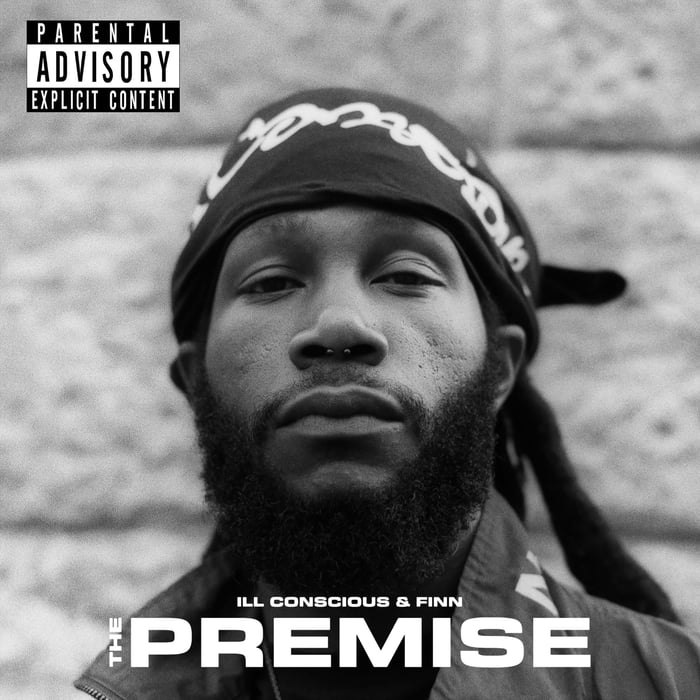
Album Review: The Premise by Ill Conscious & Finn
An in-depth review exploring how Ill Conscious and Finn’s collaborative album “The Premise” fuses lineage, language, and identity through dense lyricism and purposeful production.
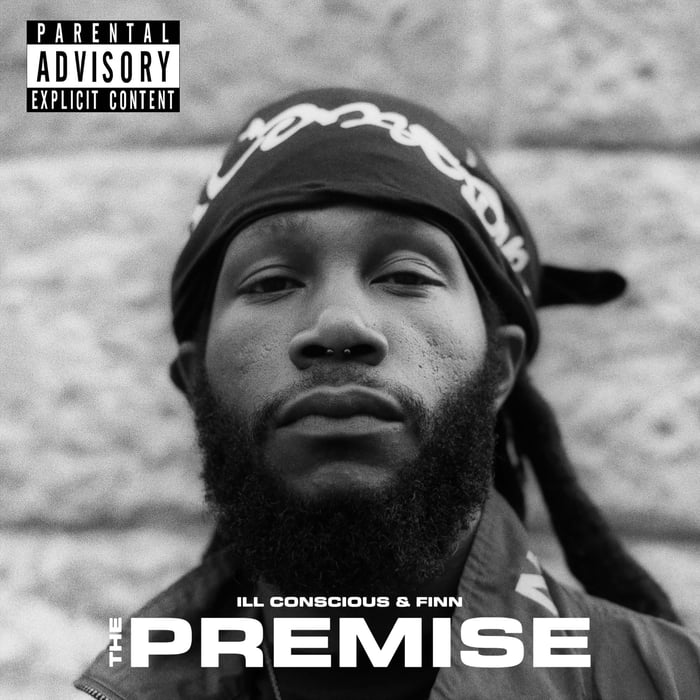
Album artwork provided via Vinyl Digital GmbH.
A record that starts like rap and ends like a doctrine
You can tell within minutes that The Premise isn’t trying to “vibe.” It’s trying to convince you of something—maybe even corner you into agreeing.
Ill Conscious treats his sixth LP like a courtroom brief that got stapled to a Bible study handout. Thirteen tracks, and the whole thing keeps leaning toward a sermon, even when the beats are smooth enough to pass for casual listening. Finn’s production helps: steady motifs, loops that feel intentional rather than lazy, and drum choices that keep you from settling into comfort. The album’s real trick is that it sounds controlled while the ideas keep multiplying like they’re trying to escape the bars.
And yeah, I kept waiting for it to simply rap—just be a rap record—before realizing the point is that it refuses to stay in that lane.
The album’s thesis hides in a “what does DNA mean?” punchline
The ending tells you what the whole thing was aiming at. Near the end of the closing track, the record basically turns into a lesson on language, etymology, and God—like you accidentally wandered into a lecture that thinks it’s music.
Here’s the part that matters: the album wants to connect lineage, language, and identity so tightly that biology becomes theology. Whether you buy that argument or not almost doesn’t matter. The bigger point is that Ill Conscious wants the argument to feel unavoidable—coded into you.
“De- deoxy, see, that’s a Latin root… If you trace its meaning, it means God… It means the master, the lord.”
— Ill Conscious, spoken section referenced at the album’s close
That’s not a throwaway “deep” moment. It’s the frame. The Premise is built to make rap feel like a way of reading history into your bloodstream. I’m not totally sure the etymology thread holds up as airtight logic (it’s said with the confidence of someone who doesn’t plan to be corrected), but I can’t deny it’s a bold way to end a rap album: not with victory laps, but with a claim about the fire at the center of your being.
“Tuthmosis” is where the album starts showing off its real muscle
This is where Ill Conscious reveals the actual method: stack references until they stop being “references” and start being a worldview.
On “Tuthmosis,” he’s rapping over a steady piano motif that Finn loops in a way that almost feels impatient. The loop is stable, but it never fully relaxes—like Finn’s refusing to let nostalgia become a pillow. Then a crisp drum switch snaps the track into a different posture underneath Ill’s lines.
Ill drops: “Receiving these praises ‘cause the cadence is cohesive/I was scheming, reading the pages of Flavius Josephus,” and he does it like naming a first-century Roman-Jewish historian is just normal breakfast talk. That’s the flex, sure—but the intent feels clearer than flexing. He’s planting flags across eras and continents in a single verse:
- pyramids and lineage
- the Tigris and Euphrates
- “dapper dan in Mercedes”
- African fans in Pakistan through Kuwait
The piano keeps holding the center while the verse travels. And then he lands the cellular metaphor—“But instead they stuck in themselves like mitochondria”—which is him basically saying: lineage isn’t just ancestry, it’s a trap inside the body. That’s the album in miniature: history as biology, and biology as destiny.
A reasonable listener could argue it’s too much—like he’s trying to win by footnotes. I thought that on first pass. On second listen, it hit me differently: the overload is the point. He’s making the mind feel busy the way the world feels busy.
“Pupils Become Rivals” makes betrayal sound like a lesson plan
After that, “Pupils Become Rivals” hardens the mood. Ill’s voice tightens, gets blunt, and the beat turns heavier: a descending bass figure, plus a vocal sample floating half-buried in Finn’s mix. It feels like the sample is drowning on purpose—like memory you don’t want to hear clearly.
The hook idea is nasty in a good way: “This what happens when shit get out of alignment/Your pupils become your rivals.” It’s not just about competition; it’s about mentorship turning sour, legacy turning into a knife.
Then he drops the line that names the whole project: “Clean up the premise for you wicked niggas, handling the constituent predicament.” It’s a mouthful, and it’s meant to be. The album title isn’t “The Premise” because it’s tidy. It’s “The Premise” because Ill thinks the base assumptions in people’s lives are dirty—and he’s scrubbing them with bars.
A few lines later he’s juggling Mr. Miyagi, Ricky Bobby, and Tupac imagery in the same run. That should feel ridiculous. Somehow the bass groove keeps it tight, like the beat is the only adult in the room telling the references to behave.
“Prominent Sunz” turns fatherhood into lineage math
The album relaxes—sort of—on “Prominent Sunz.”strong> The sample feels luxuriant, and Ill starts rapping about his daughter. It’s not sentimental in a Hallmark way; it’s practical and loaded with concern: growth, passports, spontaneous trips, a mother who “blended us quick.” This is fatherhood as logistics, not just emotion.
Then Rome Cee steps in, also from Baltimore, and he frames survival like a biblical trial: “Just to make it in Baltimore like the desert for forty years… take tears to face fears.” Two voices walking the same harsh landscape.
And the choice that tells you everything: “Sunz” is spelled sons, not suns. That’s not cute branding—it’s the album’s lineage obsession showing up in the title itself. The track is basically saying: we shine because we come from something, and we’re trapped by what we come from too. If that sounds contradictory, good. The song wants both.
“Pineapple Mimosas” is where the halo slips—and it’s not subtle
If “Prominent Sunz” is Ill trying to sound grown, “Pineapple Mimosas” is him admitting growth doesn’t erase mess.
Finn gives him a coastal-feeling loop—cascading guitar, snapping snare—breezy enough that you almost miss how ugly some of the content is. Ill drops the fatherhood thread into courtrooms:
“Four baby mamas, the Lord was calling us whore mongers/No remorse coming, no tour buses, just court summons,”
and then flips right into roses and vacations—Miami, Mendoza—like romance and legal trouble are just two rooms in the same house.
That’s the unsettling part: the phrasing treats court summons and luxury gestures as equal-weight items. The beat holds both readings in one frame, and that’s a choice. The public sees posts, not misery. He says it plainly: “They see the posts, but not the miserable parts.” Then he hits the line that actually stings: “Dealing with instability like juggling congenital hearts.” That’s not brag rap—that’s a man describing chaos as a chronic condition.
But then the track swerves into sexual boasting that feels intentionally abrasive, like he’s testing whether you’ll still ride with him after he ruins the “responsible father” angle. I’ll be honest: that part lost me a bit. Not because artists can’t be messy, but because the song starts sounding pleased with its own ugliness. Maybe that’s the point—self-contradiction as proof of honesty—but it still plays like a smudge on a clean lens.
“The Allegory” and “Carbon Traces” treat history like a haunted scrapbook
On “The Allegory,” Finn loops a pitch-shifted vocal sample that feels like a ghost stuck on repeat. Ill drops one of his only direct nods to contemporary scandal almost as a side note—tucked in parentheses, brushed past quickly. That move is telling: the album isn’t interested in staying in the present. It wants to treat the present as a symptom.
Then he starts stitching together images that barely fit: a sharply dressed Black man in a suit and tie, theories blooming like rock, and then the closing thought that lands harder because it’s quiet: “Still holding on to non-words so my granny the allegory.” That line turns his grandmother into a symbol for language that isn’t fully spoken—faith and memory carried more than explained.
“Carbon Traces” pushes the same impulse further. He opens with Cain and Abel imagery, then rockets into sports references—Peyton and Kemp—without acting like he changed gears. Pernell Whitaker rhyming with stealth mission shouldn’t work, but he uses it to keep pulling back to the idea that wickedness is embedded, lingering inside the carbon traces. That’s the album’s fixation again: the past isn’t past. It’s residue.
A listener could say this is overwritten. I get that. Sometimes it feels like Ill is allergic to leaving space. But the density is also what makes the record feel like it has teeth.
“Bass Drum” is Finn stripping the room bare so the rappers can fight
Then Finn does something smart: he narrows the melody down until “Bass Drum” is basically an isolated heavy bassline and not much else. It’s a flex in reverse—less decoration, more pressure.
Three rappers trade verses like they’re sparring in a small gym. The hook idea—“fake thug, no love, rough from the bass drum”—keeps returning like a bruise you keep touching.
Mandriq pops in with: “I put the raw on the bun/And had the competition mad, we almost went to war over funds.” It’s blunt, it’s street-economics realism, and it fits the track’s stripped vibe.
Then Asun Eastwood takes aim at a specific kind of rap fraud: the research-rapper who’s not researching life, just Googling aesthetics.
“A lot of suckers rappin’ is sad, it’s a setback, it’s a fad…
Put the source, Googling the slang, YouTubing through ads…
They looking for clues on how to be bad.”
— Asun Eastwood, on “Bass Drum”
That’s funny in the driest way possible: the accusation isn’t that they’re soft, it’s that they’re studying softness like it’s a craft.
“Pressure” and “Consortium” prove the album can share space
By the time “Pressure” rolls in, the album starts feeling like a rotating cipher where Finn is the glue and Ill is the spine.
Recognize Ali drops a run that’s all self-definition—praise, “most high,” eagle imagery, “super black on both sides.” King Magnetic ends the same track with a clean regional flex—PA with Jersey shooters, Kerry Kittles namedropped like it’s obvious.
And “Consortium” had already set a tone with Snook Da Crook coming in vivid: “the forty-four was contorted, them shots in your pores is corium.” That’s a nasty line—body imagery turned forensic.
Six different vocal weights cross Finn’s production across the record, and Ill Conscious doesn’t get swallowed by the lineup. If anything, the features sharpen him. He sounds like he’s listening harder when other people step in—which is, frankly, how it should be.
“11th Commandment” goes full political-thriller—and almost trips over itself
“11th Commandment” is where the album swings for chaos. The beat hammers into a political-thriller mood, and Ill matches it with a heightened cadence—like he’s reading classified documents out loud.
He runs through Palestinian soldiers and paraglides, genetically modified mosquitoes, capital gains, prisons, Bible interpretation, skull and bones undertones. Finn matches the agitation with orchestral breaks—minor-key horn stabs hammering against the boom-bap pocket until it feels like the track might splinter.
Here’s my hesitation: this is the one moment where the volatility feels like it’s flirting with overload for overload’s sake. I’m not saying the subject matter is “too much.” I’m saying the delivery is so crammed that the song risks turning into a blur of alarm bells. Still, it’s a deliberate move: it’s the sound of paranoia performed as policy analysis.
“DNA” closes the loop: scripture, coding, and the need to sound certain
Then “DNA” arrives, and the album finally admits what it’s been building toward: not just cleverness, but doctrine.
Ill raps, “God molecule, deoxyribonucleic acid/We the copied lineage from the Bible pages and chapters,” and then the spoken section takes over, pushing the DNA theme into a full-on meditation about coding, proteins, expression, and “how did it manifest into rabbi?”
It’s a big swing. It’s also kind of audacious to end a rap album like you’re handing the listener a cosmic takeaway sheet. Part of me respects the nerve. Part of me isn’t entirely convinced the logic needs to be that literal to be effective. But I can’t pretend it doesn’t land emotionally—the album ends by insisting the self is written, and that writing is sacred whether you asked for it or not.
Where I landed: the tracks that actually hold the premise together
After living with it, three songs feel like the clearest distillation of what The Premise is trying to pull off:
- “Tuthmosis” (the thesis: lineage as geography, history as bloodstream)
- “Pupils Become Rivals” (the betrayal angle sharpened into a mantra)
- “Carbon Traces” (the residue concept: wickedness as something embedded)
I initially thought the album was going to be another dense-rap exercise where the references are the meal. But it’s tighter than that. The references are just the camouflage for a bigger insistence: that identity, ancestry, faith, and power are all the same argument wearing different clothes.
The conclusion is pretty blunt: The Premise doesn’t want your casual attention. It wants agreement—or at least friction. It’s rap as lineage-work, full of contradictions it refuses to apologize for, closing with the claim that the code inside you is already speaking.
Our verdict: If you like rap that sounds like it brought a library card and a grudge into the studio, you’ll actually like this album. If you need clean morals, tidy narratives, or choruses that behave, this will feel like getting lectured by someone who’s technically right but still kind of exhausting at dinner.
FAQ
- Is The Premise more about lyricism or mood?
Lyricism first, but Finn’s beats aren’t wallpaper—they keep the dense writing from collapsing under its own weight. - Does the album feel preachy?
Yes, on purpose. It leans into sermon energy, especially by the time “DNA” closes things out. - What’s the deal with all the history and religion references?
They’re not trivia; they’re Ill Conscious’ way of arguing lineage and belief are inseparable—and sometimes oppressive. - Which track best represents the album’s core idea?
“Tuthmosis.” It’s where the travel-through-eras approach clicks without sounding scattered. - Is there a weak point?
“11th Commandment” flirts with overload, and parts of “Pineapple Mimosas” feel like contradiction without enough reflection—depending on your tolerance for that mess.
If this record’s imagery stuck with you, a framed album-cover poster kind of makes sense—like pinning the “premise” to your wall instead of your bloodstream. You can shop favorite album cover posters at our store: https://www.architeg-prints.com
 | DISCOUNTGET 30% OFF*Use code on your next order:
|
* This post may contain affiliate links, meaning we earn a commission if you make a purchase through these links, at no additional cost to you.