Erdve Epigrama Review: Eight Songs That Refuse to Let You Breathe


 See more Architeg Prints stories on Google.
Erdve Epigrama Review: Eight Songs That Refuse to Let You Breathe
Erdve Epigrama traps post-metal heft in tight rooms—catharsis by compression, grooves as oxygen, and zero patience for your “build-up” cravings.
A record that wants the ceiling to look like a cathedral
There’s a particular image I can’t shake when I listen to Erdve Epigrama: the band playing under towering religious architecture—saints staring down, pillars stretching upward—while the musicians themselves look like regular guys who just happened to bring amps. That contrast matters. This album feels like it’s trying to drag the everyday body toward something “above,” but it does it the hard way: with blunt force and almost no breathing space.
And I’m not totally sure that’s “spiritual” in the comforting sense. It’s more like standing too close to a huge speaker and realizing the speaker is winning.
What Erdve are actually doing here is simple and kind of ruthless: they’re taking that human urge for the sublime—bigger-than-you feelings, the holy-shiver stuff—and cramming it into short, sealed containers. Not long cinematic climbs. Not patient mood pieces. Just impact after impact, like they don’t trust you to stay in the room unless they keep grabbing your collar.
The suffocation is the point—and the band knows it
Here’s where Epigrama earns its bruises. The suffocation doesn’t come from muddiness or lazy production choices. It comes from the fight between two things:
- the sheer intensity of the playing
- the tight, almost “no excess” space the songs live inside
People will reach for comparisons to Neurosis, and yeah, I hear why: the same sense of weight, the same appetite for volume-as-meaning. But Erdve don’t stretch their ideas out into long, punishing journeys. They pack them into blistering, compact doses, like they’re allergic to the concept of a ten-minute crescendo.
That choice is the album’s real personality. It’s post-metal heaviness with a hardcore attention span. If you want the feeling of a massive slow build but you don’t have time to watch it happen, Erdve Epigrama basically says: “Fine. Here. It’s already happening. Deal with it.”
And I’ll be honest—I thought that approach would start to feel samey after a few tracks. It didn’t, mostly because the band’s pacing is too deliberate to let the songs smear together. Still, the album is so committed to pressure that it occasionally risks making every moment feel like the “most important moment.” That’s not a fatal flaw, but it’s a real trade-off.
The opener hits like an alarm, and it never hands you a towel
The opener “Epigrama” doesn’t ease you in. It comes off like an air-raid siren followed by a straight punch—no warning, no gradual mood-setting, no scenic route. And the next seven tracks don’t exactly offer a cozy intermission either.
The riffs are thunderous in that down-tuned, physically heavy way, but what really sells the violence is the drumming: every bass drum hit lands like something dropping out of the sky. It’s got that hard clarity and sharpness you’d associate with the kind of precision that makes aggressive music feel inevitable, not messy.
This is one of the album’s big flexes: it’s brutal, but it’s not blurry. The sound isn’t “extreme” because it’s chaotic; it’s extreme because it’s controlled. Erdve feel like they’re aiming for maximum impact per second, and they keep hitting that target.
If anything, my one small complaint is that the album can be so good at staying “on topic” that it almost refuses to surprise itself. It’s a beast that runs in a straight line—impressive, intimidating, but not always mischievous.
Grooves show up like water in a desert—and that’s not an accident
The catharsis on Erdve Epigrama doesn’t come from softness. It comes from groove—those brief, almost merciful moments where the band locks in and lets you ride the beat instead of just surviving the next hit.
“Ydos” is the obvious highlight for this. When it drops into a more graspable rhythmic pocket, it’s not the band “going easy.” It’s them reminding you they could be musical in the classic sense whenever they feel like it. That groove works like an oasis: you get comfortable for a second, your body starts nodding instead of bracing, and then—right on schedule—the discord and down-tuned crush return to business.
And I think that’s the real trick of the record. Those grooves aren’t just there to add variety; they’re there to teach you how to listen. What starts abrasive and combative slowly becomes legible. On second listen, I caught myself anticipating the way the songs pivot—like the album had trained my reflexes. I didn’t expect that. At first, I assumed it was just going to be eight tracks of being yelled at by amplifiers. But by the end, it feels less like a fight and more like you’ve learned the rules of their violence.
By the closing crunches of “Skleistis,” it’s not you versus the band anymore. You’re moving with it. Maybe that’s the closest thing this album has to “transcendence”: not escape, but acceptance.
The vocals: clarity as a weapon, not a comfort
If you’re an English-only listener, you’re probably going to end up running lyrics through translation tools to get the full meaning. But even without that, Vaidotas Darulis comes through in a way that’s unmistakable.
His voice has clarity—not clean singing, not pretty articulation, but that sharply defined shout that slices through the mix like it’s competing with the instruments for airtime. And it absolutely fits the album’s internal narrative: every element here sounds like it’s trying to be the loudest voice in the room, and somehow it works instead of collapsing into mush.
There’s urgency in his delivery that doesn’t feel performative. The drama doesn’t read like theater-kid angst; it reads like someone trying to get the words out before the floor gives way. You can disagree with the aesthetic, sure, but it’s hard to claim it’s half-hearted.
Why it doesn’t become “too much” (and how it avoids the dumb kind of heavy)
The impressive part of Erdve Epigrama is that it never turns into senseless heaviness—the kind where bands confuse punishment with meaning and think endurance equals depth. Erdve don’t overstay their welcome. The album doesn’t drag. It doesn’t bloat itself on repetition just to prove it can.
And that’s a creative decision, not a happy accident. This record feels finely tuned: tight track lengths, relentless pacing, and those carefully placed grooves that function like pressure valves. It’s designed to take you to an edge and let you stare over it—not to shove you off just for the thrill.
Do I think everyone will experience it as “cathartic”? I’m not sure. If you need spaciousness to feel emotional release, this album might feel like a locked room. But if your idea of catharsis is being pinned down until you stop resisting, Erdve have built something that actually delivers.
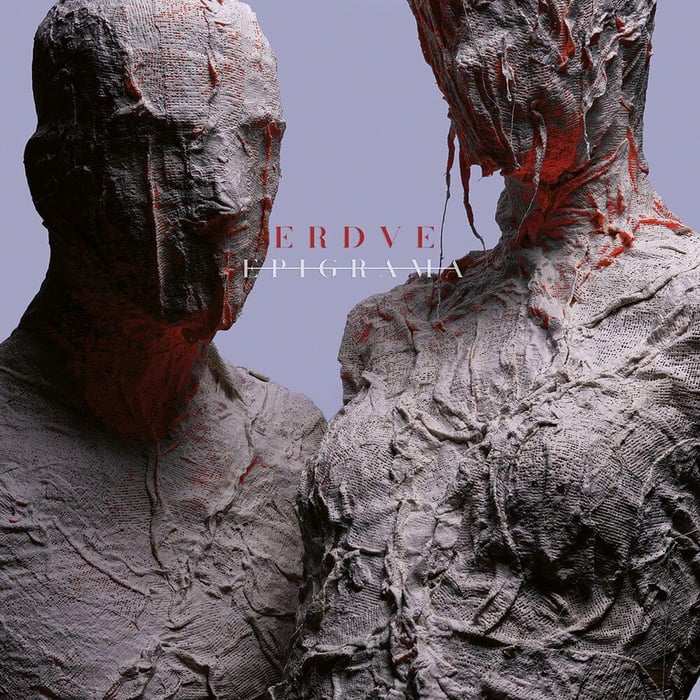
Artwork and release details
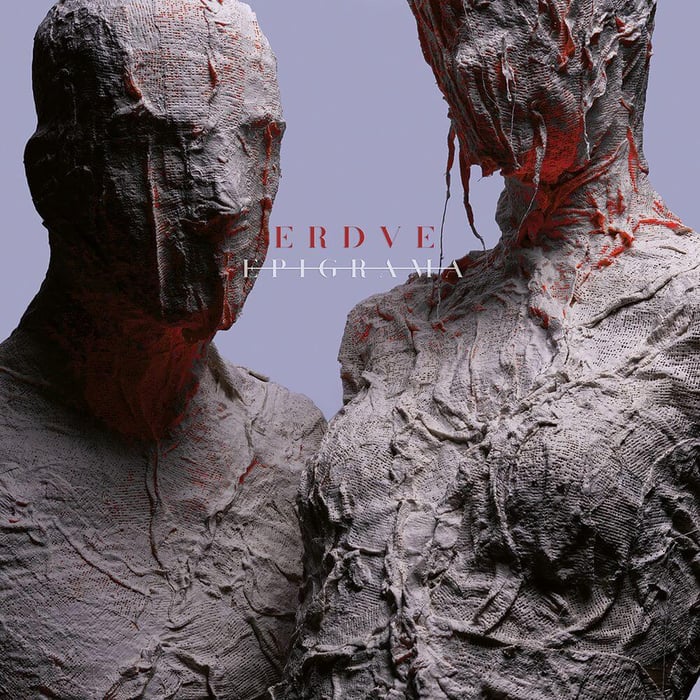
Epigrama is set for release on May 29th via Season of Mist.
If you want to keep up with the band directly, they’re on Facebook: https://www.facebook.com/erdvelt
Conclusion
Erdve didn’t make Epigrama to be “immersive.” They made it to be unavoidable—eight tracks that compress post-metal mass into tight forms, then dare you to call it claustrophobic like that’s a criticism. The grooves give you just enough air to realize you’re still alive, and then the album goes right back to work.
Our verdict: People who like their heavy music focused, punchy, and allergic to long-winded build-ups will eat this up. If you’re the type who needs post-metal to sprawl and brood for ten minutes before anything “happens,” you’re going to feel like Erdve stole your patience and spent it on drums.
FAQ
- What is the core vibe of Erdve Epigrama?
It feels like post-metal intensity squeezed into hardcore-sized bursts—less “journey,” more “impact.” - Is Epigrama more cathartic or more suffocating?
Both, depending on whether you lock into the grooves. The grooves are the relief; the rest is the vice grip. - Do I need to understand the lyrics to get it?
Not really. The vocal delivery is so urgent and clear that emotion comes through even if you don’t speak the language. - Which track best shows the album’s groove side?
“Ydos” is where the band lets the rhythm breathe before slamming the door again. - Does the album ever get boring because it’s so relentless?
It stays short and controlled enough to avoid that—though if you crave big left-turns, it can feel stubbornly linear.
If you’re the kind of person who treats album art like part of the experience, you can always frame that obsession—shop your favorite album cover poster at our store: https://www.architeg-prints.com.
 | DISCOUNTGET 30% OFF*Use code on your next order:
|
* This post may contain affiliate links, meaning we earn a commission if you make a purchase through these links, at no additional cost to you.