Awon Solidified Review: The Calmest Album About Chaos (Somehow)


 See more Architeg Prints stories on Google.
Awon Solidified Review: The Calmest Album About Chaos (Somehow)
Awon Solidified turns street memory into quiet pressure—less “bangers,” more bruises you only notice later.
Some albums kick the door in. Awon Solidified just walks inside, lowers its voice, and somehow makes the room pay attention anyway.
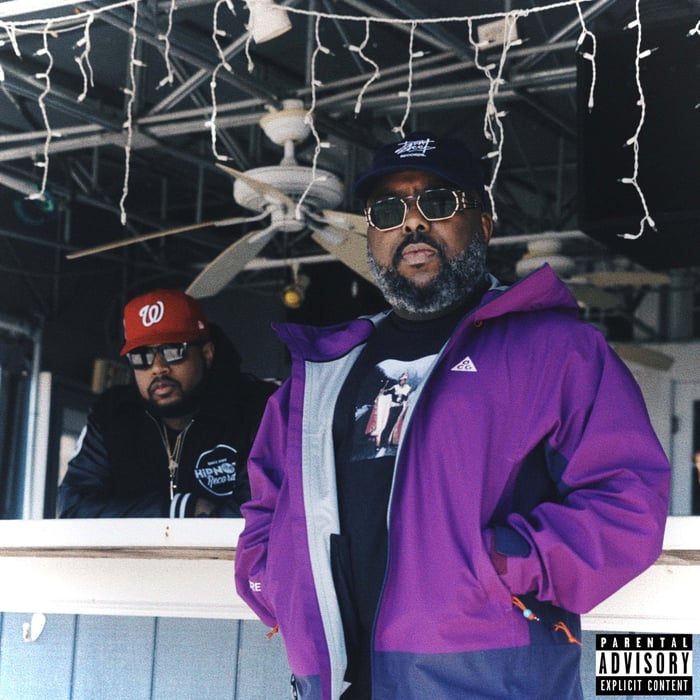
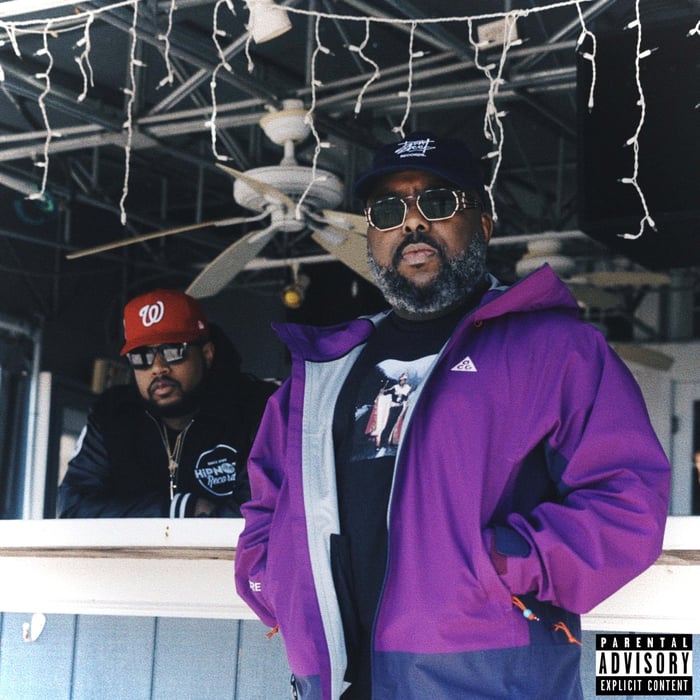
Awon’s real flex is not needing hype
Let’s get this straight: Awon doesn’t perform urgency. He refuses to raise his voice for your entertainment. And that’s the point. He raps like someone who’s already seen the ending and doesn’t need to dramatize the middle.
What hits first is the steadiness—he’ll talk about a drug bust falling apart, friends ending up in the ground, and a plate of oxtail like they’re all part of the same weather report. That isn’t emotional distance; it’s control. Awon’s authority isn’t volume. It’s phrasing—how he lands a line, how the cadence stays upright even when the story doesn’t.
And The Other Guys? They do the smartest thing possible: they stay mostly invisible. The production sits murky and bass-heavy, like it’s deliberately trying not to distract you from the voice. Someone could argue that’s “too safe,” but I think it’s a decision: this record wants the rapper to be the lighting, not the drums.
The streets show up like an epilogue, not a thrill ride
This album treats “the street” less like an adventure and more like paperwork you can’t stop filing. The stories feel pre-scripted—like Awon’s not asking if things go wrong, just how.
“Lots of Pockets” is where that becomes brutally clear. The plot isn’t some heroic climb; it’s a collapse with details so specific they feel like receipts. There’s a guy who “has everything,” and you can hear how quickly that turns into “had.” Madeline—his girl—drives a black Caravan down I-95 into Maryland. The operation runs out of abandoned buildings. He’s making enough clean money to sign a rising rapper out of Houston as executive producer without even leaving his desk. It’s mundane success, almost corporate.
Then the album does what it keeps doing: it yanks the floor without a sound effect. Madeline gets found dead under an Uzi. A payoff at the docks turns into an ambush. The love-of-his-life angle flips into betrayal. And the final image is the least “rap” gesture imaginable—he drops the gun.
“So went the glory.” — Awon
That delivery matters. A louder rapper would’ve turned this into a scene. Awon turns it into a fact, like he’s documenting gravity.
“The Embrace” flips the usual street myth—and it’s not subtle about it
After watching someone else’s downfall, Awon points the camera at himself on “The Embrace.” This is where the album stops pretending it’s only telling stories and admits it’s talking about formation—how a person gets built.
He runs the timeline like it’s stamped into him: twelve years old reading obituaries, fourteen selling, playing a teenage Nino Brown through buildings where users fell asleep forever. There’s a hook here that deliberately trashes the usual boast posture. It doesn’t say “I chose this.” It says the opposite:
“I didn’t embrace the streets, the streets embraced me / It’s not crime, it’s the way the streets raised me.” — Awon
That’s a provocative claim all by itself, and some listeners will hate it because it denies the clean comfort of “choice.” But I think Awon’s being specific: he’s describing inevitability as a kind of upbringing. Not an excuse—more like a map of how limited options start feeling like destiny.
There’s a body count underneath all of this—and he refuses to blur it
You can hear it in “Ice Rink,” which feels like walking through a day that never stops scanning for threats. Two verses, and the images stack up: dodging bullets, getting hassled by cops who want your name and want to know if you’re carrying, tucking jewels into his pants on the way home from school. That last detail is nasty because it’s so matter-of-fact—kid logic adapting to adult danger.
He calls himself “a native of the land with no power,” and I can’t decide if that’s poetry or just the cleanest possible translation of the feeling. Either way, it lands.
Then the references widen: he brings up the Willie Lynch myth, then the knee on the neck, then the first-class flight where a Black man’s ticket gets checked twice—and he’s still expected to act grateful about it. That sequence is doing something intentional: it’s connecting street surveillance to institutional surveillance without making a speech about it. The song basically says, “Different rooms, same suspicion.”
“New Notes” makes a white tee into a uniform—and it’s devastating
“New Notes” is where the album turns an everyday object into a whole social diagram. The white tee becomes everything at once: gas station shirt, work shirt, the thing you throw on because you can’t afford to think too hard.
Awon calls it:
“A sign of dignity on the poverty line.” — Awon
And then he pushes it further. It’s the same shirt on the dealer with the Rollie, the prisoner, the deceased. That’s the move: he takes a basic symbol and shows how it crosses roles. The shirt becomes an identifier not of who you are, but how close you live to the edge.
The hook runs like an ongoing eulogy list in his phone—names and losses that keep updating. The “latest” is a friend shot dead last week. And the image that sticks to me is the repetition: he goes to work in the same shirt and goes to the burial in it. That’s not a metaphor you “like.” That’s a loop you recognize.
If there’s an argument against this track, it’s that it’s almost too controlled—like it won’t let itself break. But that’s also the chilling part: the song doesn’t sob because it’s too busy surviving.
“All My Love” is where the tenderness shows up—through food, not speeches
The album’s softest writing doesn’t happen in a love song, at least not the expected kind. It happens in “All My Love,” and it happens in kitchens.
Awon builds three verses out of cooking and the people who taught him what feeding someone really means. It opens with a grandmother humming gospel over candy yams and peach cobbler in a project oven. Then it moves to Crown Heights—his mom at the stove, stirring cornmeal into cou-cou base, mackerel in the stew, flying fish, rice and peas with oxtail. There are tamarind balls eaten like candy on Park Place. The details don’t feel like “vibes”; they feel like memory doing its job.
And he never treats the food like a cute aesthetic. The meals act like a séance. Every dish pulls somebody back into the room—people dead, people gone, people locked up. Grandmother is dead, the seat stays open. Mom’s kitchen stays bare. Homies are either jailed or buried. When the allspice hits and the flavors sharpen enough to sting, it’s not just taste—it’s grief becoming physical.
The verse lands on the simplest version of the idea: food as infused love. He even reaches for the image of Jesus feeding a crowd with five loaves and two fish, and it doesn’t feel like a random reference—it feels like him trying to say, “I watched care multiply when there wasn’t enough.”
I’ll admit something: on my first listen, I thought this track might drift into sentimentality. On second pass, I realized it’s not sentimental at all. It’s blunt. It’s mourning with a ladle.
Money goes both ways here—and the album refuses to pretend it balances out
A lot of rap treats money like a scoreboard. Awon Solidified treats it like a current that can pull you under in either direction.
“Bonus Day” is the ugly side. A blue-collar bonus shows up and immediately gets swallowed by real life: tip at the counter, something for the kids, maybe a little drip—then the car breaks down. The gasket costs the same as the bonus. AAA gets called. Dinner plans get killed. It’s almost funny in the way only real misfortune is funny—because it’s so predictable it’s insulting.
Then Rob Cave comes in for the third verse and raps like hardship with a mouth. He frames it as a stickup, demanding dough, ice, and even “spirit,” and he drops the kind of line that’s supposed to sound motivational but actually sounds like a threat:
“Every diamond is some carbon that survived the pressure test.”
The nastier twist is that the verse also implies the man getting robbed gave the robber his entire world to begin with. That’s a complicated idea—shared conditions turning into shared damage. Some people will call that moral fog. I think it’s Awon refusing the fantasy that suffering produces clean ethics.
“Mid Century Modern Aesthetic” swings to the bright side: lobster tails, a wife, eating organic, a home filled with found objects accumulated over a lifetime. The flex is there, but it isn’t empty—he frames it like he’s building a space where tastes and history can coexist. His wife gets Coltrane and Funkadelic, which is the kind of detail that reads like domestic pride more than status.
Then the second verse turns the flex into intention: his six-year-old is brand-aware, basically a tiny heir with over a million in savings and a back catalog to inherit. It’s a little absurd—kids shouldn’t have “brand” as a personality trait—but that’s also the honesty. He’s describing the modern idea of security: money plus cultural continuity.
When he stops narrating and just talks, the album gets sharper
The most arresting moments come when Awon steps out of story mode and speaks directly. “To the Sky” does that immediately. It’s written to his son with special needs, and it’s also about Awon being sober for three years. The way he presents it isn’t dramatic—it’s plain, close to the ground, like he’s refusing to turn parenting into inspiration content.
He focuses on parents learning to read a grip, a hold, the language of effort when words aren’t available. The hook hangs on the fact that no words were spoken, but work still got done—through a smile, through contact, through persistence.
And there’s one line that stays stuck in the air:
“The reason they can’t fly is ’cause God gave them little wings.”
Awon credits his wife for schooling him on it, and that detail matters: it’s not a solitary-hero song. It’s a household learning how to translate life.
“Snickerdoodle” is the other direct-light moment—a love poem he seems almost surprised to be writing. He admits it’s basically the only situation where he could confess that a wedding ring didn’t fit anymore. It’s an oddly specific confession, and that’s why it works: it sounds like the kind of detail you only say when you’re done pretending.
Now, mild criticism: The Other Guys keep the floor heavy for so long across the record that a few tracks can feel like they’re the same shade on first listen. I kept waiting for a beat switch that never came. But the funny part is—once I ran it back, the lyrics separated the songs like labels on identical jars. The sameness is partly the setup. The writing is the differentiation.
Conclusion: this album isn’t chasing you—it’s cornering you
Awon Solidified doesn’t beg for attention. It just keeps placing scenes in front of you until you realize you’ve been holding your breath. The quiet delivery isn’t a lack of emotion; it’s a refusal to perform pain. And the production’s murk isn’t laziness—it’s camouflage so the voice can do the real work.
Our verdict: People who like rap that treats storytelling like evidence will actually love this. If you need big hooks, obvious beat fireworks, or motivational climax moments, you’ll get impatient and start checking your phone—this album will not chase you down the hallway.
FAQ
- What is “Awon Solidified” really focused on—bars or vibes?
Bars, but not the showy kind. The record wins through phrasing, detail, and how calm delivery makes grim scenes feel even worse. - Is the production by The Other Guys too understated?
Sometimes, yes. A few beats blur together on first listen, but the restraint is deliberate: it keeps the spotlight on narrative. - Which track hits the hardest emotionally?
“All My Love,” because it uses food and family memory to resurrect the dead without announcing it’s doing that. - Does the album glamorize street life?
No—it treats it like an ending you can’t rewrite. Even the “successful” moments feel temporary, like they’re waiting to get audited. - What’s the most direct, no-metaphor moment on the album?
“To the Sky,” where parenting, sobriety, and learning a new language of care are presented without dramatic dressing.
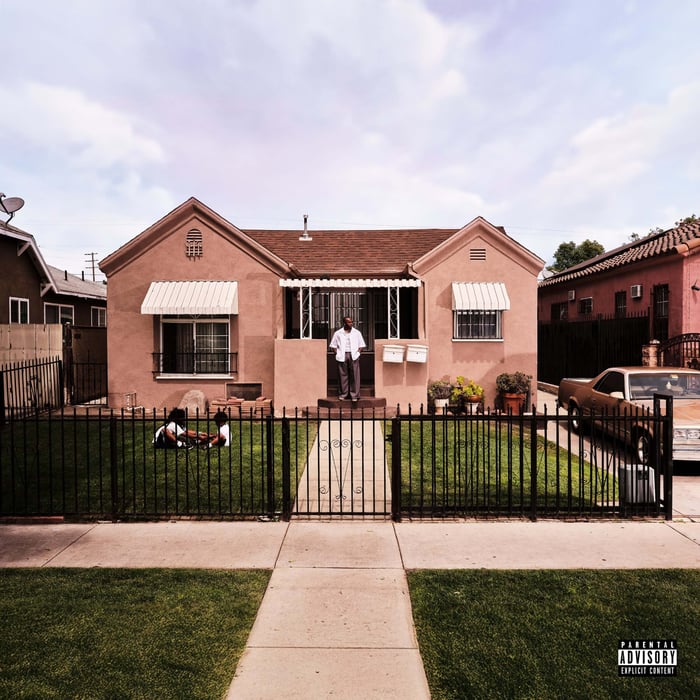
If you’re the type who fixates on cover art as part of the whole mood, consider grabbing a favorite album cover poster from our shop—it fits this record’s “memory you can hang on a wall” energy.
 | DISCOUNTGET 30% OFF*Use code on your next order:
|
* This post may contain affiliate links, meaning we earn a commission if you make a purchase through these links, at no additional cost to you.