Blxst’s Labor of Love Review: Smooth Devotion or Expensive Homework?


 See more Architeg Prints stories on Google.
Blxst’s Labor of Love Review: Smooth Devotion or Expensive Homework?
Blxst’s Labor of Love keeps promising “I’m not leaving”—but the album quietly asks whether devotion is real if it never has to sweat.

First, the album tells you it’s not here to sing—it’s here to argue
The first voice you hear on Labor of Love isn’t trying to impress you with melody. It’s dry, close, and almost plain on purpose—Blxst over stripped-down keys, talking like he’s laying down terms rather than setting a mood. And the terms are blunt: love is work. Not the romantic “we’ll get through anything” kind, but the annoying day-to-day version—showing up when you’re tired, showing up when you’re wrong, showing up even when you feel a little halfway out the door.
He’s basically daring you to accept a definition of love that doesn’t flatter anyone.
Blxst has always sounded like devotion comes easily to him—smooth reassurances, clean chords, that polished South Central glide where even the confessions come out moisturized. This time he slaps a bigger word on the same instinct: labor. The title is a wager that love should cost something. The question that hangs over the whole thing (and I’m not totally sure he answers it) is whether he can make that cost audible—or whether “labor” is just a nicer label for the same comfort-talk he’s always been good at.
The love songs keep arriving at the same promise—just through different doors
Once the album gets moving, you start noticing the pattern: Blxst keeps walking you to the same statement like it’s a house he’s proud of, and he wants you to admire it from every angle. Different track, same emotional furniture.
On “Outside,” he sells staying in like it’s the grand romantic gesture. Turning down the club becomes the entire plot: he’s got a spot saved for someone worth more than nightlife, and he says it like a flex—I’m here, I’m staying, don’t overthink it. The line that sticks is the casual confidence of it: waking up to her won’t get boring. That’s a vow, sure, but it’s also an attempt to make permanence sound effortless.
“Why” is even more direct. He turns one person into the reason he stops searching: “you my why.” It’s simple enough that it almost dares you to call it corny, but he smooths it out with delivery—like if he says it cleanly enough, nobody will question how convenient love becomes when it’s reduced to a slogan.
Then “Something Bout It” slides in like the “we’re fine” text after an argument. He brushes off conflict by treating it as disposable: whatever they fought about, they can conveniently forget it, because the escape hatch is always the same—go outside, change the scene, reset the vibe. It’s warm and it’s easy to slip into.
Here’s the arguable part: these songs don’t really solve anything. They loop reassurance the way some people loop “good morning” texts—sweet, consistent, and slightly automated. The low end stays sturdy, the production stays clean, and the point stays the same: he isn’t going anywhere. But the insistence can start to feel like the whole relationship is being held together by the tone of his voice rather than the substance of what he’s saying.
When the album finally allows an actual disagreement, it sharpens up fast
The writing gets noticeably tighter the moment the fantasy of frictionless devotion breaks.
“Ruin” is the rare love song here that feels like two adults in the same room. Blxst admits early that he starts with hurting—he owns it, quickly, like he’s trying to get ahead of the argument. And then Sasha Keable steps in and refuses to let that admission count as closure. She pushes back, making it clear they’re both in the wrong, and when she tosses the rhetorical question back at him—about pressure and irony—the track suddenly has stakes. Two voices tugging the same knot creates tension the solo tracks can’t manufacture.
And honestly? It makes a lot of the earlier sweetness look a little too convenient. When it’s just Blxst alone, love is always smooth. When someone else speaks, love suddenly has splinters.
“Just My Type” thrives on contradiction in a way the calmer songs avoid. The tenderness and the late-night need get jammed into the same breath—morning affection, nighttime chaos. It’s messy, but it’s alive. I thought the line would come off as try-hard the first time, but on second listen it actually reads like a confession he didn’t polish: the part of him that wants to bolt is standing right next to the part that imagines a wife.
Then “Is That Too Much” plays like a familiar wishlist—travel, quiet, a different setting, a softer pace—until the sampled voice at the end flips the whole question into something heavier:
is that too much for a Black woman to ask of a Black man?That one moment reframes the plea from “I want peace” to “why does peace feel like a negotiation?” It’s the kind of turn the album needs more often.
When Blxst steps outside the bedroom, he stops coasting
The album gets more interesting the moment romance stops being the only proving ground.
“Work” goes back to his father—specifically, a father who isn’t a cartoon villain. He’s “far from a deadbeat,” the type who loved his kids but was barely home because labor swallowed him whole. Blxst raps it plain: the man’s middle name might as well have been his job. That’s not just biography—it’s a fear blueprint.
And the song’s real tension is Blxst trying to do the inverse without becoming the same man in a new outfit. He says he can’t imagine his kids not in the same house as him, then admits the terror underneath it: the apple is too close to the tree. The hook from Cheyenne Wright—“After midnight, never leave me”—turns that anxiety into a rule. Not a romantic rule. A generational one.
When he says “generational curse, let’s put a reverse to it,” it lands because it’s not poetic; it’s practical. Love becomes what you do for someone who can’t reciprocate yet. That’s labor you don’t get applause for.
“Right Back” echoes the worry in a quieter, more personal way. He counts who’s still around—who the last ones left are—and there’s something sobering about hearing loyalty framed like inventory. Then he names what he’s raising: “two kings,” and the line hits like a man trying to speak stability into existence. The love songs ask a lover to stay. These songs ask Blxst whether he can stay—whether he can be the reliable presence he needed.
Arguably, this is where the album’s title finally feels honest.
“Day After Day” is the one time he sounds genuinely worn down
The hook on “Day After Day,” sung by Lori Perry, carries an older kind of struggle—working through difficulty, being down on luck, being up against the wind. And it’s the only place on the album where Blxst doesn’t sound fluid. Here, he sounds taxed. Like he’s doing math he doesn’t want to do.
He talks about taking loss after loss until a win finally shows up—but then he admits the win didn’t fix the floor beneath him. That’s the detail that makes the track sting: making it out doesn’t automatically mean you’ve escaped the feeling of being back at square one. It’s not dramatic in a cinematic way. It’s dramatic in the way life is dramatic—quietly, repeatedly, and without asking permission.
Big Sad 1900 comes in colder on the second verse, like someone who decided a long time ago that questioning God won’t change the outcome. He points upward without bargaining, and he points toward his mother with the intention to make things right. The pain becomes origin story—what made him who he is—and it’s delivered without decorative emotion.
I’ll say it plainly: this track does more for the album’s “labor” concept than a lot of the romantic material, because it finally lets exhaustion be audible.
“He Can” turns pain into posture—and somehow it works
Later, “He Can” responds to that grief with nerve. It’s the sound of someone turning bottling into fuel and calling it a business model: he lets life out in the booth and people pay for the pain. Brick by brick, he builds the thing.
When he asks, “If not me then who?” it doesn’t sound like empty bravado. It sounds like a man who already carried the losses from earlier tracks and decided confidence is the only way to keep walking.
This is an arguable choice, though: turning pain into confidence can read like growth, or it can read like armor. Sometimes I can’t tell which one he means—and maybe he can’t either. But the conviction is strong enough that the question doesn’t feel rhetorical. It feels like a dare aimed at himself.
“Home” is where the album stops being smooth and starts being specific
“Home” is the moment where fear has blood relations. Blxst stretches further here than anywhere else on the record, and you can hear him stepping back onto the block with a different weight in his voice.
He calls himself an eastside baby and circles one memory like he can’t stop touching it: a drive-by, a flashback to being five, the whole crib getting shot up. The blast hits like it’s happening again, not like it’s being remembered from a safe distance.
And then the real punch: he watches that fear echo into his son’s face—the look you get when you realize innocence isn’t protected by wishing hard enough. He isn’t singing to anyone here. He’s witnessing something and reporting it. That choice matters. The hook’s images—palm trees, the ghetto bird—aren’t just scenery. They’re a prayer that the place outlasts the trauma it keeps producing.
If Labor of Love is trying to prove devotion costs something, “Home” is the receipt.
So… is this actually a “labor,” or just a better slogan?
By the end, I didn’t walk away thinking Blxst reinvented himself. I walked away thinking he tightened the screws on his own persona. The album keeps presenting devotion as a decision—showing up, staying, refusing the easy exit. But it also keeps flirting with comfort, with the idea that if you say the right reassuring things in the right tone, love becomes self-sustaining.
That contradiction is the point, I think. He wants to be the guy whose devotion feels natural, while also insisting it’s work. Sometimes those two ideas sit together perfectly—“Work,” “Right Back,” “Home.” Sometimes they step on each other, especially when the romance tracks keep looping the same promise with slightly different lighting.
And I’ll admit it: my first impression was that the album was almost too smooth to carry its own title. But the deeper cuts—where family history and fear creep in—changed how I heard the sweetness. The softness starts to feel less like laziness and more like a man intentionally building a calm room inside a loud life. Still, a couple love songs could’ve used sharper edges; reassurance is nice, but it can also be a way of avoiding the real conversation.
Conclusion: Labor of Love succeeds when Blxst lets devotion look unglamorous—parenthood anxiety, inherited patterns, trauma that doesn’t stay in the past. When he relies purely on polished romance, the album risks sounding like it’s trying to hypnotize itself into stability.
Our verdict: People who like their R&B/rap emotional but controlled—clean mixes, grown-man promises, and just enough ache to feel real—will actually like this album. If you need mess, unpredictability, or hooks that punch you in the chest on first contact, you’ll get impatient and start checking how many tracks are left.
FAQ
- Is Labor of Love more singing or rapping?
It’s a blend, but the album’s backbone is Blxst’s half-sung, half-spoken ease—he slides between modes depending on how much conflict the song allows. - What’s the main idea behind Labor of Love?
The album keeps arguing that love is repeated effort—showing up when it’s inconvenient—rather than a vibe you fall into and coast on. - Which tracks feel the most emotionally “real”?
“Work,” “Right Back,” and especially “Home” hit harder because they’re rooted in family pressure and fear, not just romantic reassurance. - Does the album ever challenge Blxst’s smooth persona?
Yes—“Ruin” introduces real pushback through a second voice, and “Day After Day” is one of the only moments he sounds genuinely worn down. - Will this album work for someone who doesn’t like slow, polished R&B?
Probably not. A lot of the record is designed to feel rounded and steady, and if you want jagged risk-taking, you’ll find it a little too composed.
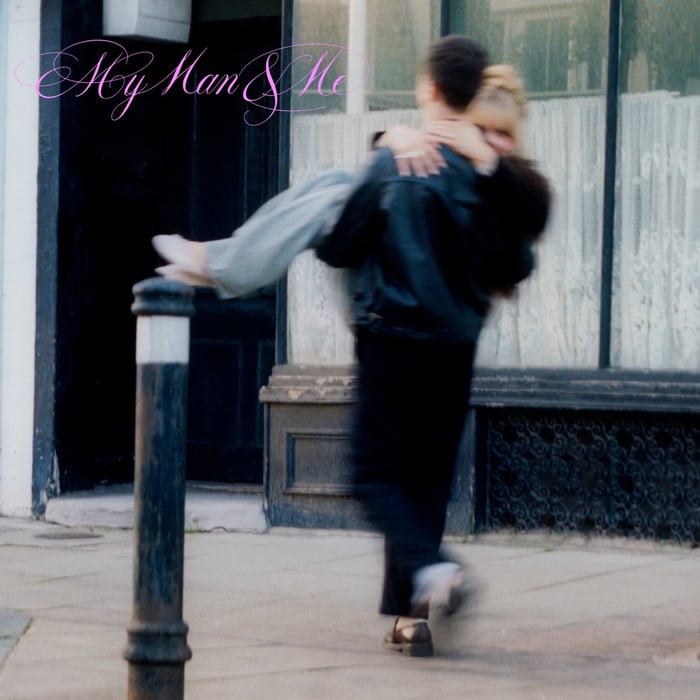
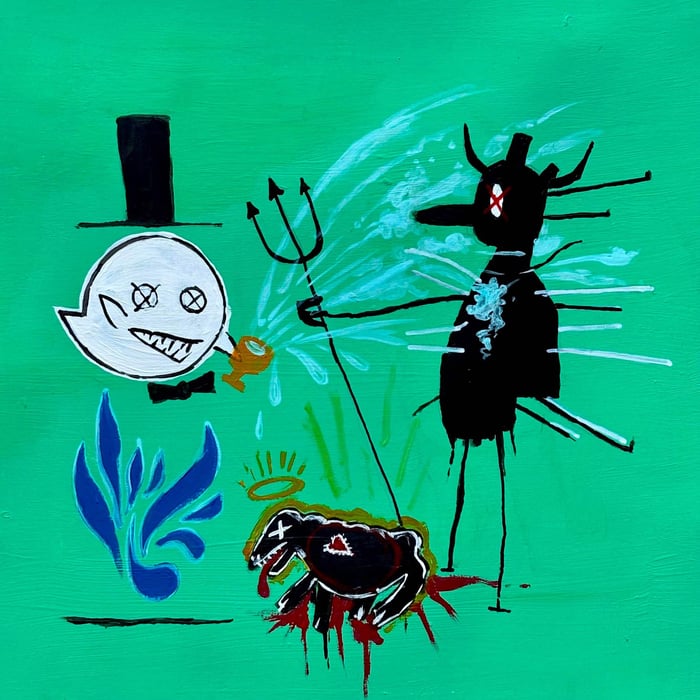
If the cover art stuck with you while you were reading, you can always grab a favorite album cover poster for your wall at our store: architeg-prints.com. It fits the theme—turning music you live with into something you actually live around.
 | DISCOUNTGET 30% OFF*Use code on your next order:
|
* This post may contain affiliate links, meaning we earn a commission if you make a purchase through these links, at no additional cost to you.