Blood of the Lamb Review: Mickey Diamond Makes Faith Sound Like a Fight


 See more Architeg Prints stories on Google.
Blood of the Lamb Review: Mickey Diamond Makes Faith Sound Like a Fight
Blood of the Lamb turns street scripture into an argument with God, money, and the mirror—and it’s way less comforting than it sounds.
A record that doesn’t “preach”—it interrogates
Three albums in a little over a year with the same producer should’ve snapped this partnership in half. Instead, Blood of the Lamb lands like the last round of a long sparring match: same corner, same stance, but now somebody’s finally talking reckless.
Big Ghost keeps the production locked in one lane—soul and gospel textures, hard edges, no detours into sweetness—and Mickey Diamond stays similarly committed: one raw voice, no crooning, no “let me try a hook that sings.” At first, I thought that lack of melody might turn the whole thing into background grit. On second listen, I realized that’s the point. This album doesn’t want to soothe you. It wants to keep you awake.
And it does it by using scripture like slang—not to sound holy, but to sound haunted.
Big Ghost’s “one-lane” production is a decision, not a limitation
Let’s be honest: Big Ghost makes this thing feel intentionally boxed-in. Same palette—gospel dust, soul fragments, that sepia-toned crackle—track after track. Some listeners are going to call that repetitive. I’m not totally sure I disagree.
But it also works like a pressure chamber. When the beats refuse to lighten up, Mickey’s lines have nowhere to hide. There’s no pop relief, no melodic disguise. The album forces the words to do the heavy lifting, and Mickey responds by turning every “religious” reference into something uglier: money, loyalty, paranoia, grief.
The wild part is how often he questions himself mid-flex. Most rappers use biblical language to sound chosen. Mickey uses it to ask whether being chosen even means anything if the world is rigged.
“Communion” is where the album stops performing certainty
This is the moment the record tells you what it’s really doing. “Communion” doesn’t feel like a song built to make a point; it feels like a live wire that keeps sparking because it can’t find ground.
Mickey throws out a commandment—don’t take another man’s life—then immediately drags in the missing clause everybody pretends not to know: what if he had it coming? He’s not roleplaying a villain here. He’s testing morality the way you test a sore tooth: by pushing it and wincing.
He even questions whether empty promises count as salvation—whether saying the words without meaning them can pass for repentance. That’s the first big tell: this album doesn’t trust language, even its own.
Then comes the line that changes the temperature: the confusion about how Jesus gets painted, and what that implies about who’s “chosen.” It doesn’t land like a clever bar. It lands like someone realizing, out loud, that they were handed a faith and told not to inspect the stitching.
A reasonable listener could argue he’s mixing theology with politics and calling it depth. I heard something else: a person trying to keep belief while the evidence keeps heckling him.
“Lamb’s Blood” turns from God to the people cashing the checks
The argument gets sharper on “Lamb’s Blood,” and the target shifts. It’s less about the Almighty and more about the earthly middlemen who claim the receipt.
Mickey opens by admitting he’s not one of those people who knows scripture front to back. That admission matters. It’s him refusing the expert role. He’s not preaching; he’s cross-examining.
He throws out questions Sunday School never wants to answer cleanly:
- who creates hell if God creates heaven?
- why give free will if sin is basically the wallpaper?
- why does suffering get written into the contract at all?
- and why does the story include centuries of slavery?
Then he brings it down to something you can point at: the pastor’s Benz, the pastor’s big house, the pastor staying conveniently un-broke. It’s almost funny in how plain it is—like Mickey’s saying, if this is God’s economy, why does the salesman always drive nicer than the customers?
You could call it cynical. I’d call it the album finally naming what a lot of “faith talk” avoids: the cash register sound behind the choir.
“Cold Sweats” keeps the spiritual dread tied to street math
Just when the record risks floating off into pure religious debate, “Cold Sweats” yanks it back into the panic that caused the questions in the first place.
It opens on a man waking up cold, sweating, screaming—devil on his back. That’s not metaphor in a cute way. It’s the body reacting like it knows something the mind can’t solve.
Then it cuts to a shooting—wrong man on the wire. That’s the album’s real spiritual horror: not demons, but consequences. The story keeps stacking:
- witnesses take ten grand and still testify
- a buddy doing life
- a hook that shrugs and tells the truth anyway: karma catches up
This is one of those tracks where a listener could argue the message is too neat—karma as a clean ending to messy violence. But I don’t think the hook is meant as comfort. It sounds like a warning Mickey doesn’t even enjoy delivering.
“Break Bread” uses a family phrase like it’s a trapdoor
The next pivot is slick. “Break Bread” takes something warm—a communal, familial idea—and turns it into a survival memo.
“Keep the wolves fed” isn’t generosity here. It’s prevention. Hunger leads to bloodshed. The hook feels like a proverb that got dragged through concrete.
Then the record drops into a prison narrative that doesn’t play for drama; it plays for erosion. A kid goes in young, comes out old. The visits stop. The girl disappears. Time doesn’t just pass—it deletes.
The detail that sticks is the recalled advice from his mother on the way in. That’s the song’s real gut punch: the album treats family as both sanctuary and prophecy, and it’s not clear which one hurts more.
And then Mickey says the simplest thing on the whole record: do something different with your life. No choir behind it. No flourish. Just a flat statement that sounds like it took effort to say without protecting it with style.
If there’s a mild criticism I can’t shake, it’s that the album sometimes hides behind its own toughness—like it’s allergic to being direct until it absolutely has to be.
“Erick’s Sermon” is the moment the armor actually comes off
By the back stretch, Mickey stops sounding like he’s debating the universe and starts sounding like he’s talking to one person.
“Erick’s Sermon” is aimed straight at his father. It’s built around a recorded phone call—Mickey telling his half-asleep dad he wrote a song about him, naming it in a way that nods to the EPMD rapper/producer. It’s such a specific, human move that it changes the album’s whole posture. Suddenly, this isn’t “a concept.” It’s lineage.
In the verses, Mickey spells out the logic of his defenses—the idea that his father walked crooked so he could fly straight. He vows not to let him down. Then he names him directly: Erick Robinson. No mystery, no mask.
You could argue it’s sentimental compared to the album’s earlier sharpness. I heard it as the record admitting what it’s been circling: all that God-talk and judgment-talk is also family-talk. The sermon isn’t for the crowd. It’s for the bloodline.
“Holy Water” is the hardest scene because it refuses to dress up
Earlier, “Holy Water” contains the moment that’s hardest to shrug off, because it’s delivered without theatrics.
It starts like a prayer of thanks. Then Mickey recounts something terrifyingly specific: his infant son finding his gun under the sofa and firing it. The shot grazes Mickey’s head, bounces off the wall, and somehow nobody dies.
He doesn’t wrap it in scripture. He doesn’t soften it with moral packaging. He just tells it like a father who’s still trying to understand how close the margin was between “normal day” and “I killed my own child.”
If you want a clean “theme,” that’s it: faith isn’t a lifestyle here—it’s what you reach for after the worst almost happens.
So what’s Blood of the Lamb actually doing?
This album isn’t trying to convert you. It’s trying to show you what it sounds like when belief is under interrogation by real life.
It keeps returning to the same symbols—communion, stigmata, holy water, lamb’s blood—and each time they mean something else: money, loyalty, paranoia, grief. The religious language becomes a second vocabulary for street reality, and the street reality keeps interrupting any attempt at purity.
And yeah, sometimes I wanted a left turn musically—just one track that breaks the palette, one moment of air. But the refusal to pivot is part of the point. Big Ghost builds the church. Mickey argues inside it.
Favorite tracks (the ones that show the album’s real nerve)
- “Communion” — the moral questioning is the whole engine
- “Lamb’s Blood” — the shot at religious profiteering lands because it’s concrete
- “Erick’s Sermon” — the personal specificity makes the whole record feel less like a pose
Conclusion
Blood of the Lamb is what happens when a rapper stops using faith as decoration and starts using it as a courtroom. Big Ghost keeps the walls close, Mickey keeps asking questions he can’t comfortably answer, and the album wins by refusing comfort.
Our verdict: This will hit people who like their rap grim, spiritual, and argumentative—listeners who’d rather hear doubt than “confidence.” If you need hooks, bright tempos, or anything resembling a singalong, you’ll feel like you showed up to a sermon where the preacher keeps interrupting himself on purpose.
FAQ
- Is Blood of the Lamb more spiritual or more street?
It’s street first, but it uses religion as the language to explain why the street feels like a constant moral test. - Does the album actually criticize organized religion?
Yes—especially when money enters the picture—but it doesn’t sound like an outsider mocking faith. It sounds like someone mad because it mattered. - What’s the most intense moment on the record?
“Holy Water,” when Mickey recounts his infant son firing a gun he found under the sofa. It’s delivered with almost no dramatic cushioning. - Does Big Ghost switch up the production style much?
Not really. The soul-and-gospel lane stays consistent, and whether that feels focused or repetitive depends on your tolerance for one-minded atmosphere. - Where should I start if I’m new to Mickey Diamond?
Start with “Communion” if you want the questioning, “Lamb’s Blood” if you want the critique, and “Erick’s Sermon” if you want the personal core.
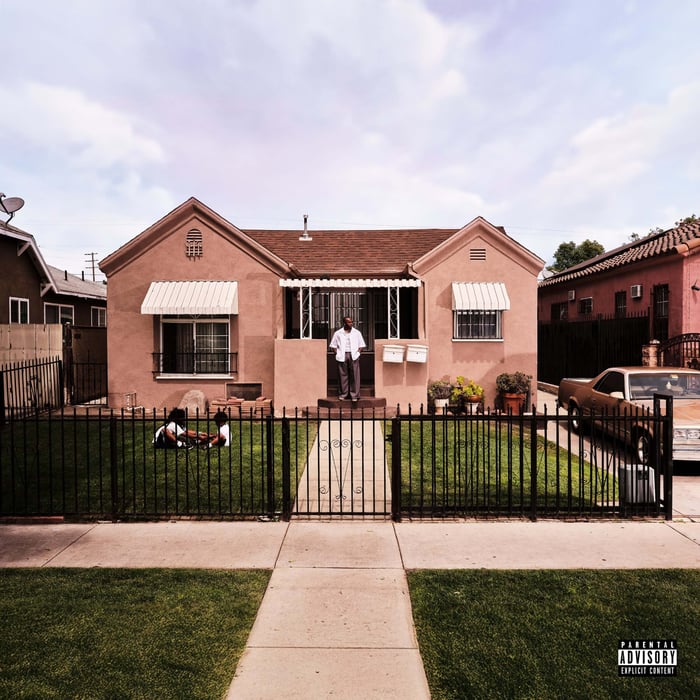
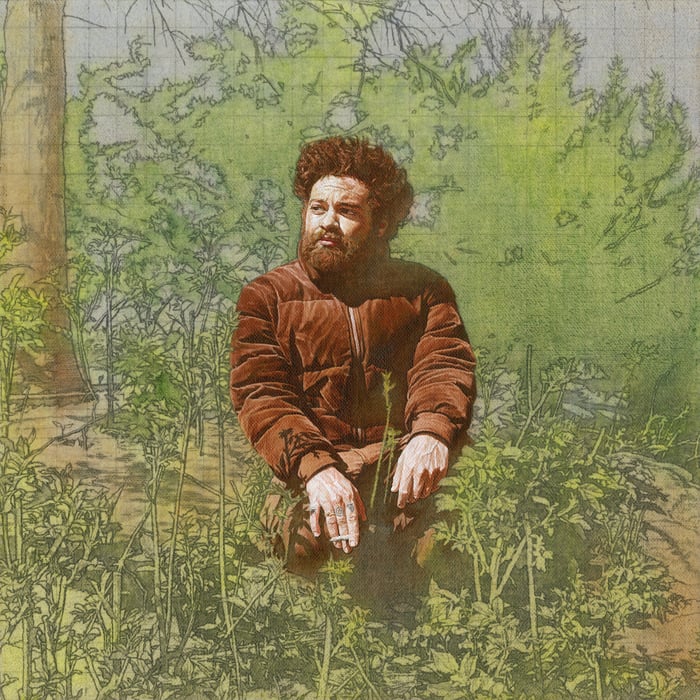
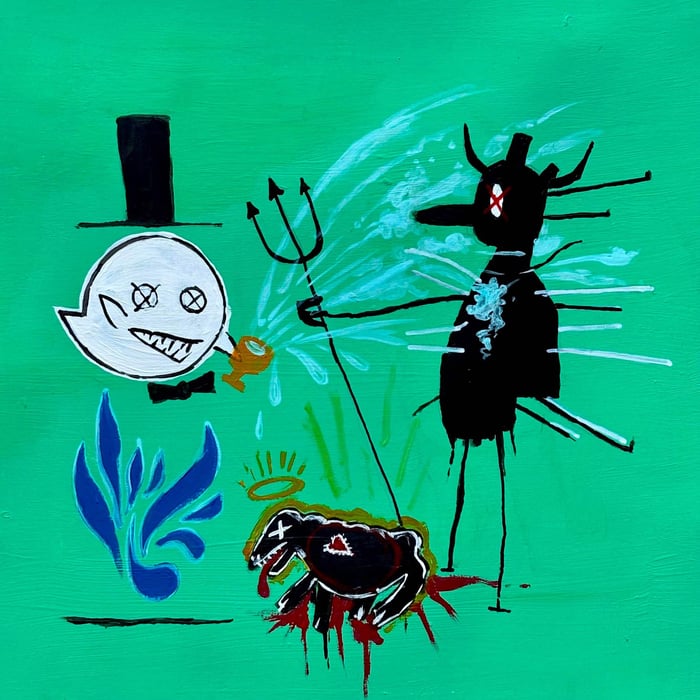
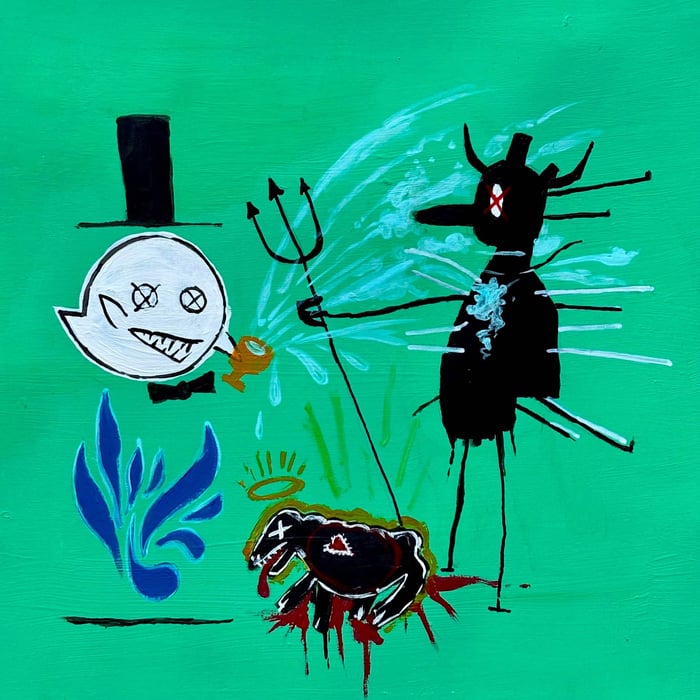
If this album’s imagery stuck with you, it’s the kind of cover that actually looks good on a wall—more reminder than decoration. If you want to grab a favorite album-cover poster, you can browse prints at our store: https://www.architeg-prints.com/
 | DISCOUNTGET 30% OFF*Use code on your next order:
|
* This post may contain affiliate links, meaning we earn a commission if you make a purchase through these links, at no additional cost to you.