Boldy James & Rome Streetz Manhunt EP: A Terse, Detailed Listen Report

 See more Architeg Prints stories on Google.
EP Review: Manhunt by Boldy James & Rome Streetz
An in-depth exploration of the Manhunt EP by Boldy James and Rome Streetz, focusing on its rapid release context, lyrical themes, and detailed drug-trade memoir style.
Courtesy of 1301 LLC / Mass Appeal.
Release context and basic setup
Manhunt EP arrives as a short, functional release from Boldy James and Rome Streetz, two rappers who operate at a pace that suggests calendars are mostly a suggestion. The project behaves like a quick check-in that still insists on being taken literally.
A crowded release schedule, treated as routine
The listening experience makes more sense when placed next to the amount of material surrounding it. Boldy James has already moved through something like eight or nine releases in 2025 alone, treating collaboration as a default setting rather than an event. The run includes Murder During Drug Traffic with RichGains in January, Permanent Ink that same month, and Token of Appreciation with Chuck Strangers in February. It keeps going with Conversational Pieces with Real Bad Man, Alphabet Highway with V Don, Hommage with Antt Beatz, plus a cluster of additional titles—Late to My Own Funeral, Criminally Attached, and Salvation for the Wicked with Nicholas Craven (with Ransom also involved on the latter)—landing just a week before Manhunt EP shows up.
Rome Streetz is not operating as the “special guest” in this situation. He finished Trainspotting with Conductor Williams through Mass Appeal in May, and Hatton Garden Holdup with Daringer arrived the year before. Between the two of them, the output doesn’t so much compete for attention as it simply occupies space. This is the practical question hovering over Manhunt EP: when work arrives at this speed, does it do anything besides increase the inventory count?
The opening skit sets a tone of procedure
The EP opens with a skit sampling The Hateful Eight before either rapper speaks. It’s a small move, but it communicates the project’s overall attitude: the scene is already in progress, and the listener is not being asked whether they’re ready. The skit functions like a door opening onto a conversation that has been happening for years, with the assumption that details will be understood or, at minimum, accepted.
That framing matters because Manhunt EP is not interested in novelty. It proceeds as if the job is to document conditions and keep going.
The lyrics stick to the drug-trade memoir without pretending otherwise
The EP clears the “inventory” concern largely because both artists bother to fill the space with actual statements. Across Manhunt EP, the writing holds to drug-trade memoir from start to finish, and neither Boldy nor Rome dresses it up as something else. The verses are built from transactions, risks, and the kind of day-to-day accounting that turns personal history into a running total.
On “Hot Plate,” Boldy moves through lines about running off on plugs and stacking dirt on his palms with the composure of someone reading from a receipt. It isn’t performative panic; it’s the sound of routine being recited cleanly. Rome enters the same track and keeps it equally direct, laying out kilos, taxing, and a career arc summarized in plain terms: moving from hand-to-hand work into selling bricks. The contrast is not in subject matter but in posture. Boldy sounds like someone who has repeated this process enough times to stop marking milestones. Rome sounds like someone who assumes proof is still required and doesn’t mind providing it.
“Like Biggie Did” moves beyond the ledger, without turning confessional
“Like Biggie Did” is where the EP starts behaving like more than documentation, even though it still refuses to become sentimental. Rome opens by describing a sleep-deprived grind through the dark internet, then drops an image of moral tension packaged as a statement of appetite—“the sinner in Christians”—before landing on the practical outcome: thousand-dollar dinners. It’s a method of speaking that treats contradiction as normal and sustenance as the goal.
Boldy follows with a status update that’s less celebration than maintenance. He describes being richer than ever, then delivers an unusually casual pop-culture metaphor—“keep at least 30 Pokémon in your Poké Ball”—using it as a simple way to say the weapons are numerous and close at hand. He notes life feeling short, his wick feeling shorter, and pairs God with a lawyer like they’re both necessary contacts saved in the same phone.
Nothing here reads as a confession. The verses don’t pause for cleansing. They operate as survival tallies: what was done, what is carried, what is kept nearby, what gets invoked when things go sideways. Faith is present, but it behaves less like comfort than like a tool that may or may not function every time.
Boldy’s solo “Cheat the Grind” treats craft as a dense everyday activity
Boldy gets his lone solo on “Cheat the Grind,” and he uses it to pack the bars with wordplay that never asks to be applauded. The lines arrive stacked and sliding, with images that bounce between the familiar and the oddly specific—red-dotting “like a Hindu,” a line about teaching someone “how to pimp a butterfly, not let a butterfly pimp you,” and an ongoing sense of a trigger finger that stays restless even when the delivery stays calm.
A Kendrick reference folds in without reverence and without eye-rolling. It’s simply placed into the verse and moved past, like any other tool on the workbench. The overall effect is that the writing becomes the moment of impact, because the vocal tone refuses to dramatize itself. Boldy’s approach here is practiced to the point of near-indifference, which becomes both the advantage and the constraint: when the voice rarely flinches, the listener waits for something to puncture the surface.
On “Cheat the Grind,” that puncture is the density itself. The craft does the job of emphasis. The performance declines to raise its hand.
“Tricky” changes the emotional temperature by adding weight instead of removing it
“Tricky” runs at a noticeably different temperature. Rome recounts collecting what he’s owed and describes the movement from “the dirt” to something global, treating the transition as both progress and continuation. He frames music-making in practical terms—putting soul on Pro Tools—then drops the image of speeding in an AMG because of the wave he managed to catch. It’s still a report, but it carries more heat.
Where Boldy tends to subtract emotion, Rome stacks it. The difference isn’t melodrama; it’s pressure. Rome’s delivery holds onto urgency a little longer, as if the story still needs to be argued in real time rather than filed away.
“Only One” uses structure to keep the verses in motion
“Only One” brings both rappers into a more obviously coordinated exchange. The production leans on a soul loop, and the hook works in call-and-response fashion, punctuating the end of bars so the track keeps moving forward without drifting. It’s one of the EP’s clearer examples of pacing doing part of the writing.
Boldy uses his verse to tick off trafficking specifics—importing, exporting, measuring by eyeball—phrased with the same matter-of-fact calm that shows up elsewhere. Rome matches the tone with details that land like warnings filed as standard operating procedure: orange jumpsuits as court clothes, and the reminder to keep your mouth closed if you get caught. The track doesn’t widen into reflection; it tightens into instruction, delivered without a change in facial expression.
The title track sharpens the writing by making the references domestic
The title track, “Man Hunt,” lands as the EP’s most sharply defined moment, largely because the details get stranger in a quieter way. Boldy stacks an unexpected pair of references—Martha Stewart and Martha Quest—back-to-back, then describes shadow boxing with his own silhouette. He adds a forklift line—working one because he “played with so many bricks”—and the metaphor sits there without decoration.
The domesticity of the references doesn’t soften anything; it makes the violence underneath feel more granular, like it’s embedded in normal life rather than separate from it. The track doesn’t ask the listener to gasp at the contrast. It simply places household names next to street realities and lets them share the same sentence, as if that’s how memory works when everything is stored in the same mental room.
Rome closes the EP with a detail that refuses to behave like a clean ending: he describes a friend dying from the same product he was selling. The final line—“most niggas ain’t got the drive”—hovers between elegy and recruitment pitch, and he doesn’t pick one. He delivers it while the chipmunk-soul, bouncy trap loop keeps spinning underneath, then the EP cuts out. No formal goodbye. Just a stoppage.
Favorite tracks
- “Like Biggie Did”
- “Only One”
- “Man Hunt”
Conclusion
Manhunt EP behaves like a compact transaction between two high-output rappers who are willing to say what happened, what it cost, and what remains in circulation. It opens with a film sample, moves through drug-trade memoir with minimal decoration, and ends with a line that doesn’t resolve its own intent, which is a tidy way to finish a project that avoids tidy interpretations.
Our verdict: concise, detail-heavy, and committed to sounding like a normal workday conducted at abnormal volume.
FAQ
- How long is Manhunt EP?
It plays like a short EP: a brief opening skit, then a tight run of songs that ends before the material overstays its format. - Do Boldy James and Rome Streetz split the mic evenly?
Mostly. Boldy gets one solo (“Cheat the Grind”), while other tracks pair them in shared space and similar subject matter. - What’s the core subject across the EP?
The writing stays in drug-trade memoir territory throughout, delivered as practical recollection rather than moral statement. - Which track feels most distinct in its details?
The title track “Man Hunt” stands out for its oddly domestic references and the way they sit next to street-level violence without explanation. - Are there any lighter moments or obvious detours?
Not really. The closest thing to relief is structural—hooks and soul loops that keep the pace steady—rather than a change in topic.
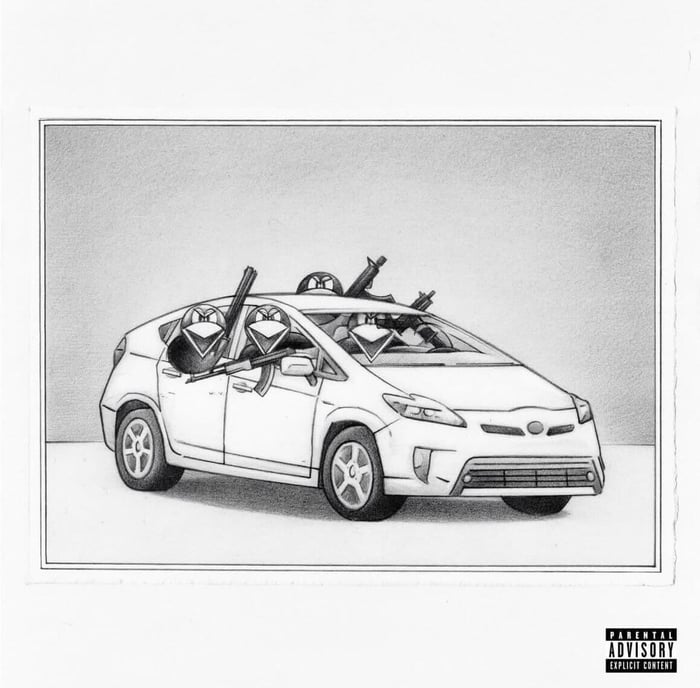
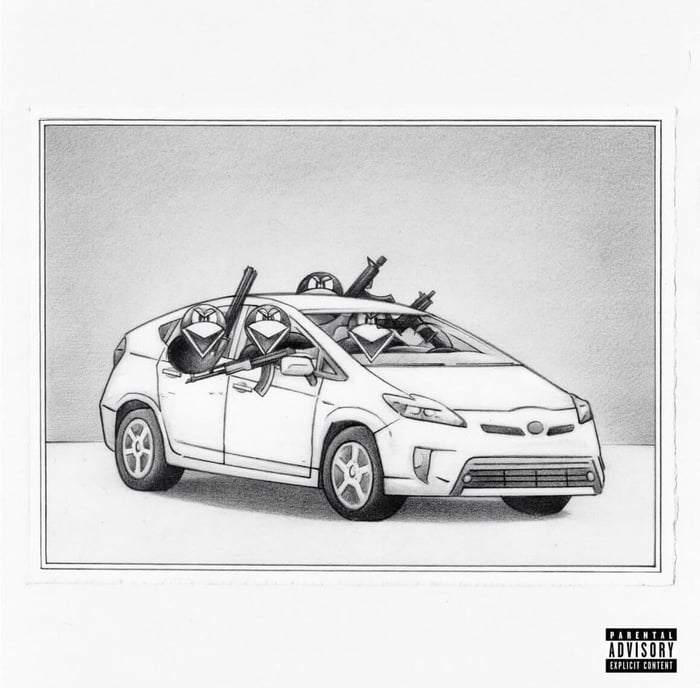
If you keep thinking about the cover after the music stops, a poster print is a tidy way to give that feeling a place to live. You can browse album-cover-style prints at our store: https://www.architeg-prints.com
 | DISCOUNTGET 30% OFF*Use code on your next order:
|
* This post may contain affiliate links, meaning we earn a commission if you make a purchase through these links, at no additional cost to you.