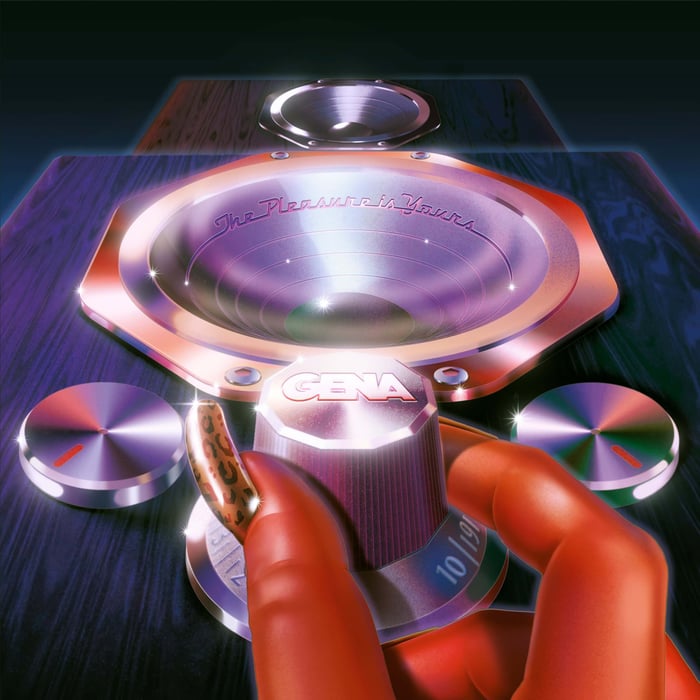
GENA’s The Pleasure Is Yours Album Review: Liv.e and Karriem Riggins in Sync


 See more Architeg Prints stories on Google.
GENA’s The Pleasure Is Yours Album Review: Liv.e and Karriem Riggins in Sync
Exploring boundaries, desire, and prayer through loose drums and sharp vocals, GENA’s collaborative album The Pleasure Is Yours captures the tension between niceness and kindness with precision and style.
Album context
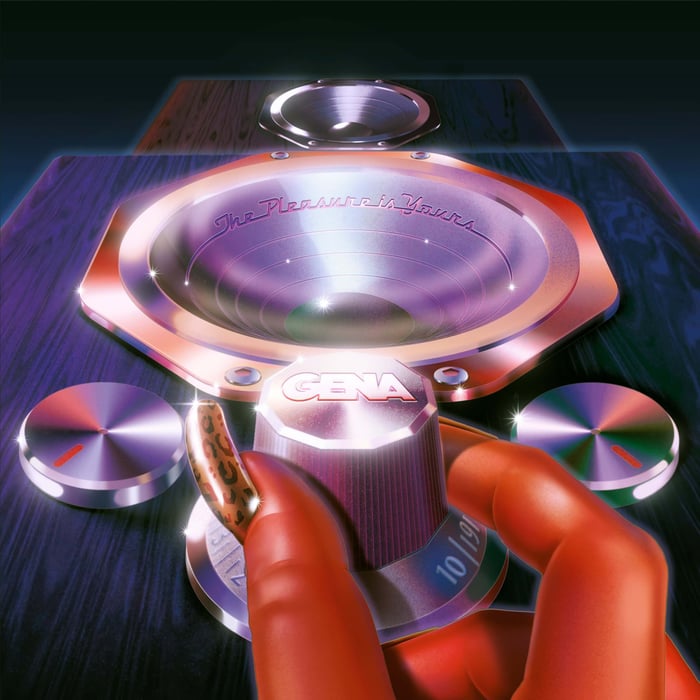
The Pleasure Is Yours is a collaborative album by GENA, the pairing of Dallas singer Liv.e and Detroit drummer-producer Karriem Riggins. The record moves through sixteen tracks with an emphasis on voice, percussion, and the practical consequences of saying what you mean.
Niceness vs. kindness becomes a working subject
The album opens with a distinction that keeps resurfacing: the difference between being pleasant and being precise. “Nice” shows up as social compliance—smiling through discomfort, agreeing to keep the air smooth, absorbing small violations because objecting feels impolite. “Kind,” by comparison, behaves like a harder discipline. It implies direct speech, accurate intention, and a willingness to let a room tighten if that’s what clarity costs.
Liv.e approaches that tension as something already lived-in rather than newly learned. On “Theybetterbegladihavetherapy,” the point lands as a flat statement delivered with minimal decoration, as if over-explaining would only encourage bargaining:
“I thought I was taught kindness / But it turns out I was taught niceness / Which really means you are stupid.” — Liv.e
The line doesn’t arrive as a twist. It arrives as a correction, filed and submitted.
Karriem Riggins’ drums behave like movable furniture
Riggins’ percussion doesn’t present itself as a hard-edged downbeat authority. It’s placed with a casual exactness—sometimes slightly behind the vocal, sometimes hovering as if the groove is being tested for structural integrity. The effect is less “hit” than “lean.” Beats sit under the songs like supports that can be repositioned mid-conversation.
That looseness gives Liv.e room to move without announcing what she’s doing. Across the record she shifts from mock-threat to prayer to bedroom instruction with the same matter-of-fact delivery, changing tone the way people adjust their voice depending on who’s present and what they need to get done. The album’s central dynamic is that gap between what’s said and what’s tolerated—between keeping things comfortable and keeping them accurate.
Conviction stays consistent even when the outfit changes
Liv.e’s phrasing tends to avoid showy vocal athleticism. She often delivers lines straight, repeating them without turning them into a spectacle. The steadiness reads like a choice: emphasis comes from placement and timing, not from embellishment.
That same spine reappears in different social settings. “Left the Club Like ‘Really Nigga!’” carries a version of self-worth at a higher temperature—jealous, blunt, moving quickly, scanning for trouble. The posture changes, but the underlying claim doesn’t: someone else can occupy space nearby, but they don’t get to replace the original framework. The track functions like a boundary drawn in public, where politeness is optional and speed is part of the message.
“Unspokern” turns desire into a practical negotiation
“Unspokern” is where the writing becomes the most vivid in its mechanics. The song trades positions and instructions, then flips them, as if the speaker is testing how much control is possible while still wanting closeness. Commands appear, reverse, and return changed. The language keeps moving toward a point where ownership stops being easy to separate: “So close can’t tell which part is mine/Is it yours, is it mine?”
The call-and-response structure shifts who seems to be leading often enough that following the leader stops being the goal. The track doesn’t resolve the confusion; it documents it. Compared to the rest of the album, it feels unusually open—less guarded, less interested in winning the exchange, more interested in admitting that the exchange is happening.
Control arrives plainly on “Lead It Up”
After that loosened frame, “Lead It Up” presents a more fixed posture. Liv.e is steering and sounds unbothered by whether anyone approves of it. The line “Kiss my face, I carry the crown” lands like a statement of current status rather than aspiration. There’s no audible request for permission and no time spent softening the delivery.
From here, the album continues to treat self-definition as an operational necessity. The songs don’t lean on sweetness. They lean on terms.
“Douwannabwithastar” and the limits of proximity
“Douwannabwithastar” sharpens the album’s self-image through refusal. Liv.e rejects the reduced forms other people might prefer—being someone’s slogan, accessory, or endless emotional labor. The lines about not being a “bumper sticker” and not being a “super woman” function like a set of restrictions written for repeat offenders.
Money appears as a hypothetical offer—“endless figures”—and is dismissed as insufficient compensation for containment. The image of a cage not fitting “all these numbers” turns the negotiation into something physical: accumulation cannot replace freedom, and scale does not equal suitability. The track keeps the conversation plain: closeness is allowed, but only under conditions that do not shrink the person being approached.
The album’s main question: boundaries without exile
As the record proceeds, a central question keeps returning in different outfits: what does a boundary look like when you still want someone near you? Liv.e works through the cost of stepping away from agreeableness and into clarity. The process isn’t presented as inspirational or clean. It’s shown as repetitive labor—confronting, negotiating, backing off, leaning in, and repeating when necessary.
Riggins’ production supports that push-pull without forcing the songs into a single emotional temperature. His percussion rarely “punches” a downbeat when he can let the pattern breathe. When the lyrics turn confrontational, the drums fill out and take up more room, like an office meeting that suddenly has minutes being recorded. When the songs turn gentler, the tempo doesn’t so much slow down as expand—measures feel slightly stretched, giving Liv.e space to hold a note longer or drop into a whisper without the track rushing to catch up.
What changes most across the album is her phrasing. She jokes, warns, flirts, and petitions without sanding down the transitions. The friction stays in place. The record refuses to settle into one mood for long enough to become background.
“HOWWEFLOW” adds mutual recognition—and real stakes
On “HOWWEFLOW,” Riggins adds ad-libs, and the dynamic shifts. The track starts to feel less like a solo dispatch and more like an exchange with another person present in the room. The effect is subtle but consequential: the song’s weight changes because the recognition is shared rather than merely described.
The lines about people hoping she won’t make it, and others loudly insisting the world needs to know, place the song in a familiar social ecosystem: gatekeeping, narration, permission structures. The track treats visibility as something distributed unevenly and often granted late, if at all. It doesn’t dramatize the unfairness. It simply states the workplace policy.
“Doobie Doo Wew” makes ambition feel like indoor weather
“Doobie Doo Wew” shifts from public recognition into something more private, where the future looks close enough to irritate. The song frames “almost there” as its own pressure system—gold within reach, but not yet in hand, turning anticipation into a kind of atmosphere.
When Liv.e says, “My mind is a window I look out that hoe/Take me up so high I can’t see the flo,” the sensation is physical rather than poetic. Ambition becomes something pressing against the inside of the skull—elevation requested as a practical tool for not having to look down. The line reads like a method for managing overload: change altitude, reduce visual input, continue.
“omo iya ati baba” closes the room for prayer
Then “omo iya ati baba” arrives and removes the remaining conversational clutter. The track functions as invocation—Yoruba petitions for protection, comfort, and healing—spoken plainly, without an attached storyline of improvement. No resolution is promised, and no arc is performed. The prayer stands on its own, as if the album briefly stops negotiating with people and speaks instead to whatever is listening when people are done being reasonable.
It’s one of the record’s clearest shifts in posture: from interpersonal terms to spiritual request, from boundary-setting to asking for coverage.
“readymade” sets terms without performing them
With “readymade,” the album turns inward again, and the focus tightens on specificity. Liv.e asks for something tailored—built for her, not pulled from a generic rack and presented as romance by default. The refrain makes the requirements explicit: if it isn’t special, if it isn’t fitted, it isn’t needed.
What’s notable is how the phrasing holds two actions at once. The demand is stated, but the self-check is audible too—as if the speaker is negotiating with herself in real time to confirm the boundary will hold under pressure. It’s not indecision so much as verification: the policy is being tested before it’s enforced.
“Circlesz” exhales, but keeps moving
The debut single “Circlesz” returns to the desire thread from a calmer angle. Liv.e lists small observations about a relationship, delivered in a rounder, almost sing-song voice that contrasts with her sharper edges elsewhere. The track behaves like an exhale—not a conclusion, more like a pause where the shoulders drop for a moment.
Riggins supplies a merry-go-round groove: circular, warm, and gently insistent. The drums skip forward without sounding like they have a specific destination. The song doesn’t chase escalation. It rotates through its view and lets that be enough for the duration.
Notes preserved from the closing lines
The listening notes attached to this album’s write-up conclude with a brief shorthand assessment—“Great (★★★★☆)”—followed by a list of highlighted cuts. Stripped of ceremony, it reads like an internal memo: someone marked the project as effective, then underlined a few tracks for quick return.
The listed favorites are:
- “Theybetterbegladihavetherapy”
- “Left the Club Like ‘Really Nigga!’”
- “Unspoken” (appearing earlier as “Unspokern” in the track discussion)
No further justification is provided, which is a tidy way to imply that the songs already did their job.
The album ends up documenting a workable method for closeness with conditions: speak plainly, keep the groove flexible, and accept that clarity has a recurring fee.
Our verdict: controlled, mobile, and consistent about stating terms. It functions like a conversation that keeps its receipts without raising its voice.
FAQ
- What is the core idea running through The Pleasure Is Yours?
The record repeatedly returns to the difference between being socially “nice” and being meaningfully clear, especially when boundaries are required. - How do Karriem Riggins’ drums shape the album’s feel?
The percussion often sits slightly behind or around the beat, letting patterns breathe and giving Liv.e space to shift tone without formal transitions. - Which tracks focus most directly on boundaries and self-definition?
“Theybetterbegladihavetherapy,” “Douwannabwithastar,” and “readymade” state limits and requirements in plain language. - Where does the album get most structurally unusual?
“Unspokern” plays with swapped roles and mirrored commands until keeping score stops being practical. - Is there a calmer moment on the record?
“Circlesz” carries a more rounded vocal delivery over a circular groove that feels like a pause rather than a peak.
If you want a physical reminder of this album’s very specific mood board, you can shop a favorite album cover poster at our store: https://www.architeg-prints.com
 | DISCOUNTGET 30% OFF*Use code on your next order:
|
* This post may contain affiliate links, meaning we earn a commission if you make a purchase through these links, at no additional cost to you.