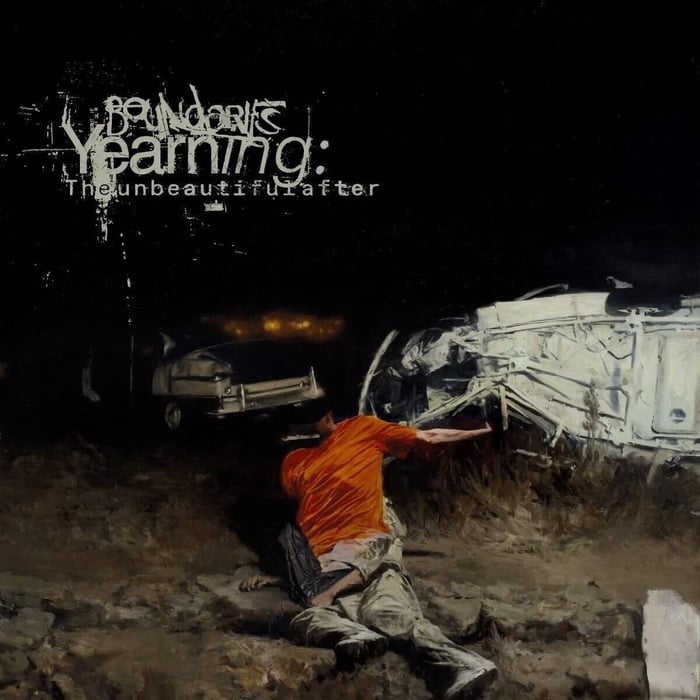
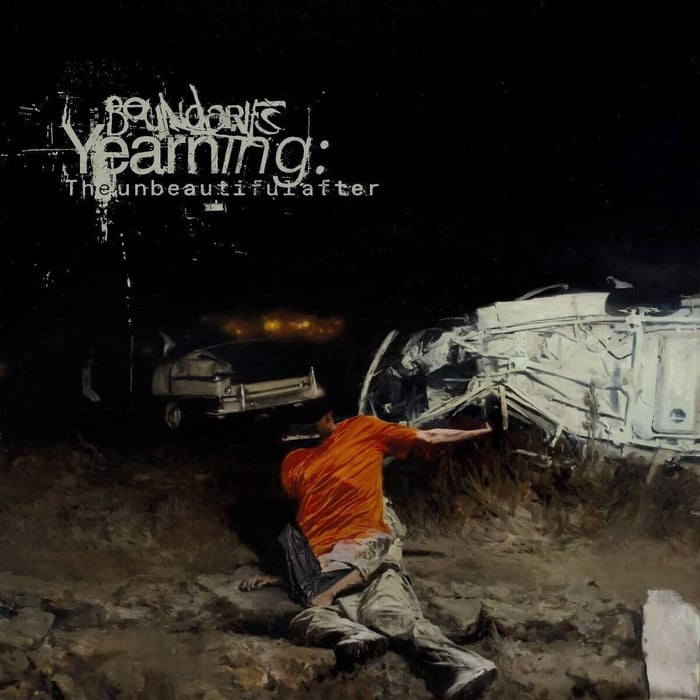
Boundaries “Yearning: the unbeautiful after” Album Review — Grief With Teeth


 See more Architeg Prints stories on Google.
Boundaries “Yearning: the unbeautiful after” Album Review — Grief With Teeth
Boundaries’ Yearning Unbeautiful turns metalcore grief into blunt-force therapy—then buries some of its best riffs in a cramped mix.
A record that doesn’t want your sympathy
This album doesn’t show up asking to be understood. It kicks the door in, grabs you by the collar, and basically says: you’re listening to this pain now.
Yearning Unbeautiful is Boundaries doubling down on the nastier side of modern metalcore—the lane that cares more about abrasion than accessibility, more about impact than polish. And yeah, it’s “heavy,” but the bigger point is why it’s heavy: the band uses force like a coping mechanism, not a genre checkbox.
Where Boundaries plant their flag (and who they clearly aren’t trying to be)
To me, Boundaries have spent the last few records carving a very specific shape out of the 2000s metalcore revival: one that’s all dissonant guitar angles, violent vocal pacing, and breakdowns stacked like bricks. They’ve always leaned closer to that confrontational school of thought—where riffs feel like bad news and the songs don’t “open up,” they corner you.
Even when clean vocals show up, they don’t come off like a cynical play for radio oxygen. They feel more like an old screamo ghost drifting through the wreckage—human for a second, then gone. On this fourth album, that philosophy stays intact: the songs are compact, relentless, and weighed down by grief like it’s a physical object.
I kept waiting for the band to sand the edges down—because that’s what a lot of metalcore bands do once they realize melody sells—but it never really happens here. If anything, the record’s mission is to make the listener sit inside ugly feelings without decorating them.
The grief isn’t aesthetic; it’s the engine
The emotional center of the album comes from real loss: a car accident that killed several friends connected to the band, on top of other personal tragedies. And you can hear the difference between “writing about grief” and bleeding it.
Vocalist Matt McDougal doesn’t perform these songs like he’s playing a role. He sounds like he’s trying to out-scream a memory that won’t shut up. His delivery stays dynamic—spitting, shrieking, growling—like he’s cycling through denial, rage, and exhaustion in real time. The lyrics hit from two directions:
- the poetic, image-driven pain:
“I will take this torment and circle the earth/Leaving signs of you like a leaking urn”
- the blunt refusal to accept reality:
“A son, a brother, a father, a friend/but never fucking dead”
That second line is the kind of thing that would sound corny in lesser hands. Here it lands like a slammed fist—because the performance sells it as a fact he can’t live with, not a slogan.
Tim Sullivan, the drummer, adds clean vocals that function like brief, uneasy air pockets. Not “relief,” exactly—more like the moment after you’ve yelled yourself hoarse and you’re forced to breathe. The cleans don’t soften the record so much as underline how wrecked everything is underneath the aggression.
I’ll admit, I wasn’t totally sure at first if the album wanted recovery or just wanted to document damage. On second listen, it felt less like a “healing arc” and more like a refusal to pretend healing is tidy.
The instruments aren’t supporting the emotion—they’re amplifying it
The band writes like they’re trying to externalize a nervous system. The drums, especially, keep pushing the songs forward as if standing still would be dangerous.
On “The leper’s bell,” Sullivan drops squalling blast beats that basically clear a brutal open lane for McDougal to unload. It’s not “technical” in a show-off way—it’s functional violence. The drums make space by being a storm.
Then you get the curveballs: startling melodic riffs popping out on “Death will follow me” and “Nothing, gathered.” Those moments don’t feel like the band “going melodic.” They feel like the brain flashing back to something tender right in the middle of catastrophe. It’s tonic, sure—but it’s a bitter tonic.
And despite the constant breakdowns—because yeah, there are a lot—the band still writes distinct patterns into each pit-ready section. The guitarists Cory Emond and Cody Delvecchio don’t just recycle the same chug with a different tempo. The breakdowns have different shapes: different rhythmic stutters, different tension-release timing, different ways of letting the riff “snap.”
That’s the sneaky skill of the record: it’s relentless without becoming interchangeable.
The songs actually try new things (even when they’re being barbaric)
Here’s what surprised me: the album isn’t just “Boundaries doing Boundaries.” They clearly pushed to make songs, not just a playlist of punishment.
“Malconscience” as an opener has this frantic pulse that turns metalcore into something like a demented rave track—especially with that thudding kick pattern hammering under the guitar chugs. My first impression was basically, “Okay, this is going to be pure bludgeon-mode front to back.” But the longer I sat with it, the more I noticed how nimble the rhythm choices are. It’s not mindless. It’s manic on purpose.
“Crowned and crucified” scratches that old-school metalcore itch—riff-forward, nasty, direct—and it gets a well-placed vocal feature from Landon Tewers (The Plot In You). His emotional scream fits because it doesn’t sound like a guest cameo; it sounds like another person caught in the same fire.
Then there’s “Torn wide open,” which pulls in Sean Harmanis (screams) and Alex Reade (clean vocals) from Make Them Suffer. The first half is pure energy: Harmanis, McDougal, and bassist Nathan Calcagno trading off the line
“life is fucking killing me”like they’re passing a lit match between them. It’s blunt, almost stupidly blunt—and that’s why it works. It’s the kind of line you say when you’re past the point of eloquence.
The second half flips the lighting completely as Reade’s gentle cleans come in like a spectral lullaby—less “pretty chorus,” more “warning you can’t un-hear.” That transition is one of the album’s smartest emotional tricks: it doesn’t soothe you, it haunts you.
And the closer/title track, “Yearning: the unbeautiful after,” goes big: grand chorus, thunderous breakdown, then a repeating final lyric as the album fades into silence:
“What would you have me do/There’s nothing left to give and everything to prove”
That ending doesn’t feel like closure. It feels like exhaustion winning.
One arguable take: four albums in, Boundaries don’t sound like they’re running out of ideas—they sound like they’re finally trusting themselves enough to make the songs weirder.
The one thing holding it back: the mix keeps stepping on the songs
Now for the part that lost me a little.
The biggest flaw here isn’t the songwriting or the performances—it’s the production choices. Earlier Boundaries releases had Randy LeBouef steering. This time they brought in Drew Fulk, which makes sense on paper if you want that modern, punishing clarity associated with top-tier heavy releases.
But the mix here feels too compressed, and it kneecaps the impact in ways that are hard to ignore once you notice them.
- McDougal’s vocals cut through clearly (no issue there).
- But a lot of the guitar riffs feel muffled, like they’re fighting for air.
- The bass presence gets suffocated, which is a real problem for a band that builds so much power through low-end violence.
- The drums sometimes ring out tinny and flat when they should hit like a wrecking ball.
There are moments that land—the absurd, over-the-top bass drops, the occasional echoing snare bomb that sounds like a door getting kicked off its hinges. But too often, the mix compresses the life out of what should be enormous moments.
It’s frustrating because the material is strong enough that a more open, less smothered mix would’ve let these songs feel truly unavoidable. As it stands, the album sometimes sounds like it’s playing inside a room that’s slightly too small for it.
That’s a mild criticism, sure—but it’s also the difference between “great” and “why am I squinting my ears right now?”
So what is this album actually doing?
Yearning Unbeautiful isn’t trying to be “the heaviest thing ever.” It’s trying to be honest in a genre that often confuses toughness for truth. The grief is blunt, sometimes poetic, sometimes ugly, and the band refuses to dress it up.
Even at its best, I kept wishing the mix would back off and let the riffs breathe—because these songs deserve to hit with full force. Still, the record pulls off something rare: it sounds like real loss translated into sound, not merch-table sadness.
The album is out now via Sumerian Records.
Conclusion
This is Boundaries making grief physical: blast beats as panic, breakdowns as anger, melody as the unwanted memory that keeps coming back. The band’s writing is sharp and varied enough to keep the violence from turning into wallpaper—yet the compressed production keeps stealing some of the impact they clearly worked to earn.
Our verdict: People who like their metalcore sincere, abrasive, and emotionally unguarded will actually love Yearning Unbeautiful—especially if they can tolerate a mix that occasionally sits on the guitars like a wet blanket. If you’re looking for glossy hooks, pristine separation, or “heavy but make it friendly,” you’re going to bounce off this record and call it a headache. You might be right. You also might be missing the point.
FAQ
- What is the core mood of Yearning Unbeautiful?
It feels like active grieving—anger first, then flashes of tenderness, then a tired kind of resolve that doesn’t pretend everything’s okay. - Does Boundaries use clean vocals a lot on this album?
They show up as contrast rather than a takeover—Tim Sullivan’s cleans feel like eerie calm, not a pop pivot. - Which tracks show the most variety in songwriting?
“Malconscience” has that frantic, almost dance-like pulse, while “Torn wide open” shifts dramatically in its second half with Alex Reade’s cleans. - Are the breakdowns repetitive?
There are tons of them, but they’re patterned differently enough to stay interesting—if you like breakdowns in the first place. - What’s the biggest downside of the album?
The compressed mix: vocals cut through, but guitars and bass often feel boxed in, and the drums can sound flatter than the performances deserve.
If you’re the kind of person who stares at album art while replaying the closer, you can always shop a favorite album cover poster at our store — it’s a nice way to keep the feeling on the wall without blasting your speakers again.
 | DISCOUNTGET 30% OFF*Use code on your next order:
|
* This post may contain affiliate links, meaning we earn a commission if you make a purchase through these links, at no additional cost to you.