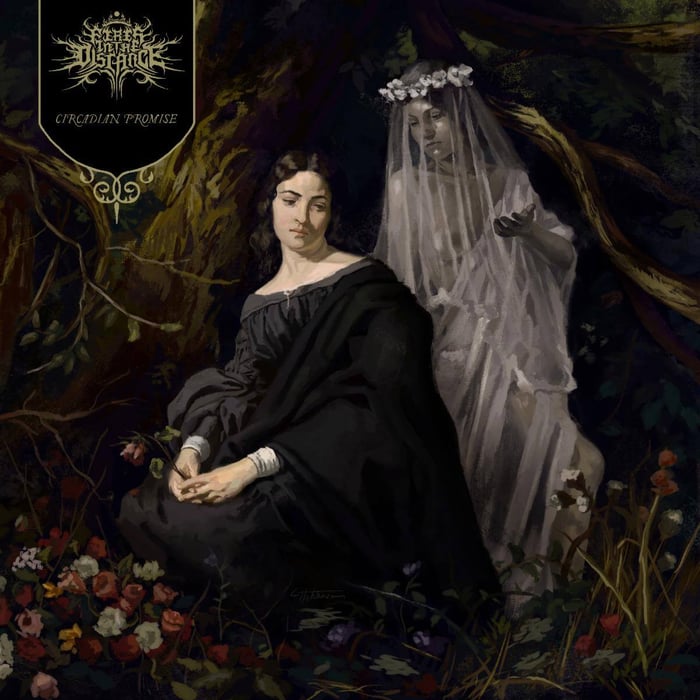
Circadian Promise Review: Melodeath That Thinks It’s Your Alarm Clock


 See more Architeg Prints stories on Google.
Circadian Promise Review: Melodeath That Thinks It’s Your Alarm Clock
Circadian Promise turns grief into muscle: melodic death metal that swells, snaps, and somehow stays human even when it’s trying to crush you.
The hook: this album isn’t “heavy,” it’s intentional
Some albums want to impress you. Circadian Promise wants to move you—then it wants to see if you’ll still stand there when the blast beats come back in.
FIRES IN THE DISTANCE started as a solo idea, and you can still hear that “one brain, one vision” focus in the way these songs are built. But this is absolutely a full band record now: a four-piece locking into intricate melodic death metal that keeps its emotions sharp, not sentimental.
From solo-project DNA to full-band force
Here’s what hit me early: this band understands that “melodic” doesn’t mean “soft.” The melodies don’t float above the aggression like a polite garnish. They’re wired into it—like the music is dragging beauty across concrete on purpose.
Their earlier record Air Not Meant For Us already showed they could take death metal’s raw feeling and aim it like a beam rather than a bonfire. Circadian Promise doesn’t abandon that approach; it tightens it. It feels like the same emotional core, just delivered with more confidence and less hesitation.
I thought going in that I’d get another modern melodeath record that checks the boxes—big chorus-y leads, tasteful clean breaks, the usual. On second listen, I realized the “tasteful” moments here aren’t manners. They’re strategy.
The opener makes a promise—and then actually keeps it
If you want the thesis statement, it’s the opener: “Of Radiance And Levitation.” Nearly ten minutes long, which is normally where bands either get self-indulgent or start padding the runtime with scenic overlooks. This track doesn’t do that. It moves like it has somewhere to be.
The song stacks epic melodic surges with delicate, intricate sections that don’t feel like mandatory “calm parts.” Then the rhythm section comes in with force—heavy enough to matter, but not so messy that the details smear.
What surprised me is how organic it feels for something so clearly planned. You can tell every chord change, tempo lurch, and blast beat got weighed and measured. Yet it doesn’t come off contrived. It’s sweeping and sorrowful, but it still swings a weighty punch when it decides the beauty’s done talking.
A reasonable person could argue this song is “too much” for track one. I don’t buy that. This is them planting the flag: this album is going to be colossal, and you’re going to sit through the whole feeling.
Precision without showing off (most of the time)
From there, the album basically lays out its operating system. Everything is considered—progressions, pacing, when the drums go from driving to detonating. But Circadian Promise doesn’t confuse complexity with depth. At its root, it keeps that natural death metal heart beating under the melody.
That said, I’m not going to pretend it’s flawless. There were moments where I caught myself thinking, okay, I get it—you can thread a needle while carrying a boulder. The detail can border on “look what we can do” before the next crushing section reminds you the point isn’t gymnastics. The point is impact.
And when it wants impact, it gets it.
“To You, Author Of My Fade” hits like a grudge with a pulse
“To You, Author Of My Fade” is where the album’s heavier side stops implying and starts stating. It’s rhythmically relentless—the kind of track that would hold its own even among bands that live purely in the heavier lanes.
Now, some listeners are going to hear the softer passages and call them a contradiction—like the band can’t decide if it wants to soothe you or flatten you. I actually think that tension is the whole point. The softer sections aren’t “breaks.” They’re contrast panels. They make the breakdowns feel heavier because you’re not numb by the time the weight arrives.
If anything, the album seems to be saying: I’m not going to be heavy the entire time just to prove I can be heavy. That restraint is a flex.
The middle stretch is where the band quietly upgrades itself
Moving deeper, tracks like “Once The Silence Take Your Place” and “Agonal Dreaming” feel like the band refining what made the previous record pop—then pushing it harder in both composition and production.
This is where I started noticing the album’s confidence in pacing. These songs don’t just “add parts.” They move through scenes:
- a melody that feels like it’s trying to remember something it doesn’t want to remember
- a rhythmic turn that sounds like a door locking
- an eruption that doesn’t feel random—it feels earned
And the production is doing real work here. There’s space to hear the phrases clearly—guitars aren’t just a blur of gain, and the quieter detail doesn’t vanish. But when it’s time to hit, the sound stacks into a wall that lands like a sledgehammer. That shift—from air to impact—is one of the album’s main tricks, and it keeps working.
I’ll admit there was a point where I kept waiting for one track to overstay its welcome. It didn’t quite happen, but I wasn’t fully sure it wouldn’t—this style can get carried away with its own grandeur. The album mostly avoids that trap by staying emotionally grounded even when it’s being huge.
Bleak, but not theatrical—grand, but not smug
The mood is bleak, sure. But it’s not the kind of bleak that’s winking at itself in the mirror. The melancholy doesn’t feel overly dramatic, and the grandness doesn’t tip into pretentiousness. That balance is harder than bands pretend it is.
The melodies are doing a lot of the emotional heavy lifting. They weave through the heavier sections like an intricate tapestry—except this tapestry is being stitched in a storm. The band is adept at delivering weight, but what makes Circadian Promise stick is how the melody doesn’t “escape” the heaviness. It lives inside it.
A listener could argue the album is too accessible for modern melodic death metal—that it cleans up the ugliness. I’d argue the opposite: it makes the ugliness legible. It doesn’t sanitize; it frames.
Six tracks, no filler—just a crushing embrace
This is album three, and it sounds like a band that has progressed without losing the original emotional thesis. Circadian Promise comes in as six tracks of what I’d call a “crushing embrace”—music that pulls you in with grace and then reminds you it’s still death metal.
It also feels like they took their best songwriting techniques from earlier releases and evolved them instead of rewriting them. The album twists and turns, but it never feels like it’s wandering. It demands attention—not because it’s chaotic, but because it keeps making deliberate left turns at the exact moment you think you’ve mapped it.
And yes, I’ll go there: if I’m putting a number on it, my reaction lands around a 9/10—not because it’s perfect, but because it executes its intent with scary consistency.
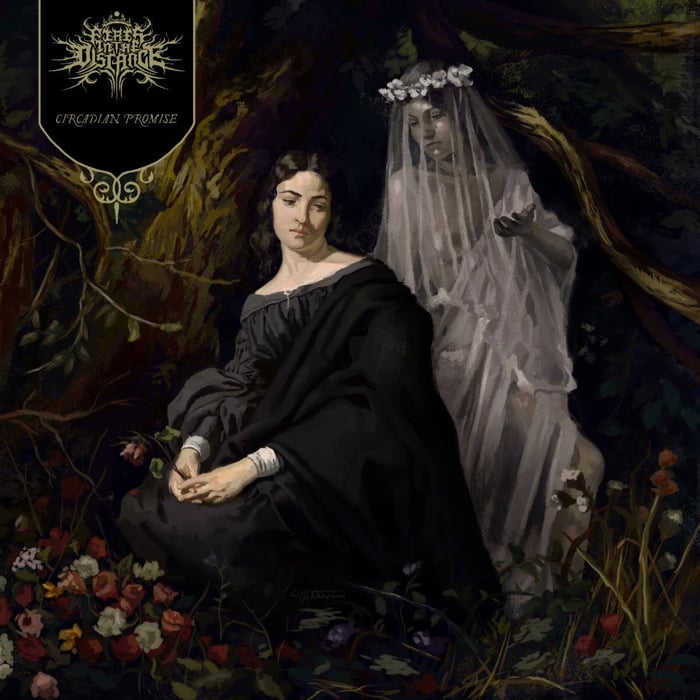
Release details (because timing matters with a title like this)
Circadian Promise is set for release on June 12 via Prosthetic Records.
If you want to keep up with the band directly, they’re on Facebook:
https://www.facebook.com/firesinthedistance/
Conclusion: the “promise” is control, not comfort
Circadian Promise doesn’t try to reinvent melodic death metal. It tries to prove the genre can still feel personal while sounding enormous—and it pulls that off by treating softness and violence as two tools in the same kit, not two competing personalities.
Our verdict: People who like melodic death metal with actual emotional architecture—where the quiet parts aren’t just hydration breaks—will get hooked fast. If you only want constant speed, constant brutality, and zero tenderness, this will probably annoy you… like a beautiful alarm clock that insists you have feelings before work.
FAQ
- Is “Circadian Promise” very technical, or more emotional?
It’s both, but the technique feels like a delivery system. The emotion is the point; the precision is how they aim it. - Does the long opener drag?
I expected it might, but it stays surprisingly organic. The length feels like a statement, not a stunt. - Are the softer passages out of place in a heavy album?
They could seem like a mismatch at first, but they’re used to sharpen the impact of the heavy moments—not dilute them. - Is this album approachable if I’m picky about production?
Yes. The mix leaves room for detail, and when it needs to hit hard, it hits like a unified wall rather than a noisy pile-up. - How many tracks are on the album?
Six—and it plays like they’d rather leave you wanting more than pad it out.
If you’re the kind of listener who judges an album by whether the cover feels like the music, you might want to turn your favorite album art into a clean poster for your wall. We keep that kind of thing simple over at https://www.architeg-prints.com.
 | DISCOUNTGET 30% OFF*Use code on your next order:
|
* This post may contain affiliate links, meaning we earn a commission if you make a purchase through these links, at no additional cost to you.