Eligh & FAZE.ONE Album Review: “The Way the Light Looks” Isn’t Here to Save You


 See more Architeg Prints stories on Google.
Eligh & FAZE.ONE Album Review: “The Way the Light Looks” Isn’t Here to Save You
Eligh & FAZE.ONE deliver a raw, honest portrayal of adulthood and recovery, focusing on the messy realities of life rather than offering tidy lessons or inspirational anthems.
A record that refuses the inspirational poster version of recovery
You know that particular kind of “grown-up rap” that shows up with a clean smile and a lesson plan? This isn’t that. Eligh & FAZE.ONE made an album that keeps its hands dirty on purpose, like it doesn’t trust a tidy moral.
At first, I thought The Way the Light Looks was going to be a calm victory lap—middle-aged perspective, gratefulness, the usual “I made it out” stuff. But pretty quickly it becomes obvious: Eligh isn’t here to wave a recovery flag or coach you through anything. He’s rapping from cramped, unglamorous places—the tour bus, the kitchen table, the mental loop of trying not to repeat yourself. And the album’s quiet power is that it stays down in those corners, even when it would be easier to zoom out and narrate a solution.
That choice is arguable, sure. Some listeners will call it “small.” I’d call it the entire point: the album doesn’t want to sound like a man teaching. It wants to sound like a man living.
When Eligh slows down, the honesty gets meaner (in a useful way)
Here’s where the album stops being “mature” and starts being brave: the writing gets heaviest around the later stretch, especially on “Anger.” The tempo drags—slow, cumbersome, almost stubborn—and that pacing matters because it forces you to sit in the ugly parts instead of sprinting past them.
Eligh traces his temper back into childhood—repression, obsession, that early wiring—and then he does something most “dad rap” swerves away from. He records himself losing control at his infant son during a teething night. Not as a dramatic plot twist. Not as a redemption scene. More like a confession he can’t talk himself out of.
“Hit the bottom when I can’t control my anger/At my son when he is teething in the night and needs the comfort of a father.”
And he doesn’t pretty it up. He names what he hates about himself—a grown man getting angry at a baby who’s in pain. That’s the kind of line that doesn’t want applause. It wants accountability. If you came here for “healing vibes,” this track basically tells you to sit down and stop clapping.
Even so, I’m not totally sure every listener will want this level of self-portrait. Part of me wondered, on first listen, if it crosses into self-flagellation. On second listen, it felt less like punishment and more like precision: he’s trying to identify the exact animal inside him so it can’t hide behind philosophy later.
“They Don’t See” turns the touring rant into something colder
If “Anger” is hot and internal, “They Don’t See” is cold and outward-facing. The track forces a comparison: the churn of touring life versus the child back home. It doesn’t romanticize the road; it makes touring feel like a job that slowly scrapes your ability to care.
“Music lover losing love for tour.”
No poetic fog, no inspirational framing—just a statement that sounds like someone admitting they can’t pretend anymore.
And here’s my arguable take: the track works because it doesn’t “resolve.” Most albums would turn this into a grateful lesson (“but the fans keep me going”). This one lets it sit there like a bruise you keep bumping into.
FAZE.ONE’s beats don’t chase variety—they weaponize pace
FAZE.ONE doesn’t build this album around flashy beat-switch fireworks. The production leans into a bass-heavy groove that stays consistent, and the real change comes from speed—how fast the drums move, how much space Eligh has to pack syllables in, how agitation builds.
A lot of the rap tracks run head-nod slow—“No Ploy,” “New Man,” “Inside Out”—and that slower pace gives Eligh room to cram in dense writing without sounding like he’s sprinting to catch up with the bar line. His voice also sits right up front in the mix; even when he clips words short, you can still read the consonants through the drums. That’s a decision, and I’m glad they made it. This album isn’t interested in burying the difficult stuff in reverb.
But speed plays the opposing role too:
- “Glory Dayz” picks up the pace so nostalgia doesn’t turn into candlelit worship.
- “They Don’t See” moves faster to match its own rising irritation, like the beat itself is getting tired of the situation.
If someone told you these beats are “unchanging,” they wouldn’t be wrong. Still, I’d argue the steadiness is the frame: FAZE.ONE builds a runway so Eligh’s internal contradictions can actually land.
When the album hands the wheel to Big Concepts, it wobbles
Two tracks let concepts take over, and honestly, that’s where the album slackens.
“New Man” centers on a pitch about pumping your veins with nanobots, de-triggering your triggers, making you “the best man.” It’s funny in that grim, late-capitalism way—like a self-help ad that knows it’s a scam. But the idea repeats past the point where the feeling underneath has anything left. The song keeps talking even when the emotional engine has already shut off.
“Motherboard” takes a similar plunge but from a spiritual angle—matrix talk, technology sustained through time, cracks of light, stoking the fire. The problem isn’t that it’s “deep.” The problem is it sounds like the thought got a head start on the lived moment. The concept arrives first; the human catches up later.
This is my mild criticism: when Eligh gets abstract, he sometimes starts narrating at me instead of letting me overhear him. And on an album this strong at small, specific scenes, the high-level theorizing feels like leaving the room to read a manifesto.
The title track’s simplest move is the one that sticks
The one idea that actually stays lodged is also the simplest: the afternoon-sun warmth of the title track, the way it drops Eligh into 1988 like a memory you can smell. It’s not trying to sell you a system. It’s trying to pull your eyes off the screen.
“Why so serious? Go fly a kite.”
And compared to the nanobot pitch or the tech-matrix sermonizing, that line feels like it accidentally tells the truth better than the “big” ideas do.
That’s the contradiction the album seems to understand: sometimes the way out isn’t a theory. It’s a small decision you can actually do with your hands.
Features don’t steal the album—they stress-test it
The guest spots aren’t just decoration here; they change the temperature.
On “On Fire,” Slug brings the album’s strongest dose of doubt—loneliness that overwhelms, uncertainty about learning to love what you’re becoming. That makes the narrator’s simpler hook—got to get home—feel almost too neat by comparison. And I don’t mean that as a diss to Eligh; I mean Slug walks in, says the quiet part out loud, and suddenly the “home” idea gets complicated. That tension is useful.
On “That’s My Shining,” Ceschi cranks up the political heat while Eligh stays cooler, tossing out lines that snap harder because they’re not shouted. Myka 9 closes the circle with that elastic, freestyle phrasing he’s clearly been sharpening for decades—like his verse can bend without breaking.
Then there’s “Everest,” the pit stop that almost derails the mood. Buddy Rockwell takes three of the four verses and goes full motivational coach: don’t stress the numbers, don’t trip on the views. It’s not “bad,” but it’s a different genre of sincerity—the kind that sounds good on a sticky note. Eligh drops in with a verse that has nervous systems and daughterly kisses, and it gets buried under the coaching tone.
Arguable statement: “Everest” proves that motivation is not the same thing as intimacy, and this album thrives on intimacy.
The love songs hit hardest when they’re plain enough to be awkward
Eligh’s strongest romance writing here is the least poetic. On “Nothing Like You,” the warmth comes from specific, ordinary facts: married on a beach with loved ones, a son and a daughter. That’s the real flex—domestic detail that doesn’t beg for approval.
Then he drops a line like my eternal metabolic anatomical connection, and the vibe turns briefly clinical, like someone trying to impress a biology textbook. It didn’t ruin the track, but I did blink at it. The song is better when it stops trying to decorate the feeling.
“Glory Dayz” improves the backward glance by refusing to romanticize the old life—warehouse days, shrooms, the whole mythology. The image is almost comically unromantic: taking a piss in a bucket on shrooms under a full moon. And instead of treating that like sacred lore, he files it under who I don’t want to be, ending with a blunt dismissal: no way, no thanks, I’m good right here.
Owl Green’s verse leans the same direction—handing off a “glory days” sports metaphor just to shrug it away. The arguable claim here is that the song is anti-nostalgia on purpose: it’s not denying the past was intense; it’s denying that intensity equals meaning.
“Dear Son” is where the album finally lets tenderness stay unpolished
By the time “Dear Son” rolls around, the support Eligh offers isn’t glamorous—and that’s exactly why it works. He tells his kid repression isn’t the key to cope. It’s not a cinematic speech. It’s a warning from someone who knows how repression metastasizes.
Scarub, of all people, lands the most practical version of what kids can actually grasp: do your dishes, make your bed, take out the trash. That line matters because it refuses the fantasy that wisdom always arrives as a quote you frame. Sometimes it arrives as chores, repeated until they become structure.
And Eligh’s time in the game shows up here in a way that doesn’t feel like “legacy.” It feels like mileage. A 46-year-old father telling his 6-week-old son he can’t stop kissing his face—yeah, I believe it. The album earns that moment by spending so much time earlier admitting the darker ones.
Conclusion
The Way the Light Looks works best when Eligh & FAZE.ONE stop trying to explain the escape route and just show you the room they’re standing in—bus fatigue, parenting panic, love that’s more daily than poetic, and anger that doesn’t get a heroic soundtrack.
Our verdict: This album will click for listeners who want grown-up rap that doesn’t come with a tidy lesson or a merch-table mantra—people who’d rather hear a complicated father than a perfected one. If you need every track to “go somewhere,” if you hate conceptual detours, or if you want your recovery stories wrapped with a bow, you’re probably going to get impatient and start checking your phone.
FAQ
- Is “The Way the Light Looks” more personal or more conceptual?
More personal, and it’s strongest there—tour-life burnout, parenting stress, and love in plain language. The conceptual tracks are the wobbliest moments. - What’s the core sound of the production?
FAZE.ONE leans on bass-heavy grooves where tempo changes matter more than texture changes; the vocal sits forward so the writing stays readable. - Which songs hit the hardest emotionally?
“Anger” goes places most rap songs about fatherhood avoid, and “They Don’t See” makes touring sound like a slow leak in your spirit. - Do the features help or distract?
Mostly help—Slug adds real doubt, Myka 9 brings elastic phrasing—though “Everest” veers into motivational-speech territory that blunts Eligh’s intimacy. - Is this an album for fans of nostalgia rap?
Not really. “Glory Dayz” actively refuses to romanticize the past, like it’s allergic to its own myth-making.
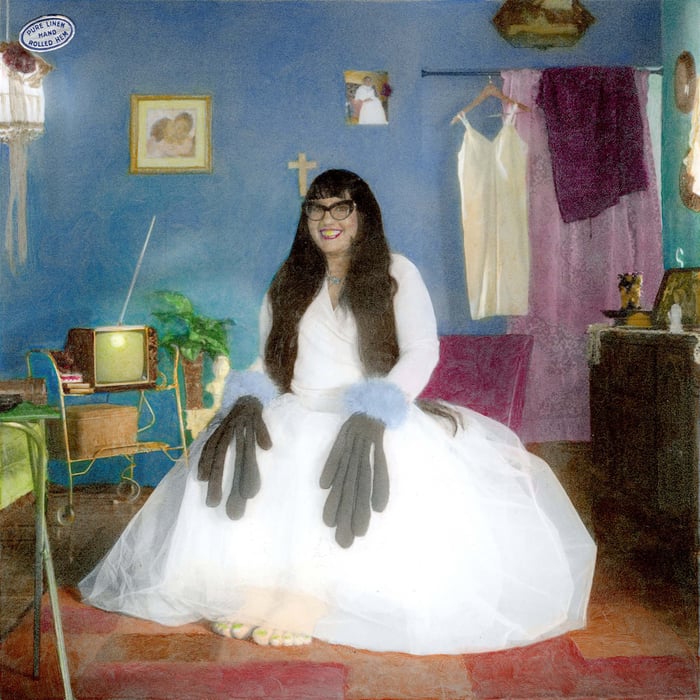
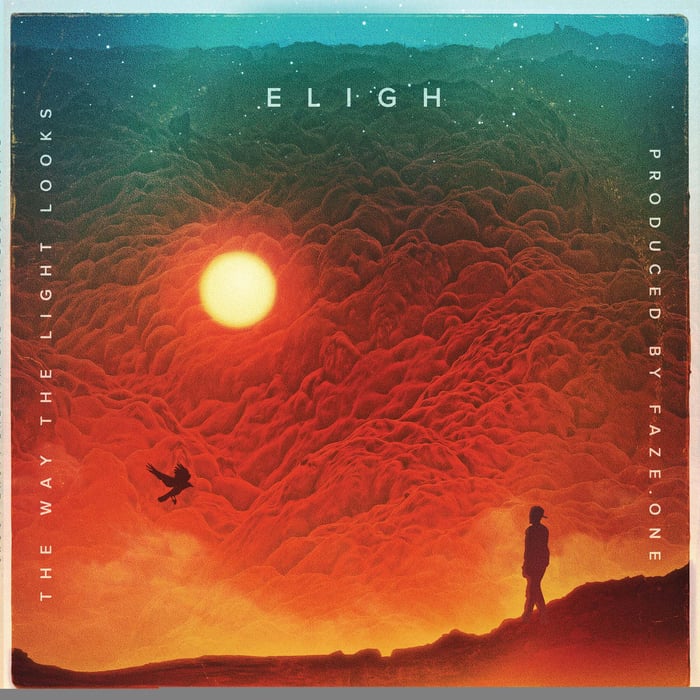
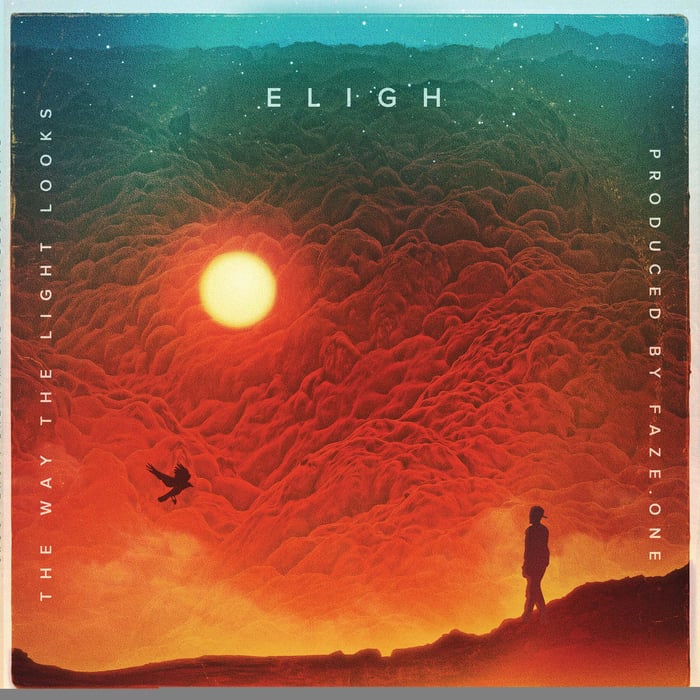
If this album got you staring at its cover between tracks, that’s not an accident—sometimes you want the art where you can see it. If you feel like matching that mood on your wall, you can shop a favorite album cover poster at our store: https://www.architeg-prints.com
 | DISCOUNTGET 30% OFF*Use code on your next order:
|
* This post may contain affiliate links, meaning we earn a commission if you make a purchase through these links, at no additional cost to you.