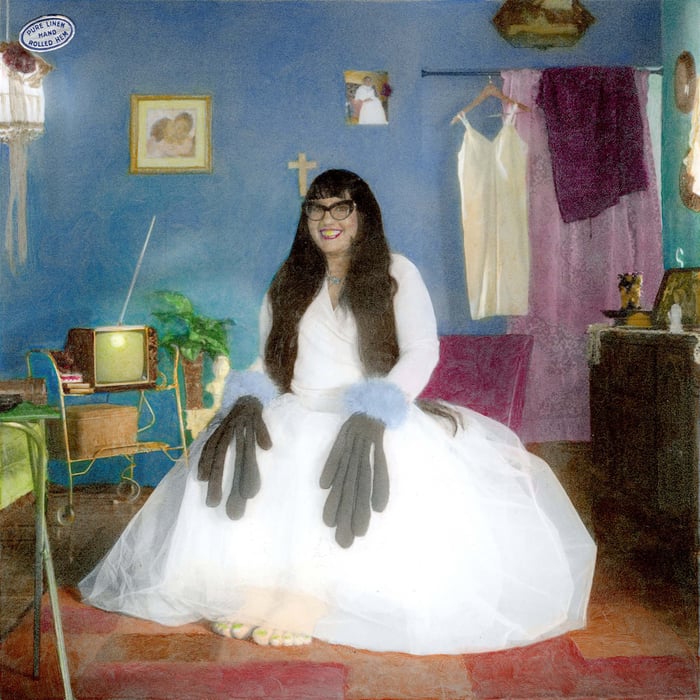
Sparklmami’s *in this body* Review: A Radio Station Built From Homesickness


 See more Architeg Prints stories on Google.
Sparklmami’s in this body Review: A Radio Station Built From Homesickness
An in this body review of Sparklmami’s debut: live-band warmth, dream-broadcast framing, and lyrics that stop pretending everything’s fine.
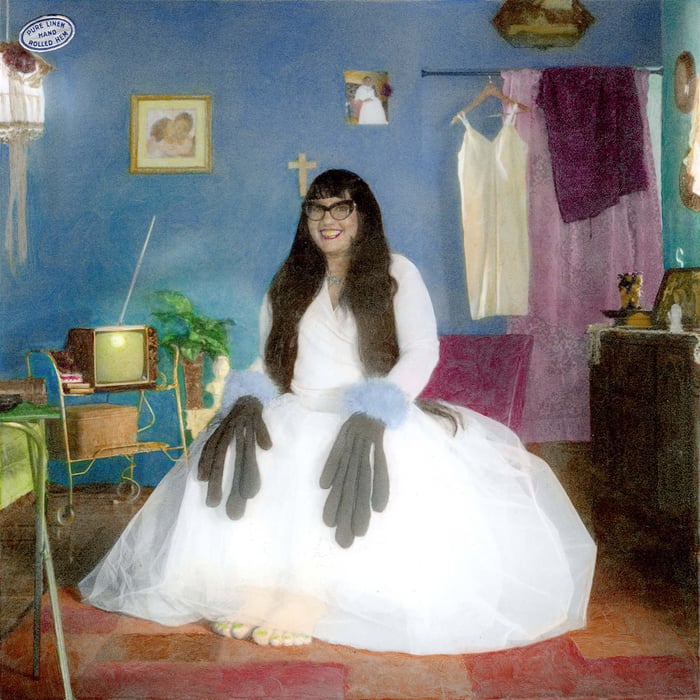
A record that doesn’t “start” so much as it tunes in
This album doesn’t kick the door down. It flicks on a light in a room you forgot you lived in, then dares you to stand there and feel weird about it.
Sparklmami’s in this body plays like a memory system put onstage—family music, church-band discipline, art-school reconstruction habits—all moving at once instead of waiting politely in separate folders. The band sounds like they’re in the room together because they basically are; you can hear the air between instruments and the little risks that only happen when people stop polishing and start performing.
And yeah, that choice matters: this is an album that wants the moment more than it wants perfection. A reasonable listener could call that “unfinished.” I think it’s the point.
She builds a “station” first, then hands you the receiver
The opener, “no te vayas,” starts by pretending it’s not even a song yet. There’s radio-host patter welcoming you to “Sparkle Mommy Radio,” selling you a world where, supposedly, anything is possible and your fantasies get to act like they pay rent. It’s a little corny—on purpose. Like she’s staging a threshold you have to walk through before she’ll talk plainly.
Then the track slips into this looping chorus that almost refuses to develop in the standard way. It keeps turning over a few phrases and scatted runs, more like a signal repeating than a verse-chorus-verse structure trying to “entertain” you. The hook lands with that simple insistence:
No, no delusions / No, no legends / See, we’re connected / You and me.
The host returns at the end to thank you for tuning in, promise another pass, and gesture toward a “land” of desire and dreams. It’s basically an invitation to stay on the frequency. If you wanted a bold thesis statement, this opener refuses. It’s bait. And I mean that as a compliment.
I’ll admit, my first impression was that it might be too slight—too vibe-forward, too “intro track.” But on second listen, I caught what it’s doing: it’s not introducing an album, it’s introducing a private channel. That’s a different job.
“quisiera” is the moment the album stops flirting and tells the truth
After the broadcast framing, “quisiera” hits like the actual reason this record exists. It’s homesickness with a face, directed at her mother, and it’s sung in Spanish in a way that doesn’t feel like aesthetic “flavor”—it feels like the only language the emotion fully fits inside.
She opens by wishing she could honestly explain what it feels like to be here while her mother is there. The song doesn’t just mourn distance; it complains about what distance does to understanding. The chorus holds two wants at once: missing her mother and wanting her mother to know her.
Then the second verse tightens the screws. It gets quieter and sharper at the same time—one of those deliveries where the volume drops but the meaning punches harder:
- You’re over there, I’m here.
- You talk more, I talk to myself.
- You don’t hear me, and I don’t hear you.
That’s not decorative sadness. That’s a relationship diagram drawn with three lines and no room to dodge. And it runs longer than anything else here, which makes sense: this is the track where she uses the least cover. If someone told me this is the emotional center and everything else orbits it, I wouldn’t argue.
Here’s the arguable claim: “quisiera” makes the rest of the album’s dreamier gestures feel earned. Without it, the radio concept might’ve read like a costume.
The band carries short songs like they’re full-length scenes
A lot of in this body is built on a line or two—almost like she’s writing emotional captions and letting the band turn them into weather. That shouldn’t work as often as it does, but the players keep it afloat with this loose, jazz-schooled give.
The core sound—drums, bass, percussion, keys, and saxophone (Kenneth Leftridge Jr. showing up like a human exhale)—leans into warmth without getting sleepy. The grooves hint at 1970s Brazilian swing as much as they nod to the boleros and Latin pop bloodline she clearly has in her bones. It doesn’t feel like genre cosplay. It feels like she’s letting multiple histories sit at the same table.
“running” is basically its chorus repeated until it turns into a little obsession: chasing someone who only stares back. The lines are simple—“Running, trying to reach you there / Running, when all you do is stare”—and the band keeps moving after the words have already said what they’re going to say. That’s a choice: the music becomes the pursuit. The lyric stops; the wanting doesn’t.
I kept waiting for a bigger lyrical turn in “running,” something that would complicate the premise. It never arrives. That’s my mild criticism: sometimes the writing leans so hard into minimalism that the song starts to feel like a sketch pinned to a corkboard. Still, the playing makes the sketch feel like a living room.
“vaga” proves she can cut deep in under a minute
“vaga” flies by in under a minute, and it still manages to land a whole character. It’s a teasing scrap aimed at someone who can’t stay home, calling them restless—bien vaga—the type who never wants to be in the house. And then it ends on a shout, like she got bored of explaining and decided to punctuate instead.
Here’s the arguable part: the short runtime isn’t a gimmick; it’s the entire point of the track. “vaga” is a dart, not a monologue. If it overstayed, it would lose its bite.
The instrumental doesn’t “fill space”—it exposes the album’s backbone
The lone instrumental, “penso en voce” (Portuguese for “I think of you”), is where the band gets to talk without subtitles. No words to answer to, no lyric to frame what you’re allowed to feel. It’s also where you realize how much of this album depends on trust in the musicianship.
And honestly, that’s a risky move for a debut. An instrumental can feel like a detour. Here, it reads more like proof: the emotional architecture isn’t only in the lyrics; it’s in the pocket, the phrasing, the way the sax line leans into the harmony like it’s overhearing something private.
I’m not totally sure everyone will have patience for it on first play. I wasn’t sure I did. But it quietly re-centers the record: this isn’t diaristic pop dressed up with live players. It’s a band-led language, and the voice is another instrument inside it.
“fajas” turns empathy into something heavier—and less heroic
“fajas” starts with a hook that sounds almost too clean for what it’s describing:
- “Buried witness to your pain”
- “Wrote you letters in your sleep”
That’s not just watching someone hurt. That’s keeping vigil, and it’s intimate in a way that’s a little unsettling. The verse cracks it open further—waiting for someone’s return, sure, but also waiting for something stranger: “the unknown,” “the untouched,” “the unfelt.” Like she’s bracing for an arrival she can’t name.
Then the image that stays: “Empty pages and a pen on the floor.” It’s mundane, which is why it stings. Big feelings, tiny evidence.
The last lines flip the perspective and refuse the savior narrative. The watcher doesn’t remain clean. She folds herself into what she’s been tending:
- “I also buried the witness”
- “I am also pain”
That’s the kind of lyric that changes the temperature of a room. And it’s an arguable statement, but I’ll say it anyway: “fajas” is the album’s sharpest writing because it admits complicity—because it doesn’t let tenderness cosplay as purity.
“grounded” uses one word like a fist, then like a key
On “grounded,” she takes a single word and makes it do multiple jobs. It moves through:
- grounded as punishment (like a kid)
- grounded in debt (adult gravity)
- grounded like a live wire (danger)
- grounded as release (sudden freedom)
The lines stack up—“Grounded you’re dead / Grounded in bed / Grounded in debt”—and it feels like a list of ways life pins you to the floor. Then she twists it: “Grounded I’m not dead / Grounded now I’m free.”
That turn could’ve sounded like self-help if she delivered it wrong. She doesn’t. It lands more like a stubborn correction. A listener could argue the wordplay is too neat. I think the neatness is the point: she’s trying to regain control using language as leverage.
The title track claims the body as the one room nobody can evict
The title song, “in this body,” makes the album’s thesis almost blunt. It opens on the hook like she’s writing it on a wall she plans to keep:
- “In this body… I’m my own”
- “I am whole”
- “I’m not alone”
- “I’m safe”
It’s the body as shelter—the one room nobody can take from her. And after the earlier tracks, it doesn’t read like a motivational poster. It reads like she had to build that shelter, plank by plank, out of memory and distance and all the music that raised her.
Then she does something generous (or reckless, depending on your mood): she turns that shelter outward. Near the end she tells someone, “I’ma go, but you can stay / You’ll be safe within.” She offers the room instead of hoarding it.
Here’s my arguable take: that closing gesture is the album’s real flex. Plenty of artists can write about self-possession. Fewer can write about it and still make space for somebody else without sounding fake.
Where “it was 5am” fits, even when it won’t explain itself
One of the tracks that stuck with me hardest is “it was 5am,” and I can’t fully explain why without over-interpreting details that aren’t handed to me. Maybe it’s the title—time-stamped like a private panic. Maybe it’s how it sits in the tracklist like an afterimage.
I thought it would be an interlude-type throwaway when I first clocked the name. Then it lingered. That’s the album’s quiet trick: it plants small phrases that keep replaying after the music stops, like you accidentally tuned the radio to your own thoughts.
Conclusion: this album isn’t “pretty”—it’s personal radio with teeth
in this body doesn’t act like it’s trying to win you over. It acts like it’s trying to transmit something true, even if the signal comes through in fragments: a chorus repeated until it becomes a fixation, a one-minute jab, a sax line that says what words won’t, a title track that turns survival into shelter and then dares to share it. The whole thing feels live not just in recording style, but in spirit—messy in the human ways that matter.
Our verdict: People who like intimate, band-forward songs that don’t over-explain themselves will actually love this album—especially if you enjoy Spanish-language emotion sitting naturally beside jazz looseness. If you need big pop structures, obvious climaxes, or lyrics that wrap everything up neatly, you’ll get impatient and start checking the time like you’re waiting for a chorus that’s already happening.
FAQ
- What is the core theme of in this body?
Taking the body as a kind of home—especially when actual home feels distant—and turning memory into something you can perform in real time. - Is in this body more about lyrics or musicianship?
Both, but the musicianship does a lot of the storytelling. Several tracks are built on minimal lines that the band expands into full emotional scenes. - Which track feels the most emotionally direct?
“quisiera.” It says the quiet part out loud: missing someone and also wanting to be known by them. - Are there any tracks that break the vocal-song format?
Yes—“penso en voce” is an instrumental, and it works like a window into the band’s role as co-narrator. - Who is this album not for?
Listeners who want every song to “develop” in a conventional way. Some tracks are deliberately slight, and the repetition is part of the language.
If you want a physical reminder of this album’s whole “body-as-home” idea, a poster of your favorite album cover is a surprisingly nice way to keep the signal around—feel free to browse https://www.architeg-prints.com.
 | DISCOUNTGET 30% OFF*Use code on your next order:
|
* This post may contain affiliate links, meaning we earn a commission if you make a purchase through these links, at no additional cost to you.