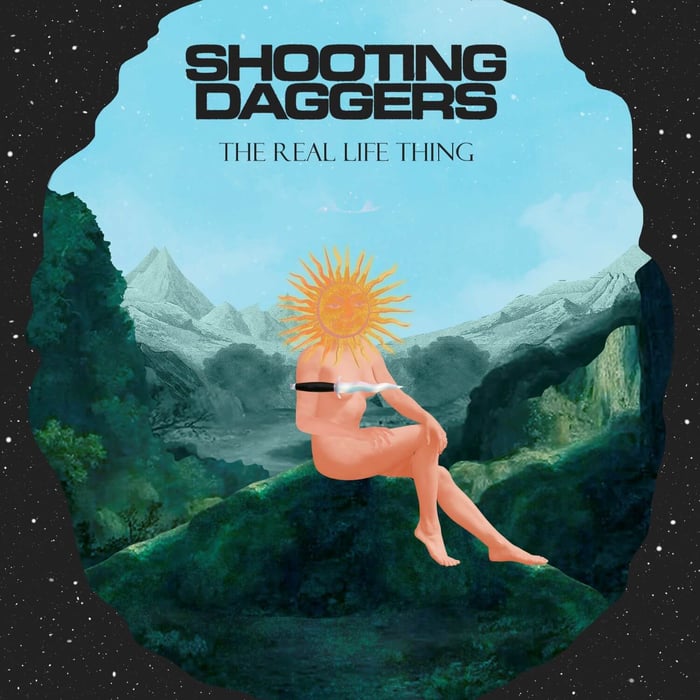
The Real Life Thing Review: Shooting Daggers’ Punk Therapy Session

 See more Architeg Prints stories on Google.
ALBUM REVIEW: The Real Life Thing – Shooting Daggers
A fierce and urgent punk mini album that demands attention and community, The Real Life Thing by Shooting Daggers channels raw energy and emotional depth in a queercore package.
I went into The Real Life Thing expecting another “loud London band goes fast” situation. It’s that, sure—but it’s also a record that keeps trying to drag your attention back to the present moment, like it’s offended you even considered dissociating.
A mini album that acts like a megaphone
Here’s the thing: Shooting Daggers aren’t making punk just to sound tough. This “mini album” comes off like a deliberate decision to bottle fierce energy and aim it at one message—be present, look around, and stop pretending community is optional. The record keeps circling this belief that love and integrity can still do something real, even while everything else feels like it’s on fire.
And yeah, that’s an easy thing to say. What surprised me is how much the band commits to sounding like they mean it—anthemic vocals that stick, riffs that don’t politely fade into the background, and arrangements that keep switching moods like they’re trying to mimic the whiplash of being alive right now.
I’m not totally sure everyone will hear “hope” in it the same way I did, though. Sometimes hope in punk sounds suspiciously like someone yelling because they’re scared. This record walks that line and doesn’t apologize.
“Adrenaline” opens the door by kicking it off its hinges
The first move matters, and “Adrenaline” doesn’t waste time being subtle. It starts with distorted guitars, then swerves into that classic rock-meets-punk lane—like someone threw older arena riff DNA into a sweaty DIY room and locked the door.
The vocals are the kind of shouty presence you expect from punk, and on this record they’re basically the spine holding everything upright. What makes the track really click, though, is the bassline: gnarly, insistent, and glued to the drums in a way that makes the whole opener feel like it’s already mid-set.
This is an arguable take, but I think “Adrenaline” is doing more than hyping you up—it’s setting a standard: if you’re here for passive listening, you’re in the wrong place.
“My Oh My!” plays moody… then weaponizes the chorus
The transition into “My Oh My!” is where the album starts showing its real personality. The atmosphere turns moodier, like the lights got dimmer without anyone asking. You can tell the chorus is coming like a storm warning, and the satisfaction isn’t just that it arrives—it’s that the song keeps letting you feel that tension-and-release more than once.
There’s a push-pull happening: bleak-ish verses, empowering chorus, back again, then back again. It’s not just songwriting; it feels like a point being made. Like, yeah, you can be furious and still choose to be defiant. The track keeps proving it.
The album’s first proof-of-concept, and the later tracks get messier (in a good way).
“T.R.L.T.” brings the anger back—and makes it physical
Right after that mood swing, “T.R.L.T.” announces itself with something as simple as a frustrated groan at the start. It’s such a small detail, but it matters: it’s not theatrical, it’s human. Then it kicks into punk rock proper, like the record’s done politely building atmosphere and wants to spit out the truth already.
There’s a false start/stop moment, and then the drums and bass switch into a bouncy beat with a speed-up effect. And honestly, this is where the band sounds most intentional to me—like they’re not just “playing fast,” they’re using tempo and momentum as emotional cues. When they drop into that fast punk chaos, it’s not random; it’s the sound of patience snapping.
If you don’t like punk that courts disorder, you could argue this track is doing too much. I’d argue the opposite: the chaos is the point, because “real life” is rarely clean.
“We Just Wanna Play” is cute on purpose—and then it stings
The interlude “We Just Wanna Play” is where I hesitated for a second. It’s built from nature sounds, clapping, and playground-style chants—stuff that feels like it belongs to childhood. For a moment, I wasn’t sure it would fit on a record that’s been hitting so hard.
But then it turns: those familiar schoolyard rhythms carry words about modern adult issues. That contrast is the whole trick. It’s not nostalgia; it’s indictment. It’s the album basically saying: we learned the games early, and now the stakes are uglier.
Mild criticism, though: I get what it’s doing, but it’s the one moment where the concept feels clearer than the musical payoff. It works as a palate cleanser and a mood-shifter—still, I wanted it to hit a little sharper.
“Loud Mouths” turns the volume into a boundary line
Then comes “Loud Mouths”, and it’s the record’s first guest moment—featuring fellow punks The Menstrual Cramps. The title isn’t metaphorical. It’s loud, angry, and aimed at problematic behaviors targeting people in their queer community.
This track feels like two bands linking arms and deciding the room doesn’t get to intimidate them anymore. The message lands like a plain statement: we will not shut up, and we will not be silenced. And the song’s power is that it doesn’t dress that up with poetic ambiguity. It just stands there, unblinking.
A reasonable listener could disagree, but I think “Loud Mouths” is one of the album’s most important moments because it refuses the idea that punk outrage is just aesthetic. It’s not cosplay. It’s a boundary drawn in thick marker.
“Le Soleil” shouldn’t work here… which is why it does
After all that teeth-bared intensity, “Le Soleil” shows up and changes the temperature completely. On paper, a melodic, hauntingly beautiful track seems like the kind of left turn that would break a punk record’s spine.
Yet it doesn’t.
It’s the kind of song that proves this band isn’t just chasing volume for its own sake. The melody hangs in the air, and the restraint becomes its own kind of force. If the earlier tracks are the confrontation, “Le Soleil” is the quiet part where you realize what the confrontation was for.
And no, I’m not going to pretend I can do it justice by over-describing it. This is one of those tracks where words get in the way, and the best compliment is that it makes you stop typing.
“Glow” closes the record with a familiar riff… and a smart guest
The closer, “Glow,” brings in the second guest: Dennis Lyxzén of Refused. The track goes back to that classic rock riff + punk vocal pairing, and as a finale it feels like the album tightening its grip and reminding you where it started.
It’s a solid ending, not because it tries to be a grand finale, but because it sounds like the band knows exactly what this record is meant to do: hit fast, say it plainly, leave a mark.
If anything, “Glow” also underlines the album’s core idea that punk isn’t some museum genre. It keeps changing because the world keeps changing—and Shooting Daggers sound like they’re paying attention, not just repeating moves they saw in older bands.
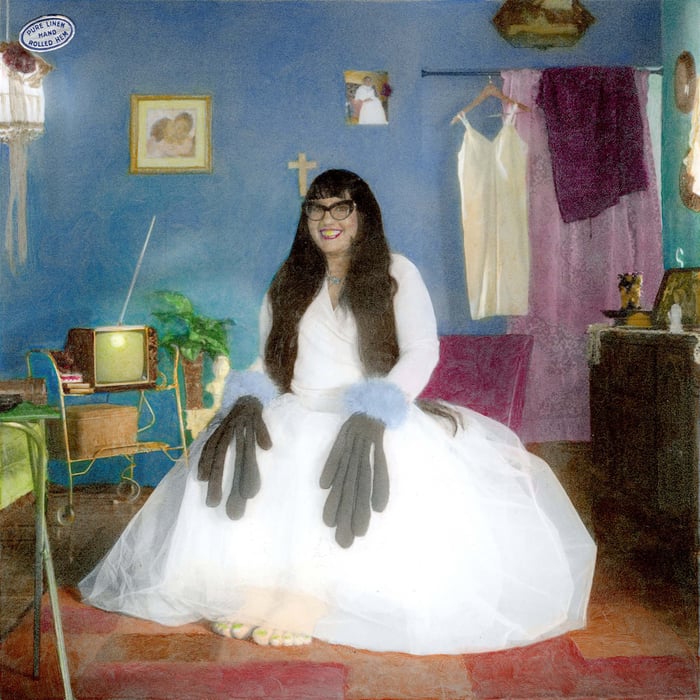
The artwork and the “out now” reality check
The record is out now via New Heavy Sounds, which feels appropriate because this mini album doesn’t act small. It acts like a flare.
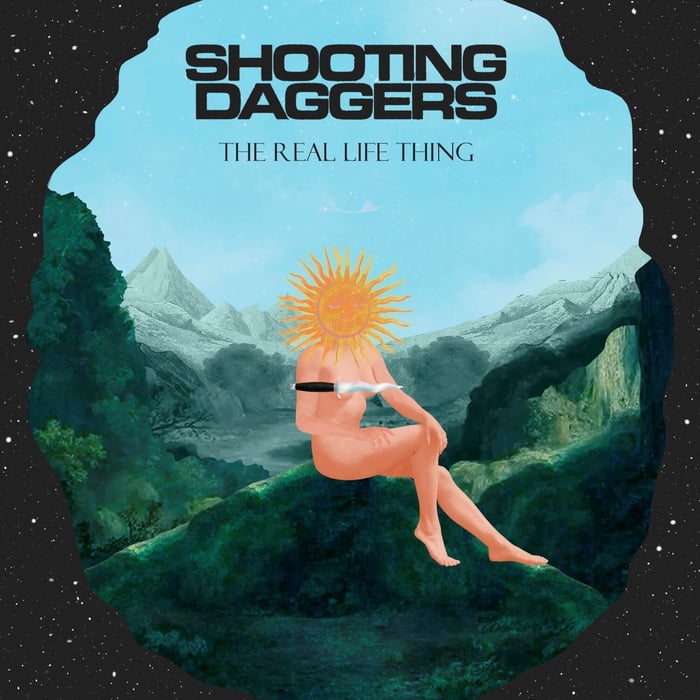
And if you want the simplest way to frame my reaction: I didn’t finish this record thinking “nice songs.” I finished it thinking, “Okay, they actually meant that.”
Also, if I’m being honest, if someone forced me to slap a number on it, I’d land around 9/10—not because it’s “perfect,” but because it’s effective at what it’s clearly trying to do: rally people without pretending rage is the only emotion worth having.
You can follow/like Shooting Daggers on Facebook here: https://www.facebook.com/shootingdaggersxhc
Conclusion
The Real Life Thing is punk that doesn’t just want your adrenaline—it wants your attention. It swings between anger, resolve, and a strange little pocket of beauty, and the constant message is basically: be here, care harder, don’t get quiet just because someone wants you quiet.
People who like punk that means something specific—and doesn’t mind switching moods mid-swing—will actually love this. If you want punk as pure escapism, or you flinch when a chorus starts sounding like a community chant, you’ll probably roll your eyes and call it “preachy”… right before you accidentally hum it later.
FAQ
- Is The Real Life Thing a full-length album or a shorter release?
It’s described as a “mini album,” and it listens like one—tight, direct, no filler energy. - What’s the core keyword takeaway for this release?
The Real Life Thing is built around presence: paying attention, staying loud, and treating community like a verb. - Which track best shows the album’s mood swings?
“My Oh My!” sets up the moody-to-empowering switch, and “Le Soleil” proves the record can soften without collapsing. - Who are the guest appearances on the record?
The Menstrual Cramps appear on “Loud Mouths,” and Dennis Lyxzén (Refused) appears on “Glow.” - Does the record stay strictly punk the whole time?
Mostly, but it deliberately detours—especially with “Le Soleil,” which is melodic enough that it “shouldn’t” fit, yet does.
If you’re the type who treats album art like part of the statement, you might want to shop a favorite album cover poster at our store—tastefully, not aggressively—over at https://www.architeg-prints.com.
 | DISCOUNTGET 30% OFF*Use code on your next order:
|
* This post may contain affiliate links, meaning we earn a commission if you make a purchase through these links, at no additional cost to you.