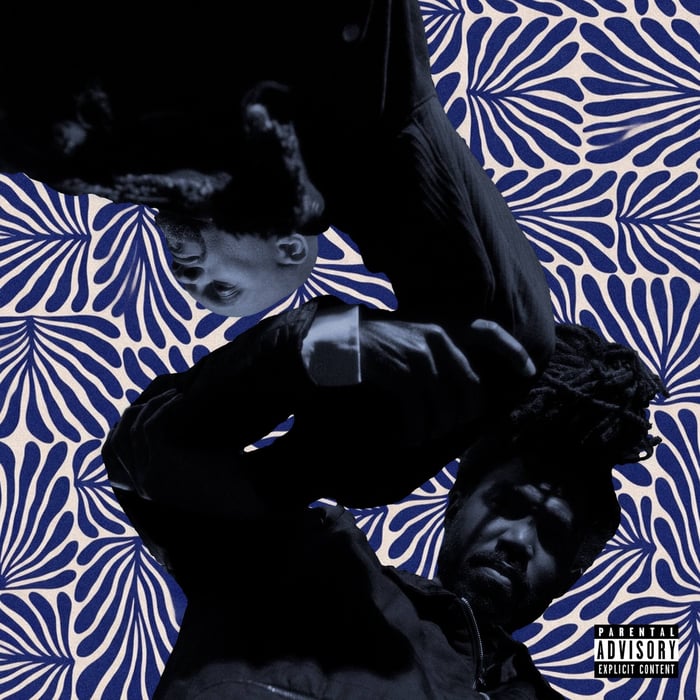
THEE IMMACULATE Album Review: Thurz & 14KT’s Holy Hustle (Too Clean?)


 See more Architeg Prints stories on Google.
THEE IMMACULATE Album Review: Thurz & 14KT’s Holy Hustle (Too Clean?)
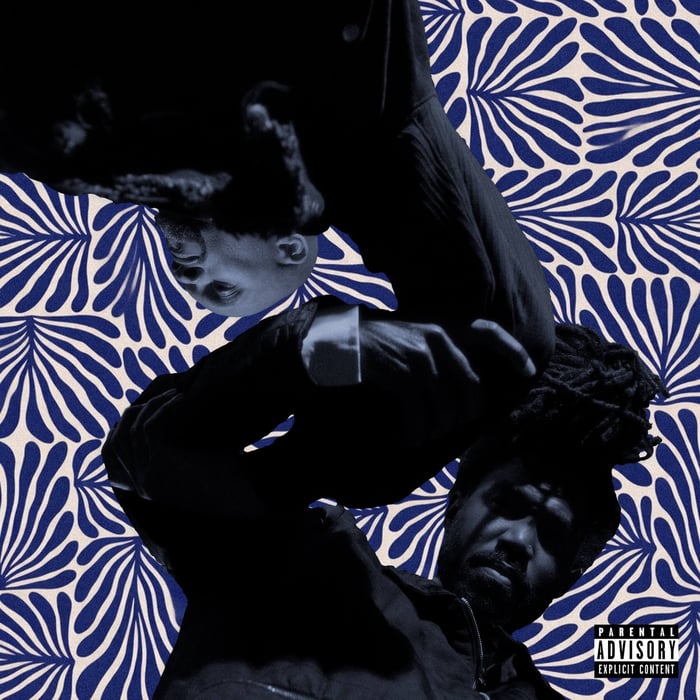
THEE IMMACULATE sounds like survival gospel in streetlight colors—Thurz narrates Inglewood like a prayer you don’t fully believe, but still repeat.
The album’s first move: make fear sound normal
Some albums kick the door in. THEE IMMACULATE just starts circling the block until you realize you’ve been holding your breath.
“Father Protect Me pt.1” drops you into an Inglewood loop—an Escalade doing the same lap like a thought you can’t shake. Kids are outside. A man is watching them. And the vow he makes—opening fire before anything reaches his children—lands with that sickening calm people use when they’ve already rehearsed the disaster. What’s nastiest (and smartest) is how the track frames protection as one mouth speaking two languages: prayer and threat. The hook is sung like a petition, but the energy underneath it is basically a loaded weapon on the kitchen table.
Here’s the weird part: Thurz isn’t even rapping in part one. He lets the fear talk first. It reads like a decision—like he’s saying, “Before I explain myself, let the neighborhood explain itself.” I thought at first that absence might be a gimmick, a dramatic intro. But after it loops in my head, it feels more like a trapdoor: you don’t get to meet the narrator until you accept the atmosphere.
And yeah, THEE IMMACULATE is obsessed with atmosphere—the kind where “protect me” and “I’ll shoot” sit next to each other like they’re cousins.
“Father Protect Me pt.2” turns nostalgia into evidence
Then part two arrives, and Thurz finally steps in—except he doesn’t storm in. He remembers his way into the verse.
The first images are almost offensively tender: Saturday morning cartoons, an ice cream truck showing up at noon. It’s the kind of childhood snapshot people use to soften a story. Thurz uses it for the opposite. When he tells you the ice cream man got “popped too high” because he was “pushing rocks” and ran into the wrong person, it’s not moralizing—it’s economics. It’s the neighborhood as a machine that eats whoever touches the wrong lever.
And he keeps the questions grounded in his own body, not in some abstract “society is broken” cloud. The line that sticks is the one that doesn’t try to be poetic: what protects better, guns or a Bible? He even slips in asthma—“a nigga can die from a cough”—and suddenly “protection” isn’t a philosophical debate. It’s respiratory. It’s literal.
There’s also Tony, handing out coupons to Smith & Wesson and Glock—an image that’s funny for half a second until you realize it’s dead serious. On this album, convenience is part of violence. Discount codes for survival.
What I can’t fully decide—still, even after replaying it—is whether Thurz is looking for an answer here or just documenting the fact that answers don’t hold. The “Freedom” outro stretches out and moves past the block, chiming like a bell for ancestors in the Middle Passage rather than kids on the corner. It’s a sharp pivot: the song refuses to be only local trauma; it insists it’s historical math.
When the prayer stops, the hands come up
Once that switch flips, Thurz pretty much drops the soft asking and starts swinging.
“The Cost of Doing Business” opens with a line that sounds like scripture with brass knuckles: “Stone that the builders refused is now the murder weapon.” The song is packed with images that don’t politely match—FIFA, Argentina, halos being sold off, and a plantation he wants burned down so new growth can claw up from the ash. It’s not subtle, and I don’t think it’s trying to be. The intent feels blunt: if the world runs on transactions, then fine—Thurz will itemize the spiritual costs and staple the receipt to your forehead.
The second verse narrows the aim. He stops talking in cosmic flames and starts talking about the people close enough to borrow your charger. Benchwarmers. “Real leaders” who act like crab buckets—pulling anything moving upward back down into the mess. He warns them not to try him for pocket change.
And then he drops the kind of brag that’s so stupid it circles back to effective: he claims he could urinate Budweiser and they’d bottle it. That’s Thurz in a nutshell—he’ll take a grim worldview and splash a little absurdity on it, not to lighten the mood, but to show how cheap everything has gotten.
Arguable take: this is where THEE IMMACULATE is at its most honest—not in pain, but in disgust.
“Cash 4 Gold” is the album’s real thesis, dressed like a pawn shop sign
The album keeps returning to value—who sets it, who steals it, who survives it. Thurz even throws out a number: two dollars in value for the soul. It’s a nasty little phrase because it feels both exaggerated and plausible in the same breath.
“Cash 4 Gold” is where that obsession finally gets a clean storyline. Gold shows up as chain, teeth, watch—objects passing over a pawn counter, traded for quick relief. Then BLESS E$CRO and Mez blow the idea wider, turning “gold” into a strip-mining metaphor: a child idolizes a player who “should own at least a little bit of the team,” while GMs “scout[e] our gold.” That’s not just sports talk; it’s labor talk. It’s ownership as a rigged magic trick.
Thurz stitches his own origin into it too: getting gold at three years old, a fourteen-karat engraved bracelet—his mother making sure the world would know his name, Yannick Koffi. That detail matters because it frames gold as identity before it becomes currency. The album keeps implying that the first thing you’re taught to value is the thing that later gets used to measure how disposable you are.
By the end, one line lands heavier than the rest because it stops juggling concepts and just stares: “They mine us for soul... Minus the black bodies they would pile up if they could.” The song earns that moment. It doesn’t feel like a slogan; it feels like the room going quiet.
When it reaches for “Somethin I Can Feel,” it almost floats away
There’s a moment where the album aims higher—like it wants to stop naming objects and start naming the sky.
“Somethin I Can Feel” is built around a plea that’s hard to argue with: Would you please give me something I can feel? The problem is Thurz starts stacking references so fast they don’t get time to bleed. He runs through Black Mirror, AI in his likeness, the projects, Leopold’s Congo, a Nina Simone nod—concepts sprinting past like highway signs at 90 mph.
I get what he’s trying to do: connect the old horrors to the new ones, show how history upgrades its software. But the speed makes the lines point at their subjects without entering them. For me, that track is the rare time THEE IMMACULATE sounds like it’s trying to prove it’s deep instead of just being deep. Not a dealbreaker—just the one place I wanted him to slow down and stay in an image the way he does on the block narratives.
The “come-up” tracks win by lowering the stakes
After all that pressure, the album gets sneakily lighter—and honestly, that’s when it becomes more dangerous, because it starts sounding like fun while it’s still talking about survival.
“Salt Water” pins you to perpetual summer: Venice Beach, Malibu, “four cylinders to four seasons.” It’s glossy on purpose, but there’s a real choice tucked inside the flex: “Fuck sellin’ drugs when there’s new teachers/When ATM is payin’ twelve hundred a month.” That teacher line lingers longer than the cologne and Saint Laurent name-drops. It’s the rare brag that’s actually a moral pivot: not “I got money,” but “I found a way that doesn’t kill me later.”
Then “Living Room Party” hits with a wordless, dancing groove that feels like walking the afternoon straight into somebody’s house. It’s a vibe track, sure, but I’d argue it’s also a tactical breather—like 14KT opens the windows so the album doesn’t suffocate inside its own seriousness.
“Album Cover” throws a Friday party, but it keeps the geography strict: “North of Pico ain’t where my peoples at, it’s all Inglewood.” The flashy language is doing camouflage work. Underneath, Thurz is still talking about being broke in a very specific way: money sliding from savings to checking to layaway to maxed-out cards, APR he can’t stand, five-day-a-week pay that bought the fit. It’s not “I struggled” content. It’s the spreadsheet version of struggle.
If you’ve ever watched someone dress like everything’s fine while their bank app tells the truth, you know exactly what he’s doing.
“Immaculate Skin” is the album’s sharpest, least avoidable song
The most straightforward writing on THEE IMMACULATE shows up when Thurz tackles colorism—because the topic doesn’t allow him to hide behind metaphor for long.
“Immaculate Skin” starts with a hook that rolls out a tight roll call: Marvin Gaye, Lauryn Hill, Curtis Mayfield, Stevie Wonder—voices that made Blackness feel like the thing to be. Then Thurz turns the blade inward: “I ain’t fair-skinned/So I’m a threat when I walk by or drive by.” From there, it gets brutally specific: “Pope white, Mary white, Jesus whiter,” the Clark Doll experiments, body cams switched off, and the implication that a man “might disappear around here.”
The part that surprised me is how far back he goes—first grade, wishing he had a “normal” first name like other kids because they laughed at his. That’s not just pain; that’s formative editing. You can hear the moment a kid learns the world will correct him before it tries to understand him.
Then the beat switches in a way that feels almost Funkadelic-ish, and Jimetta Rose comes in reaching for daylight: “Black and brown, hold it down.” She follows it with a whole verse directed at a kid named Jerome, and the final line hits like a door closing—his ex’s Creole grandmother telling her, to her face: “Don’t bring no nappy niggas around here.”
If you don’t flinch at that line, you’re not listening. And if you think the album is just “smooth hip-hop,” this track corrects you.
Affirmations, clocks, and the one line that nails Thurz’s whole deal
Near the end, Thurz starts dialing down the heat, and the album gets more internal—sometimes successfully, sometimes… not quite.
“The Queen Said” opens with a long spoken passage about being God’s anointed and unsinkable by haters. It’s self-affirmation stretched out until it almost loses shape. I kept waiting for it to land harder, and it kind of doesn’t. Still, the verse underneath finds something real: “Being Black and gifted, that shit quite exhausting/Falling short of my full potential is quite haunting.” That’s the album admitting the pressure isn’t only external; it’s also the private fear of wasting your own talent.
“Immaculate Timing” stays in that lower gear—time slipping through his fingers, ideas keeping him awake, the opening prayer returning as “Protect me now.” And then he drops what might be the most accurate self-assessment on the whole record: “I be late to the party, but I’ma arrive always on time.”
Mostly, he’s right. When he keeps his feet on the block—when he writes from the ground up—he arrives exactly when he means to.
Conclusion
THEE IMMACULATE isn’t trying to be a neat statement. It’s trying to sound like a life where faith, threat, money, and memory all share the same room—and none of them feel obligated to behave.
Our verdict: This will hit people who like hip-hop that treats “the neighborhood” as a real place with receipts—names, costs, consequences—plus listeners who don’t need every song to chase a hook. If you want clean escapism or you get impatient when an album stops to think (or prays mid-verse), you’ll bounce off this fast and call it “heavy” like that’s an insult.
FAQ
- What is THEE IMMACULATE really focused on?
Protection and value—who gets it, who pays for it, and how it mutates from prayer into threat and back again. - Which song best represents the album’s core idea?
“Cash 4 Gold,” because it turns “gold” into identity, currency, labor, and extraction without losing the human thread. - Does the album have lighter moments, or is it all tension?
It loosens up on “Salt Water,” “Living Room Party,” and “Album Cover,” but the “fun” always has bills stuffed in its pockets. - What’s the most direct writing on the record?
“Immaculate Skin.” It doesn’t dance around colorism—it walks straight through it and makes you stand there. - Is there any part that doesn’t fully work?
“Somethin I Can Feel” has a strong central plea, but it stacks big ideas so quickly that some of them never get a chance to matter emotionally.
If this album’s imagery is living in your head now, a good album-cover poster is basically the harmless version of getting it tattooed. You can grab one at our store: https://www.architeg-prints.com
 | DISCOUNTGET 30% OFF*Use code on your next order:
|
* This post may contain affiliate links, meaning we earn a commission if you make a purchase through these links, at no additional cost to you.