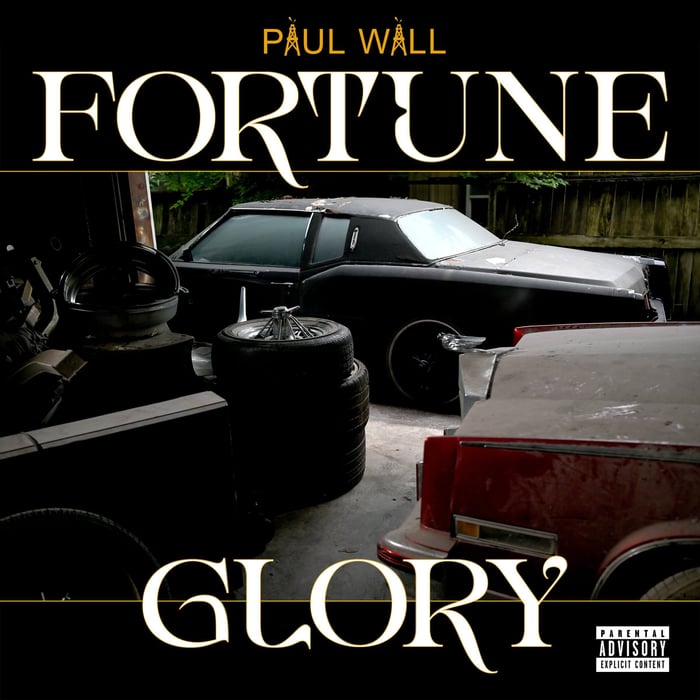
Fortune & Glory Review: Paul Wall’s Calm Flex That Somehow Works


 See more Architeg Prints stories on Google.
Fortune & Glory Review: Paul Wall’s Calm Flex That Somehow Works
Fortune & Glory is Paul Wall turning money talk into a life map—slow, stubborn, and weirdly personal when it counts.
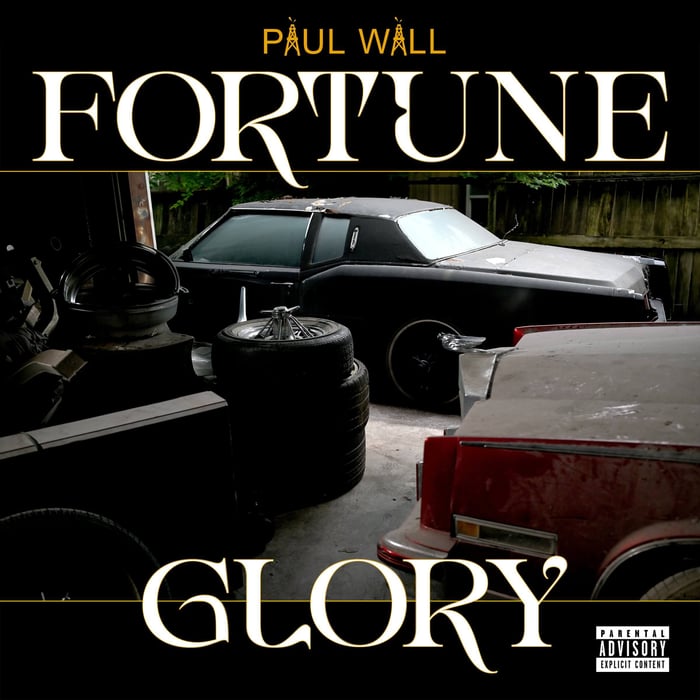
Come for the cars, stay for the quiet stubbornness
There’s a specific kind of rapper who survives by refusing to change his posture. Paul Wall is that guy. Fortune & Glory doesn’t beg for respect; it just rolls by at a speed where you’re forced to look over.
At first, I honestly thought the album was going to be another cruise through the usual subjects—money, cars, the lifestyle as a loop you can’t escape. But a few tracks in, it hit me: the point isn’t variety. The point is control. He’s showing you he can keep the same relaxed drawl, the same measured cadence, and still update the world around it like he’s swapping rims, not rewriting his identity.
And that drawl is the glue. He never tries to rap like a sprinter. He doesn’t pretend he’s chasing anything lofty, either. The mission stays blunt: get money, get cars, get whatever those things unlock. What changes here is the furniture in the room—the references, the modern little signals, the way the hustle gets dressed up in today’s language. Most of the beats come from DJ.Fresh, and the production choice is telling: it’s stark enough to leave Paul’s voice sitting in the middle like it owns the place.
The album updates the hustle by naming the apps out loud
The transition into “current times” isn’t subtle. Paul’s not reinventing his message; he’s just swapping in new props.
On “I Want it All,” the fantasy of getting the whole pie breaks into a set of very modern, very specific regrets and nerves: he talks about making 50 off crypto but knowing he could’ve made 100, and he admits election night left him feeling “kinda funny.” That’s not some grand political thesis—it’s closer to an anxious shrug from a guy who measures life in risk, timing, and profit.
Then he pivots the hustle into gym-talk: grinding for gains like CrossFit, saying it’s working, but in his mind his pockets still feel like they hurt. I don’t even know if he means that literally or if it’s just the permanent condition of a hustler brain—always convinced you’re behind, even when you’re clearly up. Either way, it lands because he says it like a man thinking out loud, not like someone polishing a quote for a caption.
“All Type of Ways” turns work into order fulfillment like Amazon, flips food imagery into jewelry (“mouth is iced like parmesan”), and “Getting Mine” opens on a “glacier cold plunge” before he starts bragging about the left wrist showing. These aren’t deep metaphors. They’re timestamps. He’s proving he still lives in the same mentality, just with updated toys: the app, the ice, the plunge, the crypto wallet.
A reasonable listener could argue this is just lazy modernization—brand names taped onto old themes. I get that. But I think he’s doing it on purpose: not to sound young, but to insist the hustle never stopped, it just got new interfaces.
He plants his flag in Acres Home, then draws the whole map
“Gettin Paper, Smokin Major” starts where it should: Acres Home. He calls it the beginning, and the track moves like a route list—Lafayette, Philly, Dallas, Chicago, and even a partner from Vallejo playing in Oklahoma. It’s cartography as flex: not “I traveled,” but “I can trace the motion.”
Then the track cuts into something more human without changing tone: “My homie got deported, now he waiting on me at the border.” Same calm delivery, like it’s just another exit ramp. That’s the unsettling part—Paul doesn’t dramatize it. He just files it under life.
He pulls a similar move on “Something for Sale,” framing the hook like a shop inventory: a little bit of this, a whole lot of that, a few of those, more in the back. It’s retail as worldview—everything has a price, everything has a place.
And then, without raising his voice, he drops darker weight into the verse: “Chiefing kale, thinking about my partners in jail.” Nutrition and incarceration packed into one breath. That’s the album’s real trick: he makes lifestyle talk feel harmless until the consequences slip into frame.
If you want big emotional performances, this album will annoy you. Paul doesn’t perform pain like a theater kid. He mentions it like a man who’s learned that reacting too hard doesn’t change the facts.
“Top Tier” treats brands like trophies, not decoration
A lot of rappers describe success with adjectives: biggest, richest, fastest, rarest. Paul tends to do something else on this album—he uses proper nouns.
“Top Tier” is built on tangible receipts: paint from House of Colors, work done by Eddie, a car that looks like it came out last week even though it’s a masterpiece from scratch. He talks about people at the gas station wanting pictures, about a trunk that’s loud enough to be seen from far away. The brag is pinned onto objects you could actually point at.
“HT to the TL” keeps that same naming habit: friends like Screwball and Big Ken get called out with respect, and so do the car details—like an engine from Kendall Motors. It’s not subtle symbolism; it’s a specific kind of pride. He’s basically saying: my life is real enough to name names.
Then “Elbow Room” turns Houston into moving color. He describes lines coming down the boulevard—blue line, orange line candy wet shine, purple line just getting started—until the city’s map starts acting like a custom paint catalog. The trains become cars in motion, and he’s “all civilian traffic like I’m herdin’ cattle.”
This is where Fortune & Glory gets sharper than it first appears. The objects stop bleeding into each other. Everything becomes solid: brands, engines, paint jobs, lines, places. It’s a flex, sure—but it’s also an insistence that his world is built out of actual things, not vague mood boards.
“RIP Old Me” is the one track that drops the mask
Then “RIP Old Me” shows up and yanks the whole album sideways. This is the only time the cars and cash melt away long enough for something else to take the wheel.
He says, bluntly, that he should’ve died a thousand times, but he survived a thousand times. He paints himself as a wild boy under dire circumstances, with a mom praying late nights and warning him he was flirting with death, playing with life.
The hook is where the song gets strange, almost comforting in a way that doesn’t totally make sense: he admits he might not understand it completely, but he knows those gunshots weren’t there—it’s all the BBs. He literally talks himself down from the worst version of the memory.
I’m not even 100% sure how I feel about that line—part of me thinks it’s denial dressed as relief. But I can’t pretend it didn’t stick. It’s the sound of somebody trying to survive their own story by editing it in real time.
And of course, the money mission still clings to him—he ends the second verse talking about having more debts to collect. Still, the God motif creeps in around the edges. It’s not a conversion testimony. It’s a man admitting he shouldn’t be here and moving on anyway.
When he tries sincerity, it’s sweet… and sometimes stiff
Outside the car-and-cash lane, Paul gets surprisingly sincere, and occasionally a little old-fashioned.
“Love with a Smile” is basically gratitude and advice—treat people how you want to be treated—delivered with the same calm confidence. He throws in a “sharp crease” line connected to Parker McCollum, and frames himself as someone who’s always been a giver, never a taker. It’s corny on paper, but the delivery saves it because he doesn’t oversell it.
“Good News, Bad News” goes darker—betrayal, disappointment, that familiar moment where you realize somebody you fed isn’t even close to a friend. But the language gets oddly stiff here (“I beseech you, don’t bite the hand that feed you”), like he reached for a formal phrase to make the point feel heavier.
This is also where I’ll say the album briefly loses me. The beats get a little too even for what he’s trying to confess. The music doesn’t collapse, but it sags—like the production refuses to change facial expression even when the lyrics need a sharper turn.
By the time “Only Me and You” gets into him recalling meeting his wife at Texas Southern—at the campus student center—the moment should feel bright and specific. Instead, it kind of blends into the bass before you can pinpoint it. That’s not a lyrical failure so much as an arranging choice that doesn’t underline the memory the way it should.
A listener could argue that’s the whole aesthetic—steady, unbothered, never theatrical. Sure. But if you’re going to put a personal landmark in the middle of a song, I want the track to frame it like it matters.
Features show what Paul refuses to do: change temperature
The guest appearances are where you really hear Paul’s strategy—because the features bring heat that he intentionally avoids.
“Limitless” gets lit up by Slim Thug and Lil’ Keke. Thug plays with the word itself (“limitless like the pill”), brags about new hustle, and drops a line about treating women like they owe him now. Keke shows up like an “H-Town legend Don Ke,” calling himself the coach. Their energy pushes the track forward in a way Paul rarely does. And that contrast is the point: Paul’s not trying to win by being the loudest guy in the room. He’s trying to be the steady one the room is built around.
Quiet Money Dot shows up on “Still True to the Game” with a contribution that feels almost childlike in its simplicity—talking about how he used to want his doors red. That’s a small flex, not a cinematic one, and it fits Paul’s vibe: the dreams were always material, always visible, always parked outside.
Then Paul’s family steps in on “The Hard Work Works”—Crys Wall and Baby Doll Wall—and the warmth is immediate. It also sets up Paul’s cleanest, most effortless punchline on the album when he answers the question he’s probably heard forever:
People ask if he still sells grills. That’s like asking a pharmacy if they still sell pills.
That line works because it’s not flashy. It’s just him reasserting: this is what I do, this is what I’ve always done, and it’s not complicated.
The brightest cruise is “You Can’t See Us,” because it doesn’t try
The most effortless DJ.Fresh track here is “You Can’t See Us.” It’s the sound of Paul cruising through South Park, stacking cream, and letting the day narrate itself.
He shouts out Damon, spots Aunt Gillette driving past, then casually flips an old rap touchstone: when he was young, it was all a dream—now the Cadillac looks pristine. Then he catches himself and undercuts it immediately: the car’s clean, but he’s riding dirty.
That little self-correction is the album in miniature. He’s never pretending the shine erased the mess. He’s just saying the shine exists anyway.
And it’s funny—quietly funny—because it’s so matter-of-fact. Like he’s describing the weather, not his moral ledger.
Conclusion: the drawl is the message
Fortune & Glory isn’t Paul Wall trying to convince you he’s relevant. It’s Paul Wall showing you he never left—he just kept driving, kept naming the streets, kept updating the objects in his hands. The album’s best moments happen when the material talk turns into geography (“Gettin Paper, Smokin Major”), when the objects become proof (“Top Tier,” “Elbow Room”), and when the mask slips just long enough to admit survival isn’t guaranteed (“RIP Old Me”). The weaker stretch is when the personal stories need the beats to shift shape and they… don’t. But even that stubborn steadiness feels like a decision, not an accident.
Our verdict: If you like southern rap that moves like an unhurried custom car—paint immaculate, bass steady, driver unbothered—you’ll actually like Fortune & Glory a lot. If you need big emotional crescendos, dramatic beat switches, or a rapper who sounds like he’s auditioning for a motivational speech, you’re going to get bored and start checking your phone by track three.
FAQ
- What is the core vibe of Fortune & Glory?
Calm, steady flexing—Paul Wall raps like he’s already won and doesn’t feel the need to prove it loudly. - Does Fortune & Glory have any personal songs, or is it all cars and money?
It has real personal weight, especially on “RIP Old Me,” where the usual shine drops away and survival takes center stage. - Do the beats change much across the album?
Not dramatically. The production stays pretty even and stark, which helps the cruising feel—though it can flatten the more emotional moments. - Which tracks best show what Paul Wall is doing here?
“Gettin Paper, Smokin Major” for the map-and-motion writing, “Elbow Room” for the car-as-city-color imagery, and “RIP Old Me” for the blunt self-audit. - Are the features worth it?
Yes, because they highlight Paul’s strategy. Slim Thug and Lil’ Keke especially raise the temperature on “Limitless,” which makes Paul’s steadiness stand out more.
If this album put a specific image in your head—candy paint at dusk, slow traffic, the city as a showroom—matching that mood with a clean album-cover poster is a nice way to keep it around. You can browse prints at https://www.architeg-prints.com.
 | DISCOUNTGET 30% OFF*Use code on your next order:
|
* This post may contain affiliate links, meaning we earn a commission if you make a purchase through these links, at no additional cost to you.