CK The Spitta Review: “Strictly 4 the Underground” Plays Like a Tryout


 See more Architeg Prints stories on Google.
CK The Spitta Review: “Strictly 4 the Underground” Plays Like a Tryout
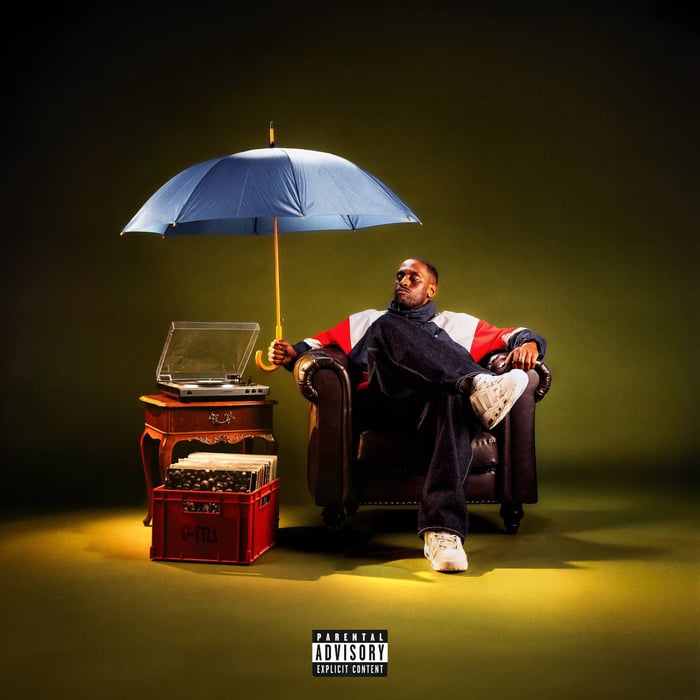
CK The Spitta’s album “Strictly 4 the Underground” channels the competitive spirit of a failed sports career into a visceral, lived-in rap diary that blends personal narrative with cultural homage.
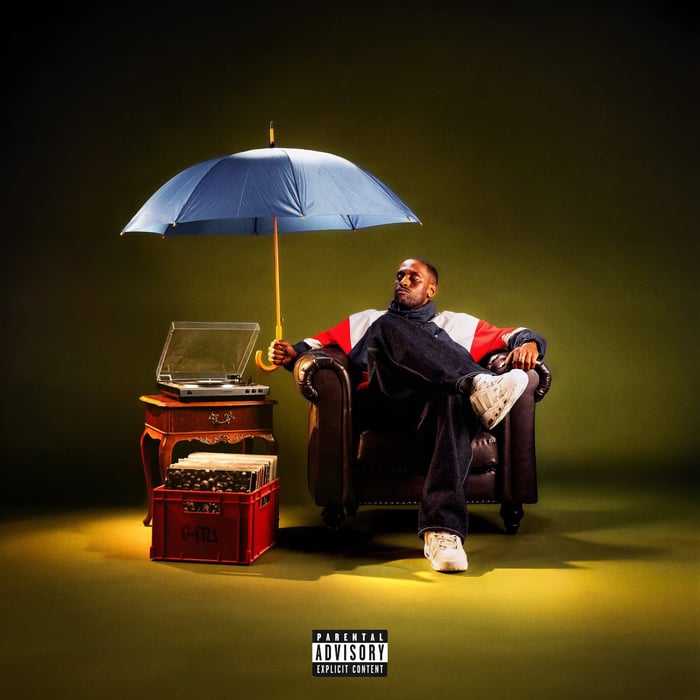
You can hear it fast: this album isn’t trying to “introduce” CK The Spitta. It’s trying to justify him. Like he’s still arguing with the version of his life that was supposed to go pro.
A Failed Pro Turns the Locker Room Into a Booth
The first thing I clocked is the specific kind of bruise you only get when sports doesn’t pan out. Not the inspirational “I overcame adversity” bruise—the competitive, itchy one. The one that makes you treat rap like a second career, not a hobby you stumbled into.
On “Fruits of My Labor,” CK talks about landing his first football contract, getting love when he dribbled “like Zinedine,” scoring, then catching a red card “Balotelli style,” and then… not going pro. The way he frames it, the loss didn’t humble him. It re-routed him. Like rap became the only remaining place to dump that intensity.
And the detail that tells you what kind of rapper you’re dealing with: he admits he hesitated. He puts himself in Mansa’s kitchen, where there’s recording equipment and half-formed ambition, and he basically says: I was dragging my feet. I couldn’t decide if this was real. I had to sort my head out before I could commit.
That’s not a glamorous origin story. That’s an adult origin story. And it makes a blunt promise: if he’s talking, he’s not pretending it was always destiny.
The Album Refuses to Explain Where It’s From (On Purpose)
Here’s the weird, smart trick Strictly 4 the Underground pulls: it keeps giving you locations and cultural textures, but it refuses to pin them down into a neat “scene.”
On “This Life of Mine,” CK’s on a balcony in Lisbon with his family, vintage wine, life calm enough to taste it. On “Majestic Tone,” he’s chasing legacy “like Diego out in Naples,” sitting in favela plastic chairs with a margarita, calling his spouse “muy bonita,” even tossing in Santeria like it’s part of the air. On “S4TU,” he pours Pinot Grigio and sleeps overseas while still getting paid.
Those aren’t random flexes. They’re set design. And the point is: the set doesn’t come with a map.
He never explains where he’s from, and honestly that’s one of the most interesting decisions on the record. It blocks you from doing the lazy listener thing—slotting him into London, New York, Toronto, whatever mental playlist you keep. The Lisbon balcony just sits there. The Naples ambition just sits there. CK raps from inside those spaces without footnotes, like you’re supposed to accept the world first and decode later.
I’m not fully sure it always works—sometimes I wanted one more breadcrumb, one clearer anchor—but the refusal also feels like the thesis: this isn’t about “representing” a place. It’s about living in motion and daring you to keep up.
Sports References Aren’t Bars Here—They’re His Brain
Next hook, because it matters: CK doesn’t use sports like a rapper grabbing ESPN wallpaper. He uses it like someone who still thinks in drills.
On “Karl Kani Freestyle,” he says he receives the ball and curls it “to the left like Foden.” On “Wavy Art,” he calls himself “Project Mbappe” and says he shoots “like Bukayo Saka.” On “Composure,” the hook tells him to aim “accurate, Dirk Nowitzki.” On “Tribute to Rap,” he frames himself as “Francesco Totti, captain of the game, Daniele De Rossi.”
That spread matters. It’s European football first, then basketball crossovers—Kobe, Kareem Abdul-Jabbar, Nowitzki, Andre Ingram. But the difference is you can hear that CK actually played. The lines that land are tied to body memory: curling left, getting the shot off, reaching height, eating consequences.
And when he name-drops Totti and De Rossi, he’s not picking the flashiest avatars. He’s picking captains. Loyalty guys. One-club lifers. That’s not accidental. That’s CK quietly telling you what kind of artist he wants to be: not the mercenary, not the trend tourist—the one who stays put and runs the midfield.
A reasonable listener could argue it’s too many references, too much of the same mental lane. I get that. But I think the repetition is the point: he can’t stop translating life into match footage. That’s his dialect.
“What a Day” Is Where the Album Stops Posing and Gets Serious
So here’s where the album tightens its fist.
“What a Day” is CK writing about the block with a kind of precision he doesn’t always hit elsewhere. The images don’t feel like rap imagery. They feel like witnessed detail.
He talks about boys who haven’t even hit puberty firing shots—kids acting like they’re already dead. He mentions a friend wearing a bulletproof vest because his best friend got killed, and the friend is basically living in revenge mode: when he sees them, it’s their last breath.
CK tries the spiritual angle—tells him to chill, says it’s up to God—and the friend rejects it: he’s in charge. And CK lands on a helpless truth: there’s nothing to do but pray.
Then he runs through the alternatives people grab when they can’t face their own life cleanly:
- county jail
- numbing out with prescriptions
- putting hands on women
- scamming
- lying until lying becomes your personality
And then he says it plainly: he was never a gangster. Never tried to act hard. Two-parent household, morals intact, no need to fabricate.
The line that makes the whole song click is the accountability pact: his homie told him he’d hold him accountable if CK ever lied in his raps. That’s the spine of the verse. It’s written under threat of being checked. That’s why the details hit: summertime gunshots while kids are playing; adults trying to calm them down by saying it’s fireworks; the ghost face the kids think they saw. That doesn’t sound invented. That sounds remembered.
If you only hear one track to understand what CK can do when he stops entertaining himself and starts reporting his conscience, it’s this one.
“Fruits of My Labor” Builds a Timeline Out of Headphones
The album’s most revealing writing might still be “Fruits of My Labor,” because it’s structured like a life story told through whatever was playing at the time.
First verse: junior high. Baggy jeans, nine-to-fives, Talib Kweli in his headphones. He’s pedaling his bike, scraping up his thighs, falling in love with Mary Jane. He shows up to a party uninvited with vodka, and the alcohol dissolves the insecurity. In the background, his friends argue whether Kanye is really better than 50 while The College Dropout plays.
That detail dates itself without trying. It’s mid-2000s specific in a way you can smell.
Second verse: he’s older. Football pitch now. Kendrick’s Overly Dedicated in his headphones. Older homies sneaking him into the club at 17, a girl grinding on him, asking his age while he lies. He wanted to dress like Pharrell but couldn’t afford $400 for a hoodie. Then the goal, the red card, the Balotelli energy—cockiness and punishment stapled together.
And the song literally splices in Balotelli’s attitude like a sample of consequences:
“Too many people speak about me bad, and now they have just to shut up,” — Mario Balotelli
Third verse: back to the kitchen at Mansa’s. The confession that he was the problem. The decision to commit. Then the home studio—his “throne” moment.
What I respect here is that he narrates failures of nerve alongside accomplishments. He doesn’t polish himself into a motivational poster. He tells you when he wasn’t wholehearted. That’s the rare part.
When the Album Gets Cute, It Trips Over Itself
Now for the part where I don’t pretend everything lands.
On the Madlib-tribute “Qua$imoto,” CK jumps from Black power and Black Lives Matter to joking two lines later about scamming a snow bunny. The tonal collision feels accidental, not provocative on purpose. It’s like he wanted range and got whiplash.
Same track: the line about his pockets getting fatter like “Lizzo ‘fore she realized health matter” tries to be a punchline, but it contradicts the self-discipline vibe the rest of the album keeps preaching. It also just feels like a booth joke that should’ve stayed in the booth.
And “Proceed” and “Composure” share a motivational mode—keep composure, gray clouds but we proceed, a taste of defeat never harmed. It’s sincere, and I’m not calling it corny… but it’s also not uniquely his. Those bars could belong to a lot of rappers with decent breath control.
The Elon Musk line on “Proceed”—“Call her Twitter finger, had to let go, convert to X”—is another example. I can picture everyone in the room laughing when it was recorded. Hearing it later, it lands kind of limp. Not because it’s offensive. Because it’s disposable. Like he traded a bar for a timestamp.
I thought these moments would annoy me more, honestly. On second listen, they started to feel like the cost of how he records: he lets the freestyle muscle show, even when the editorial instinct should’ve stepped in and tightened the screws.
His Hip-Hop Devotion Isn’t Nostalgia—It’s a Code of Conduct
The next bridge: even when CK is uneven, he’s never careless about the culture he’s rapping inside.
On “Unapologetically Me,” he gives DJ Kool Herc credit—“Without you, it ain’t possible.” He pays tribute to Prodigy. He takes the red pill from Morpheus. He mentions two brothers who made the Forbes list telling him to block the noise.
On “Wavy Art,” he lists hip-hop’s elements—breakdancing, rhymes, DJs, mixing, scratching, wordplay—with the sincerity of someone who learned the list as a kid and still believes it matters. Not as trivia. As a kind of constitution.
The titles are part of that devotion. Naming a track “Qua$imoto” is an open salute to Madlib’s pitched-up alter ego. Naming “Karl Kani Freestyle” is a nod to a fashion imprint that’s basically sewn into ‘90s rap memory. He references MF DOOM too—“masks on the premises, MF DOOMs.”
This doesn’t read like cosplay. It reads like somebody who memorized every lyric the day a song dropped, then showed up the next morning rapping every word to friends who couldn’t believe he already knew it. Fidelity, not nostalgia.
A listener could argue it’s too referential, too inside-baseball. I’d push back: for CK, the references aren’t decoration. They’re proof of membership. He’s telling you he’s not visiting—he lives here.
CK The Spitta built Strictly 4 the Underground like a second chance that still wants to compete. The best songs don’t beg for respect; they earn it through specificity—kitchens, balconies, pitches, gunshots, and the uneasy gap between who he was and who he’s forcing himself to become. The weaker moments are mostly when he reaches for easy punchlines or generic motivation, like he’s briefly auditioning for a version of rap he doesn’t actually need.
Our verdict: This album will hit for listeners who like rap that sounds lived-in—sports-minded metaphors, real-world scenes, and an artist who admits hesitation without turning it into a pity party. If you need every track to be tightly edited, or you flinch at a few booth-joke bars sneaking into serious sequencing, you’ll be side-eyeing it by the halfway point (and you’ll probably complain about the Elon line like it personally borrowed money from you).
FAQ
- What’s the core idea behind CK The Spitta on this album?
He raps like someone who lost a sports future and redirected that competitiveness into music—same intensity, different arena. - Which song shows his strongest storytelling?
“What a Day” has the sharpest, most grounded writing, with details that feel observed instead of invented. - Why are there so many football references?
Because it’s not a gimmick—he thinks in movement and match logic, and the best lines come from that physical memory. - Does the album ever stumble?
Yeah. A few punchlines and tonal swings (especially on “Qua$imoto”) feel like ideas that needed a tougher edit. - Is this more about travel-luxury rap or street rap?
Both, and that’s the point: Lisbon balconies and block realities sit side by side without him explaining the contradiction away.
If this record put a specific image in your head—balcony wine, plastic chairs, or that kitchen-with-a-mic origin moment—you can keep that feeling on your wall with a favorite album cover poster from our store: https://www.architeg-prints.com.
 | DISCOUNTGET 30% OFF*Use code on your next order:
|
* This post may contain affiliate links, meaning we earn a commission if you make a purchase through these links, at no additional cost to you.