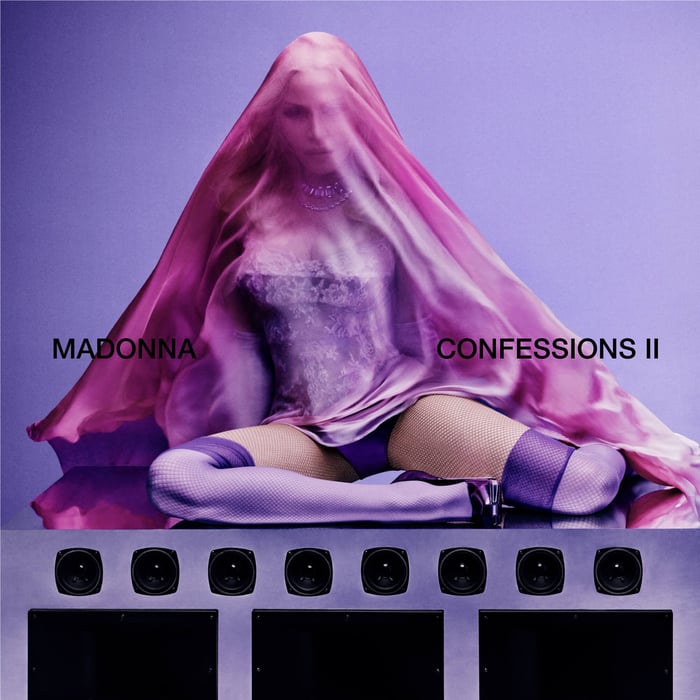
Confessions II Review: Madonna’s Dance-Floor Therapy Gets Weirdly Specific


 See more Architeg Prints stories on Google.
Confessions II Review: Madonna’s Dance-Floor Therapy Gets Weirdly Specific
Madonna’s Confessions II turns the club into a confessional booth with a mirror ball. It’s sweaty, bitter, tender—and stubbornly alive.
The hook: this isn’t a comeback, it’s a return to the scene
The first thing Confessions II tells you is that the dance floor isn’t where Madonna goes to celebrate. It’s where she goes to survive.
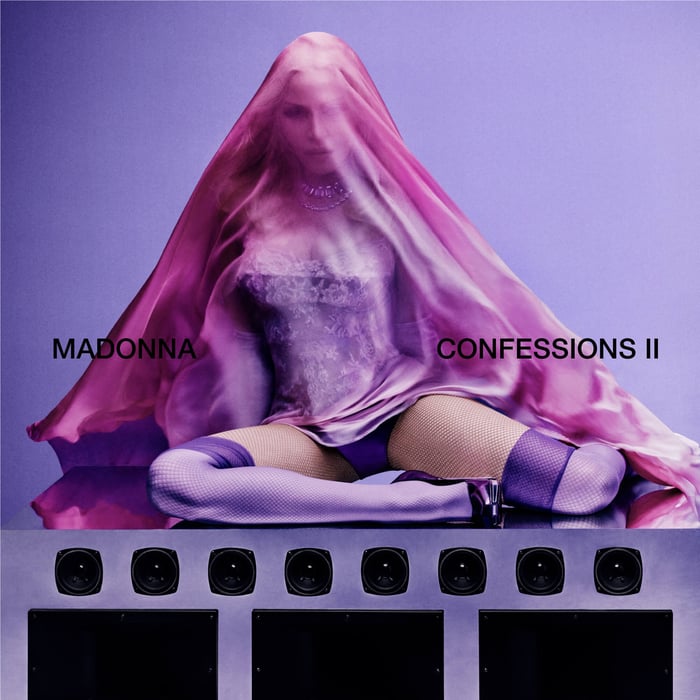
Back in 2005, I can practically hear her building a continuous mix in Stuart Price’s London home setup like she’s trying to sweat a decade off her body under a mirror ball. That original run felt effortless—like pop stardom doing cardio and calling it spirituality. Then came the long stretch of chasing that high: big-name EDM flirtations, albums that blurred together, a detour to Lisbon, and a greatest-hits tour that read like a reminder of what the new music wasn’t delivering.
So when Price shows up again on Confessions II, it doesn’t feel nostalgic. It feels tactical. Same thread, one brutal change: the woman on the floor isn’t 46 anymore. She’s 67, and the people who haunt her—dead partners, exes, even her daughter—aren’t outside the club. They’re in it with her.
And yeah, on my first pass I expected a victory lap. On second listen, it hit me: this thing is more like a locked room mystery where the culprit is memory.
The dance floor as refuge, not flex
The album opens by treating the club less like a party and more like a shelter with bass.
“I Feel So Free” rides pressure-heavy deep house, looping Lil Louis’ “French Kiss” in a way that’s not coy—it’s purposeful. The track doesn’t “reference” the past so much as it presses Madonna against it. She doesn’t burst in like a pop general. She slips around the edges as a half-whispered host, sounding like she’d rather invent “a new persona” than risk being recognized. She talks about “safety in numbers,” orders champagne like she needs a prop just to step onto the floor.
That’s the key move: she’s not using dance music to look young. She’s using it to disappear.
“Love Without Words” pushes the idea into something almost religious. The club becomes “a temple of sweat and surrender,” strangers get promoted to brothers and sisters, and the beat starts feeling like a ritual instead of a hook. It’s a bold choice—also a slightly ridiculous one, if I’m honest—because turning a nightclub into a sanctuary is the kind of move that can sound profound or corny depending on your tolerance for sermonizing. Here, it mostly works because she sounds like she needs it to be true.
Then “Love Sensation” lands trust in a way that catches even her off-guard. She sings,
“It’s more than love, yeah/Knowing that I can feel trust,”
and the moment plays like a real-time discovery rather than a lyric on a schedule. A reasonable listener could call it melodramatic. I hear someone surprised the floor didn’t betray her.
“Dance music is superficial”? She picks that fight on purpose
Just when you think the album will stay in vibe mode, Madonna decides to argue.
“One Step Away” comes right out and says it: “People think that dance music is superficial/But they’ve got it all wrong.” And then she does something more confrontational than singing—she delivers a fully spoken keynote, insisting the dance floor “is a threshold.”
Not a metaphorical threshold, either. She frames it like a line you cross into a different set of rules: movement over talking, bodies over opinions. Then she drops the sharpest pin in the whole “joy” message:
“Nobody’s free until they’re broken.”
That sentence changes the temperature of everything around it. It’s not a motivational poster. It’s a warning label.
“Good for the Soul” tries to smooth the edges with mysticism: Virgo moon notes, Venus lining up with Taurus, a thousand birds released into the sky, a casual recommendation for a rain-dance—no method required, as if the point is the intention, not the technique. Part of me enjoys how lightly she tosses these images around, like guidance scribbled on a yoga studio chalkboard. Another part of me kept waiting for the music to earn that cosmic language more often. The mysticism only really sells when the pain is still visible in the anatomy of the song.
And sometimes it isn’t.
When guests show up, it’s not community—it’s confrontation
A lot of albums use features like décor. Here, the guests show up like witnesses.
On “Bring Your Love,” Sabrina Carpenter drops in as the younger half of a two-woman unit fighting off the forces of opinion and spreadsheet logic. Madonna’s line is the real thesis:
“Don’t try to distract me with numbers/I did it all for love.”
She follows it with a calm little toast that’s way more threatening than it needs to be:
“I know where the bodies are buried.”
That’s Madonna in late-stage form: not begging for approval, not pretending she doesn’t remember what people did. She remembers. She catalogs.
“Read My Lips” goes even more direct—she’s got a specific liar in mind, and her repeated request is basically: close your mouth. She details the damage with the kind of bluntness pop stars usually avoid:
“You hurt me with your kiss, and I realize/You’re just broken.”
Then Feid answers in Spanish, needling from inside the chaos like the argument has multiple rooms.
Even “Everything,” which should be the clean, uplifting moment—visions, commands, “go into the sunlight”—can’t resist sneaking resentment into the bridge. She wonders why this other person always makes her feel bad about herself, and she admits she sometimes wishes she could be somebody else. That contradiction feels intentional: the album keeps insisting on liberation while showing you the chain marks.
Seduction as a syllabus (and yes, it’s controlling)
When she switches into sexy mode, she doesn’t flirt—she instructs.
“School” has Madonna playing teacher to a man who sounds like he never got issued the basic materials. She sizes him up with a line that’s funny because it’s delivered like a fact:
“Maybe you’re Picasso/But you’re also a liar.”
Then she lays out terms with zero softness: she wants a blank canvas for her longing, and she clarifies,
“Really I’m not your mother, I’d rather be your lover.”
That’s not just a lyric. It’s a boundary dressed as seduction.
The painter motif threatens to get away from her—burned masterpiece, dealer’s cut, a jab about colorblindness—images flash past before any single one becomes the clear symbol. I’m torn on that. Part of me likes the speed; it feels like thought racing. Part of me wanted one of those ideas to sit still long enough to sting.
“Bizarre” tightens everything into a tabloid-ready refrains:
“Movie star, deep blue eyes/In Hollywood, we’re a perfect prize,”
plus a Shelby Cobra tearing down the road. It’s compressed like she’s already anticipating how the story will get repeated back to her in the ugliest, laziest way possible. And sure enough, it’s already being linked to a real-life celeb by the British tabloids. The song sounds like Madonna shrugging: you people will attach a name anyway, so here’s a hook you can choke on.
Grief shows up, and the album stops pretending it’s only about dancing
The most exposed material on Confessions II belongs to her recently departed brother.
“Fragile” lands like a room going quiet mid-party. It started after a last conversation with her brother Christopher Ciccone—estranged for years before his death in 2024—and the writing doesn’t dress anything up. It’s stark:
“We shared a name, a home/We shared a fragile bond/Now you’re gone.”
No cleverness. No metaphor armor.
Even the way she processes the grief is telling: she invites him into her dreams, but not for some cinematic reunion. She gives him tasks. “Don’t forget about me” and “Don’t forget to be happy.” It’s grief organized into a to-do list, which is either heartbreakingly human or kind of chilling. I can’t fully decide, and I think that’s the point—control is one of her coping mechanisms, and the album refuses to edit that out.
Then she goes ice-cold on “Betrayal,” delivering a verse like testimony:
“When the book of love is written, I am the writer/And by the last page, you will not be mentioned.”
She tells someone off-stage, “You’ll never take my mother’s place,” and then—this is the eerie part—she melts mid-dance into something less rigid. She admits she hated him once, then loved, “forever ‘til the end.”
That pivot is the album in miniature: it makes a hard statement, then shows you the bruise underneath it.
“My Sins Are My Savior” hands part of the redemption weight to Stromae, and Madonna saves one plainspoken moment for herself near the end:
“I was not lost, I was just broken,”
and she says it like she’s placing the crown back on her own head. A reasonable listener could hear arrogance. I hear self-preservation with better lighting.
“Danceteria” is the real time machine (and it’s oddly tender)
“Danceteria” doesn’t just reference the past—it walks there.
She steps off the 4, 5, 6 trains and starts rolling out a film-credit list of who’s in the room. Martin Burgoyne is holding the door. Haoui Montaug waves people past the velvet rope. Debi Mazar’s in the elevator. Mark Kamins is in the booth spinning her “Everybody” demo. And she sings like everybody inside is a piece of art.
It’s nostalgia, sure—but it’s also inventory. Madonna isn’t reminiscing; she’s taking attendance.
Then “L.E.S. Girl” picks up the same girl, but the mood has changed. Now she’s out in the rain on Avenue B, cherry red lipstick smeared on a cracked mirror inside a boy’s leather jacket. She’s staring at a guitarist on St. Mark’s Place—Marlon Brando face, dirty bleach-blond roots. The landlord wants money. Polaroids are stapled to the wall. The neighborhood sings to her like an address.
If this sounds romantic, it’s because Madonna makes it sound like hunger can be holy. And if it sounds grimy, good—that’s the honesty. These songs don’t glamorize the past; they underline what it cost.
The album’s deepest cut is an apology with no escape hatch
“The Test” is where the whole project stops being concept and becomes personal in a way Madonna usually sidesteps.
She calls Lourdes Leon “Little star,” perches on a stool under strobes, and says, flat-out:
“I wish I knew/The pain I caused.”
Lourdes—here as Lola Leon—takes the other verse:
“I trace the line of what you have sewn/Keep my own design.”
They meet at the end on:
“You made me whole when I was broken too.”
It’s not dramatic. It’s careful. Two singers circling an apology that can’t be stylized into something cooler. After decades of Madonna framing herself, she hands the microphone to the one person in the room she can’t redesign into a persona. The song is better for it—less shiny, more real, more dangerous.
And I’ll admit something: I wasn’t sure this track would work at first. The setup sounded like it could tip into theater. But the restraint—especially from Madonna—keeps it from turning into a scripted “mother-daughter moment.” It just sits there, unresolved in the way real relationships are.
Conclusion: Confessions II isn’t chasing youth—it’s auditing the past
Confessions II uses the dance floor the way some people use a diary: to say the thing out loud, then hide it inside rhythm. Stuart Price gives her a structure that can keep moving even when the lyrics want to stop and stare. Madonna fills that structure with names, grudges, spiritual slogans, and sudden softness. Sometimes the cosmic language feels a little too easy—like incense trying to cover smoke—but the album’s best moments don’t pretend to be clean. They just keep dancing anyway.
Our verdict: People who like pop when it’s messy, grown-up, and slightly controlling in the way real coping can be will actually like Confessions II. People who want Madonna to either relive 2005 flawlessly or stay politely “fun” are going to get irritated fast—and honestly, the album seems fine with that.
FAQ
- Is Confessions II a direct sequel to Confessions on a Dance Floor?
It behaves like one in sound and continuity, but it’s not trying to recreate youth—it’s revisiting the same room with different ghosts. - What’s the emotional center of Confessions II?
“Fragile” and “The Test” hit hardest because they drop the persona-management and let grief and apology sit in plain sight. - Do the guest features feel necessary?
Yes, because they function like pressure points—Sabrina Carpenter and Feid don’t decorate songs; they complicate them. - Is the album actually “about” dance music being deep?
Madonna practically argues that out loud on “One Step Away,” and the album backs it up when it lets pain show through the glow. - Where should I start if I’m only sampling a few tracks?
Try “Danceteria,” “Fragile,” and “L.E.S. Girl” first—they show the album’s memory, grief, and street-level romantic damage in one run.
If you want to keep that dance-floor-afterimage around, a poster of your favorite album cover is a surprisingly nice way to do it. You can browse options at our store: https://www.architeg-prints.com
 | DISCOUNTGET 30% OFF*Use code on your next order:
|
* This post may contain affiliate links, meaning we earn a commission if you make a purchase through these links, at no additional cost to you.