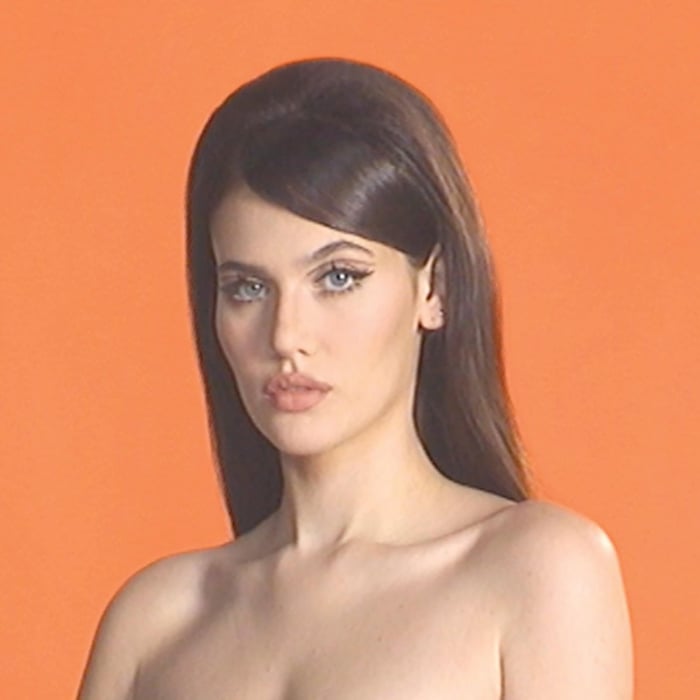
Visitor Album Review: Sienna Spiro Makes Heartbreak Feel Like Rent


 See more Architeg Prints stories on Google.
Visitor Album Review: Sienna Spiro Makes Heartbreak Feel Like Rent
Visitor album turns soul confession into a temporary lease—strings, ego, and numbness included. Here’s what Sienna Spiro is really doing.
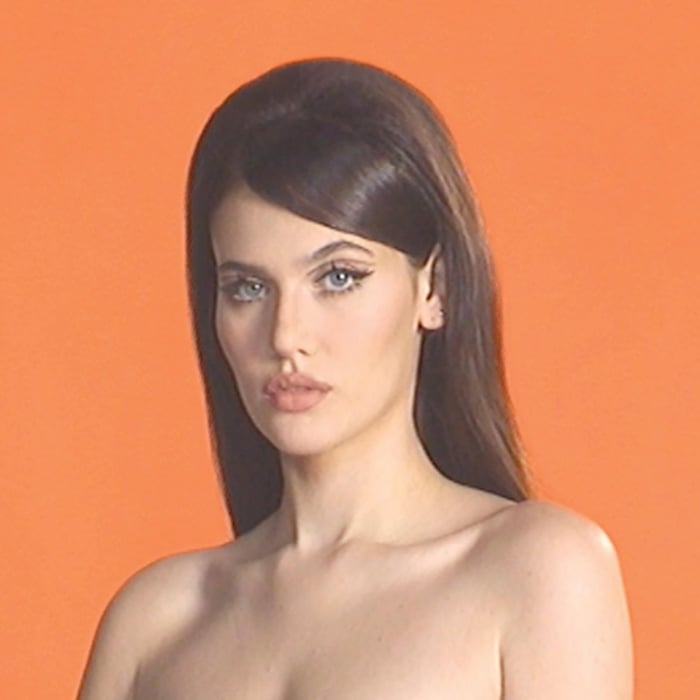
A quick warning: this record doesn’t “move on”
This is the kind of album that stares at the exit sign and still orders dessert. Visitor isn’t about healing. It’s about learning how to live like you’re never fully allowed to unpack.
And yeah—Visitor album is a debut, but it doesn’t act like one. It acts like someone already knows what their damage looks like under bright lighting and decided to sing anyway.
From phone-camera covers to big-room mythology
Here’s the arc you can hear, even before the first chorus lands: Sienna Spiro started out uploading phone videos in London around 2021, pulling listeners in with the kind of influences you can’t fake—Etta James, Amy Winehouse, Frank Sinatra, Frank Ocean. That’s not a “vibe board.” That’s a warning label: voice-forward, pain-forward, no hiding.
Five years later, at twenty, she’s cutting her debut across Electric Lady in New York, Abbey Road in London, and Valentine in Los Angeles. That geographic flex isn’t just trivia—she uses those rooms to make her writing feel expensive and exposed at the same time. Soul-driven lines get framed with orchestral strings like she’s putting a bruise in a museum case.
She keeps coming back to one core feeling: being “a visitor,” someone passing through. And the women she writes don’t sit down comfortably in their own lives. They’re guests—in a bed, in a house, in a relationship that already has someone else’s name on the mailbox. That’s the album’s actual theme: temporary access.
I wasn’t sure at first if the “visitor” idea was going to be one of those concepts that sounds better in an interview than in a song. Then the title track happened and it got uncomfortably specific.
“The Visitor” is her mission statement, and it doesn’t blink
This section hits right after you settle in: the title track, “The Visitor,” reportedly took one take—believable, because it has that single-breath adrenaline where you can hear a singer choosing danger over perfection.
Her vocals climb over a 20-piece string orchestra arranged by Peter Rotter. Not cute little background strings, either. These are sweep-the-floor strings, the kind that make every lyric feel like it’s being entered into a permanent record.
“We lay on towers, on rented time”
“I’m yours for hours, you’re always mine”
“All things expire, I know you won’t stay”
That’s not romance. That’s hourly labor with eye contact. And when she pleads, “Say that you love me / Say I’m all you need,” she’s doing something sharper than begging—she’s mocking her own bargaining tactics while still using them. It’s self-awareness that doesn’t save her. It just narrates the fall more clearly.
An arguable take: the strings don’t soften the song—they weaponize it. They make her sound like she’s testifying, not confessing.
“Mono No Aware” tries to make peace, and then refuses
The next pivot is “Mono No Aware,” a Japanese phrase pointing at the ache inside every goodbye. Spiro treats it like a list of proofs—small things that die, big things that fade, and the annoying fact that knowing this changes nothing.
She runs through the losses plainly: “For flowers to expire / For love to lose desir / For you to get so tired.” The wording is almost child-simple, like she’s stripping language down so nobody can hide behind poetry.
Then she gives you the chorus like a hand on your shoulder:
“It’s okay to fall and turn to blue”
“It’s okay to love and okay to lose”
“The beauty is you don’t have to choose”
That “beauty” line sounds comforting until she undercuts it with: “Everybody dies / And I still ask why.” That’s the real move: she lets herself almost accept impermanence, then snaps back into refusal. The album keeps doing that—offering peace, then sabotaging it because peace would be too final.
I thought on first listen this would be one of the softer, “life-affirming” moments. On second listen, it’s basically a polite argument with reality.
“Die on This Hill” and the art of staying anyway
Next, “Die on This Hill” is where she stops romanticizing misunderstanding and just names it: nothing reaches him. “God I wish one thing meant to you.” That line doesn’t feel like a lyric; it feels like a cornered thought.
And still—she plants her feet:
“I’ll take my pride, stand here for you”
“No, I’m not blind, just seeing it through”
“I’ll take tonight and die on this hill / I always will”
Here’s my mildly annoying criticism: the promise gets so endless that it flirts with melodrama. Not because the emotion isn’t real—because it’s almost too clean as a vow. But maybe that’s the point. She’s not trying to sound reasonable. She’s documenting the moment you decide to be loyal to something that’s already failing.
Arguable statement: this song isn’t about him at all—it’s about her addiction to endurance.
“We’re Not in Love” makes situationship logic sound like physics
Then she slides into “We’re Not in Love” and acts like the denial is just a casual detail. The hook lands because it’s blunt: “We’re not in love / But we make love / And that don’t make no sense.”
And then she explains the sense herself—he’s “right here but you’re not here.” That’s the whole situationship thesis: physical proximity, emotional absenteeism. She vows to “keep coming back… anyways,” staying close but “not enough to break.”
The line that really shows her hand: “You say I’m pretty, but you hit so hard / Oh I’m laughing, but I’m in the dark.” That’s not flirting. That’s someone performing okay-ness while actively getting bruised by the setup.
Arguable take: the song pretends to be casual, but it’s one of the most desperate tracks here—because it’s desperation disguised as chill.
“Great Expectation” is where she rewrites the plot to survive
“Great Expectation” doesn’t even try to hide the imbalance. Intimacy exists “in my head.” He “calls me till you got something you need me for.” That’s not a relationship; that’s customer service.
And the most revealing admission is craft-level: she starts editing her own narrative just to keep him inside it. “I go back and change the plot / Just to have you in the way I want.” That’s brutal because it’s true-to-life—people do this constantly, rewriting memories and motives until the story stops hurting.
By the chorus she’s boiled down to one sad fuel source: “All I need is the great expectation of you.” Not you. The expectation of you. The mirage. The trailer, not the movie.
I kept waiting for the big empowerment turn here, the “forget him” punchline—and it never comes. She doesn’t grant herself that fantasy.
“He’s Not My Baby, I’m His” is the record’s coldest mirror
This is the persona piece, and it’s where Visitor album stops feeling like diary songs and starts feeling like a courtroom monologue.
She sings from the perspective of a girl spending “all Sunday” waiting for a man “twice my age,” then crying herself “out of a hunger” by Monday. She calls it a “guilty pleasure” with someone she “should know better” about—words that sound like a warning delivered too late.
And she narrates her own self-judgment with that nasty clarity:
“Stroke in my head, it’s a stroke in my ego”
“And no one feels quite as seen / As when a child gets chosen”
“And I’m half his age, it’s a rite of passage / To know it’s wrong, but not quite care”
That “child gets chosen” line is not there to shock you. It’s there to explain how the trap works—how harm gets dressed up as validation until you can’t tell which part you wanted.
Arguable statement: this is the album’s real centerpiece, not the title track, because it shows Spiro isn’t just writing about pain—she’s writing about the stories people invent to justify staying in it.
“You Stole the Show” claps for him, then catches itself
On “You Stole the Show,” she gives him the kind of praise that sounds like surrender: “You stole the show, got a standing ovation / I lost control, from the stage, from your face.”
Then she tells you exactly what she’s chasing: reassurance. “I ask if you love me, and you just shrug your shoulders.” That shrug is practically the villain of the album: casual, quiet, devastating.
She turns jagged in the next verse—“My love turns green, I know you / Made me hate myself”—and she doesn’t pretend the jealousy came from nowhere. She knows what he’s doing to her internal weather.
If there’s humor anywhere on Visitor album, it’s the absurdity of asking for love and getting a shrug, like she requested a refill and the waiter just blinked.
“Pure” points the knife inward: applause vs meaning
“Pure” is where she stops making the man the sole problem and drags her own ambition into the room.
“Used to do it all so pure / For the love of the song no more.”
“Now I think about an applause / When I open my mouth.”
That’s not a noble artist statement—it’s a grimy little truth. Once you know people are watching, your motives get fingerprints all over them.
She even admits the social fallout: “I’ve been losing all my friends / Pushing people to the edge.” That’s the cost of turning your life into output. And no, she doesn’t glamorize it. She makes it sound lonely and slightly pathetic, which is the correct tone.
Arguable take: “Pure” is the bravest track here because it refuses to let heartbreak be the only villain. Sometimes the villain is the need to be witnessed.
By the final stretch, she’s not chasing applause anyway—she’s chasing meaning. And then she admits the worst punchline: by the last song, she just wants to feel something. “Just wanna feel special / I just wanna feel.” The last thing she admits she feels is numbness. No fireworks. Just the dead battery icon.
“Time, You & Me” uses a cliché on purpose—and I think it works
“Time, You & Me” opens with a line that is, frankly, a cliché: “Time waits for no one / Naturally.” For a second I rolled my eyes. Then I realized she’s using the cliché like a bland wall paint—so the rest of the scene looks harsher.
She imagines a fictional man who’ll “waste the days till forty-five” and “regret the time as he waits to die.” It’s not subtle. It’s supposed to feel like staring at a life you don’t want and realizing you’re already in it.
Then she flips back to her own ledger with a carousel metaphor that actually earns its keep:
“Everybody rides a carousel”
“That’s what it costs”
“To get on again and off again, to lose the ones you love”
“But to have them for the hours and the minutes that there was”
And then she drops the line that sounds like a bill sliding across the table: “You’ll never get back what you’ve spent on me.” The kicker is—he’s listening. She’s marked his weeks. She’s not a visitor in his timeline; she’s an expense he can’t itemize.
Arguable statement: this is the only moment where the album sounds remotely adult in a traditional sense—not wiser, just more aware of time as currency.
“My House” is the one boundary she actually enforces
Then comes “My House,” and the mood shifts because she finally owns something. There’s a “blue door,” and it matters because it’s not symbolic fluff—it’s a line she can shut.
She invokes a neighbor who will “testify” forever, watching how slow she was to enter water filled with “the tears you put into my eyes.” That’s such a specific image—public witnesses to private misery—that it lands like a bruise you forgot was visible.
She insists she built her kitchen “with my bare hands,” bled “into the foundation,” and it’ll remain “‘til I’m cremated.” She swears the walls she built “gonna fall down for no one.”
The point isn’t domestic pride. The point is refusal. The tears he caused might fill her pool and echo through her home, but the deed is hers. The door is hers. She can close it. After an entire album of rented time, “My House” is the first moment that doesn’t feel leased.
I didn’t expect this to be one of the most satisfying tracks emotionally—but it is, because it’s the only place she stops negotiating.
Favorite tracks (the ones that actually tell the truth)
I’m not pretending these are the “best,” but they feel like the album’s spine:
- “My House”
- “He’s Not My Baby, I’m His”
- “The Visitor”
And yes, I’d call the album great in the plain-English sense: not flawless, not immune to a little dramatic over-commitment, but sharply written and staged with intent.
Conclusion
Visitor album is Sienna Spiro building a mansion out of temporary feelings, then walking you room to room to show you how little of it is truly hers. The strings and big studios aren’t there to impress you—they’re there to make the loneliness sound official, like it’s been notarized.
Our verdict: People who like soul-pop that admits the ugly thoughts (jealousy, ego, numbness, bargaining) will latch onto this fast. If you need your heartbreak songs to offer clean closure or “self-love” slogans by track three, this album will irritate you—politely, with a 20-piece orchestra, while it does absolutely nothing to comfort you.
FAQ
- Is Visitor a concept album or just a breakup album?
It behaves like a concept album because the “visitor” feeling keeps reappearing—guests in beds, borrowed time, love that expires—but the songs still hit like personal snapshots, not plot points. - What’s the most intense track lyrically?
“He’s Not My Baby, I’m His” goes for the throat because it doesn’t just describe a bad situation—it explains the mental gymnastics that keep it alive. - Does the orchestral production overpower her voice?
Most of the time, no—the strings raise the stakes. If anything, they make the voice sound more cornered. A few moments flirt with melodrama, but that tension is part of the appeal. - Is there any real resolution by the end?
Not the comforting kind. The closest thing to a boundary is “My House,” where she finally claims something as non-negotiable. - Where should I start if I’m new to Sienna Spiro?
Start with “The Visitor” for the thesis, then “My House” for the boundary, then “Pure” for the self-aimed honesty.
If this album put an image in your head you can’t shake—the blue door, the standing ovation, the rented time—hanging an album-cover poster is basically just admitting you live with your music. If you want, you can shop your favorite album cover poster at our store: https://www.architeg-prints.com
 | DISCOUNTGET 30% OFF*Use code on your next order:
|
* This post may contain affiliate links, meaning we earn a commission if you make a purchase through these links, at no additional cost to you.