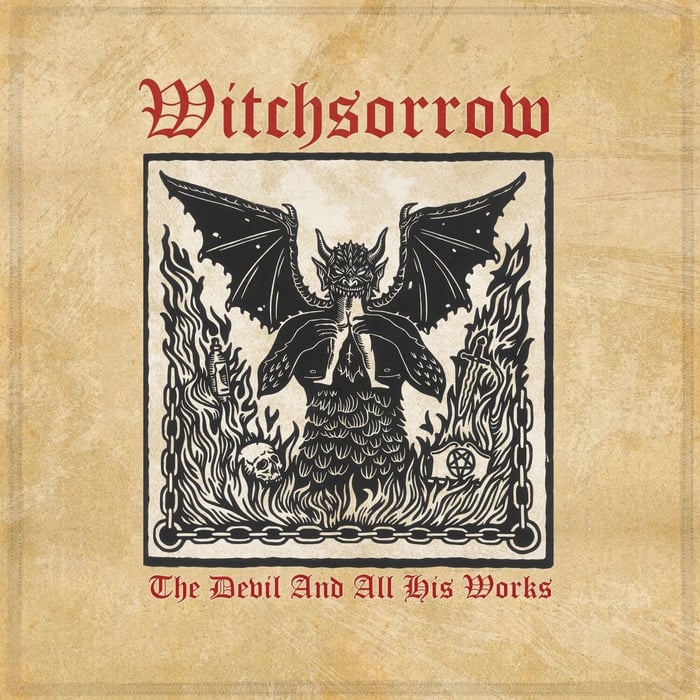
Witchsorrow Doom Returns: Bells, Booze, and No Progress Allowed


 See more Architeg Prints stories on Google.
Witchsorrow Doom Returns: Bells, Booze, and No Progress Allowed
Witchsorrow doom comes back swinging: tolling bells, obscene riff weight, and a stubborn refusal to “evolve” for anyone. It’s devotion, not reinvention.
The real question: if the bell doesn’t ring, does doom even start?
There are “big life questions,” and then there are the ones that actually matter when you hit play: if a doom record doesn’t open with a tolling bell, is it even trying? I’m not pretending this is philosophy. It’s genre law.
And Witchsorrow doom doesn’t flirt with the law—it shows up in robes and reads the sentence out loud. Right away, this album makes it clear it’s not here to impress the prog crowd or chase shiny ideas. It’s here to do doom the old way, like it’s a craft passed down through smoke and amplifiers.
Eight years gone, and they come back like they never left
Here’s what surprised me: after eight years since Hexenhammer, I expected some softening around the edges. Time does that to bands. They get cleaner, “broader,” more polite. On first listen, I thought The Devil And All His Works might be a tidy comeback record—competent, maybe a little safe.
Yeah, no.
It comes back grimy and heavy, like the gap never happened. If anything, the record sounds like it’s been saving up weight. I can’t prove intent, obviously, but it sure feels like Witchsorrow decided that absence wasn’t an excuse to modernize—it was a chance to return with something that refuses to accommodate anyone.
“Omnia Finiuntar”: the bell tolls and the floor drops out
The opener, “Omnia Finiuntar,” is basically Witchsorrow announcing, “We remember what you came here for.” The bell tolling isn’t atmosphere—it’s a door slam.
Then the instruments lock into that classic doom chemistry:
- Necroskull’s guitar: thick, riff-first, built to flatten a room
- Emily Witch’s bass: not just following, but reinforcing the riff like it’s steel rebar
- Willbrahammer’s drumming: heavy in a way that feels physical, like stone shifting
The combination lands in that Iommi/Butler tradition—less “influence,” more “blueprint.” And over the top of it, Necroskull’s vocals come in soaked in reverb, and yeah, it’s hard not to think of Lee Dorrian—especially that early 90s era where everything sounded raw, real, and mildly catastrophic.
This track runs close to 12 minutes, and the important thing is: it earns its length by staying oppressive without getting lazy. It doesn’t wander off to “show range.” It just keeps tightening the screws.
Also worth saying plainly: this is Willbrahammer’s final recorded appearance with the band, and knowing that adds a weird gravity. The drumming doesn’t show off— it just keeps the altar from cracking.
A visual taste of the album’s attitude
“Bacchus” turns doom into a stomp, not a funeral march
After that opener, “Bacchus” could’ve sagged. Instead it leans into an ode to sin and decadence like it’s proud of the dirt under its nails.
The riffs are fuzzed and downtuned—no surprise there—but the detail that makes it work is the way the bass and drums punch off-beats. That little rhythmic shove gives the song a stubborn groove, like it’s dragging something heavy across a floor and enjoying the noise.
If “Omnia Finiuntar” is doom as ritual, “Bacchus” is doom as indulgence. Same tools, different grin.
When they speed up, it’s not “variety”—it’s a threat
Here’s the part where the album stops just being “pure doom” and starts throwing elbows.
On “Hades Chains” (with guest vocals from Serena Cherry of Svalbard) and “In Triumph We Rot!!!”, they kick the tempo and push into full-on metal territory. Not in a slick way. In a “move or get moved” way.
These aren’t polite nods to speed. They’re headbanging monsters, the kind of tracks that clearly exist because the band wants the pit to wake up when they play live.
I’m a little torn, though—and I’ll admit I’m not 100% sure about this—because part of me thinks the faster punches land so hard that they briefly make the slower material feel even slower by comparison. That might be the point. Or it might just be the risk of putting your most immediately physical moments right in the middle of a record that also loves long, crushing sprawl.
Either way, the choice is confident.
“In Triumph We Rot!!!” writes a love letter to doom lifers
“In Triumph We Rot!!!” doesn’t just sound like a scene anthem—it wants to be one. Lyrically it tips its hat to the doom faithful, the flare-wearing, crucifix-bearing, riff-slaves who treat volume like a belief system.
It’s almost ridiculous in how devoted it is, and that’s exactly why it works. Doom has always had that church-like loyalty, and Witchsorrow leans into it instead of pretending they’re above it.
And honestly? After a few listens, I respected that more than I expected to. My first impression was that the lyrics might feel a little on-the-nose. But the music sells it so hard that subtlety would’ve felt like cowardice.
“Altar” and the art of making “tried and tested” still feel dangerous
From there, the album keeps most of its aim trained straight at doom purists. Tracks like “Altar” stretch out into those weighty, sprawling shapes the genre lives for.
But here’s the thing I don’t want to undersell: the band isn’t just repeating a formula. They’re working inside it with a kind of grim imagination—tiny shifts in riff emphasis, pacing decisions that stretch discomfort, and lead guitar moments from Necroskull that actually feel composed rather than tossed in.
If you think doom is only slow riffs and despair, “Altar” is the track that makes the argument back: doom is also arrangement, and Witchsorrow knows exactly when to sit on a riff until it turns mean.
The closer “A Quintessence Of Dust” doesn’t comfort you—good
By the time “A Quintessence Of Dust” closes the album, the mood isn’t “resolved.” It’s more like the record slowly backs away into shadow and lets the last notes hang there.
It’s melancholy, sure, but not in a delicate way. It’s heavy sadness—the kind that doesn’t ask you to relate, just to stand there and take it.
If there’s a flaw in the experience, it’s also part of its identity: sometimes this record is so committed to weight that it risks blending its own corners together. Not often, but there were moments where I caught myself craving a sharper left turn—then realizing Witchsorrow probably considers that craving a personal problem.
Production that understands doom isn’t supposed to sound “nice”
Doom lives or dies on production. If you can’t make the riffs feel like they have mass, you’re just playing slow rock with spooky decorations.
This record gets it right, and the reason isn’t mysterious: Chris Fielding (UK underground metal figure, also known for his time as Conan’s bassist) brings the kind of production that doesn’t polish—he magnifies. When his name shows up in the credits, you expect something nasty in the best way, and that’s what happens here.
Everything hits with oppressive clarity:
- guitars feel thick without turning to mush
- bass sits like a foundation, not an accessory
- drums land with that “stone altar” weight
- vocals float in reverb like warnings echoing down a corridor
It’s not modern-sleek. It’s purpose-built ugly, and it fits the album’s intent.
Who this is for (and who it politely ignores)
Let’s not pretend this album is trying to recruit newcomers. If you’re brand new to doom metal, The Devil And All His Works probably won’t be your gateway. It doesn’t hold your hand, doesn’t lighten up, and doesn’t do the “look, we can be accessible too” routine.
But if you’re already the type who loves classic Sabbath, Cathedral, and Pentagram, this thing is going to feel like a feast. Witchsorrow isn’t reinventing doom; they’re doubling down on why it worked in the first place.
And yes, I’d still peg it at 8/10 in terms of how effectively it delivers what it’s trying to do—even if I can nitpick a moment or two where I wanted a slightly sharper contrast.
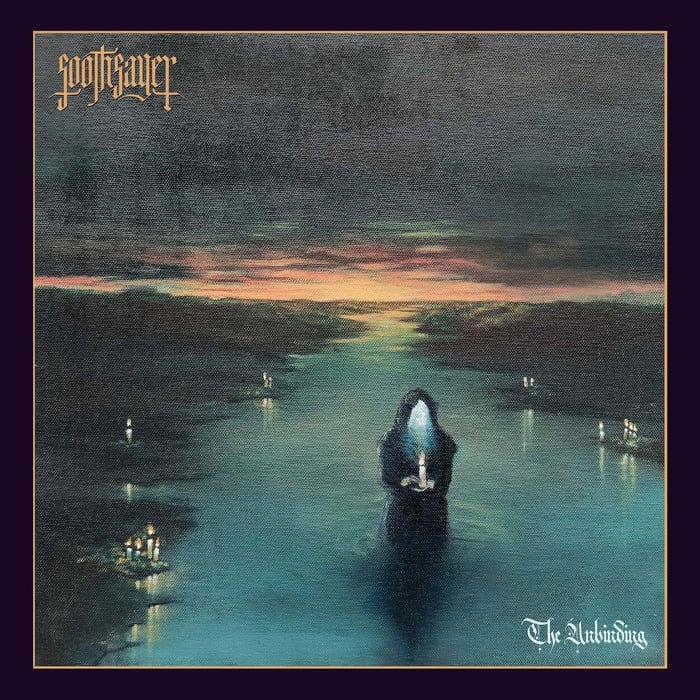
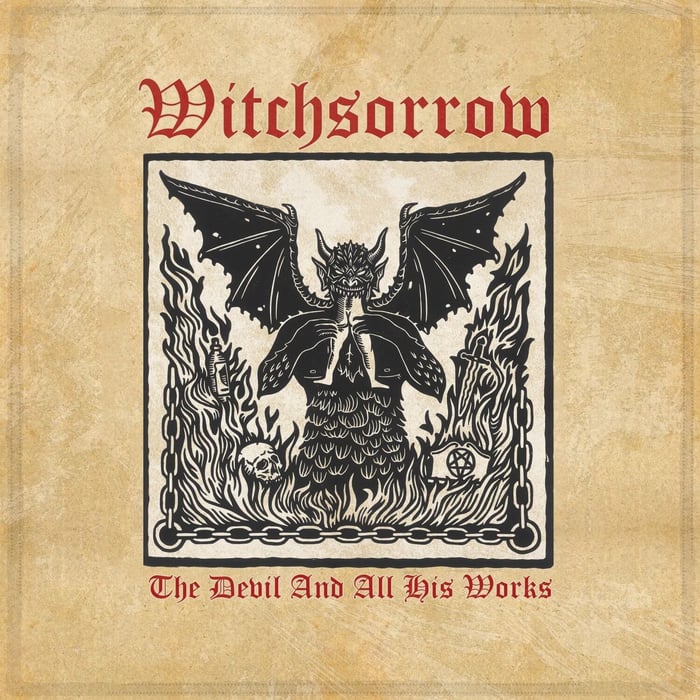
Album art that matches the sermon
This cover doesn’t whisper. It stares you down, like it already knows you’re going to press play anyway.
Release info, plain and simple
The Devil And All His Works is out now via Church Road Records.
If you needed a neat timestamp for Witchsorrow’s return, that’s it. The rest is just volume.
FAQ
- What is the core sound of Witchsorrow doom on this album?
Thick, fuzzed, downtuned riffs with big reverb vocals and production that makes everything feel heavy instead of pretty. - Does the album start with the classic doom bell trope?
Yes—“Omnia Finiuntar” opens with tolling bells, like the band is enforcing a rule they believe in. - Which tracks push beyond slow doom into faster metal?
“Hades Chains” (with guest vocals from Serena Cherry) and “In Triumph We Rot!!!” kick the pace up and hit like pit-starters. - Is this a good entry point for someone new to doom metal?
Probably not. It’s more of a statement for purists than a welcome mat for beginners. - Who produced the album, and why does it matter here?
Chris Fielding handled production, and the sound has that essential doom quality: huge weight without turning into indistinct sludge.
If this record’s cover art (and attitude) is your kind of wall décor, you can always shop a favorite album cover poster at our store: https://www.architeg-prints.com/ — it fits the same “loud object” energy.
 | DISCOUNTGET 30% OFF*Use code on your next order:
|
* This post may contain affiliate links, meaning we earn a commission if you make a purchase through these links, at no additional cost to you.