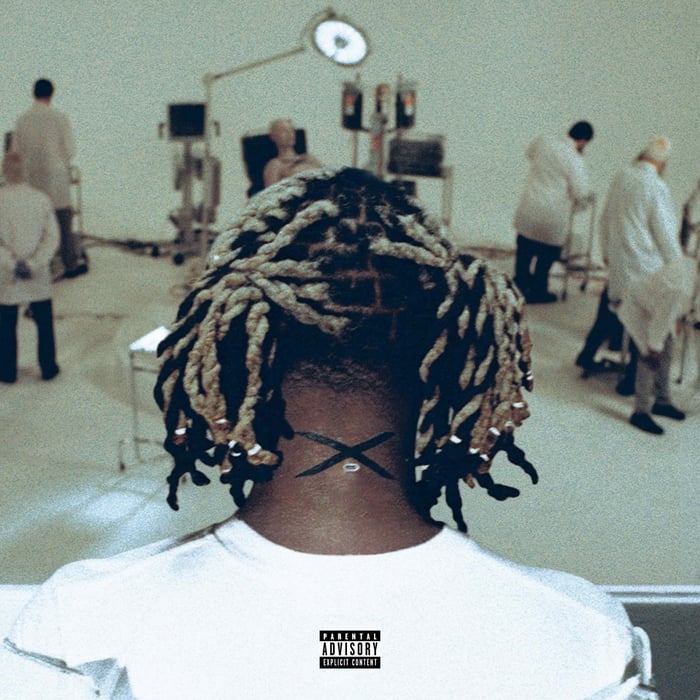
Ken Carson xperiment review: rage isn’t dead, it’s just on cruise control


 See more Architeg Prints stories on Google.
Ken Carson xperiment review: rage isn’t dead, it’s just on cruise control
Ken Carson’s xperiment is a 22-track flex spiral where Opium rage keeps moving, but the point is the numbness—and that’s the gamble.
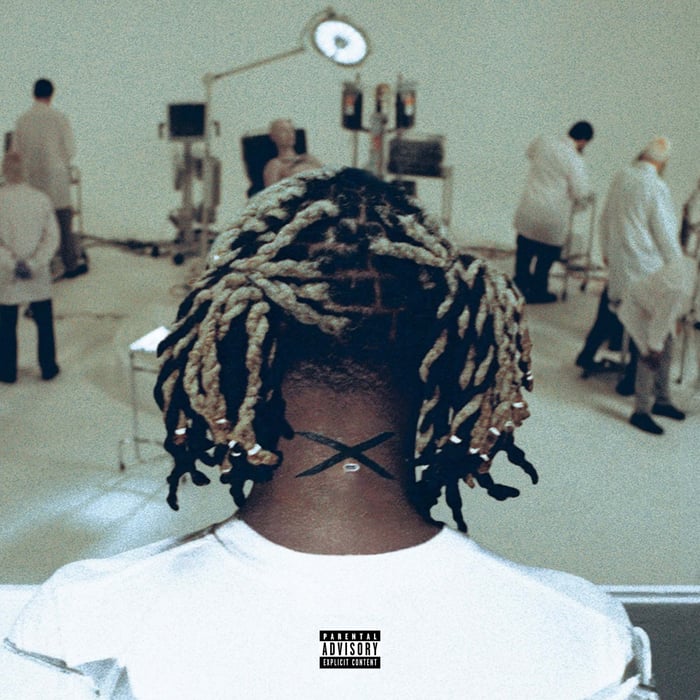
The real “xperiment” is how little emotion he lets you have
Rage was supposed to be a phase, right? Five years after Whole Lotta Red cracked open the distorted-synth, blown-out-808 playbook, the sound should’ve aged out like an expired trend cycle. Instead, it’s basically moved into Opium full-time—Carti’s label as a kind of lounge where the bass rattles, the lights are dim, and nobody admits they care.
Ken Carson comes off like the most consistent worker in that room. Not necessarily the most devoted disciple—more like the guy who shows up, clocks in, and keeps the machinery humming. After More Chaos hit No. 1 last spring on sheer weight and volume, xperiment doesn’t act like a pivot. It’s the same engine, just idling at cruising speed: 22 tracks of drugs, jewelry, women, and grievances, delivered in an Auto-Tuned monotone that scrubs his voice down until it’s almost a texture instead of a personality.
That choice is the whole album’s thesis, whether it admits it or not. A reasonable listener might call it lazy. I think it’s closer to a dare: how long can you stay locked into a mood if the narrator refuses to blink?
Punchlines as background radiation, not a spotlight
Right after the first stretch, you realize Ken isn’t “setting up jokes.” He’s tossing them off like they’re receipts in a pocket. The punchlines land in multiples, and the best ones aren’t even delivered like they matter.
On “wheredoistart,” a breakup doesn’t become heartbreak; it becomes geology—something like continental drift, slow and inevitable. It’s funny in the way a deadpan text message is funny: you laugh because the sender clearly isn’t going to.
Then there’s “5.56s and .308s,” where he name-checks Thanos, BangBro, and John Cena’s villain turn in the span of a verse and slides into “this a drive-by” without changing expression. Threat, porn joke, pop-culture toss-off—same flat register, same emotional temperature. The arguable part: that’s the point. He’s not trying to make you laugh; he’s showing how everything sounds the same when you’ve decided none of it is allowed to reach you.
And every once in a while, he tries on the idea of “depth” without changing the voice. On “truth,” he goes:
“Late night in the studio, I’m pourin’ my heart out in the booth.”
But the song is basically him demanding honesty from everybody else while keeping his own locked behind tinted glass. It’s not hypocrisy so much as brand consistency: he wants confession as content, not as vulnerability.
On this tape, drugs aren’t a topic—they’re the main character
Here’s where xperiment stops pretending the “women, money, lifestyle” buckets are equal. Women are present, sure, but they feel secondary—like scenery. Drugs outweigh women in Ken’s ledger on this project, and not in a romanticized rockstar way. More like: this is the daily operating system.
Codeine isn’t described like a vice; it’s treated like a personality trait. On “the ritual,” he shouts an Oxy chorus over an 808 punch that also props up a cautionary moment about selling drugs where he sleeps. It’s a neat contradiction: the beat is triumph, the lyric is consequence, and he refuses to choose which one “wins.”
On “outofmybody,” he captures a dissociative thrill with that line—“off codeine, yeah, I’m pissed”—like being angry is the only sensation strong enough to register through the haze. He even wears detachment like a medal. If you’re expecting a moral about addiction, you’re in the wrong room.
That numb chant shows up again on “possession”: “I’ve been fillin’ up my fuckin’ body with these drugs.” The hook about raking money like leaves sits on top of it, like cash is just another substance to stack on the same shelf.
And on “amnesia,” he does something weirdly petty and almost tender: he compliments his ex by diagnosing her. “I got amnesia, I forgot about all the times that I seen ya.” It’s a break-up line delivered like he’s reading a shipping label—cold enough to be funny, and maybe cold enough to be true.
I’ll admit I’m not totally sure whether the album wants this to feel tragic. Sometimes it feels like he’s proud of the numbness; other times it sounds like he’s reporting it from inside a locked car.
The guests don’t “feature”—they interrupt the spell
One thing Ken does smartly here: he uses features like contrast dye. The guests show you what his clipped delivery is doing by putting it next to someone who bends time differently.
Young Thug stomps all over “drug kit” with scratchy vocals and Xanax offers—“you gon’ fall in love, and now she need a Xanax”—his cadence weaving and wobbling around Ken’s tighter phrasing. It’s not just “Thug is charismatic.” It’s that Thug makes Ken sound even more like a man choosing restraint on purpose. If Ken is a straight line, Thug is graffiti.
On “ghost,” Lil Uzi Vert stretches words to fill space around Ken’s clipped boasts, and that push-pull is the actual hook. Uzi hits:
“I just took your bitch, I don’t got a phone / I gotta write a love letter.”
Ken doesn’t chase the melody; he lets Uzi float while he stays grounded, like he’s allergic to flourish.
And then Carti pops in twice—brief cameos that feel slurred and smudged into the background. On “deaf note,” his growls register as one more texture in Ken’s beat, not a “moment.” On “wedidit,” he’s mashing up canary diamonds with Men in Black workout gear over Ken’s repeated hook rhymes. Arguably, that’s Carti’s most useful role these days: not a frontman, but an atmosphere.
When Ken reaches for “big” songs, he shows his hand
The transition into the more “festival-coded” moments is where xperiment starts acting like it knows you might drift.
“edm” is basically Ken slipping a festival tune into a rage tape—festival synths sitting on hip-hop drum breaks. He even says it outright: “808s hittin’ just like EDM.” That kind of self-labeling is almost corny, but it works because he doesn’t over-sell it.
Then he drops the line that snaps the whole flex grid into something human: “I just want my mom to see me on TV,” and then, “Bought my mom a house.” That last line lands like the real love song on the record, and it’s aimed at the only audience that seems to matter to him. You can disagree, but I think that’s the most emotionally expensive thing he says across 22 tracks—and he says it like it’s no big deal, which makes it bigger.
On “shadeson” with 2hollis, Ken hits the most radiant moment on the project. It’s glossed in electronic shimmer, and the duo feels like mismatched siblings under the same “cool” umbrella: Ken shrouded in chains and sheen, 2hollis sounding more unvarnished—except for the synth haze itself. The arguable claim: this is where Ken sounds most alive, because he’s sharing oxygen.
Then “shopping” goes the opposite direction—busiest production here, stacked across high-end and mid-range like the track is literally showing off its inventory. It treats commerce as self-expression and builds to one of the simplest, best flexes on the tape: “Now I get a discount ‘cause my name lit.” That’s not just a brag; it’s the album admitting what “status” is for—lowering friction in daily life.
Where the tape thins out: when the attitude replaces the idea
Here’s the part that lost me a little: when it’s just Ken and an 808, the project can get sparse for ideas. The vibe is strong, but vibe isn’t a substitute for something actually happening in the writing.
“fw00” mostly rides sub-weight and shouted non-sequiturs, tossing Kurt Cobain and Smurf-blue Percocets within two measures. It’s the kind of reference salad that sounds exciting for ten seconds and then feels like scrolling past a caption you didn’t read.
“amandabynes” repeats a similar approach, dissing an ex with: “She think she all that, Amanda Bynes.” It uses the celebrity as shorthand instead of turning her into a symbol with any bite. Maybe that emptiness is intentional—maybe the whole point is that the insult is disposable. Still, it’s one of the few moments where I wanted him to either sharpen the line or drop it entirely.
And “wrist” lingers too long on scene-setting before it gets to the hook—“Show me your wrist.” But even there, one small burst of honesty leaks through the bravado:
“It’s Ken Carson, R.I.P. To X.”
That line hits because it’s not a flex. It’s a crack in the mask.
“addiction” is where he accidentally proves he can structure a verse
I thought xperiment was going to be pure cruise control the whole way—just endless forward motion without any real turns. On second listen, “addiction” made me walk that back a bit.
It’s his most consistently structured verse here, and the focus is tight: a girl watering down her drug supplies—“She like Xans and coke, girl, tell me, where you get this addiction?”—without realizing she might be the one with the deeper problem. The song doesn’t pretend to save her. It just frames the situation cleanly, which is more effective than any fake empathy would be.
He follows it by rattling off price tags—Rolexes, Rick Owens—shouting out producers, the usual economy of status. And then he drops to something bare and undeniably sincere:
“I made so many M’s, my mom and sister straight, yeah, forever.”
For me, that’s his best performance on the tape, maybe the year—because he finally sounds like he means something more than “I have it.” He’s saying, “I fixed what I could fix.”
If the downside is that it makes you want more of that Ken, so be it. That tension is the entire album’s tease.
Conclusion
xperiment isn’t trying to reinvent rage rap; it’s trying to prove it can run like a machine—steady, glossy, numb, and profitable. The best songs are the ones where that numbness gets interrupted by family pride, a sharper structure, or a guest who bends the air around him. The weaker ones expose the risk of his chosen voice: if everything is delivered deadpan, sometimes the ideas die too.
Our verdict: This will hit for listeners who like Opium-era rage as a setting—bass, blur, brand, repetition as hypnosis—and who don’t need emotional range to feel entertained. If you want actual vocal inflection, narrative stakes, or a sense that the artist is awake inside the songs, xperiment may feel like being trapped in a very expensive elevator with great speakers.
FAQ
- Is this a “rage” album or something else?
It’s rage by infrastructure: blown-out 808 DNA and synthetic glare, but played like it’s already been normalized into daily life. - Does Ken Carson change his style on this project?
Not dramatically. The main “change” is commitment to a cruising pace—22 tracks where the voice stays intentionally flat. - Which tracks feel the most different from the rest?
“edm” leans into festival synth energy, and “shadeson” with 2hollis brings the most shimmer and warmth. - Do the guest features matter or just add hype?
They matter because they expose Ken’s clipped delivery by contrast—Young Thug and Lil Uzi Vert especially reshape the space around him. - What’s the biggest weakness of the tape?
When it’s only Ken and minimal ideas, some songs drift into reference-stacking and shorthand disses that don’t land.
If you’re the type who treats album art like part of the whole obsession, you can grab a favorite album cover poster for your wall over at our store: https://www.architeg-prints.com/.
 | DISCOUNTGET 30% OFF*Use code on your next order:
|
* This post may contain affiliate links, meaning we earn a commission if you make a purchase through these links, at no additional cost to you.