Tabernackle Vol II Review: Estee Nack Raps Like the Door’s Locked


 See more Architeg Prints stories on Google.
Tabernackle Vol II Review: Estee Nack Raps Like the Door’s Locked
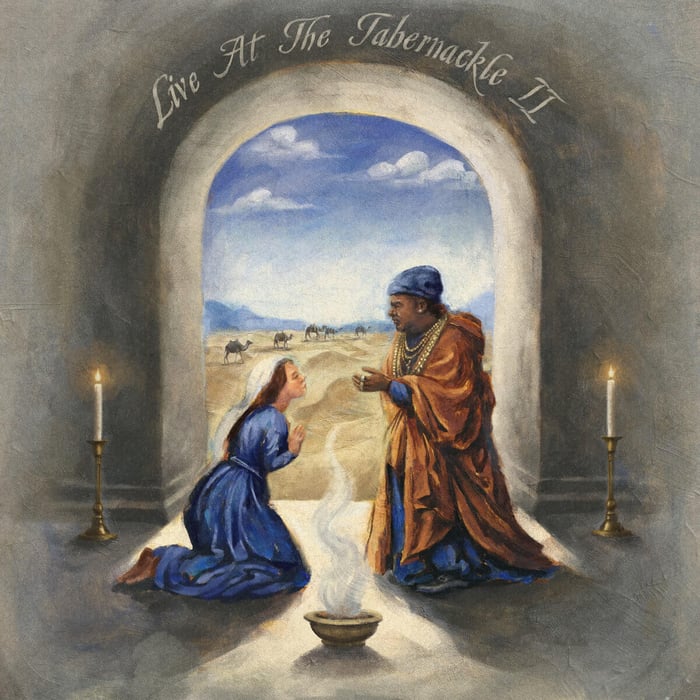
Estee Nack and Mike Shabb turn Tabernackle Vol II into a paranoid sermon—drug math, doctrine, and punchlines stacked until the air runs out.
A record that treats you like you already know the password
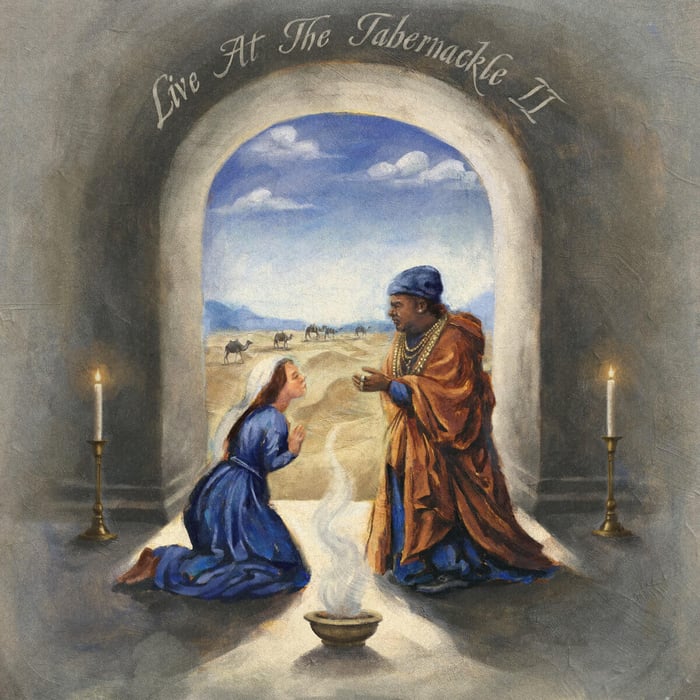
This album doesn’t introduce itself. It presses its thumb to your forehead and starts talking like you’ve been in the room the whole time. Tabernackle Vol II is Estee Nack and Mike Shabb moving like they’ve got no interest in converting new listeners—only rewarding the ones who can keep up.
And yeah, I hear the lineage: Lynn, Massachusetts energy—hard-headed, unpretty, built out of hustle folklore and grim precision. Nack has always sounded like he’s barking from behind a half-closed door, and here he doubles down on that “you can’t sit with us” posture. The difference is Shabb’s production makes the space feel curated, not just hostile. Chris Mercedes on keys gives it that extra sheen—like the sermon got upgraded to a nicer building without changing the message.
“COMINOFAGE” is a pat-down, not an origin story
The opening move on “COMINOFAGE” isn’t nostalgia; it’s procedure. It plays like a protocol you follow because you have to, not because it’s romantic. Nack runs through an apprenticeship that’s less “coming up” and more “getting processed”: selling pills, powder, weed at all hours, phones ringing absurdly early, wrists aching from illegal whips, then eventually couture and tour planning once the chessboard flips in his favor.
The hook is almost suspiciously clean:
“Coming of age, I focused on my ways.” — Estee Nack
That line lands like a self-justification he’s repeated so many times he no longer hears how bleak it sounds. And when fentanyl shows up in the packages, the whole atmosphere shifts—like the era got darker without asking permission. Rap becomes currency, not catharsis. I thought the track was going to be a straightforward “I survived” flex at first, but it plays more like an affidavit you can dance to if you’ve lost enough sleep.
Arguable take: this is Nack at his most practical. Not reflective—efficient.
“JONRON” turns trafficking into sports talk, and that’s the point
“JONRON” keeps the same worldview but changes the metaphor: baseball. Home runs arriving in the post. Bricks traveling to California wrapped like Christmas gifts. Prison pen problems written up like greeting cards. A drug dog described in a way that’s so casual it’s almost offensive—like even the obstacles are just characters in the story, not threats.
If trap is a game, they’re not talking regular season. They’re talking Series. And the brag isn’t “we won,” it’s “we learned the rulebook so well it stopped feeling like rules.”
Arguable take: the sports angle isn’t for cleverness—it’s to make the violence feel normal. That’s the real flex.
“AFFAIRSINARGENTINA” is where Shabb goes warm, and Nack goes colder
Then the album slides into “AFFAIRSINARGENTINA,” and Shabb drops one of the most hypnotic loops here—warm, cool, low-slung drums, the kind of beat that suggests expensive dim lighting. Nack spends most of it in Spanish, and it doesn’t come off like a gimmick. It comes off like a relocation: different tongue, same habits.
He’s checking a palm reader, pouring whiskey by the quart, spending money he used to hoard. He talks about “medicina” like it’s both product and ritual, and the line between the two stays intentionally blurry. The verse migrates—North Carolina, Medellín valley, hotel bars—without ever feeling like travel writing. It’s more like he’s proving he can move between hemispheres while staying the exact same person.
And when he drops the woman the second she’s no longer useful, it’s not framed as villainy or heartbreak. It’s framed as workflow. That’s what makes it feel nasty.
Arguable take: this is the album’s real thesis—global movement, local morality. The beat invites you in; the behavior shoves you back out.
“CHRISTRO” weaponizes church mood without joining the church
“CHRISTRO” is where the keys turn into a lake—gospel-moistened, slow head-nod, looped like a thought you can’t stop having. A preacher’s sermon shows up and “naturalizes” the sample, like the track is daring you to confuse religious texture with redemption.
But the sermon doesn’t save anybody. It’s more like a lighting choice. You hear that voice come forward and suddenly the whole track is about how easy it is to sound holy while staying godless. The album keeps laughing on both sides of the aisle—believers, non-believers, hustlers, listeners. Nobody’s immune.
I’m not totally sure if the sermon is meant to be irony or just atmosphere—but either way it works because it makes the room feel bigger while the lyrics stay claustrophobic.
Arguable take: this isn’t spiritual rap. It’s rap using spirituality as camouflage.
“ESTUPIDO” and “MADPHILOSOPHIES” show how Nack likes his threats: sideways
“ESTUPIDO” comes in with a fat reggae patter and these shivering edges, like the audio is vibrating at the margins. The hook is mockery-driven—“tried to bring a pocket knife into a gunfight”—and it lands as a theme for the entire album: people stepping into environments they don’t understand, then getting corrected.
Nack’s flow slips in and out of references—Quran, snitch-on-sight energy—like he’s flipping channels but every channel is still him. The menace isn’t loud; it’s assumed.
Then “MADPHILOSOPHIES” tightens the loop—smaller, scratched-up, with pointed, rickety drums. It feels like walking through a rocky ditch while someone explains the rules of survival in metaphors. Nack drops coke-trade rainisms and promethazine yelps, then flashes a line that sticks:
“Accidentally brilliant from penny pinching to plenty bidding.”
That’s Nack’s whole thing: he wants you to believe the genius was incidental, like he tripped into mastery while carrying contraband.
Mild complaint, though: the rickety drum feel can verge on stubborn. There were moments I wanted the beat to hit harder just to give the words a different frame—then again, maybe that hunger is the intended tension.
Arguable take: Shabb is intentionally denying “knock” to keep the listener focused on code, not comfort.
“STUDENTS&TEACHERS” is the real center: myth, doctrine, and ego in one breath
This is the longest track by a lot, and it uses the runtime like a classroom you can’t leave until the lesson is done. Nack starts with a memory—stealing gold teeth as a ’95 kid from Miami hustlers—then flashes to his own gold-toothed smile now, and suddenly it’s not just a story. It’s lineage.
From there he breaks down Five Percent doctrine: the eighty-five and the five, the Black man did it all first, the universe, manifestation beyond what science can explain. He says, flat out, “I manifest with nothing, science doesn’t explain that,” and it doesn’t feel like a throwaway. It’s presented as evidence.
The features keep the theme but bend it:
- Myalansky ties narcotics paperwork to a higher court of appeals, with the reminder: “But only God will be the judge of that.”
- Raz Fresco stacks references so densely it starts to sound like he’s daring you to call it arrogance, then asking what other word you’d use to call him God.
On first listen I figured this track would drag—long rap songs love to confuse length with importance. But it didn’t sag the way I expected. The verses keep changing the angle, so the “lesson” stays active. It’s still indulgent, sure, but it earns more of its time than most.
Arguable take: this song isn’t about enlightenment—it’s about authority. Teacher energy, not student curiosity.
The feature run turns the album into a moving operation
From here the record starts feeling like a coordinated set of rooms, each one staffed by someone who knows the rules.
On CRIMEAPPLE-assisted “PINKCANDY,” Nack is feverish—flavored water, club-night cocaine, “epics,” pushing product from eight to dawn while the feds conveniently stay out of the way. It’s decadent and stressed at the same time, like party lighting over surveillance cameras.
On “TRIUMPHANTALLIES,” Codenine comes through with poolside mimosas, a quick Satoshi Nakamoto name-drop, and these grand, orchestral arrangements—Vienna Philharmonic vibes, except the conversation is still about leverage and deals. That contrast is the point: luxury language over street math.
Then Daniel Son closes it with “VPNZ4THEDARKWEB.” Mercedes comes back on keys, but lower and heavier now, like the floor dropped out. The tone turns dire. Nack’s paranoia pairs with Son’s survivalist rhetoric, and the track feels like a last corridor with no windows.
Arguable take: the album saves its most dangerous mood for the end because it wants you to leave unsettled, not impressed.
Interludes that survive by staying small
“The flunkies that survive are minimal-deliberate.” That’s exactly how “PINPIN” and “WINTERMISSION” behave: they don’t try to be big songs. They flicker.
“PINPIN” kind of boffs in and out—more shattering white, green-card offer to a docile burro, no tagline, no neat bow. It’s like overhearing half a conversation while you’re walking past a door.
“WINTERMISSION” spins after that aborted restart: friends on the phone crying into the abyss, asking for visual confirmation of children unwrapping birthday gifts. Nack “slip-ghosts” over airfield smoke. It’s a bleak little slice of humanity that refuses to become sentimental.
Both tracks work, but they also fizzle before anything catches fire. Part of me wanted at least one of them to commit harder—either be a real interlude or be a full track. Instead they hover, then vanish.
Arguable take: that incompleteness is a control tactic—don’t give the listener too much relief.
“BREAKFASTBITCH” is where the punchlines hide the actual philosophy
“BREAKFASTBITCH” hits fast, like the album suddenly remembered it can be funny without smiling. Punchlines fly—Boris Yeltsin, Zelda, Prada—crammed into ten bars like he’s trying to see what will still fit before the beat ends. There’s a pesos prompt, parcels dispatched El Chapo-style, and the whole thing moves like a factory line of jokes.
But the track tucks a cipher inside the wordplay:
“And time waits for no on/The samurai gotta serve the shogun.”
That line is the real heartbeat—duty, hierarchy, consequence. The minutes became months spent amassing knowledge, and now he’s back, glad, and for once the machine has enough breath to carry the thought all the way across the bar.
Arguable take: the punchlines aren’t decoration. They’re misdirection. This album doesn’t want you focusing on the moral; it wants you distracted while it states it.
Conclusion
Tabernackle Vol II doesn’t act like a “live” document in the crowd-noise sense—it’s live like a wire: active, risky, and not interested in your comfort. Shabb builds rooms that feel expensive and haunted. Nack fills them with coded confessionals, doctrine, paranoia, and jokes that land like warnings. The record’s real trick is how it keeps shifting languages—Spanish, street code, spiritual talk—without ever changing the person speaking.
Our verdict: This will hit hard for listeners who like dense bars, criminal theology, and beats that hypnotize instead of knocking. If you need obvious hooks, clean narratives, or any sign the artist wants to be liked, you’re going to bounce off this and blame the album—when really it just didn’t open the door for you.
FAQ
- Is Tabernackle Vol II approachable if I’m new to Estee Nack?
It’s doable, but it won’t hold your hand. Start with “AFFAIRSINARGENTINA” if you want the mood to pull you in first. - What does Mike Shabb bring to the album’s feel?
He gives the record a controlled temperature—warm loops, low drums, and space for Nack’s voice to sound like a threat and a sermon at the same time. - Where do the keys matter most?
“CHRISTRO” makes them feel sacred on purpose, and “VPNZ4THEDARKWEB” turns them heavier and darker when the paranoia peaks. - Which track feels like the album’s centerpiece?
“STUDENTS&TEACHERS.” It’s long, doctrinal, and ego-forward—the moment where the album stops implying and starts stating. - Are the shorter tracks skippable?
Not really. “PINPIN” and “WINTERMISSION” are small, but they’re placed like pressure valves—brief glimpses that keep the main run from turning into one long monologue.
If this album’s imagery stuck in your head—the keys, the codes, the locked-door vibe—you might want that feeling on your wall too. You can shop your favorite album cover poster at our store: https://www.architeg-prints.com
 | DISCOUNTGET 30% OFF*Use code on your next order:
|
* This post may contain affiliate links, meaning we earn a commission if you make a purchase through these links, at no additional cost to you.