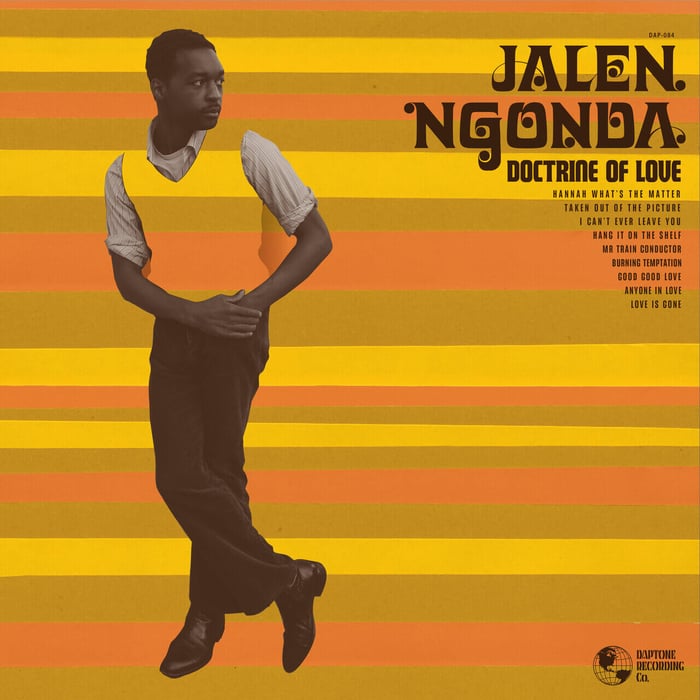
Doctrine of Love Review: Jalen Ngonda Turns Soul Into a Stress Test


 See more Architeg Prints stories on Google.
Doctrine of Love Review: Jalen Ngonda Turns Soul Into a Stress Test
Jalen Ngonda’s Doctrine of Love isn’t here to romance you—it’s here to show how love wrecks your posture, your pride, and your week.
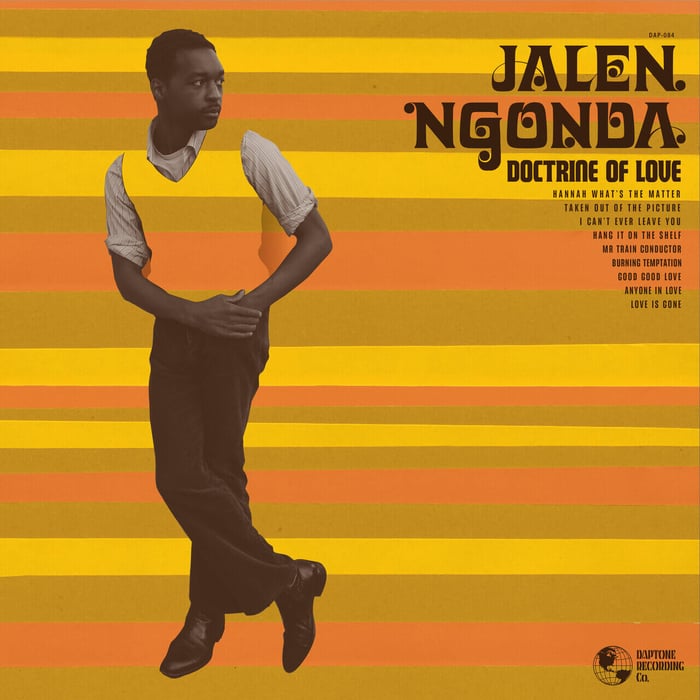
A quick warning: this isn’t “warm soul,” it’s the cold part
Most revivalist soul records chase the easy pleasures: the slow dance, the candlelight, the soft-focus fantasy where everybody’s attractive and nobody’s complicated. Doctrine of Love doesn’t bother. This album keeps leaning toward the wreckage—toward the moment after the apology, when the apology didn’t work, and you’re left standing like a person-shaped regret.
I went into this expecting something sweet in a classic way, because that’s the usual deal when an album comes packaged in this kind of sound. But the longer I sat with it, the clearer it got: Jalen Ngonda keeps placing himself where it hurts most. Not as the tragic hero. More like the guy who messed it up and can’t stop replaying it like security footage.
And yeah—this is a Daptone Records release, and you can feel that whole ecosystem in the air: tight musicianship, vintage-minded tones, and songs built like they actually care about structure. But the emotional posture here isn’t nostalgia. It’s damage assessment.
He sings like someone who learned soul to survive it
The record gives off the sense of someone who taught himself how to sing by living inside other people’s records first—like soul was a language he studied until it became a reflex. I can practically hear the “learned this as a kid” discipline in how straight he keeps his lines, how little he reaches for vocal drama unless it’s earned.
What I can’t fully tell—maybe I’m reading too much into it—is whether the restraint is confidence or self-protection. Sometimes that flatness feels like honesty. Sometimes it feels like he’s holding back because letting go would make the songs too revealing. Either way, it’s a choice, and the album keeps choosing it.
There’s also a narrative shift here that matters: earlier songs in his world felt like an earnest young guy trying to get inside love’s front door, trying to be accepted into the scene. These new songs feel like that same guy having a truly lousy week—pleading, hovering, misreading the room, arriving late, standing on the wrong side of a door that’s already closing.
And crucially: Ngonda keeps putting himself in the position of being the one who screwed up. That’s not trendy. It’s not flattering. It’s effective.
“Mr. Train Conductor” turns regret into a commute
This is where the album starts showing its real tactic: turning emotional helplessness into a physical place you can’t escape.
On “Mr. Train Conductor,” he paces a station like the floor owes him answers. He’s begging the person in control—literally the man running the engine—for a ticket back to the life he damaged. The line that sticks is how plain the plea is: can you get me back into my baby’s arms again? Not “I’ll change.” Not “I deserve it.” Just: I need to get there.
And when he admits, “I foolishly made her cry,” he doesn’t dress it up. No heroic shame. No theatrical remorse. The delivery is almost unsettlingly level, like he’s tired of hearing himself explain it.
Then comes the gut-punch detail: word arrives that someone else “knows just what to do” better than he does. The song doesn’t explode into jealousy. It just slumps. The cost of leaving becomes this weird negative space he can’t name except by what it removed from him—“I feel less human than before.”
That’s the album’s lane: love isn’t a glow here, it’s an identity test. And he’s failing it on purpose so you can watch.
“I Can’t Ever Leave You” is surrender pretending to be resolve
If “Mr. Train Conductor” is about trying to get back, “I Can’t Ever Leave You” is about staying even when you know you shouldn’t. And I don’t mean “staying because it’s romantic.” I mean staying because the relationship has turned into gravity.
He frames it like a game of cards—she “won my heart” and now she maintains control. That image matters because it makes him sound less like a partner and more like a prize someone walked away with. The song even contains its own protest—he can say he’s had enough, he can compare himself to a dog chewing a shoe—but the whole point is he still can’t break free.
The best part is the way he draws two climates inside one person:
- “In your eyes I see a summer sky”
- “In your heart I feel the blade of a cold, cold winter’s night”
He sees the winter clearly. He stays anyway. That’s not poetic indecision—it’s addiction described politely.
And here’s where I had to revise my first impression: on first listen I thought the song was almost too conventional, too clean in its phrasing. On second listen, the cleanliness started to feel like the actual horror. He isn’t screaming because he’s past screaming. He’s reciting his own sentence.
The title track stops begging and starts grading you
“Doctrine of Love” is where the album pulls a smart, slightly ridiculous move: it stops pleading and turns into a lecture.
Instead of “please come back,” he’s handing out diplomas. He’s listing the curriculum like love is a course you survive, not a place you live. You “pay the price,” “make the sacrifice,” you get “ecstasy with the misery”—and the song delivers those lines with this straight-faced authority that feels intentionally fake.
The brass and choir harmonies prop up the hook like a carnival barker dragging you into the tent. It practically sounds like: step right up, congratulations, enjoy your suffering. That’s the joke, but it’s not a joke-joke. It’s the album’s most open moment of distance, where Ngonda stands outside the pain and smiles at it like he’s finally learned how it works.
If you wanted one track that reveals intent, it’s this: he’s not writing love songs. He’s writing about the systems people willingly enroll in.
When the love is healthy, he gets weirdly forgettable
Here’s the mild criticism: Ngonda is at his most bland when everything is fine. When he’s grateful, the music kind of… floats away.
“Good Good Love” is pure thankfulness—he’s so smitten he’ll “travel far” and “bring you the stars,” and it’s pleasant in that way a nice conversation with a stranger is pleasant. You enjoy it, you forget it. The song doesn’t stick because it doesn’t risk anything.
“Hang It On the Shelf” has a sweet concept—he’ll take his own pains and put them away for her, hang them up, tidy the emotional room. But the sweetness turns innocent to the point of weightlessness. He offers so much trouble-management and the song gives back almost nothing that bites.
Even “Anyone In Love”—which is pretty, solid, and competently written—leans on universal truths about hearts breaking in two and walks in the park not meaning what they used to. It could’ve come from almost any era, from almost any soul singer. It’s not bad; it’s just not heavy. And on an album that’s clearly better at bruises than bouquets, “not heavy” reads like an evasion.
That might be the point, honestly. But it still left me waiting for a sharper turn.
“Taken Out of the Picture” finally shows the room, not just the wound
Then the album snaps back into focus with “Taken Out of the Picture.” This is Ngonda at his best: metaphor-simple, emotionally nasty, and painfully clear.
The idea is straightforward—he’s been removed from the frame—and suddenly he can see the whole room he used to live inside. The song plays like someone sifting through photographs like they’re evidence. Not for closure. For proof that what he felt was real, or at least real to him.
And the gut of it is the late understanding: he realizes he was persuaded, he was kept calm, he was made to believe he was the only lover while something else was being entertained behind the scenes. There’s a “masquerade” quality to it, and the hurt doesn’t come out as rage. It comes out as a question that lands in an empty room: can’t you see I’m hurt?
“I can see right through the looking glass
That every day and night that pass
You thought about another.”
That line works because it’s almost embarrassing in its directness. No poetry armor. Just a person asking for their pain to be acknowledged by someone who’s already gone.
My arguable take: this song does more emotional work than the album’s “happy” tracks combined, because it lets the narrator be both perceptive and powerless at the same time.
“Hannah, What’s the Matter?” is domestic proof that still doesn’t solve the riddle
By the time “Hannah, What’s the Matter?” shows up, the album starts playing a different kind of cruel game: what if nothing is technically wrong, and you still can’t find the fix?
This one carries the weight of a long stretch of time—ten years, specifically—and by his own account, nothing in that decade has gone wrong. He’s got receipts for a good life:
- a long white Cadillac to take them near or far
- roses and lilacs shining by evening stars
- a sweetener that makes him feel nice at home
It’s almost comically specific. Like he’s laying the items out on a table to prove he did his part. Look: transportation. Look: romance. Look: domestic comfort.
And still, something has slipped away from him. He keeps asking the same question—Hannah, what’s the matter… tell me where did I go wrong—and the repetition becomes the point. He’s holding the Cadillac and the flowers and he still can’t locate the hurt.
If “Taken Out of the Picture” is about realizing you were never centered, “Hannah” is about realizing you were centered and it still wasn’t enough. That’s a colder feeling, and the album lets it sit there without rescuing it.
So where does Doctrine of Love land?
I’m left thinking Doctrine of Love is less a romance record than a collection of self-incriminating scenes. It keeps choosing the unflattering angle: the guy begging at the station, the guy who can’t leave, the guy applauding you for surviving misery like it’s a credential, the guy staring at photos like they’re a crime.
Not everything hits. The moments of healthy love slide by a little too easily, like the album doesn’t quite know what to do with peace. But when it leans into discomfort, it’s locked in.
And yeah, in my book this one is simply great—not because it’s flawless, but because it’s deliberate about what it wants to show you.
Favorite tracks: “Mr. Train Conductor,” “I Can’t Ever Leave You,” “Taken Out of the Picture”
Doctrine of Love doesn’t try to convince you love is beautiful. It argues—calmly, stubbornly—that love is an education you pay for with your dignity, and the diploma is mostly bruises.
Our verdict: People who like soul music when it’s a little haunted—and who don’t need every chorus to feel like a hug—will actually love this album. If you only want charming throwback romance and zero emotional self-owning, you’ll get bored and wander off around “Good Good Love,” humming politely like you’re trapped in a nice waiting room.
FAQ
- What’s the core vibe of Doctrine of Love? Wounded soul that refuses to dramatize the wound—he narrates it like it already happened and he’s still living in the aftertaste.
- Is Doctrine of Love a “retro” soul album? The sound nods to classic soul, but the emotional framing is less candlelight and more fluorescent lighting over bad decisions.
- Which songs hit the hardest on first listen? “Mr. Train Conductor” and “I Can’t Ever Leave You” land immediately because they commit to helplessness instead of trying to style it out.
- Does the album have weaker spots? When the love is healthy—especially on “Good Good Love”—the songs can feel pleasant but too light to leave a mark.
- What should I listen for to understand the album’s point? Pay attention to how often he places himself as the one at fault, then watch how he still can’t fix the situation. That tension is the thesis.
If this record’s mood stuck with you, an album-cover poster is the one souvenir that doesn’t fade after the last track. You can browse prints at our store here: https://www.architeg-prints.com/
 | DISCOUNTGET 30% OFF*Use code on your next order:
|
* This post may contain affiliate links, meaning we earn a commission if you make a purchase through these links, at no additional cost to you.