Dead Tree Album: Oh Hiroshima Turns Dread Into Something You’ll Hum


 See more Architeg Prints stories on Google.
Dead Tree Album: Oh Hiroshima Turns Dread Into Something You’ll Hum
Oh Hiroshima’s Dead Tree album blends lush instrumentation and slow-burning tracks to explore grief and hope through a powerful central metaphor.
A record that doesn’t “set a mood”—it sets a trap
This album doesn’t politely ask for your attention. It builds a careful little world around you and then quietly removes the exits. And The Dead Tree Gives No Shelter is Oh Hiroshima leaning hard into what they do best—wide, emotional soundscapes—but with extra hands on deck and a bigger palette than usual.
It still sounds like Jakob Hemström and Oskar Nilsson at the core: that familiar mix of weight, shimmer, and slow-motion catharsis. But the fifth record doesn’t feel like a repeat. It feels like a controlled expansion—like they decided the old frame was too small, then started pulling in keys, reeds, brass, and strings until the songs could physically breathe.
The “dead tree” isn’t subtle—and that’s the point
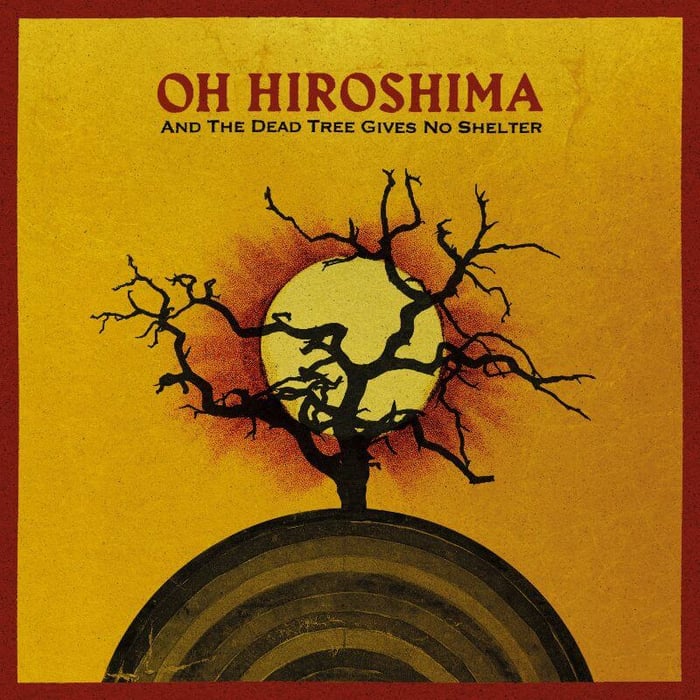
The whole album orbits one central image: the dead tree. And yeah, it’s a metaphor with its boots on. This is music about watching what gives us life wither—about depletion, ruin, and the dumb, grinding consequences of how we live. The album’s emotional engine runs on that sense of desperation.
But it doesn’t stay in the pit. There’s a stubborn counterweight running alongside the bleakness: a faint, persistent hope, and a belief that community still matters even when everything else looks scorched. That’s the album’s strange trick—standing in the wreckage while still pointing toward wonder and some kind of “call to arms,” like the band is saying: you can mourn, but you can’t stop there.
I’m not totally sure the record always balances those two impulses cleanly. Sometimes the hope feels earned. Sometimes it feels like a bright coat thrown over a bruise. But even that tension reads like the point.
“Meridian” makes the thesis feel physical
Before the record really settles into its long arcs, it gives you a statement piece early with “Meridian.” It’s the kind of track placement that feels intentional: second in the sequence, early enough to define the album’s posture.
The rhythm comes off defiant, not frantic—like it refuses to panic even when it clearly knows something’s wrong. What grabs me is how the melodic lines feel interlaced and overlapping, like ideas stacked in translucent layers. It gives the song an uncanny vibe: a little alien, but still rooted in something human and earthy. The effect is visual without trying too hard; it throws up “countless images” in your head because the arrangement leaves space for your brain to project.
And honestly, on my first pass I thought “Meridian” might be the obvious single moment—the clean showcase. But on second listen, it started feeling more like a warning flare: not “here’s the hook,” but “here’s the shape of the whole storm.”
“Servant Of All” opens the door with a chant and a dare
Coming out the gate, “Servant Of All” is exactly the kind of opener that tells you the album’s not going to sprint. It layers instrumentation patiently, then locks into a chant that feels built for a room full of voices. I can already hear it bouncing back from a crowd—simple enough to grab, but not cheap.
This is where the expanded instrumentation pays off early: it doesn’t just decorate the song, it lifts it. The record’s “effectiveness” comes in multiple dimensions at once—melody, atmosphere, texture—like the band wants you to feel surrounded rather than merely impressed.
If I’m nitpicking, there’s a tiny risk here: the chant is so easy it could tip into comfort-food territory. But the surrounding detail keeps it from getting lazy.
The album keeps telling you to slow down—and it mostly earns that
After the initial framing, the record repeatedly nudges you into a slower relationship with time. “Angelos” and “Ivory Tower” are the clearest examples: they don’t rush to make a point. They let meaning arrive gradually, like the song is exhaling instead of speaking.
That pacing is an arguable choice. Some listeners will call it immersive. Others will call it stalling. I lean immersive—because the tone isn’t just “pretty,” it’s patient, and patience is part of the message here. A record about decline and responsibility shouldn’t sound hyperactive. It should sound like you’re being asked to sit with something you’d rather scroll past.
“Skeleton Key” takes that same slow-burn idea and makes it feel intimate. The song practically
sighs—a lament that pulls you into a pensive melody without forcing drama. It’s not begging for tears. It’s doing the more unnerving thing: sounding resigned.
When the songs push harder, it feels like weather turning
Just when you get used to the record’s gentle unfolding, it leans into urgency. That contrast is crucial—otherwise the album could drift into a single long beautiful fog.
“Tree Of Life” is the hinge. It lands like first light after a thunderstorm, and it really does feel like the album’s lifeblood: a moment that turns the record’s gaze forward instead of back. The crescendo here matters—not just because it’s “big,” but because it feels like a decision. Like the album is choosing motion over mourning for a few minutes.
If there’s a mild criticism I can’t shake: the album sometimes relies on crescendo as proof of emotional weight. Most of the time it works, but every so often I catch myself thinking,
Okay, yes, we’re rising now, I get it.That said, when “Tree Of Life” hits its peak, it earns the drama. It doesn’t feel pasted on.
“Broken Sunlight” is the moment the album stops being polite
If “Tree Of Life” is the turning point, “Broken Sunlight” is the flex. The soundscapes get mammoth—big enough that you stop thinking about “songs” and start thinking about architecture.
The bass is doing a lot of heavy lifting: it booms, grooves, and thunders, anchoring the whole piece like a slow-moving engine. What I love is the way the melody seems to pass between strings and vocal, trading the lead role back and forth. It ebbs and flows through gravelly rhythm and chiming harmony, like the track is deliberately blurring what counts as foreground.
This is the kind of instrumental barrage that could easily turn into self-indulgence. But it stays listenable because the motion is clear—you can feel where it’s going, even when it’s loud.
“Exit Cloud” closes with air, thunder, and something dangerously hopeful
To close the record, “Exit Cloud” works as a genuine bookend to the opener’s might. It’s swaying and airy, like the album stepping outside after spending an hour in its own head.
But it doesn’t end in pure calm. There’s thunder in it too—storm energy gathering behind the atmosphere. You can hear it in the way the arrangement drips and shimmers, in the reeds and strings that feel like rain starting to fall.
What lands is the sense of final push: the arrangements feel more deft here, and the album’s scope hits a new level of artistry right at the end—like the band saved one last breath to prove the whole journey wasn’t just mood-setting.
And the emotional takeaway is weirdly euphoric. Not because the problems vanish, but because the album insists on a particular kind of hope: the world might be starving for nourishment, but the rain is coming—and people are still here, listening for it.
So what is this Dead Tree album actually doing?
For me, And The Dead Tree Gives No Shelter isn’t trying to be “beautiful post-whatever.” It’s trying to make responsibility feel emotional again—without turning into a lecture. The record keeps moving between shimmering light and deep drudging weight, like it’s demonstrating the contradiction: despair is real, and meaning is still possible, annoyingly, at the same time.
I expected a familiar Oh Hiroshima experience—pretty, heavy, tastefully controlled. What surprised me is how much the additional players reshape the emotional impact. The keys, reeds, brass, and strings don’t just add color; they change the scale of the world these songs live in.
If I had to pin a number on how it lands for me, it sits around an 8/10—not because it’s flawless, but because when it hits, it hits with real intent.
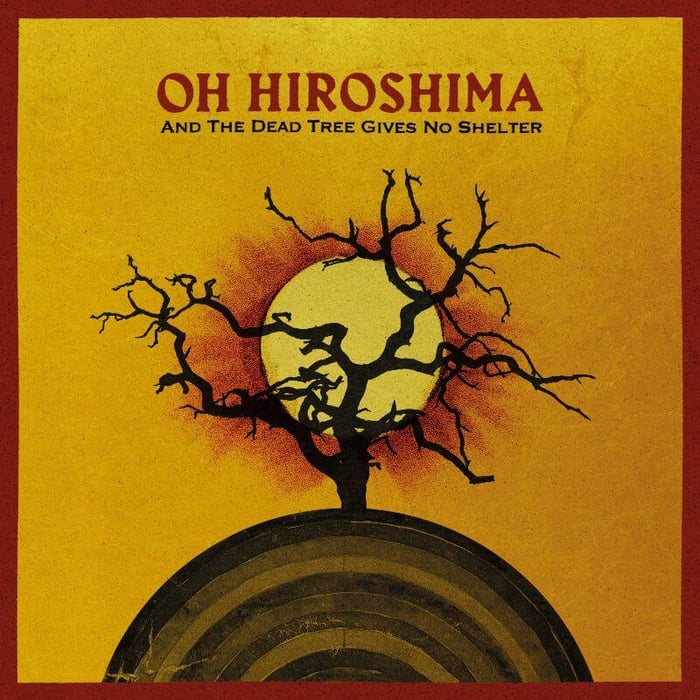
And The Dead Tree Gives No Shelter is set for release on June 5th via Pelagic Records. You can also find Oh Hiroshima on Facebook.
Conclusion
This album treats the image of a dead tree like a mirror and dares you not to look. The best songs don’t just sound big—they sound like the band is trying to rebuild a sense of awe without pretending everything’s fine.
Our verdict: People who like slow-burning, detail-stacked post-rock atmospheres (and don’t need constant payoff every 30 seconds) will actually love this. If you think patience in music is just the song failing to get to the point, you’ll bail halfway through and blame the tree.
FAQ
- What is the core theme of the Dead Tree album?
It circles desperation about what’s fading in the world, while still clinging to community and a thin but real hope. - Which tracks feel the most urgent on the album?
“Meridian” and “Tree Of Life” push forward with more drive, especially compared to the slower unfurling tracks. - Which songs are the slowest burns?
“Angelos,” “Ivory Tower,” and “Skeleton Key” take their time and let the mood and message seep in gradually. - What’s distinctive about the instrumentation on this record?
Beyond the duo’s core sound, the record brings in keys, reeds, brass, and strings to widen the soundstage and sharpen the emotional cues. - When is And The Dead Tree Gives No Shelter released, and on what label?
It’s set for release on June 5th via Pelagic Records.
If this record put an image in your head you can’t shake, that’s basically an album-poster problem. If you want to hang that feeling on a wall, you can shop favorite album cover posters at our store.
 | DISCOUNTGET 30% OFF*Use code on your next order:
|
* This post may contain affiliate links, meaning we earn a commission if you make a purchase through these links, at no additional cost to you.