Mach-Hommy “Easy Listen” Review: A Title That Lies to Your Face (5786 AM)


 See more Architeg Prints stories on Google.
Mach-Hommy “Easy Listen” Review: A Title That Lies to Your Face (5786 AM)
Mach-Hommy’s Easy Listen isn’t background music—it’s a private-language flex, packed with scripture-sized hooks, gun-drawer jokes, and history lessons that bite.
The album opens with a dare, not a welcome mat
The first thing this record tells you is that it doesn’t need you. That sounds like an insult, but it’s more like a design choice—Mach-Hommy makes an album that treats confusion as a feature, then grins while you catch up.
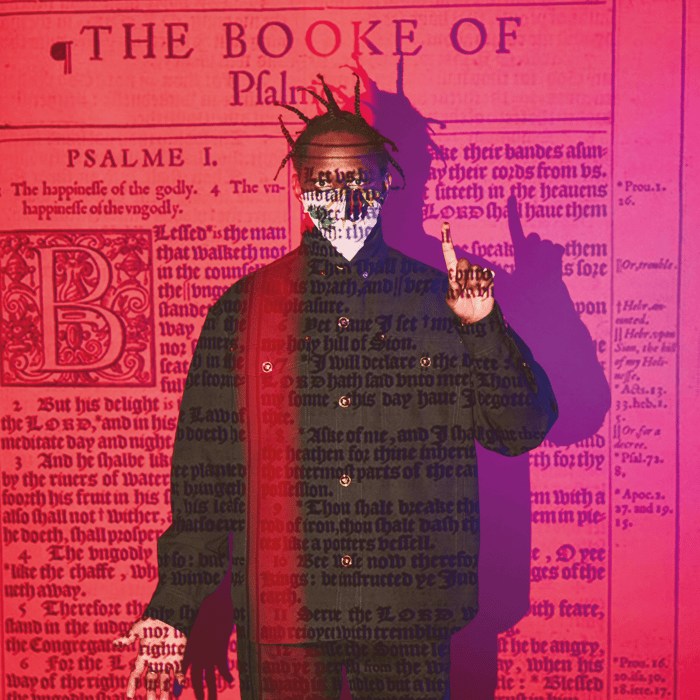
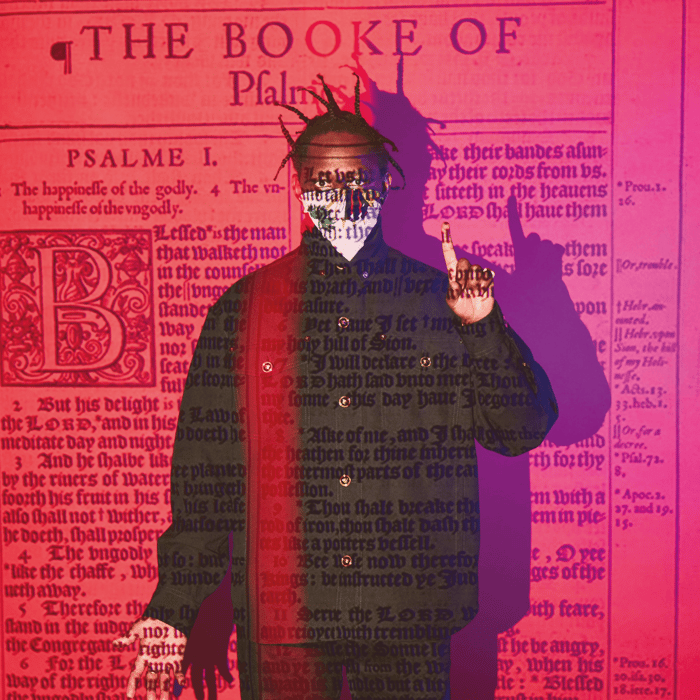
Even the packaging is part of the posture: limited LP and cassette, no “normal” rollout, none of that “please stream me” anxiety. He’s basically selling objects like they’re art pieces and acting like the files are a privilege. The title alone—5786 AM: Easy Listen—sets up the gag with a straight face, pitting a Hebrew calendar year against a Latin phrase about the age of the world. It’s high-concept window dressing, but it also tells you the point: he’s stacking time, language, and status symbols until you stop asking for a clean entry point.
And no, it’s not “easy listening.” The title is the kind of lie that makes the truth sharper. Mach has spent a decade writing verses so dense and reference-heavy that a casual playthrough only catches the outer coating. Here, across thirteen tracks produced front-to-back by Playa Haze, he doesn’t simplify—he tightens the knot and calls it hospitality. An arguable take: this album isn’t trying to be understood; it’s trying to make you feel understood only if you already speak the dialect.
“Name, Image, Likeness” is him speed-running identities
The flex on “Name, Image, Likeness” isn’t just that he boasts—it’s that he does it like he’s flipping channels faster than your brain can buffer. He stacks images until they fold over each other: a hickey, a plus-sized suit, “Hot shit coming quicker than a ride or die on the jitney,” and none of it gets a polite pause to land.
Then he runs an entire Eddie Murphy routine inside the verse and tells a woman to call him Prince Akeem. It’s a ridiculous move—on purpose. He swings that comedy into a world-spanning line (“and land on we’s like Eddie”) and somehow makes it feel like a natural progression instead of a left turn.
And then the hook shows up like it’s trying to get printed on a church wall:
“I am the coin where the light of God shines through/’Cause God and I are one and not two.”The whiplash is the point. He goes from Coming to America bits to divinity in less than a breath and refuses to mark the transition. An arguable claim: the track isn’t showing range—it’s showing control. He’s saying, “I can make slapstick and scripture share a couch, and you’ll still call it coherent.”
I’ll admit, on first listen I thought this was just him doing his usual maze-rap with extra polish. On second listen, it clicked differently: the song is basically a stress test for meaning. If you demand a single tone, it punishes you. If you accept contradiction, it starts to look intentional.
“The Fifth Hammer” turns violence into furniture inventory
Here’s where the record gets sneakier. The violence never really comes out and waves, but it’s always there, tucked into punchlines and domestic clutter. “The Fifth Hammer” is the clearest example, because Mach uses the word “hammer” like it’s a portable reality—lap, jeans, armrests, under the seat, the mother of his children, his people, the neighbors… every location becomes a possible hiding place. The joke is how casual it sounds. The threat is how normal it’s made to feel.
He drops lines like, “I used to go bananas, now I’m ceramic on Tropicana,” and the gun becomes a punchline again and again until repetition turns it into atmosphere. Then Doley Bernays comes in colder and more meticulous—bedside gun, rat on the other side, the last guy who tried to grab it “turned his ass to ash.” He even tosses a gun “in the sky like LeBron at the pre-game,” which is a wild comparison for something that should feel deadly. But that’s the trick: the record defuses the threat without losing its edge.
The best part might be the silverware drawer detail:
“Deuce five under the napkin right next to the rigatoni/’Cause what happened to Tony?”That’s not just a bar—it’s a whole little kitchen scene where menace sits next to pasta like it pays rent there.
And then the song snaps out of itself. Deadpan, Mach asks: “(Is that fucking part of the hook?)” That little aside is a pressure valve. It’s him admitting the structure is absurd while still keeping the gun-talk sharp. An arguable statement: he’s not glorifying violence here—he’s showing how easily it gets stored inside everyday life.
Later, on “When Putsch Comes to Shove,” he circles back to that toaster-level domestic imagery, aiming his contempt at “approachable heat makers”—the industry leeches he’s always dodged. The heat is real, but it’s aimed like a private warning, not a press release.
The guest verses don’t just feature—they steal rounds
Mach is famously territorial in how he moves, so it’s telling that he leaves real space for guests here. Not polite space—winning space. A couple features end up being the best moments of the whole listen, and the album doesn’t flinch about it.
Spook closes “The Twelfth Pound” by turning rap into a tech swindle and then into a history lesson. It starts with gross SEO talk and an insult to algorithm-chasing—then lands in a stark, dead finish:
“White people do capitalism like that/They cut a check with clockwork, I met my newest cousin/It’s Black people do capitalism like this.”It’s one of those endings that feels like the beat itself stops breathing.
Mavi shows up on “Pre Dawn Chong” mid-myth—Prometheus, the eagle, liver-ripping imagery—and then swerves into a line about a “divine Fibonacci curve in your spine.” The verse ends with a skittery little exit: “Solve your puzzle for the day like Lauren London on the skates.” It’s too frenetic to neatly paraphrase, which is probably exactly why it works. An arguable take: Mavi’s speed makes Mach sound almost relaxed by comparison, like Mach is letting the room get hectic just to prove he can still stand still inside it.
Even Blu, on “Jolly Good,” flips financial struggle into tongue-twisting comedy:
“Finance fiance left me cause my finances was fishy/But now my fists be extra fit when they fit me.”That’s cartoonish phrasing with real frustration behind it—comedy as a way of not sounding bitter.
Mach doesn’t shrink next to any of them, but he does something rarer: he lets them take the highlight repeatedly. That’s confidence, or maybe it’s the album quietly saying it isn’t about being “the best” every second—it’s about curating a world where sharpness is the entry fee.
The no-rap tracks aren’t filler—they’re the album’s teeth
Three songs have no rapping at all: just Playa Haze production and someone speaking over it. These could’ve been lazy interludes, but they don’t feel like padding. They feel like Mach widening the frame—reminding you the record isn’t just “bars,” it’s a worldview.
“Price of a Kilo” opens with a man at a table piled with African foods—foods colonial officers called filthy and primitive. Then the voice points out teff (used in injera) now costs ten pounds per kilogram in London, marketed as a gluten-free miracle ingredient. The point is nasty in a quiet way: the same culture gets mocked, then monetized, then sold back with a wellness label. An arguable claim: this track is more direct than most rap “political songs” because it doesn’t perform outrage—it just places the hypocrisy on the table and lets it stink.
“Memento Vivere” is shorter and blunt—basically a reminder not to expect life to be handled for you. It lands like a note on the fridge: not inspirational, just true in a slightly rude way.
“Smarty Pants” is the hardest to sit with. It walks through the Arawak genocide as the sample describes it: millions of people on the island in 1492, fewer than 100,000 a decade later. Then it returns the word “cannibals” to the people who first used it as an insult. No beat drop is going to make that comfortable. And it shouldn’t. An arguable statement: putting this on the album isn’t “educational content”—it’s Mach insisting that his luxury-rap world still has blood under the floorboards.
I’m not totally sure how these spoken pieces “fit” on a first pass—part of me wanted them to be separate, like appendix material. But after a couple plays, they started to feel like the real spine of the record: they explain the coldness without excusing it.
When the wordplay collapses, the music turns into fog (and that’s not always good)
For all the craft here, two verses wander so far into their own cleverness that they start slipping out of your hands.
“Like Fork” keeps chanting “Cutting, everything cutting” while Mach runs a verse that’s so associative it almost disintegrates when you try to grip it. There are moments where the phrasing feels like it’s chasing itself instead of moving forward. An arguable take: this is one of the rare times the album sounds impressed with its own technique.
“Convex to the Origin” also stacks paradox on paradox until meaning starts to blur. The strange thing is, that blur is kind of beautiful—like listening to someone talk in their sleep and still catching a few true sentences. When Mach leans this hard into sonic exploration and leaves sense behind, the tracks become elusive in a way that feels intentional… but I can’t pretend I didn’t get a little lost. This is my mild gripe: the album sometimes mistakes opacity for impact, and the line between “mysterious” and “muddy” gets thin.
Still, even in the fog, certain contradictions cut through.
The swagger keeps leaking out, even when he’s trying to be cryptic
Mach’s flexes don’t come as big “look at me” announcements—they show up as casual edits to other people’s history. Over the chorus of JAŸ-Z’s “Where I’m From,” he swaps “I’m from where niggas pull your card” for a barbershop-level debate about who the best MC is: “billy, Z, or mine?” He drops billy woods, JAŸ-Z, and himself like it’s obvious those are the options. No pause. No apology. An arguable claim: that’s not arrogance—it’s Mach building a canon where he’s already included, and daring you to argue with a straight face.
He weaves Creole into the same brag—“Where I’m from they don’t say ‘Sak Pase’ back”—and underneath all that posturing, he slides in one of the simplest, sharpest lines on the album:
“We spent about five summers straight with the lights off/I fetched my mom a purse.”That’s the kind of detail that doesn’t sound like “struggle rap,” because it isn’t begging for sympathy. It’s just a receipt.
Back on “Convex to the Origin,” the contradictions start splitting open around a line like “Shot my dog like O yellin now pray for him,” and he circles back to it like he can’t stop touching the bruise. That looping-back feeling is important: for all the wealth language and coded references, the album keeps admitting it’s haunted.
Where I land: it’s not “easy,” but it’s definitely deliberate
By the end, I’m not walking away humming choruses—I’m walking away remembering decisions. The way Mach stitches comedy into divinity. The way guns get stored next to rigatoni. The way guest verses get room to shine without turning the album into a compilation. The way spoken pieces make the rap tracks feel less like entertainment and more like a curated museum where half the exhibits are traps.
If I sound convinced, I am—but not in a tidy way. I kept waiting for the album to give me one clean emotional instruction, one obvious “this is the point.” It mostly refuses. And yet, it still feels specific, like a private language spoken loudly.
Favorite tracks I kept replaying
Not because they’re the “best,” but because they show the album’s real personality:
- “The Fifth Hammer”
- “The Twelfth Pound”
- “Moxy Priest”
Conclusion
5786 AM: Easy Listen uses the idea of accessibility as a prank: it waves you in with a calm face, then starts speaking in compressed myth, brand-name theology, and kitchen-drawer menace. Playa Haze’s consistent production keeps the room steady while Mach rearranges what “rap clarity” is supposed to mean—sometimes landing on genius, sometimes landing on fog, and often landing exactly where he meant to.
Our verdict: People who like rap as a puzzle box—where the lock is the point—will eat this up. If you need hooks that behave, clean narratives, or lyrics that explain themselves on schedule, you’re going to feel like the album is politely ignoring you… because it is.
FAQ
- Is “Easy Listen” actually easy to listen to?
No. The title is bait. The album is dense on purpose, and the fun is in realizing it’s challenging you, not welcoming you. - How many tracks are on the album?
Thirteen tracks, all produced by Playa Haze, with a few tracks that feature no rapping—just spoken samples over beats. - Which song best represents the album’s humor and menace?
“The Fifth Hammer.” It turns firearm talk into household inventory, then undercuts itself with a deadpan aside without losing tension. - Do the guest features fit or distract?
They fit—and a few of them arguably steal the show. The album sounds confident enough to let guests “win” moments. - What’s the point of the spoken interludes?
They don’t feel like filler. They widen the album’s scope into colonialism, commodification, and survival, making the rap feel sharper in context.
If this album’s artwork and aura stuck with you, you can always grab a favorite album-cover poster vibe for your wall at our store—no pressure, just a nice way to keep the obsession visible.
 | DISCOUNTGET 30% OFF*Use code on your next order:
|
* This post may contain affiliate links, meaning we earn a commission if you make a purchase through these links, at no additional cost to you.