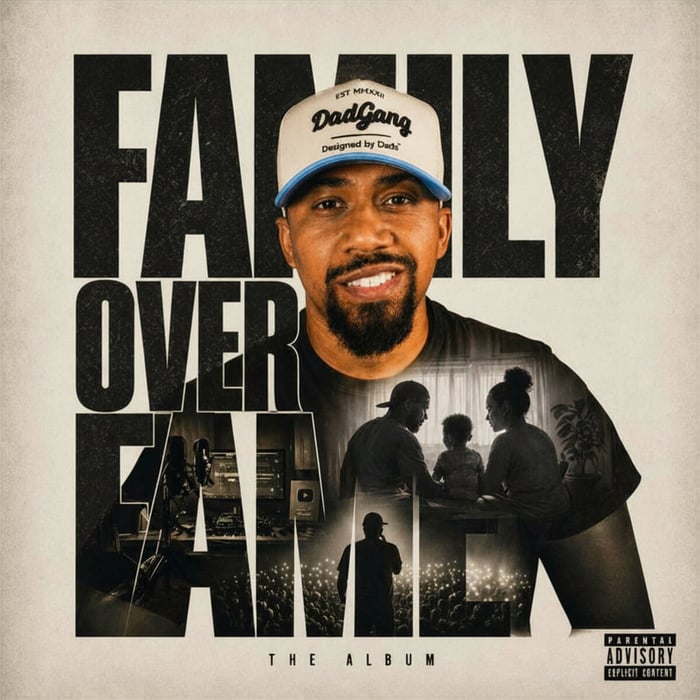
Family Over Fame Album Review: J Nolan Chooses Diapers Over Clout


 See more Architeg Prints stories on Google.
Family Over Fame Album Review: J Nolan Chooses Diapers Over Clout
Family Over Fame is J Nolan’s quiet flex: a rap record where the paycheck, the marriage, and the anxiety all talk louder than “the dream.”
The hook: this isn’t a “rap career” album—it’s a life-management album
Most rap albums want to sound like a victory lap. Family Over Fame sounds like somebody checking the calendar, checking the bank app, and still showing up to rap anyway. And honestly? That’s the point. J Nolan doesn’t perform “hustle” like it’s a costume—he treats work like gravity.
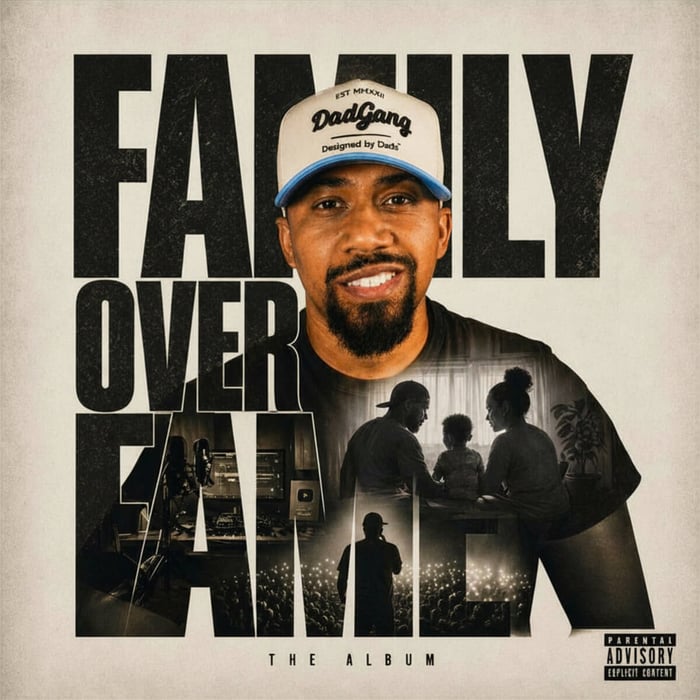
The real premise: the successful rap grind that happens off-mic
Here’s what hit me early: the engine behind this record isn’t “I’m next.” It’s “I’m already employed.” Nolan’s version of a self-sufficient rap life doesn’t depend on a label fairy godmother. It’s built from the stuff that rarely gets mythologized—writing hooks for bigger-budget artists, landing music in TV and film, and then drifting into content creation once marriage and a new son rearranged the priorities.
And the location matters, even when he doesn’t do the tourist version of it. He comes out of Atlanta’s Southside—Clayton County, what he codes as the Dale—and you can feel that difference. This doesn’t sound like a guy reminiscing about bedroom demos like they were holy artifacts. It sounds like somebody looking back at those closet-studio days and thinking, yeah, cute—anyway, bills.
Arguable take: This album treats “fame” like a distraction, not a goal. A lot of rappers claim that; Nolan structures the whole record like he actually believes it.
Money on this album isn’t jewelry—it’s oxygen
The money talk on “In My Lifetime” and “Faith & Work” lands in a specific lane: not enhancement, not status, just survival. When Nolan says he doesn’t need to be the richest—he just needs his money because his people lean on him—it doesn’t play like a slogan. It plays like a boundary he’s tired of having to explain.
He places generational wealth next to the uglier reality of people bleeding “on the concrete” and getting bled in boardrooms. And then he does something that’s easy to miss: he turns his criticism toward the very business structure he used to trust. Not from a distance—more like someone who believed the contract was inevitable because talent was supposed to guarantee it. That faith gets corrected here, bluntly.
On “Faith & Work,” B Trenton frames the thesis in plain terms: belief doesn’t magically summon blessings; you still have to clock in and get paid. Nolan’s response makes the “hustle” origin story painfully unglamorous—his dad, his mom moving to Atlanta, a couple jobs, and absolutely no silver spoon mythology.
Then the title track twists the knife: money in the pocket, but no job. Home with his son after a coronavirus infection, weighing whether to take a booking that might put cash in hand. It’s not a heroic dilemma. It’s the kind of choice that makes you stare at the wall longer than you want to admit.
Arguable take: The album’s strongest flex is that Nolan can rap well without pretending rap is his only income. That’s rare, and it changes the vibe of every “grind” bar.
“Bittersweet” and the sound of not getting out of bed
“Bittersweet” opens without the big fireworks, and that restraint matters. It starts from the simplest failure: he can’t get out of bed. No metaphor gymnastics. Just stuck. Then the hook keeps returning to one desire—wanting to know what it feels like to be free.
I’ll admit I wasn’t sure it would stick the landing the first time. On first pass, I thought the repeated hook might flatten the song into a loop you tolerate rather than a loop you feel. But the more it comes back, the more it starts sounding like the point: the mind returning to the same question because the circumstances don’t change just because the beat does.
Arguable take: That repetition isn’t laziness—it’s the trap. The hook circles because his life is circling.
“The World Is a Ghetto” gets global, but it’s still personal panic
“The World Is a Ghetto” uses a similar structure—refrain-first, heavy repeat—but the verses widen the frame. It’s not just the usual church-versus-state debate; he drags in the kind of headlines people pretend they don’t see, including people being killed in Palestine.
Then the song tightens back into something disturbingly intimate: a man on his thirty-sixth birthday wondering if he’ll even see the next one. That’s not melodrama. It’s the sound of someone realizing time doesn’t negotiate.
And across these verses, poverty isn’t treated as a cinematic tragedy—it’s treated like a chain of compromises:
- a McDonald’s dollar stretched past dignity
- overdue rent that won’t be negotiated with good intentions
- the “honest truth” that robbery starts sounding like the only remaining option
Arguable take: This track doesn’t “raise awareness.” It pressures you. It makes comfort feel like an irresponsible misunderstanding.
“Rain & The Drought” prays like somebody counting change
On “Rain & The Drought,” he ends a verse on his knees with twenty dollars left for the week, asking God how he’s supposed to eat. That moment is almost too clean—no fancy writing, no padding—just a number and a fear.
Then he flips the perspective in a way I didn’t expect: he says his siblings need more protection than he does. That line changes the emotional math. It’s not just I’m struggling. It’s I can endure it, but I can’t watch it touch them.
Arguable take: The most spiritual moments here aren’t churchy—they’re logistical. Prayer shows up when the math stops working.
The “player” tracks: jokes, swagger, and a weird sense of distance
Then the album does a hard pivot: player songs that do their own thing. “Off the Leash” throws around shiny-face imagery, king-of-the-castle talk, and a squad that moves from judging to taking care of mothers. “Poppin’” stacks luxury details—Benihana, options, a third check—like the song wants to taste expensive for three minutes.
“Cartel” drops a Ving Rhames image—him choking a man on-screen—while marking the passage of time: thirty-five approaching fifty. It’s a slick little reminder that even the tough-guy visuals age out.
And the punchlines are everywhere, sharp enough to sting if you’re listening:
- shooting like Marbury
- heat that blackens your skin and gets sold as a “cure”
- hotter than poblano peppers
On “Flex’rr,” the hook calls out broken men performing for women, then the verse answers with Teezy Fontaine’s calm, unfazed pimp-game. It’s a confident sequence—almost too confident.
Here’s my mild criticism: these swagger cuts can feel emotionally detached from the rest of the album. Not badly written—just slightly like they were recorded in a different mental room. When the record spends so much time obsessing over home, illness, and responsibility, the “I’m poppin’” angle sometimes lands like a costume change with the tag still on.
Arguable take: The player tracks are intentionally remote—Nolan’s showing you the mask, not selling it to you. But yeah, it can still pull you out of the story.
The title freestyle: the most “traditional” rapper moment, and it hits
The title freestyle punches the hardest in the most conventional way—tight angles, heavy impact, cleanly written. It’s got the kind of imagery that lands like geometry: precise, edged, built to cut. Bobby Bonds shows up; a Reaper puts someone in a sleeper. It’s the most classically constructed rap moment on the whole run, and it’s not subtle about wanting to win.
Arguable take: This is the song that proves Nolan could chase rap-sport greatness if he wanted—he just doesn’t want it as badly as he wants stability.
“Lady” turns the marriage into a timeline, not a fantasy
“Lady” is where the album stops flirting with the idea of commitment and starts documenting it. The relationship shows up as a sequence of events: a dating app, a pregnancy in North Carolina, a ring, and then a house built without some flashy Derby-day extravagance. It’s domestic, but not soft. It’s like he’s proud of how un-movie-like it is.
Then “Right Now” lightens the mood—frozen wrists, Aegean breeze, and a Kelly Rowland reference like a shiny souvenir. But even that luxury feels borrowed, not owned. Like a weekend you enjoy while still hearing Monday morning in the background.
Arguable take: Nolan’s romance writing works best when it’s practical. When he gets too glossy, the album’s own realism starts side-eyeing him.
“Never Sleep” is devotion described as infrastructure
“Never Sleep” gives the clearest picture of devotion, and it’s intense in a way that isn’t performative. He stacks images of support—back, spine, bride, water, tide—like he’s building a human scaffolding system. Then he plants a career flag: he doesn’t want a manager or label, and whoever wants him can come get him.
It’s not bravado. It’s a boundary.
Arguable take: This track isn’t about love; it’s about refusing interference. The relationship becomes proof he doesn’t need industry approval to function.
“Sending Love” is the self-portrait, and it doesn’t ask permission
If you want the most honest self-portrait, it’s “Sending Love.” Nolan writes for men who aren’t good at writing feelings. He describes working a restaurant counter, taking Ubers at four in the morning to clock in, praying on lunch breaks that his soul is still fed. Two jobs, overhead, the whole thing feeling like it’s crucifying him.
Then 2020 hits and the money starts rolling in online—site booming, book published—and even that comes with a mess: a lawyer wanting to sue him for damages. He’s been self-employed for five years now and he’s “getting chicken again,” like back when he was fulfilling tickets. The past and present collapse into one grind, just with different uniforms.
And that’s where the player songs start making more sense to me. At first I took them as detours. On second listen, they feel like a coping language—punchlines and swagger as a pressure valve, a way to talk when sincerity gets too heavy.
Arguable take: “Sending Love” is the album’s real centerpiece because it admits success still feels like work, not arrival.
What sticks—and what doesn’t
A few things this album does extremely on-purpose:
- It prioritizes household over byline, even when rap tradition begs for bigger ego.
- It treats money like responsibility, not decoration.
- It lets repetition do emotional labor (especially on “Bittersweet” and “The World Is a Ghetto”).
And the part that lost me, just a little: sometimes the swagger tracks feel like they’re trying to keep the album “fun” out of obligation, not impulse. Not a dealbreaker—just a moment where I can see the seams.
Favorite track notes (the ones I kept replaying)
These three feel like the clearest windows into what Family Over Fame is actually saying:
- “In My Lifetime”
- “Sending Love”
- “Bittersweet”
Overall assessment
Solid (★★★½☆)
Conclusion: the album picks responsibility, then dares you to call it boring
Family Over Fame doesn’t beg to be crowned. It shows you the unsexy machinery beneath a “self-made” rap life—work, faith, marriage, illness scares, hungry weeks, and small flashes of luxury that don’t last long enough to become a personality. It’s not trying to be inspirational. It’s trying to be accurate, and that’s why it lands.
Our verdict: People who like rap when it sounds like real adulthood—jobs, pressure, principles, and the occasional petty flex—will actually love this album. If you need your rappers to live entirely inside the fantasy (money, mayhem, and permanent victory), this will feel like watching someone balance a budget on purpose—useful, impressive, and not what you came to party for.
FAQ
- Is Family Over Fame more about family or ambition?
Family. Even the ambition here feels like “keep the lights on,” not “take over the world.” - Does J Nolan sound bitter about the music industry?
Not bitter—more like disillusioned in a practical way. He raps like he’s already stepped on the rake and remembers the bruise. - Are there lighter moments, or is it all heavy?
There are swagger cuts and punchlines (“Off the Leash,” “Poppin’,” “Flex’rr”), but even the fun feels like a break between responsibilities. - What’s the best entry point track if I only play one?
“Sending Love” gives the clearest self-portrait and explains the whole mindset without needing extra context. - Do the repeated hooks work or get annoying?
Depends on your patience. I thought it might drag at first, but the repetition starts to feel like the point—stuck thoughts, stuck systems.
If you’re the kind of listener who judges an album by its cover before you even hit play (don’t lie), you can always shop a favorite album cover poster at our store—consider it a neat way to keep the vibe on your wall: https://www.architeg-prints.com
 | DISCOUNTGET 30% OFF*Use code on your next order:
|
* This post may contain affiliate links, meaning we earn a commission if you make a purchase through these links, at no additional cost to you.