Lizzo BITCH Album Review: Petty Feelings in a Pop Suit (On Purpose)


 See more Architeg Prints stories on Google.
Album Review: BITCH by Lizzo
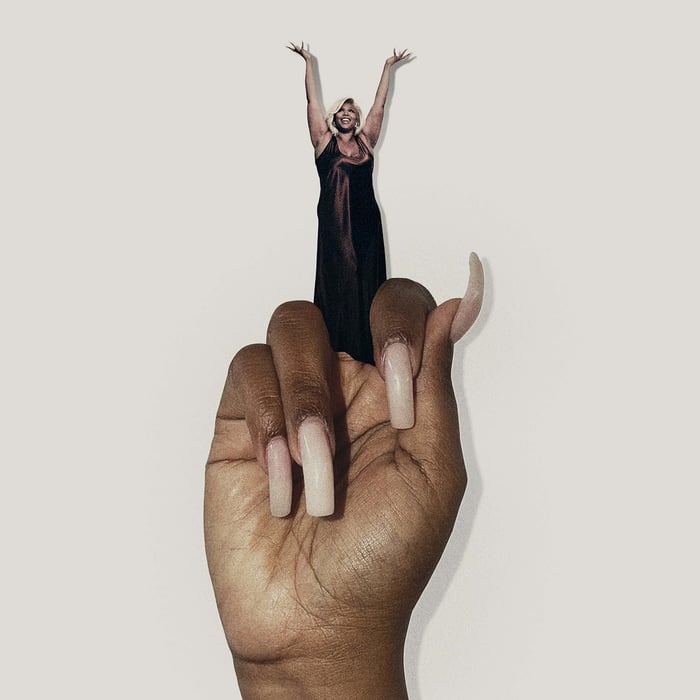
Lizzo’s BITCH is a bold pop album that embraces jealousy, spite, and obsession with unfiltered honesty, creating a compelling and sometimes uncomfortable listening experience.
The Hook: This Album Wins by Not Cleaning Up the Mess
Most pop albums disinfect jealousy before the chorus hits. They either turn it into a cute villain story or sand it down into something you can sing while making iced coffee. Lizzo BITCH doesn’t really do that. It leaves fingerprints on the glass. It keeps the discomfort intact—screen-staring at 2 a.m., counting favors, letting resentment sit in the room like a bad smell you can’t pretend you don’t notice.
And honestly, that’s where Lizzo is sharpest here: not in the grand declarations of self-worth, but in the smaller, uglier feelings she’s willing to chew on until they get weirdly catchy. I’ve never been convinced that “big statements about self-love” automatically make good songs. A lot of them are basically greeting cards with a drum loop. The petty stuff, though? The petty stuff has plot.
Jealousy as a Full-Time Job: “She Stole My Man”
If the album has a secret weapon, it’s how far Lizzo will take a dumb, humiliating feeling without blinking. “She Stole My Man” is the best example: it should collapse under its own ridiculousness, and it just… doesn’t. It keeps finding new space to expand.
The premise is painfully specific: she’s attached to a man who doesn’t know her. That’s not “romantic,” it’s practically a tech-support ticket for the human brain. She lays it out with that blunt insomnia math:
- 2 a.m.: staring at him on the internet
- 4 a.m.: still awake, still doesn’t know him
Then the photo shows up—him with someone else—and the hatred locks in:
“I hate that bitch forever.”But the part that actually lands is the little twist of self-awareness right after:
“But honestly, I let her.”That’s the album’s real skill—making the embarrassment part of the hook instead of hiding it behind confidence.
I thought on first listen the track might be a one-joke ride with glossy, cheesy production dragging it down. But the writing keeps pulling focus back. The song doesn’t just say “I’m jealous.” It shows you the hour-by-hour mental spiral, like it’s documenting a crime scene that happens to be inside her own head.
And that’s the point: the discomfort is the product.
Reverse-Detective Pop: “Whose Hair Is This”
Right after that, “Whose Hair Is This” flips the perspective and somehow gets even more satisfying. Instead of jealousy, it’s investigative certainty—she’s narrowing suspects like she’s narrating a true-crime episode to herself.
She’s ticking off evidence:
- the hair color math (“I’ve been blonde, brunette / But I ain’t been red”)
- the physical remnants (“My lashes in your bathroom, and my glitter on your sheets”)
It’s funny because it’s competent. She sounds like she’s winning. And then Lizzo punctures the whole chase in one final line:
“Oh shit, I did have red hair last week.”
That ending doesn’t just twist the story—it exposes the whole impulse. The thrill wasn’t “catching him.” The thrill was having a reason to keep chasing. The song basically admits that the brain will manufacture suspense if boredom is the alternative.
That’s a braver confession than most pop songs manage, and it’s also a better punchline than the usual “I’m too hot for you anyway” exit.
When She Stops Joking, the Grudges Hit Harder
Here’s where the album gets sneakily mean. The kiss-off tracks don’t always bother with comedy or some big cinematic “I’m healed now” finale. They just state the grievance and walk away, like leaving a plate on the table for someone else to clean up.
“Too Nice” is the clearest: it’s about being everyone’s support beam and realizing nobody checks if you’re cracking. The detail that sticks is the bill moment—everyone vanishes, she pays, and then nobody checks on her. That’s not an anthem, that’s a receipt.
Then she drops a line with basically no warm-up:
“You’d still be workin’ at the mall if it wasn’t for me,”followed by something that barely qualifies as an apology. The meanness pops because it doesn’t beg for your approval. It’s not trying to be “relatable.” It’s trying to be accurate.
“A Toast” goes piano-led and tired in a way that feels intentional: a toast to “waste of time,” to the energy poured into people who didn’t deserve the hours. The little “Still love you though” doesn’t sweeten it—it makes it stranger. That’s the real grudge zone: not venom, not forgiveness, just unresolved truth sitting there.
And then “Like a Crime” opens with an outlandish, impossible premise—fighting her own period “to the death”—and drifts into deadpan fact-reporting. It’s like she starts in cartoon mode just to lure you in, then swaps the tone under your feet.
A reasonable person could argue these tracks are too blunt, that they don’t “develop.” I get that. But I think the refusal to wrap it up is exactly the point: Lizzo is writing feelings that don’t resolve cleanly, because most of the time, they don’t.
Heartbreak Turns Superstitious: “Little Black Cat”
The record gets mystical on “Little Black Cat,” and it’s not subtle about it. This is heartbreak as superstition spiral: black widows, a psychic with accurate premonitions, nursery-rhyme logic—like the brain is grabbing for symbols because it can’t control the actual situation.
The line
“Bad little black cat ain’t bringin’ you back”lands like a child scolding their own bad luck. The images stack up and get delightfully absurd:
- “Amethyst on the dash in the HOV lane”
- “Full moon lightin’ up your ex at three”
It’s the kind of detail that feels like it came from someone actually living in that paranoid, half-magical headspace—where every object becomes a sign.
And then the fantasy reconciliation devolves into child-speak:
“Watch a little Hulu and split me in two, two / Like zooma, zooma, zoom, zoom.”That moment is either going to charm you or completely lose you. I wasn’t sure how I felt at first—I kept waiting for it to snap back into adult language. But on second listen, the childish phrasing started to sound like the real confession: heartbreak makes you infantile, and you hate yourself for it, and you do it anyway.
“Sexy Ladies” Isn’t Rivalry—It’s a Crew
From there, “Sexy Ladies” shifts the “woo” energy into a D.C. go-go groove (with Tay Keith involved), and it uses UCB’s “Sexy Lady” sample as the track’s engine. The interesting move is that Lizzo doesn’t play it like a competition. She answers as a clique of women rather than rivals.
“Love when real bitches win, it do somethin’ to me”is basically the mission statement. And then, in the third verse, she’s not even flexing—she’s coaching a girlfriend through a rough patch: girls’ night, hair up in rollers, holding somebody through the nonsense.
That’s an arguable choice for a song titled like this. Plenty of artists would’ve turned it into a mirror-pep-talk. Lizzo turns it into community logistics. The groove says party; the verse says mutual aid.
The Title Track “BITCH”: Legit Grievance, Thinner Writing
The title track “BITCH” has a real grievance at its core, and it’s one of the most understandable things on the album: she’s been up since 6 a.m., working her “A to Z,” worn down to
“You want me to be everything except a human being.”That’s not drama—that’s the exhaustion of being treated like a product.
There’s also a line that hits with offhand toughness:
“I ain’t lost sleep since I slept in my car.”It’s tossed out like an old scar you don’t show people unless you mean it.
But this is also where the writing gets thinner in two spots, and I don’t think it’s nitpicking to say it. The song gives away its biggest beat and biggest chorus to Meredith Brooks, lifting the “I’m a bitch, I’m a lover / I’m a child, I’m a mother” refrain straight out of 1997. It’s a bold move, sure, but it also means Lizzo’s own verses—often sharper—have to ride a hook that already has its own cultural baggage.
Then the bridge leans on a line that’s been floating around for years:
“I’m not a bitch, I’m that, I’m that bitch.”It’s not that it’s “bad.” It’s that it feels like the song briefly stops being specific. Lizzo’s best work on Lizzo BITCH is the stuff that sounds like only she would bother saying. Borrowed slogans flatten her.
“That GRRRL”: The Chant Is the Weak Part
“That GRRRL” is most convincing when Lizzo stops chanting.
The hook—
“Say you don’t like a big bitch, don’t trip”—is a sturdy insult, but it doesn’t do much besides set up crowd participation. It’s a line built for people to yell back, which is fine… but it’s also a little lazy compared to the verses.
The verse detail cuts closer:
“Everything is bigger outta Houston, Texas, but they call me fun size.”
Then she stops singing and delivers a spoken section that doesn’t soften anything. The bluntness is the whole point:
“You can be fat, and you can be Black / You can’t be no fat, Black bitch, man / That’s what it takes to be me.”
That’s the most straightforwardly pointed moment on the album, and because it comes out without embellishment, the earlier chant starts to feel like an afterthought. Like it’s there to sugarcoat the real statement, even though the real statement doesn’t want sugar.
A listener could disagree and say the chant is necessary—give people a handle, give it replay value. Maybe. I just think the song is better when it tells the truth plainly and lets the room go quiet for a second.
When Lizzo Goes Motivational, She Gets… Predictable
Here’s where Lizzo BITCH gets less interesting: when it aims for saccharine inspiration. When Lizzo reaches for motivational mode, she tends to write by the book, and the book is kinda worn out.
“Don’t Make Me Love U” is basically the same old ultimatum structure. Still, there’s one line with some teeth—
“I’m a big fine woman, don’t lose your place in line”—and it stings harder than the chorus around it. That line sounds like Lizzo. The rest sounds like the default setting.
“Happy 2 Be” plays like a straight thank-you, and most of it stays polite. But one verse drops the politeness and suddenly the whole song wakes up:
“I broke in Houston, Texas, couldn’t get off the sofa / The thing about depression, you think your life is over.”
That’s reportage. That’s rock-bottom described without flattering language. And once she does that, the rest of the song can’t really keep up—the “gratitude” framing feels thinner next to an image that real.
Then “Goodmorning!” closes in pep-talk mode:
“Time to get your ass up / The day is waiting for ya.”That kind of line usually slides right off me. But there’s one image that redeems it because it’s slightly unflattering and therefore believable: staying in pajamas for no reason,
“Running on empty, but no one can tell / Whoever gon’ see me, gon’ see the Chanel.”
That little detail weighs more than the platitude it’s attached to. Lizzo is best when she admits the battery is dead and she’s still going outside anyway.
Where This Leaves the Album: Hooks, Spite, and the Parts That Actually Stick
Taken as a whole, Lizzo BITCH lands above the mushy middle most pop albums settle for—mainly because it’s willing to be petty, obsessive, and occasionally embarrassing. The funniest songs aren’t “comedy tracks”; they’re precision studies of ugly feelings. The mean songs don’t apologize. The superstitious one turns heartbreak into a charm bracelet of bad signs. And even when the motivational songs drift into template writing, Lizzo still sneaks in lines that sound like a real person talking instead of a brand.
If you want the clearest proof of what this album does best, it’s right here: “She Stole My Man,” “Whose Hair Is This,” and “Too Nice” are the moments where Lizzo sounds most alive—because she’s describing behavior, not selling an identity.
Lizzo doesn’t “fix” the listener on this album. She documents the mess, then dares you to sing along to it.
Conclusion
Lizzo BITCH works when it treats jealousy, spite, and exhaustion like worthy subjects instead of guilty secrets. The album stumbles a bit when it borrows big hooks or reaches for motivational autopilot, but it snaps back the moment Lizzo gets specific and slightly unflattering again—the zone where she’s basically unbeatable.
Our verdict: People who like their pop a little nosy, a little bitter, and weirdly honest will actually like this album. If you only want glossy empowerment slogans and clean endings, this is going to feel like reading someone’s unfiltered group chat—useful, but not “uplifting,” and that’s the point.
FAQ
- Is Lizzo BITCH more about confidence or insecurity?
It’s more about insecurity being loud, specific, and sometimes funny—confidence shows up, but it’s not the main event. - What are the best tracks to start with?
“She Stole My Man,” “Whose Hair Is This,” and “Too Nice” show the album’s sharpest writing and strongest perspective. - Does the title track “BITCH” rely heavily on a sample?
Yes—the chorus pulls directly from Meredith Brooks’ “Bitch,” and Lizzo’s verses feel more interesting than the borrowed hook. - Are there any songs that feel less original?
The more motivational cuts (“Don’t Make Me Love U,” parts of “Happy 2 Be,” and “Goodmorning!”) lean into familiar structures, even if they contain standout lines. - What’s the album’s most blunt moment?
The spoken section in “That GRRRL,” where she states the reality of being judged for being both fat and Black without softening it.
If you’re the kind of person who remembers album art as vividly as the hooks, you can always shop a favorite album cover poster at our store—tastefully, not loudly—over at https://www.architeg-prints.com.
 | DISCOUNTGET 30% OFF*Use code on your next order:
|
* This post may contain affiliate links, meaning we earn a commission if you make a purchase through these links, at no additional cost to you.