Sir Render Review: Navy Blue’s “Surrender” Is Actually a Flex Disguised as Therapy


 See more Architeg Prints stories on Google.
Sir Render Review: Navy Blue’s “Surrender” Is Actually a Flex Disguised as Therapy
Sir Render turns dense rap writing into a pressure test—Navy Blue stacks meaning until it snaps, then admits the parts that still hurt.
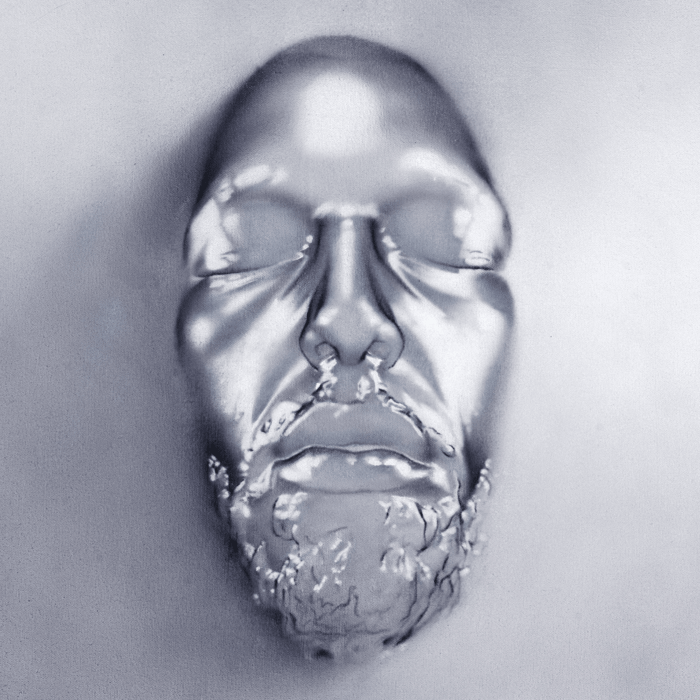
A record that dares you to keep up
Some albums want to be understood. Sir Render mostly wants to see if you’ll even try. Navy Blue has that particular kind of focus where the music isn’t begging for attention—it’s calmly demanding effort like it’s obvious you owe it.
And yeah, I hear the pun immediately: Sir Render as “surrender,” but also as a person, a knighted version of giving in. That’s the whole album in miniature—submission presented as craft, vulnerability presented as control. A reasonable listener could argue it’s overthought. I’d argue the overthinking is the point.
The one-man factory approach (until he decides not to be)
Here’s what’s been true for a while: Navy Blue tends to operate like a one-person assembly line. He writes his own raps, flips his own samples, builds his own drums, and keeps releasing project after project until the pile starts to look less like “discography” and more like “terrain.”
Sir Render lands like the capstone on a series he started a couple years back, and it sounds like he knows it. The beats don’t feel casually tossed off. The sequencing doesn’t feel accidental. Even when the mix is understated, the intent is loud: this is a closer, or at least it’s pretending to be one.
Then he brings in help—The Alchemist, Mario Luciano, Jason Wool, Shungu, and others—and the album quietly shifts from “solo grindset” into “curated pressure cooker.” If you think outside producers automatically mean a bigger sound, you might be disappointed; the flex here is subtler. The beats don’t suddenly balloon. They tighten.
The real gimmick: he raps like footnotes are the main text
Navy Blue’s whole thing on Sir Render is writing that behaves like it has layers even when it’s saying something simple. He stacks secondary and tertiary meanings into rhyme pockets, like he’s hiding extra rooms inside each bar. There are lines that genuinely take a few read-throughs to unfold—not because they’re confusing, but because they’re packed.
That kind of density can turn pointless fast. Some artists write like that and you can feel them mistaking complication for depth. Long stretches of this record avoid that trap. Not all of it, though. There were moments I caught myself thinking, okay, but are we building a life here or just building a sentence? I’m not fully sure Navy always knows the difference—and that little blur is either the album’s weakness or its secret honesty.
“Commencement” proves he doesn’t need tricks
The album’s sharpest move might be how blunt it gets when it feels like it. On “Commencement,” he’s about as straightforward as he ever is:
“I cast a line when fishing out the reservoir
I pass time with deep sighs and interlocking arms
I capsized then I turned my life over to God”
It’s clean writing, and the rhymes don’t feel like they’re straining to impress you. One thing turns into another until it’s out of his hands. That’s basically the emotional thesis of the record: control collapses into surrender, and he’s trying to narrate the moment it happens instead of dressing it up.
Hot take, maybe: “Commencement” is stronger than some of the more intricate tracks precisely because it doesn’t try to be clever. It just lands.
“Reflections” turns self-destruction into math (and it weirdly works)
Right after that, “Reflections” ramps the intensity—not by getting louder, but by getting more inward. He filters the uglier thoughts through a geometric trope:
“I struggle with survival, I was suicidal / That’s the golden ratio, the structure of a spiral”
That could’ve been corny. It isn’t, because he delivers it like the comparison isn’t decoration—it’s inevitability. The spiral isn’t a metaphor he picked; it’s a shape he recognizes. Even his name gets turned over like a problem he can’t solve: “Sage is a title… Sage been a rival.” The self is both identity and opponent.
If you think rap should keep emotions “raw” and untheorized, this might feel too intellectual. I get that argument. I just don’t buy it here. This album is literally about a mind that can’t stop making frameworks.
“Belladonna” is the counter-argument: he’s showing off and enjoying it
To anyone claiming the density is only a symptom—only pain turning into puzzles—“Belladonna” shows the other side. This is Navy Blue grinning while he works. He’s stacking sports and film references like bricks, building a clean, sustained flex:
- bending “a ball around the wall like Keira Knightley”
- talking Beckham and armbands
- framing a rival as Ty Lue to his Iverson
- then pausing to ask: “Would you rather be happy or right…? Choose wisely.”
That question is the real punch. It’s not a throwaway. It’s the album arguing with itself mid-track: are we chasing peace, or winning arguments with reality?
Earl Sweatshirt shows up in the same headspace—off-kilter, jagged, tuned to weird frequencies. He drops lines like “Whole lotta rage, in and out of phase,” then swerves into taste markers (“Lil B and Cormega”), then domestic authority (“Got my baby highchair at the boss table for sure”). It’s like he’s casually proving you can be abstract and still concrete if your voice is confident enough.
When the guests show up, the writing gets better by getting messier
Here’s the part that surprised me: the “party people” (the guests) actually pull the album’s writing down to earth—and that’s the best thing that happens to it.
On “Residuum,” billy woods walks into a full scene in a rented room with a drink and rain at the window, watching someone paint with her hair in two braids. Then he flips the weather inward—“It’s pouring out like a heart with a hole”—and ends on one of the strangest images on the record: heartbreak as “a T-shirt with only one seam.” It’s specific, ugly, memorable.
ELUCID takes a different route through the same track: cruising the city flashing peace signs to strangers, laughing at mall cops, turning up a Stevie record in a borrowed car. That’s not mythology. That’s object-level living.
And the beat helps: the drums on “Residuum” come in more aggressive than much of what surrounds it, like the track is briefly willing to punch instead of meditate. Navy tends to reach for big symbols; woods and ELUCID reach for things you can hold. I’d argue the objects hit harder. They stick because you can picture them without translating.
“Over” hits with plain grief, then swerves into basketball time travel
On “Over,” Mike Shabb doesn’t dress it up: “I was right there when they buried bro.” No smoke, no mirror maze. Just the fact.
Then the track pivots into a Vince Carter flashback—driving fifty like he’s in his Vince Carter years, turning into Tracy in the late game, all backboards. That shouldn’t work, but it does. It’s grief doing what grief does: your mind grabs anything with motion, anything with lift, anything that reminds you what it felt like to feel unstoppable for five seconds.
If you want your mourning music to stay solemn, you might find that sports turn a little sideways. I think it’s honest. Memory doesn’t keep tone consistent.
“Circa” is where the album raises its own bar
“Circa” starts with Navy Blue saying, “I’m alive, was only five when I knew death,” which is the kind of line that sounds simple until you realize it’s not a metaphor—it’s a timestamp.
Then Ka comes in, and the temperature changes. Ka’s writing is packed, but it’s packed with things: a kid with “a hunch in lunchbox” and a mom who “packed a prayer,” watching Happy Days during the saddest year, and then that cold line about the world’s operating system: “the establishment only want to establish fear.” He even turns crying into a discipline—“only got you beat harder, smarter to master tear”—like emotion is something you train for because nobody’s training you for it.
I thought on first listen Navy might get overshadowed here. On second listen, I heard what he was doing: he’s matching Ka by getting out of the way and meeting concreteness with clarity. The form keeps raising the bar, and on “Circa,” Navy actually clears it.
The simplest lines do the most damage
For all the intricate construction, Sir Render hits hardest when Navy just says the thing.
On “If God Had Legs,” he drops: “In my case, self-harm brought peace / It was written on my face, I got a calm you can’t breach.” There’s no clever escape hatch. It’s brutal because it’s direct.
And on the title track, he stops pretending the album is only art and admits the real setting: “I been in them psych wards tryna get a grip / This what livin’ life for, I call it what it is.” That’s not a writer trying to impress you. That’s somebody filing a report.
A listener could argue that kind of bluntness clashes with the album’s more allusive style. I’d argue it’s the glue. Without those plain-spoken moments, the density would float away.
“The Birth of Medicine” and the grief that refuses metaphor
There’s a line on “The Birth of Medicine” that lands because it refuses to decorate itself: “My brother tomb don’t have a headstone / It’s just a cross that sits across from my reflection.” That’s grief without the usual lyrical borrowing. No borrowed myth. No grand symbol. Just the physical detail and the way it bounces back into the self.
That’s the contradiction Navy Blue keeps walking straight into on purpose: his writing becomes most powerful when the subjects aren’t “used.” When he stops making the pain serve the craft and lets the craft serve the pain, the songs stop being impressive and start being unavoidable.
If I have one mild gripe, it’s that every once in a while the imagery outweighs the emotion, and the track turns into a gorgeous paragraph that doesn’t quite bleed. But when he gets the balance right, it’s top-tier stuff—especially considering he’s also producing the whole thing and still keeping pace with heavyweight guests.
Favorite tracks (the ones that keep pulling me back)
I’m not going to pretend every moment hits the same, but these are the ones that feel like the album’s spine:
- “Commencement”
- “Reflections”
- “Circa”
Conclusion: surrender as craft, craft as survival
Sir Render doesn’t romanticize collapse. It organizes it. Navy Blue writes like he’s trying to out-think the abyss, then periodically admits the abyss doesn’t care how smart the sentence is. That push-pull—between mastery and giving in—is the record’s real pulse, and it’s why it sticks even when it’s a little exhausting.
Our verdict: People who like lyric-dense rap that rewards re-listens (and don’t mind doing a little mental lifting) will live inside Sir Render. If you want instant hooks, big choruses, or a vibe that explains itself in the first 30 seconds, you’ll bounce off this and blame the album—when really you just didn’t sign up for homework with feelings.
FAQ
- Is Sir Render more about rapping or production?
It’s both, but the rapping runs the show. The production feels designed to hold dense verses steady, not compete with them. - Does the title track matter, or is it just branding?
It matters. The title track is where the album stops hinting and just admits what “surrender” looks like in real life. - Which track best represents the album’s writing style?
“Reflections” for the layered, conceptual lines; “Commencement” for the clean, direct version of the same mind. - Do the guest verses feel tacked on?
No—if anything, the guests reroute the album into more concrete storytelling, and that contrast strengthens the whole run. - Is this an easy listen?
Not really. It’s not hostile, but it is demanding, and it expects you to pay attention the way Navy clearly did.
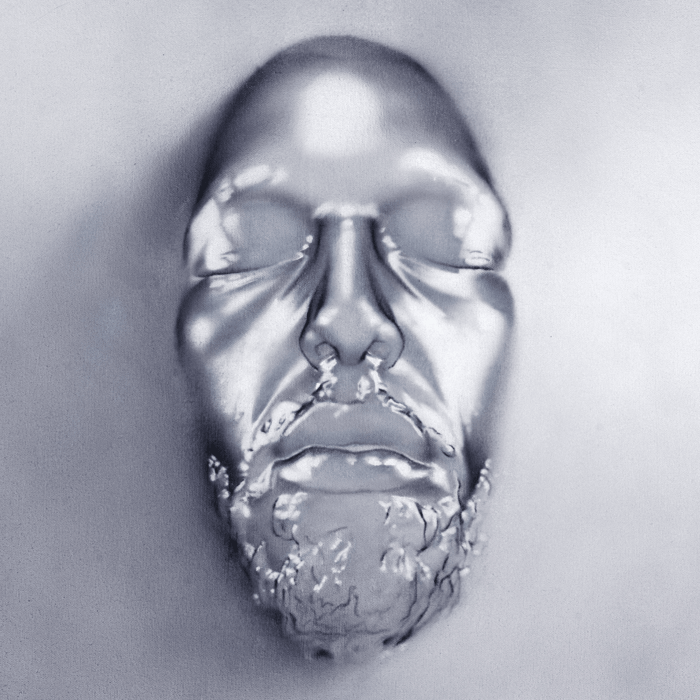
If you’re the kind of listener who falls for album artwork as part of the whole spell, it’s worth grabbing a favorite cover poster and making the “surrender” feel a little more permanent on your wall: https://www.architeg-prints.com
 | DISCOUNTGET 30% OFF*Use code on your next order:
|
* This post may contain affiliate links, meaning we earn a commission if you make a purchase through these links, at no additional cost to you.