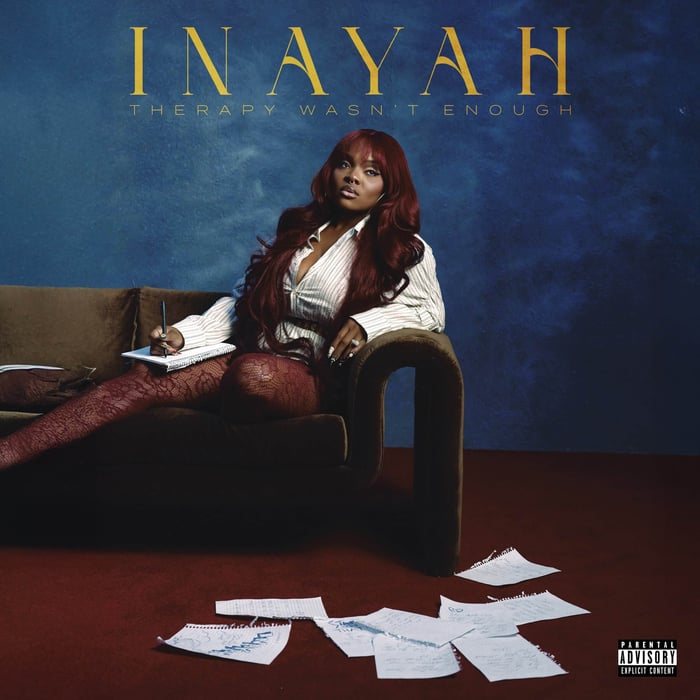
Therapy Wasn’t Enough Review: Inayah Turns Heartbreak Into a Spectator Sport


 See more Architeg Prints stories on Google.
Therapy Wasn’t Enough Review: Inayah Turns Heartbreak Into a Spectator Sport
Therapy Wasn’t Enough is Inayah singing like the timeline is in the room—messy, loud, and weirdly strategic. It’s breakup music for people who hate “privacy.”
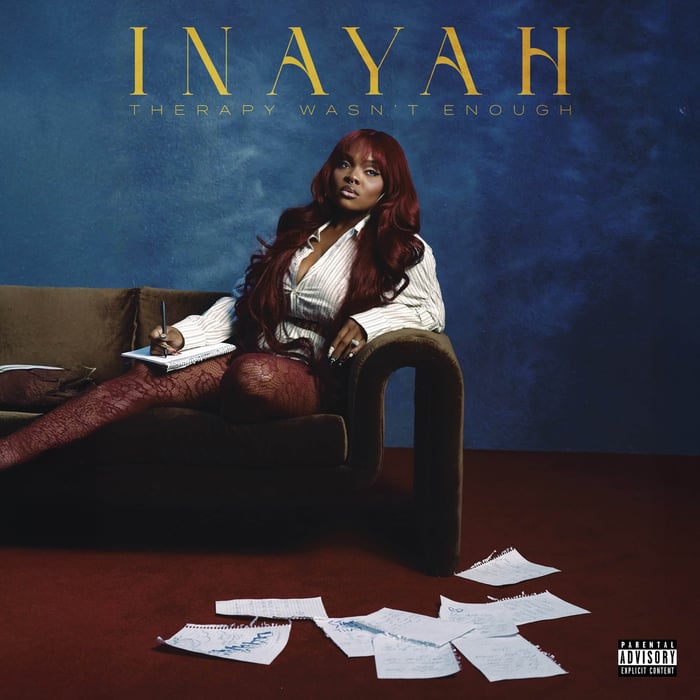
Inayah doesn’t write these songs like she’s trying to heal. She writes them like she’s trying to win. And not win the relationship—win the story after the relationship got dragged into the street.
The Real Premise: Your Breakup Went Public, So Now It’s a Product
Here’s what hits first: this album moves like it already knows the audience has screenshots. Inayah—Houston singer, internet-built, first known for flipping other people’s hits again and again before her own single “Fairy Tale” caught—sounds flat-out offended that everybody got a seat at her mess. Not “sad.” Not “reflective.” Offended.
By the time the first songs really sink in, the split isn’t just a split. It’s a public event with timestamps. October is basically the opening chapter, and the guy didn’t just leave—he posted. He aired it out on Instagram, made it a team sport, and suddenly every move became something strangers could “take sides” on. That’s the poison in the bloodstream of this record: it’s not only heartbreak; it’s heartbreak with witnesses.
And yeah, she’s at her best when she bares her teeth. The sweet moments exist, but the bite is where the personality lives.
“Downside”: She Rewinds October Like She’s Building a Case
The album’s clearest time-stamped storytelling lands hard on “Downside.” She drags the timeline back to October—breakup, then him “hopped on the ‘Gram, acting out,” and her snapping back with that simple boundary: keep my name out your mouth. It’s not poetic. It’s not trying to be. It’s a text bubble turned into a hook.
Then she pushes forward: by November he flies out to her, and she spends her birthday feeling nothing—alone, even with the story still making noise. By December he’s suddenly posting ocean pictures with “your hair down,” switching lanes into regret while she’s left stuck between wanting him back and wanting to wring his neck. That contradiction isn’t a flaw; it’s the whole point.
The production choice matters here: DJ Chose gives her a mid-tempo piano-trap-soul glide that’s almost too smooth for the subject. That’s why it works. The beat moves like normal life, while she’s spitting irritation that keeps catching on the edge of the melody—like she’s trying to keep it cute and failing on purpose.
A couple lines in, the real punch shows up: she’s not only mad at him. She’s mad that his behavior forced her to manage her fans’ perception of her.
- deleting pictures, now people clock it
- leaving her to explain why he’s out the country
- turning private chaos into public admin work
That’s a special kind of rage: not “you hurt me,” but “you made me do PR for my pain.”
“WTF”: The Album’s Unspoken Rule—Keep the War Indoors
From there, “WTF” turns into the mission statement: if you’re going to fight, do it in private. Over a slow snap beat with synth bass and strings, she sounds like she’s trying to keep composure in front of an audience she never invited. That’s the humiliation underneath the anger—performing stability for people who “don’t even know us.”
This is where I thought the album would stay locked: pure scorched-earth, pure public-shaming revenge arc. But it doesn’t. Not exactly.
I’m not totally sure if that’s because she softened… or because she realized control looks better than chaos.
“Too Much to Lie”: The Begging Starts Turning Into a Warning
On “Too Much to Lie,” the energy shifts from “please” to “try me.” She spends a lot of it hyping herself up—you’ll never find another one like me—but every few bars her voice hardens like she can’t keep pretending this is only sadness.
The threat peeks through:
- you’re gonna lose me
- you’ll be left with your pride if you don’t choose me
She frames his “fame” like an earthquake that rearranged him into someone who forgot who he was, forgot who she was, and started acting like her love was performance. The sharpest moment is how quick she fires back at that accusation: “Take that back.” Not a metaphor. A reflex.
The Underdogs keep the piano warm enough that the warning slides by fast, like she doesn’t want the track to look “angry” even when it is.
“All for Nothing”: Same Plea, Better Bounce, Less Patience
Then “All for Nothing” repeats the core anxiety—please don’t let this be meaningless—but dresses it in a bouncy, Timbaland-flavored rhythm (Agape & Seige Monstracity and Rance 1500 behind it). The hook keeps pleading that it can’t be all for nothing, but the outro stops begging and starts issuing terms.
She lands on the line that tells you exactly what kind of love story this is:
- handle me carefully
- don’t handle me carelessly
- my love or my enemy—pick one
That’s not romance. That’s a contract with emotional penalties.
“Choose”: The Album’s Cleanest Argument, Then a Sudden Spiritual Turn
“Choose” is the highlight because she finally says the quiet part out loud: why is she being forced to pick between the sweetest love she’s gotten from a man and music? She calls it unfair, and she’s right—but also she’s choosing to frame it that way because it keeps her morally centered. If she’s being forced, she doesn’t have to admit she wants both.
Mustapha and Triangle Park give her that slow, turn-of-the-millennium-style beat—soft edges, late-night glow—so the ultimatum feels like a heavy conversation in a parked car. She flips it back: if he loved her like he says, he wouldn’t make her choose.
And then the song drops into something rawer: half-spoken, half-sung processing. The polish breaks. She talks through pain until she lands on God—needing to hear from God, believing God is doing something “new” in the man who’s going to be her husband.
I didn’t expect that pivot to land, and at first I thought it was a little jarring—like switching channels mid-scene—but on second listen it felt like the only honest exit from a loop she can’t solve with logic. If you can’t control the man, you outsource the ending to faith.
That’s as exposed as she gets anywhere here.
When She Stops Pleading, the Album Starts Breathing
Once she quits begging, the record loosens up. She’s not “over it.” She’s just finally steering.
“Outside”: Sampling Nostalgia to Deliver a Kiss-Off
“Outside” is the release valve. It flips Lil’ Mo and Fabolous’ “4Ever” and threads an interpolation of Usher’s “U Don’t Have to Call.” That’s not random. That’s intentional time-machine scorn—turn-of-the-millennium R&B energy where the whole point was to sound calm while saying something cold.
She delivers the kiss-off with that exact posture:
- you don’t have to call
- I wouldn’t pick up anyway
- you made your bed, now you lay in it
She’s done trying to salvage this at home. Now she’s outside doing what “every boss bitch does,” and DeezyBaby and crew give her a bounce that basically mutes her anger by turning it into motion.
Arguable take: the beat is almost too fun for what she’s saying, like the track is trying to dance its way out of a fight. But maybe that’s the point—joy as retaliation.
“Need You”: A Reconciliation Pitch That Sounds Like Paperwork
Then “Need You” swings back toward wanting him, except she frames the reunion like terms and conditions. The hook is blunt—I need you—but she won’t let it sound soft. She calls out that this isn’t friendship. This takes commitment from both of them. She basically asks: are you riding or not?
It’s romantic in the way a lease agreement is romantic. Still, it hits because she refuses to pretend she’s okay with half-effort.
“All Falls Down”: The Only Track That Lets Her Certainty Crack
If the album has one real doorway for doubt, it’s “All Falls Down.” Over Andrew Clifton and Eric Hudson’s ballad, she drops the practiced certainty long enough to admit she’s split in two: half already gone, half staying.
That line matters because it’s the only moment where she stops trying to win the narrative and admits she doesn’t even know what she believes yet.
I kept waiting for more of this kind of wobble, honestly. The album mostly prefers conclusions over questions.
When the Writing Simplifies, It Gets Riskier
Once the immediate fire dies down, the songwriting gets cleaner—sometimes too clean.
“You and Me”: Chemistry Still Flickers, Even When She Refuses to Look
“You and Me” keeps a little spark. She refuses to even glance at him across the room, but still insists she’s “still about” him—the one who makes her laugh when she’s mad and gets joy out of irritating her. That’s a very specific kind of love: annoyance as intimacy.
The Underdogs give her slow piano and heavy harmonies, and she sounds most alive when she’s exasperated. That’s a weird compliment, but it’s true: irritation brings out her rhythm.
“Let Me Down”: Pretty Production, Greeting-Card Promises
“Let Me Down” goes earnest—almost stiff. The vows feel built from generic building blocks:
- I can build you up
- won’t tear you down
- as long as you stick around
Brandon Hodge’s late-’80s homage sounds pretty, so it doesn’t fall apart, but this is where the writing briefly loses its teeth. And when she throws in that “this ain’t no reality show” kind of line again, it’s like the cameras walk back into the room. You can feel her bristling at being watched—but the song itself plays it safe.
That’s my mild complaint: she’s strongest when she’s specific and a little petty. When she goes “universal,” she gets less interesting.
“Crazy Too”: Forgiveness as a Choice, Peace as a Trade-Off
“Crazy Too” is where she stops pinning everything on him. She admits walking out is easy and forgiving is hard, and she owns that she understands him because she’s unsteady too.
That’s a big moment: she calls herself “crazy too,” not as a joke, but as a confession that she’s part of the mess she’s singing about.
Darhyl Camper’s vintage piano is the softest cushion on the whole record. She sits in it, staying beside him even when he’s dead wrong. It’s calm—maybe the calmest she gets.
But there’s a trade. The peace she earns here loses the acidic edge that made earlier tracks pop. “Downside,” with its petty beach-photo detail and the stress of covering for his disappearance, has more oxygen in it. This calmer lane is sincere, but it’s less alive.
And that’s the contradiction she can’t fully solve: stability doesn’t always make for gripping songs, but chaos can’t be the only muse either.
Where I Landed: Not Therapy—Control
By the end, I don’t think Therapy Wasn’t Enough is trying to be a diary. It’s trying to be a controlled burn. Inayah keeps returning to one obsession: not just what happened, but who got to see it, who got to comment, who got to choose sides. The real villain isn’t only the ex—it’s the exposure.
If I had to call the album anything, it’s a breakup record written by someone who’s sick of being perceived, yet can’t stop addressing the people perceiving her. Which is, frankly, the most modern kind of heartbreak.
She even tells you which songs carry the strongest punch. For me, the ones that actually stick are the same three she clearly built as the spine: “Downside,” “Choose,” and “Outside.” When she’s narrating the timeline, questioning the ultimatum, or finally stepping out into the world, the album stops feeling like complaint and starts feeling like decisions.
The closer you listen, the more obvious it gets: the title isn’t a cute line. It’s a warning label.
Conclusion
Inayah uses Therapy Wasn’t Enough to turn a public breakup into a private power grab—song by song, timestamp by timestamp, boundary by boundary. The best moments aren’t the prettiest; they’re the ones where she gets specific enough that you feel the group chat lighting up, then flips that humiliation into posture. It’s not healing music. It’s “watch me not beg the way you expected” music.
Our verdict: People who like R&B that talks back—especially the kind that treats love like a negotiation and public mess like a crime scene—will eat this up. If you want subtlety, or you believe every breakup should be handled like a silent retreat, this album will feel like someone arguing on speakerphone in the checkout line (and no, she’s not turning it down).
FAQ
- Is “Therapy Wasn’t Enough” more about heartbreak or public fallout?
The public fallout. The pain is real, but the rage comes from the audience, the posts, the sides, and the forced explanations. - What’s the standout track and why?
“Choose,” because she finally states the central conflict cleanly, then drops into raw, half-spoken processing that feels like the mask slipping. - Does the album stay angry the whole time?
No. It starts hot, loosens up when she stops pleading, and ends in a calmer place—though the calmer songs sometimes lose the sharp detail. - What’s one moment where she sounds unsure?
“All Falls Down,” where she admits she’s split: half gone, half staying. It’s the rare crack in her certainty. - If I only listen to three songs, which ones reflect the core of the album?
“Downside,” “Choose,” and “Outside”—timeline, ultimatum, release.
If this record put you in the mood to live with the imagery a little longer, consider grabbing a favorite album-cover poster from our shop. Not a bad way to frame a little chaos you actually chose.
 | DISCOUNTGET 30% OFF*Use code on your next order:
|
* This post may contain affiliate links, meaning we earn a commission if you make a purchase through these links, at no additional cost to you.