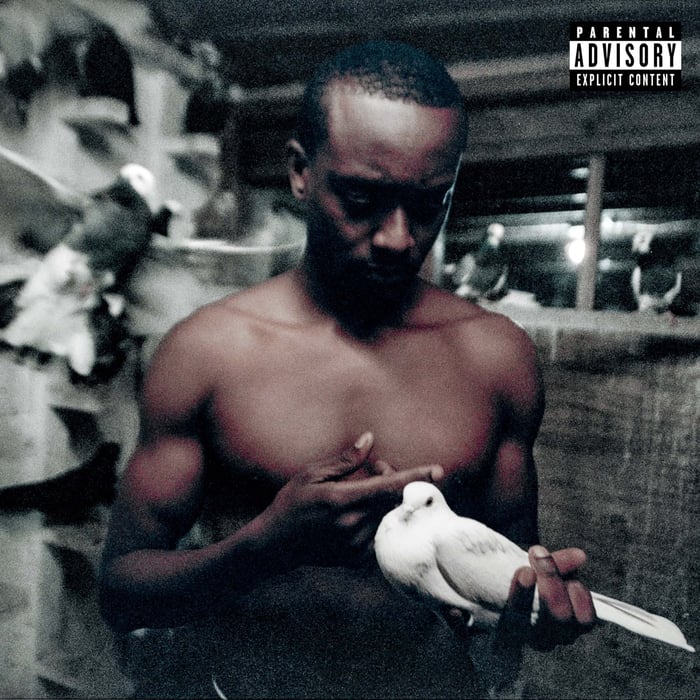
Don’t Call Me Lucky Review: DJ Muggs & T.F Sell You the Receipt


 See more Architeg Prints stories on Google.
Don’t Call Me Lucky Review: DJ Muggs & T.F Sell You the Receipt
Don’t Call Me Lucky isn’t “street rap”—it’s an audit. DJ Muggs and T.F count every mile, every dollar, and every bad decision like they’re daring you to call it luck.
A record that doesn’t knock—it already has the keys
Some albums ask for your attention. Don’t Call Me Lucky acts like you’re late to a meeting you scheduled. It doesn’t ease in, it doesn’t explain, and it definitely doesn’t care if you’re “caught up” on the characters.
There’s a familiar underground ritual happening here: one producer, one rapper, full-length commitment, guest list drawn from a circle that feels intentionally sealed. The funny part is that T.F has basically been living inside this format lately—stacking single-producer albums back-to-back like it’s a normal way to move through a career in 2025. It makes Don’t Call Me Lucky feel less like a “special link-up” and more like the latest entry in a system he’s chosen on purpose.
And DJ Muggs? He’s been treating this approach like a factory line for years—Soul Assassins as the vehicle, collaboration as the engine, and a steady run of joint albums with whoever fits the room that season. This album doesn’t feel like two artists meeting up. It feels like two people realizing they’ve been working the same job, just on different shifts.
Arguable claim: this isn’t a “collab album” vibe at all—it’s more like T.F stepping into a Muggs-built corridor and refusing to slow down so you can look at the walls.
The real subject is money—and not the motivational kind
Here’s what Don’t Call Me Lucky is actually doing: it’s writing about commerce like it’s weather. Not “I’m getting money” as a victory lap, but money as the constant pressure system that warps every decision.
“Ressie Pieces” is the clearest thesis statement because it’s so casually horrible. The scheme is blunt: sell someone baking yeast as cocaine, and when they realize, cut them up and label the parts like candy. That’s not a shock twist in the song—it’s just the premise. And the guests treat it like normal conversation at an expensive table. Meyhem Lauren opens with sea bass crudo and truffle-baked brie, OT the Real is outside with the kind of day-after confidence that always sounds doomed, and then T.F closes with that scorched-earth line about leaving “a trail of lava in the streets,” and if the target survives, they’ll still be hallucinating monsters in their sleep.
That’s the tone: luxury detail next to brutality detail, stitched together so tightly they’re basically the same fabric.
“100 Dollar Bill” takes a different route—less grotesque, more deadpan. The math is the point: take a quarter, make a dollar, repeat it thirty times, then turn the method into merchandising. It’s not “hustle talk,” it’s process talk. By the time the verses stack up, you’re hearing a table full of different versions of the same obsession: people who buy stocks and homes right next to people who break down product in homes. Even the name-drops feel like they’re there to mess with time—O.J. Mayo showing up as a timestamp long after T.F’s circle was already “balling.” It’s like he’s marking eras with stray reference points.
Then “Money in the Wall” just says the quiet part loud: it’s basically a home invasion hook turned into a chant—
knock knock, is anybody home? we want that money in the wall.Heartbreak JC drops a line that feels like the album’s floor collapsing into view: people dying every day over chains and a post. The album doesn’t separate “legit” commerce from black-market commerce; it writes them as the same impulse with different paperwork.
Arguable claim: the album’s money talk isn’t flexing—it’s accusing, and the accusation is aimed at anyone pretending these worlds don’t touch.
No explanations, no glossary, no “let me tell you my story”
The most consistent power move T.F pulls here is refusing to translate himself. No “as you may know.” No character introductions. No definitions. He’ll say something like “the chains is rusty but the hook stainless” and keep walking. If you didn’t catch it, that’s your problem.
At first, I thought that would make the record feel closed-off—like a private conversation I wasn’t invited to. But after sitting with it, the lack of explanation starts to feel like the whole ethic: these songs don’t want your sympathy, they want your attention. There’s a difference. Sympathy requires context. Attention just requires you to keep up.
Arguable claim: the album’s refusal to explain isn’t “mysterious” or “artful”—it’s discipline, and most rappers don’t have it anymore.
“Don’t Call Me Lucky” is a title that bites back
The title phrase isn’t a cute motto. It’s a refusal with teeth.
Right at the start, the first track basically swats away the idea that anything here is luck. T.F lists receipts like he’s reading off a case file: court-ordered therapy that helped beat a case, failure-to-appears that somehow didn’t stop the motion, cards declining at the limit, more cases still hanging around, and then the one number he doesn’t soften—fifteen years grinding, and that’s just his count.
Later, on “Money in the Wall,” he frames it like ten years just to get to where the album catches him. And he doesn’t isolate the grind as a personal triumph story. He keeps dragging the camera toward other people in the frame: the friend who ran through millions twice and saved nothing; people fresh off state and federal time; kids not seen in eight years. It’s bread broken with the same hands that break ribs.
Calling it “luck” would be an insult, and the album treats that insult like a recurring villain.
Arguable claim: the title is less about confidence than anger—anger at anyone who watches survival and calls it a blessing.
“El Sancho” turns the album into a three-act play in under four minutes
This is the track where T.F stops just reporting and starts directing.
“El Sancho” runs like a compact film scene, and it uses skits as scene changes. It opens on a prison phone call: a girlfriend picks up for her locked-up man, he asks for commissary money, then the call catches on a moment of suspicion—
wait, where you at?—and the air goes weird.
Verse one is from the guy at her house. He slides in with a Baby Boy reference, casting himself as the other man in a way that’s meant to make you smirk, but the verse itself plays it flat—feet up in another man’s living room, eating Chips Ahoy like domestic betrayal is just snacking. He notices the Christian Dior jacket in her Instagram photos. He admits she told him the boyfriend was selling dogs, then comes the twist of the knife: the last litter was the boyfriend’s, and this guy sold every dog and kept the money.
Then comes the disclaimer that isn’t a disclaimer:
I ain’t no snitch, but that’s quiet as kept.That line is the moral rot in one breath—he knows exactly what he’s doing, and he still wants credit for not being “that kind” of wrong.
The second skit flips the phone back to the locked-up boyfriend as he realizes another man is inside his house in real time. Verse two is him in the cell, no pictures of his kids, just the mental image of “some nigga at the crib.” Verse three jumps forward—he’s out, back in free air, and the men who snitched on him are greeting him at the door. He chases the address down and finds a for-sale sign sitting there like the world’s ugliest punchline.
The outro runs a full minute of him screaming into a phone about Chips Ahoy, Ovaltine, pillowcases, Kool-Aid, and his kids. It’s almost petty—until you realize the pettiness is the point. That’s what betrayal does: it turns your brain into a junk drawer of specific objects you can’t stop touching.
I’m not totally sure the skits will work for everyone—on first listen I wondered if they were going to interrupt the momentum. But this track proves the interruptions are the momentum.
Arguable claim: “El Sancho” is the album’s real centerpiece because it’s not just hard—it’s staged, like T.F is auditioning as his own screenwriter.
The guest list feels like a closed circuit—with one interesting exception
Most of the voices here sound like they’ve either been in a Muggs room before, or they’ve stood next to T.F long enough to match his temperature without trying. That familiarity matters because the album moves like a crew operation, not a playlist.
Roc Marciano shows up on “Ya Heard” and takes the first verse like he owns the deed. The line about dodging the pen and turning the pen into a poppy field is exactly the kind of wordplay that sounds simple until you realize it’s two lives in one sentence—legal trouble and writing practice braided together.
Heartbreak JC, though, is the curveball. He comes in without prior ties to either of them, but with the same South Central gravity as the headliner. His verse on “Money in the Wall” doesn’t sound like a guest verse; it sounds like a neighbor leaning over the fence to tell you what’s really happening on the block.
Arguable claim: the guests don’t “add variety”—they reinforce the album’s closed-world feeling, which is either the appeal or the dealbreaker.
Muggs produces like time is heavy, not fast
DJ Muggs keeps the tempo living on the slow side, and that’s a choice that changes how every bar lands. These beats don’t chase you. They follow you.
“The Scorpion Sting” is the clearest example: it creeps. The main figure hangs on two sustained notes, and the drum hits only on the second—like the beat itself is refusing to rush to the punchline. The menace is unhurried, which makes it feel more certain. “Cha Cha Chicken” builds a hook around stop-start percussion that literally mirrors the “chop chop” in the lyric, and T.F rides it like he’s working a heavy bag—repetition, rhythm, impact.
“Star Studded” flips into something dreamlike: reverb-heavy piano, a low string pulse underneath, and then T.F talking brunches and moldy laundered money like it’s a memory he doesn’t fully trust. The title track “Don’t Call Me Lucky” opens on a sound that feels like a warning siren shoved through a guitar pedal—an alarm that’s been processed until it becomes mood.
If I’m nitpicking, there are moments where Muggs’s slow-burn approach threatens to flatten the energy across the tracklist. Not because the beats are weak, but because the album is so committed to that heavy pace that you start craving one hard left turn—just one track that sprints. The upside is the whole thing stays coherent. The downside is coherence can start to feel like a locked door.
Arguable claim: Muggs isn’t trying to make “bangers” here—he’s trying to make the room feel smaller, like the walls are listening.
The album quietly insists it’s also a movie
This release showed up alongside a feature-length short film directed by Jason Goldwatch (who’s worked with Muggs before, including Death Valley, and even handled a performance of Nas’s Illmatic backed by the National Symphony Orchestra). Muggs treats the LP and film as one unit.
T.F has framed it as “the first sci-fi gangsta flick,” tossing out comparisons like Ready Player One and Inception. I can’t fully confirm that vibe from the music alone—sometimes “sci-fi” sounds like an ambition more than something you can hear. But the scene-writing on “Star Studded,” “El Sancho,” and “Luchador” makes a lot more sense if you imagine a camera sitting next to the verses. These songs don’t just describe; they block scenes.
Arguable claim: the album doesn’t need the film to work, but it clearly wants the film to make the listener stop treating these tracks like background music.
This is what it looks like to not chase an audience
What’s sneaky about T.F’s recent run is how little it seems to care about modern rollouts. Three single-producer LPs in under two years, all with beatmakers who have their own long histories, and none of it feels like it’s begging for new listeners with explanatory handholding.
That’s either arrogant or refreshing, depending on your tolerance for being challenged.
Between T.F and Muggs, T.F is arguably the rarer ingredient here—not because Muggs isn’t great at what he does, but because Muggs’s model is already established. T.F is the one insisting on living inside it repeatedly, as if he’s making the case that the audience doesn’t need to be lured. The records are for whoever was already listening—and if you weren’t, you can catch up or move on.
Arguable claim: this album is built like a private ledger, and the fact that it still slaps is almost incidental.
Conclusion
Don’t Call Me Lucky doesn’t ask you to admire T.F’s survival story—it asks you to stop calling it luck in the first place. Muggs builds slow, heavy corridors for T.F to walk through, and T.F fills them with scenes so specific you can smell the pantry snacks and the panic. It’s commerce as violence, loyalty as math, and storytelling that refuses to pause for newcomers.
Our verdict: People who like their rap like a grimy short film with no subtitles will actually love this album—especially if slow-tempo menace is your comfort food. If you need big hooks, bright choruses, or even a tiny moment of “hey, here’s who I am,” you’re going to bounce off this and call it boring (and the album will not miss you).
FAQ
- What is the core theme of Don’t Call Me Lucky?
Money as a system—legit and illegit blurred together—plus the anger that comes from people calling long-term grind “luck.” - Does DJ Muggs keep the production varied across the album?
He keeps it cohesive more than varied: lots of slow-creeping beats, tension, and atmosphere. If you want wild tempo swings, you may feel boxed in. - Which tracks best show T.F’s storytelling?
“El Sancho” is the clearest scene-driven piece, and “Star Studded” feels like a vivid, half-dream sequence. - Do the skits help or hurt the flow?
They can feel intrusive at first, but on “El Sancho” they’re basically the editing cuts that make the three-act structure land. - Is this album approachable for new listeners to T.F?
Not especially. It doesn’t explain anything. If that sounds annoying, it will be. If that sounds exciting, it’ll click fast.
If this album’s world got stuck in your head, you might as well hang a piece of it on your wall—shop your favorite album cover poster at our store.
 | DISCOUNTGET 30% OFF*Use code on your next order:
|
* This post may contain affiliate links, meaning we earn a commission if you make a purchase through these links, at no additional cost to you.