Tiwayo Outsider Album Review: Soul Peacemaker Music That Refuses to Flinch


 See more Architeg Prints stories on Google.
Tiwayo Outsider Album Review: Soul Peacemaker Music That Refuses to Flinch
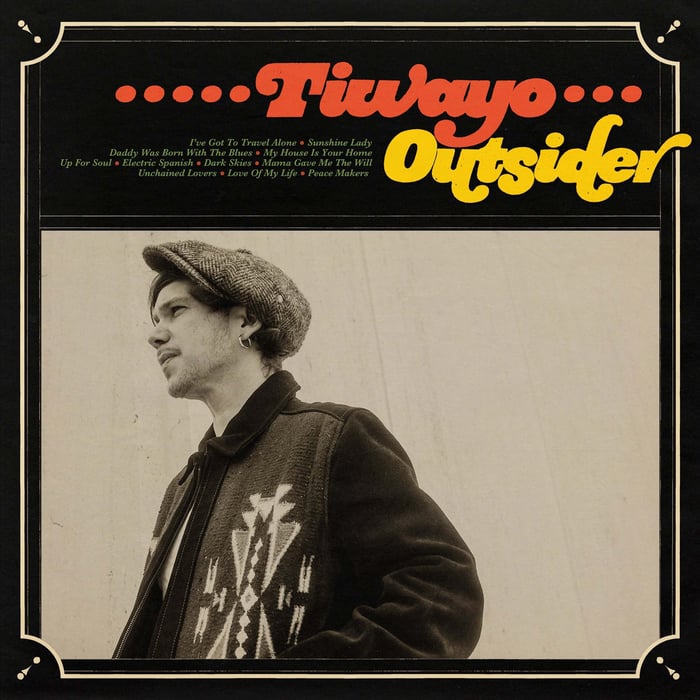
Tiwayo Outsider is a tightly played soul-funk record that bets on sincerity, family songs, and one-room chemistry—sometimes to a fault, often to its benefit.
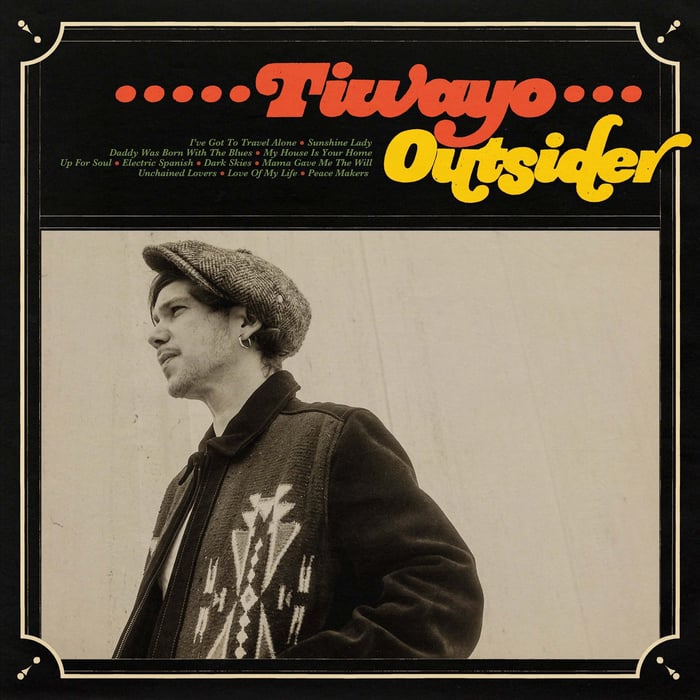
A record that walks in like it already knows you
Some albums try to impress you in the first 15 seconds. Outsider doesn’t bother. It just sits down, looks you in the eye, and starts talking like it expects you to stay in the room.
That confidence is basically the whole point of Tiwayo Outsider: a singer who’s still weirdly “unknown” to a big chunk of the American audience, making an album that acts like fame is the least interesting thing about him.
The setup: a small label, a steady band, and zero feature-chasing
Here’s what you can hear immediately: this album was made by a real working group, not a playlist committee.
Outsider came out this spring on Record Kicks, a Milan indie that leans into soul and funk LPs made by compact ensembles—the kind of label that still believes a band should sound like a band. Tiwayo’s road to this moment is baked into the record’s posture: he came up busking, landed on Blue Note for two full-lengths, toured as a support act, and then disappeared long enough that those earlier records stopped being part of the conversation.
And then the pivot: Adrián Quesada heard Tiwayo’s demos, reached out, met him at Les Eurockéennes in eastern France, and pulled him into Electric Deluxe in Austin to cut Outsider. Quesada doesn’t just “produce” in the abstract; he’s everywhere—producing every track and playing guitar on every track. The rhythm section doesn’t rotate in and out like a modern R&B credits list, either. It’s the same people, over and over, until you start trusting them:
- Jay Mumford on drums
- Terin Moswen Ector on bass and congas
- Joshy Soul on keys
- Alexis Buffum on bowed strings
- Doyle Bramhall II adding second guitar on “Daddy Was Born with the Blues” and “Electric Spanish”
- Kendra Morris appearing once for a duet
Will Grantham engineers every song, and that consistency matters. The personnel on track one is basically the personnel on track eleven, and you can hear it: not just “tight playing,” but that specific steadiness you get when nobody’s introducing themselves anymore—they’re just working.
A reasonable listener could argue this is too controlled, too same-room, too “no surprises.” I get that. But the point is: Outsider is choosing reliability as an aesthetic.
“Daddy Was Born with the Blues”: grief without the details, on purpose
From the jump, Tiwayo shows you what kind of writer he is: the kind who refuses to give you the easy explanation.
On “Daddy Was Born with the Blues,” the song for his late father, he won’t explain the death. No cause. No year. No neat “and that’s why I’m singing” backstory. He gives you a few plain facts: his father was born in a beautiful city he doesn’t name; it was a land of many dreams; he was lonely; jazz showed up at school and changed the temperature of that loneliness. Then Tiwayo lands on a line about an “extraordinary feeling” that “weighs heavy sometimes,” and honestly, that’s where the song actually lives—the weight, not the explanation.
Musically, it’s built like a quiet ceremony. Doyle Bramhall II’s guitar slides in under Alexis Buffum’s strings, and the chorus arrives like a simple four-line biography that suddenly hits harder than it should. The key move is the line about “not getting two lives to choose.” That’s the thesis: not “my dad suffered,” but “one life wasn’t enough to contain him.”
He even tosses off a little math—“two beautiful sons,” “many stories,” “did pretty well”—and then refuses to underline it. The chorus returns a couple more times, and the song ends without handing you the coordinates you’re trained to demand. If you want a funeral scene, you don’t get one.
I’m not totally sure every listener will tolerate that restraint. Some people need the plot. Tiwayo’s betting you’ll accept the silhouette.
“Electric Spanish”: the guitar pun is real, but the identity claim is louder
Then the album pulls a trick that looks like a joke until you realize it’s not.
On “Electric Spanish,” Tiwayo wanders into the streets and can’t find anyone to talk to. The isolation isn’t poetic in a decorative way—it’s practical, almost irritated. He’s lost in the country around him. He gets as high as the day will allow and still can’t reach anybody. And when people ask where he finds joy, he answers with the title:
He calls himself “electric Spanish” and “electric French,” and sure—on the surface, there’s an obvious Gibson ES pun sitting right there, grinning. But the song isn’t really about the pun. It’s about a guy naming himself into identities he doesn’t neatly “belong” to.
Tiwayo was born in Paris, raised on American music, and recorded this in a Texas studio. In this one song he claims two countries he isn’t from and a third he isn’t even standing in. That’s not wordplay; that’s the whole outsider condition. And underneath it, Bramhall II is still there on guitar while Tiwayo clocks “tension and people with bad intentions,” wishing someone would remind them that life isn’t for hate—it’s for joy.
You could roll your eyes at that line on paper. I almost did. But he sings it with zero wink, and that changes what it does.
The “peacemaker” motif: corny on the page, weirdly convincing in the mouth
From here, Tiwayo Outsider keeps insisting on something a lot of modern songwriting avoids: plain moral statements.
He calls himself a peacemaker twice—once on “Up for Soul,” and again on the closing track, where he’s driving fast through a city and trying to talk himself down. “Up for Soul” lays out the contradiction cleanly: he’s broke, he’s in debt, he could use luck, but fighting “for blood” isn’t his thing. Music is his thing.
That’s a stance, not a vibe.
And the album keeps pushing that stance into scenes:
- On “My House Is Your Home,” he opens the door to a stranger and tells them nobody defines who they are or who they will love.
- On “Electric Spanish,” he repeats that life isn’t for hate but joy.
- Later he drops, “There’s no reason to be unkind.”
These lines risk sounding naïve—especially now, when a lot of listeners treat sincerity like a prank they don’t want to fall for. I kept waiting for the album to reveal the angle, the twist, the self-protective irony. It never does. Tiwayo isn’t winking.
Whether that converts you is basically a test: how much current-era moral embarrassment are you willing to drop at the door for the length of an LP? A reasonable person could say this kind of earnestness belongs on a motivational poster. And yet—over this band, it lands more like a personal rulebook than a slogan.
Where it stumbles a bit: the love songs play it almost too safe
The plainness works best when it’s attached to family, identity, or survival. It gets harder to defend when it turns romantic.
“Unchained Lovers,” the duet with Kendra Morris, doesn’t really have an obstacle. There’s no thorn, no problem, no “we barely made it.” It’s two people naming what they are to each other, and the chorus is basically just the title phrase. The verses compare love to a field of flowers blooming, or a connection running smooth like water under trees. Pretty, sure—but also the kind of imagery pop music has been cashing checks from since pop music learned to write checks.
“Love of My Life” doubles down: his wife becomes the “sun,” the “rock,” the “sky,” plus a memory of the dress she wore under the Memphis sun. Again: these aren’t bad lines. They’re just familiar lines, and the album is otherwise so specific about its world that the love-song language feels like it steps into borrowed clothing.
That said, the band rescues the moment. Mumford drags the ballad slightly backward at the kit, and Joshy Soul’s keys open up space for Quesada’s guitar to move through like it’s taking its time. The music suggests depth even when the lyric is basically: “I’m happy, and I plan to stay that way.”
On first listen, I wrote these songs off as too generic. On second listen, I realized the album is making a blunt decision: it’s not trying to invent new words for the inside of a long relationship. It’s reporting that the inside is… fine. Stable. Unpanicked. Almost boring. Which is, honestly, its own flex.
Mother and father songs: the album hides its symmetry in plain sight
The family theme isn’t a side dish here—it’s structural.
Both parents show up on the tracklist, but in opposite states: the father is gone, the mother is present. “Daddy Was Born with the Blues” sits in the third slot. “Mama Give Me the Will” lands in the ninth—six songs later. The sequencing doesn’t announce the mirror. It just lets it exist.
“Mama Give Me the Will” works as a list song, and the list is the point: she gave him the will to be the man he wanted to be; the will to sing like in Memphis, Tennessee; the will to stay free like the birds and bees. It’s inheritance described as permission.
Memphis pops up again in “Love of My Life,” and it’s tempting to treat that like a puzzle the album wants you to solve. I don’t think it does. I don’t think Tiwayo is begging anyone to pin a red string across the tracklist. It feels simpler: he’s been there, it marked him, and when he reaches for a place-name tied to the people who made him—his mother, his wife—Memphis is what his memory grabs.
The album doesn’t underline the rhyme. It lets both songs happen and keeps walking.
The anti-playlist philosophy: one voice, one room, one lane
A lot of contemporary listening habits train you to hear albums as stitched-together collaborations—feature, producer swap, feature, new sonic palette, cameo, algorithm bait. Outsider does the reverse, almost stubbornly.
Same producer every time. Same core players every time. Same engineer every time. That means you can hear the album all the way through without losing track of whose world you’re in.
“Dark Skies” is a good example of how this record uses restraint as its signature move. Tiwayo asks an unnamed second person to be near him before the sun goes down, and that’s basically the whole request. No ornate narrative. No metaphor pileup. Just the blunt need for closeness, placed inside a band sound that doesn’t flinch or overreact.
And that steadiness reframes Tiwayo’s biography as something you feel rather than something you’re told: a singer in his thirties who spent a long stretch alone, met a guitarist at a festival field in eastern France, and ended up in Austin making a record about being a peacemaker, an outsider, a son, and a husband who still loves the woman he married.
If you want chaotic reinvention, you won’t find it here. If you want the sense that real humans played together for a concentrated stretch of days, you will.
What I keep coming back to (even when I’m not sold on every line)
If I’m being honest, Tiwayo Outsider annoyed me briefly with how unguarded it is. There’s a kind of bravery in refusing to hide behind cleverness, and there’s also a risk of sounding like you’ve never been embarrassed in your life. Tiwayo flirts with that risk.
But the album’s best moments—“Daddy Was Born with the Blues,” “Electric Spanish,” and “Mama Give Me the Will”—aren’t trying to be cool. They’re trying to be true in one take, with the same people in the same room, and a singer who’d rather leave gaps than lie to fill them.
And yeah, I can nitpick the love-song language. I can wish one chorus took a sharper turn. I can argue the record occasionally mistakes sincerity for specificity. Still: the through-line is clear enough to feel intentional, not accidental.
Conclusion
Tiwayo Outsider is what happens when a singer chooses steadiness over spectacle: one producer, one room, one band, and lyrics that refuse to wink even when they probably “should.” It doesn’t explain everything, it doesn’t chase modern feature economics, and it doesn’t apologize for believing in kindness like it’s a real practice instead of a brand.
Our verdict: People who like soul records that sound like a band actually standing shoulder-to-shoulder will click with this fast—especially if you’re tired of albums that feel like 14 open browser tabs. If you need twisty storytelling, messy romantic drama, or punchlines in the lyrics to feel safe, this one will seem almost suspiciously earnest, like it’s trying to hand you a glass of water when you asked for a cocktail.
FAQ
- Is Tiwayo Outsider more soul, funk, or singer-songwriter?
It leans soul-first, with funk in the muscle and singer-songwriter plainness in the lyrics—especially on the family songs. - Who produced the album Outsider?
Adrián Quesada produced every track and plays guitar across the whole record. - Does the album use lots of guest features?
No. It’s mostly a fixed working group; Kendra Morris appears once for a duet, and Doyle Bramhall II adds second guitar on two songs. - What’s the emotional center of Tiwayo Outsider?
The parent songs—“Daddy Was Born with the Blues” and “Mama Give Me the Will”—plus the identity tension in “Electric Spanish.” - Are the love songs a highlight?
They’re sincere and well-played, but lyrically they can feel familiar; the band’s feel does a lot of the heavy lifting.
If this record put a particular image in your head—cover art included—it might look better on your wall than in your camera roll. If you want, you can shop an album-cover-style poster at our store: https://www.architeg-prints.com/.
 | DISCOUNTGET 30% OFF*Use code on your next order:
|
* This post may contain affiliate links, meaning we earn a commission if you make a purchase through these links, at no additional cost to you.