Floetry the Extension Review: millkzy’s “Floetry” Gamble Isn’t Cute Anymore


 See more Architeg Prints stories on Google.
Floetry the Extension Review: millkzy’s “Floetry” Gamble Isn’t Cute Anymore
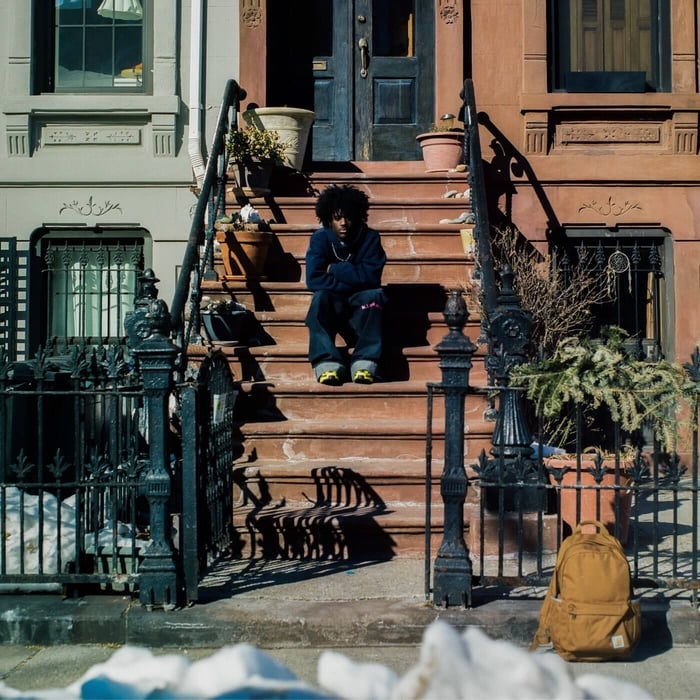
Floetry the Extension is millkzy turning his self-made “floetry” label into a weapon—naming names, handing women the mic, and daring you to call it a gimmick.
A Word He Invented, and a Bet He Keeps Doubling
Here’s the thing about naming your own style: you don’t get to stop defending it. The second you coin a term, you’ve basically stapled a target to your forehead and asked the internet to throw darts at your vowels.
millkzy has been living inside that decision since 2023, when he dropped Floetry—seven short songs that weren’t trying to “expand hip-hop,” they were trying to rename the room. The concept was blunt: fiction + poetry, pinned to live piano and strings, and with barely any drum programming showing up to do the usual heavy lifting. It was the kind of aesthetic declaration that can either become a signature or a punchline. And yeah, I kept waiting for the punchline.
But three years later, it’s hard to pretend the bet didn’t land. He’s sitting near a million monthly listeners on Spotify, moving at a pace that looks like an album per quarter, and he’s even selling the argument as clothing—his merch line, Failed Author, has a shirt that basically says: I got hate for a flow I started; this song is a response. (If you want the receipts, it’s here: https://millkzy.bigcartel.com)
And Floetry the Extension is where that word—floetry—stops being a quirky tag and starts acting like a thesis.
The Women Aren’t “Shorty.” They’re People With Names (And That’s the Point)
The quickest way to tell what an album is actually doing is to watch what it refuses to do. On Floetry the Extension, millkzy refuses the usual vague fog of “she/her/the girl.” Instead, he names women like he expects consequences.
Asmita shows up first, and “Asmita the Prideful” doesn’t play like a love song or a diss—it plays like a courtroom argument where the relationship is the defendant and pride is the weapon. He’s talking directly to her about her pride, about how she won’t maintain the “mansion” of herself, and he frames his love like it’s chaos that still came from a big heart. Then he does a move that’s so petty it circles back to being smart: verse one arrives once, and then verse two shows up word-for-word identical, like he’s replaying the message because she clearly didn’t hear it the first time.
That repetition is an arguable choice. Some listeners will call it lazy. I think it’s intentional—he’s making the conflict feel stuck, like the conversation can’t evolve because the person across from him won’t.
And then there’s Joy—his mother—whose name becomes the pun inside “Robin Hood of Joy.” That track doesn’t just “honor mom.” It ends by cutting the final hook with a sampled fight where she says, “you hurt me,” then “get out,” and then the song ends. No fade-out. No gentle landing. Just a door shutting.
It’s not pretty, and it’s not supposed to be. I’m not even fully sure whether dropping that audio is catharsis or a flex of emotional access… but either way, it makes the album feel like it’s holding proof.
“A Woman Written by God” Pulls a Slick Trick—and It Works
This is where millkzy gets bold in a way most rappers avoid: he gives away the ending.
“A Woman Written by God” is half prayer, half wish-list—millkzy is essentially asking to meet the woman he’s imagining. Then the track hands the last sixty seconds to a woman who isn’t named, but is absolutely real: a spoken outro that plays like a phone memo, not a performed verse. She talks about runway prep, Dallas outfits, a Fashion Week trip, going to an A$AP Rocky concert, a streetwear event in ATL, and the grind of getting modeling work off the ground.
And the hilarious (and slightly brutal) effect is this: his half sounds like longing; her half sounds like Tuesday.
You can argue it undercuts him. I think that’s the point. He’s writing “a woman written by God,” then letting an actual woman cut through the poetry with logistics, deadlines, and travel. It’s a quiet admission that fantasy is easy—and real people are busy.
My first impression was that the outro would feel like filler, like one of those “vibe” interludes artists use to pad meaning into a tracklist. On second listen, it plays more like the album’s hidden thesis: he can write as beautifully as he wants, but life keeps talking over the poem.
“The Cafe Closes at Nine” Is the Album’s Best Flex (And It’s Not Even Close)
If you want the clearest example of what millkzy means by floetry, it’s “The Cafe Closes at Nine.” This isn’t a song that “tells a story.” It pins you to a single conversation and makes time the villain.
Mike Vincent’s guitar and Sandro’s piano drift underneath like they’re trying not to disturb anyone—quiet enough that the whole scene feels like a cocktail bar that’s already decided to close early. And the narration moves by the clock:
- 8:15: he’s already asking her about her dreams—nurse, millionaire, or sitting beside a man with money who’s been getting her there.
- 8:30: the nerves show up, not as a vibe, but as regret about what he’s already confessed.
- 8:45: he claims he can see through her disguise, orders two more drinks to keep her talking, and you can hear him believing his own strategy.
- 9:00: the café closes, he turns, she’s gone—and outside, someone’s yelling for her to hurry because reservations are set and a seat is being saved until ten.
That outside voice is the gut punch. The whole conversation gets re-framed as him auditioning for someone who already had plans.
Then verse two does something that’s either genius or maddening depending on your patience: it starts over at 8:15 and replays the same dream question, the same “man with money” line, like he’s stuck in a loop. Like he’s practicing lines at an empty chair.
I’ll admit I hesitated here—part of me wanted the story to move forward, to give me a different angle. But the repetition is the angle. The track makes you feel what it’s like to replay a conversation that never belonged to you in the first place.
When the Album Stops Arguing With Itself, It Gets Dangerous
A lot of Floetry the Extension is millkzy arguing—sometimes with a woman, sometimes with himself, sometimes with the idea of what his genre is supposed to be. The wild part is: the album gets cleaner when he lets someone else have the final word.
“Free” is the clearest example. For about a minute, comfortuh takes verse two and the whole project suddenly stops clenching its jaw. millkzy has already made peace with leaving, and comfortuh doesn’t even bother addressing his logic. Instead, she narrates a solo drive that ends with her tripping over a rabbit burrow, noticing a tunnel in the distance, and seeing a field of sunflowers.
It’s a better image than his argument. Not because his writing is weak—because hers refuses the fight entirely. She walks out of the room and finds a landscape.
“J’aimerais Que Tu Sois Holmes” pulls a similar trick right from the top. It opens in French—eight lines where the singer has already decided millkzy was an illusion. The line “Je pensais être celle qu’il te fallait” hits like a cold towel: I thought I was the one you needed. Her version of the story arrives before his, which is a power move disguised as elegance.
Then there’s “Robin Hood of Joy,” where MARCO PLUS takes the second verse and flips the gender on a dying-relationship argument. And “Seed of a Serpent,” where La Reezy follows millkzy’s accusation verse with a first-love narration set in his mother’s car, under a sky without streetlights—eyes glossing over as they look up.
The connective tissue here matters: millkzy writes every line himself—no co-writer—and still chooses to hand the last word of a fight to someone else. Most rappers chasing “their sound” don’t do that. They control the narrative until it suffocates. This album loosens control just enough to feel honest.
The Back End Turns Defensive, and That’s Where the Mask Slips
Toward the end, the record starts guarding itself. Not subtly, either.
On “Truth Be Told,” over AJ Huang’s piano, millkzy compresses an origin-story rant into four lines that feel like a refusal to be cast as everyone’s emotional employee:
“Truth be told, I never asked to be no healer
Never asked to be no therapist
Never asked to be an only son
Never asked to have no ass to kiss.”
That’s not just a bar set—it’s a boundary. And it’s arguable whether it’s brave or defensive. I hear both. The line about being an only son especially lands like something he’s tired of explaining.
Then a plea to his mother arrives: the choice of pen over college classes. And right after that, he makes a big label-preference statement—one that honestly made me wince a little, not because it’s “wrong,” but because it’s so eager to separate himself:
“I claim the poet lyricist role, not the rapper ‘cause I would hate to be grouped up with niggas’ tales and fables.”
I get what he’s doing. He’s trying to protect the “floetry” brand from being flattened into standard rap expectations. Still, the part that lost me a bit is the implication that other rappers are just telling tales while he’s doing something purer. That’s not a fatal flaw, but it is a tell: insecurity dressed as distinction.
He waves off Grammys and sellout shows quickly, like he doesn’t even want to let those fantasies breathe. Then “Two Words,” with KIDTOKIO, pushes the argument harder. There’s a gun reference tucked inside a vow not to use one, and it lands like a threat aimed at his own worst version:
“If I ever tote the gun, don’t let me pick up the switch ‘cause that’s the day I kill a man, and that’s includin’ this bitch.”
After that, a bridge turns into a skit where he jokes about rejecting a pregnancy, cracks a line about blaming it on another man “like it’s the ‘80s,” and ends with: “baby, I ain’t made for this shit.”
Some people will hate that tonal swing. I kind of respect it—because it’s messy in a human way, and this album is clearly more interested in showing you the mess than cleaning it up for streaming playlists.
So What’s Really Happening on Floetry the Extension?
Here’s my read: Floetry the Extension isn’t trying to prove millkzy can rap without drums or can write pretty lines over piano. That’s the surface flex. The real move is that he’s turning “floetry” into a legal document—names included, voices included, receipts included.
A lot of rap projects talk about women like they’re interchangeable silhouettes. This one insists on specificity: Asmita, Joy, and the unnamed woman whose voice closes “A Woman Written by God” with a real-life schedule. And the album’s smartest trick is letting the women’s verses and outros complicate his story instead of decorating it.
If you came here looking for a neat arc, you might leave annoyed. The record repeats itself on purpose. It doubles back. It hands away endings. It closes doors mid-sentence. It’s not trying to be tidy; it’s trying to be true-ish.
And yeah, I still don’t know if “floetry” will age like a genre or like a phase. But on this album, the word finally feels earned.
Where I’d Start (If You Want the Album at Its Sharpest)
I’m not doing the fake-objective score thing. But if you want the tracks that best explain what Floetry the Extension is actually attempting, I’d point here:
- “J’aimerais Que Tu Sois Holmes” (the illusion gets called out immediately)
- “The Cafe Closes at Nine” (the tightest writing and the most surgical structure)
- “Free” (comfortuh’s verse is the album breathing on its own)
Floetry the Extension comes off like millkzy finally accepting that if you invent a word, you also invent your enemies—and then choosing to write anyway, with names, with receipts, and with just enough vulnerability to make the defense believable.
Our verdict: People who like intimate rap writing over piano and strings—and who don’t need drums to tell them what to feel—will get what millkzy is doing on Floetry the Extension. If you need hooks to behave, plots to resolve, and artists to stop arguing with the air, this album will irritate you like a beautifully written text message you didn’t ask to receive.
FAQ
- What does “Floetry the Extension” mean in practice?
It’s millkzy stretching his “floetry” idea—fiction-plus-poetry writing over piano/strings—into longer, more pointed scenes and arguments. - Does the album actually name specific women?
Yes. Asmita and Joy are named directly, and another woman appears via a real recorded phone-memo-style outro. - What’s the standout storytelling track?
“The Cafe Closes at Nine” is the clearest short story here, structured by timestamps and built around a single conversation. - Are there notable guest contributions?
Yes—comfortuh, MARCO PLUS, La Reezy, and KIDTOKIO all appear, and several of them get strategic “final word” moments. - Is millkzy positioning himself more as poet than rapper?
He says it outright late in the album, and the back end especially leans into defending that identity.
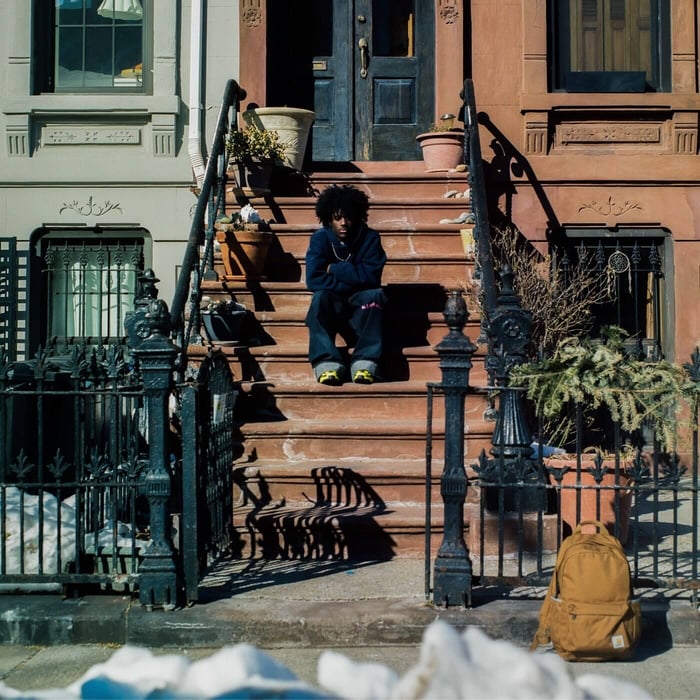
If this album’s cover is stuck in your head the way the café scene probably will be, you can always put that obsession to work with a clean poster print. We keep tasteful options over at https://www.architeg-prints.com.
 | DISCOUNTGET 30% OFF*Use code on your next order:
|
* This post may contain affiliate links, meaning we earn a commission if you make a purchase through these links, at no additional cost to you.