Miss Michigan EP Review: Momo Boyd’s Pageant Smile That Bites Back


 See more Architeg Prints stories on Google.
Miss Michigan EP Review: Momo Boyd’s Pageant Smile That Bites Back
Miss Michigan EP turns “good girl” compliments into evidence—and Momo Boyd sings like she’s done being polite about it.
A hook before the sash goes on
This EP sounds like someone finally grabbed the microphone with both hands and stopped sharing. Not louder—sharper.
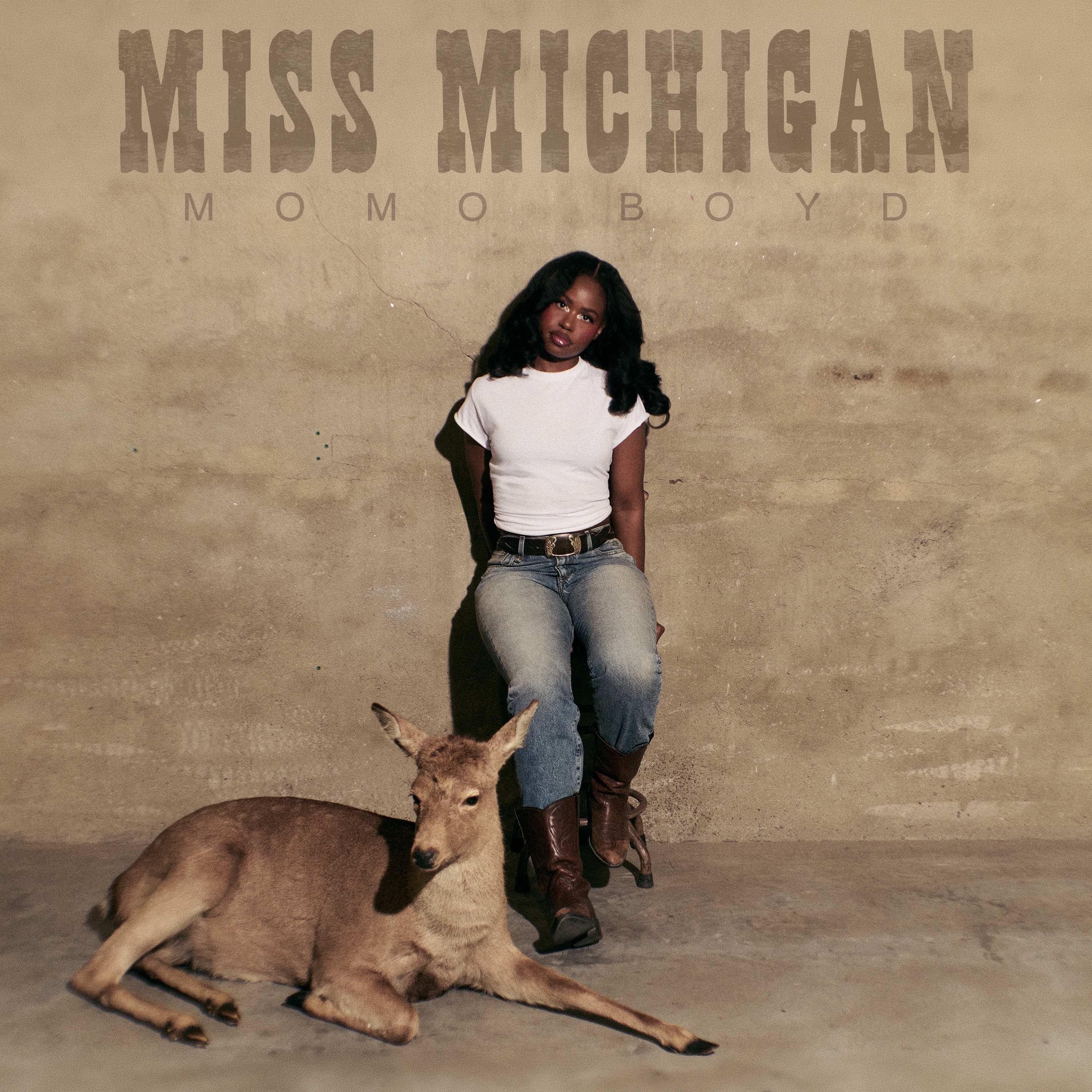
Who Momo Boyd is here, and why this EP feels “late” in the best way
To understand why Miss Michigan EP hits the way it does, you have to hear the backstory in the tone, not as trivia. Momo Boyd grew up in Detroit in a family where music wasn’t an extracurricular—it was the household operating system. Her parents founded the Boys & Girls Choirs there, and her father John worked as a choir director. That detail matters because you can tell her voice was raised like a well-trained dog: disciplined, responsive, capable of tricks, and expected to behave.
In 2006, the family relocated nine kids from Michigan to New York City because four of them—Momo among the siblings who would become the touring core—were musically inclined enough to try making singing into an actual living. For years they busked all over: Bethesda Terrace, the steps of the Met, the platforms under Times Square. Not for a weekend. For almost a decade. You can hear that kind of street-earned calibration on this EP: she knows exactly how to land a line so it catches a stranger by the collar.
That busking grind eventually turned into the family group Infinity Song getting signed after a clip from Central Park made the right rounds in 2016. Their first album in 2020 leaned more R&B. Then the 2023 EP Metamorphosis locked in the soft-rock harmony thing that actually fit them like skin, and “Hater’s Anthem” blew up on TikTok—hard enough to push them into a sold-out international tour running through 2024.
Here’s the part that shifts the electricity: Momo Boyd is the youngest of the four touring siblings, she wrote “Hater’s Anthem” alone, and Miss Michigan EP is hers without the group. It was recorded in the month after Baby Keem’s “Good Flirts” put her on a hook between his verse and Kendrick Lamar’s—basically dropping her name into a totally different crowd’s mouth overnight. I’m not 100% sure the EP is trying to “capitalize” on that moment… but the timing makes it feel like she knew the window was open and refused to waste it.
And that’s the real sound of this project: urgency disguised as composure.
“Miss Michigan” isn’t a compliment here—it’s a diagnosis
So what is Miss Michigan EP actually doing? It points at the pageant archetype—the smiling Midwestern girl with the correct answers and the trophy at the back of the parade—and then it crawls inside that costume and tells you what it costs.
It’s half joke, half medical chart. The EP doesn’t “explore” the good-girl trope. It prosecutes it.
The sneaky move is that Boyd writes a lot of this from inside the archetype. Not outside throwing stones. From inside, while still wearing the smile, still collecting the compliments, still pretending those compliments are love.
That’s why the opening premise feels so unnerving: the praise sounds like affection until you realize it’s a set of instructions.
“She’s a Sweetheart” turns compliments into a trap you can’t duck
This section slides in like it’s about being adored. Then it flips and you realize you’re listening to a user manual for exploiting a “nice” person.
On “She’s a Sweetheart,” she starts on the short end of the stick and—at first—accepts it with grace and class. The chorus stacks up the kind of lifelong branding she’s apparently been handed again and again:
“She’s a sweetheart, she’s an angel
Miss perfect princess with a big smile
She’s a lover, people pleaser
She gives it all, that’s why we love her.”
But the compliments don’t stay compliments. In the verses, they become evidence—like she’s building a case file:
“If you want her, you can have her
All it takes is an empty promise
She’ll be here regardless
Giving you access just because you’re asking.”
By the time the song hits its ending mood, “sweetheart” has curdled into “try-hard,” “angel” starts reading like “martyr,” and the cute self-portrait turns into a receipt. The arguable part: I think the song is less about being misunderstood and more about being correctly understood by the wrong people. They know exactly what she is. That’s the problem.
“Second Best” is the same wound, just inside a relationship
From there, the EP doesn’t change topics—it changes camera angle. “Second Best” runs the same case, but with someone specific in the room.
This is where Boyd sounds like she’s trimming herself on demand, shaving off parts of her needs to keep someone who would rather she care less. It’s a quiet kind of self-erasure, not melodramatic—more like watching someone fold themselves smaller so they’ll fit inside a relationship that was never built for them.
Then she drops the bridge like it’s arithmetic she’s tired of pretending is romance:
“I’d rather have a piece of you than my own peace of mind.”
That line doesn’t beg. It admits. And the arguable claim here is uncomfortable: “Second Best” doesn’t just depict low expectations—it suggests she’s learned to confuse emotional scarcity with value, like love only counts when it’s hard to keep.
“Cold Hands” refuses availability—and that’s not liberation, it’s training
Next comes the flip side: not being available at all.
“Cold Hands” opens by naming the origin story in one blunt line:
“I’m a child of divorce, I’ve seen the war I’ve seen it end.”
The song feels like she’s decided the worst way to die is alone, and because of that fear she’s trained herself for alone. That’s the cruel twist: she treats isolation like a skill set. Like, if you master it early, it can’t surprise you later.
The bridge makes the promise sound almost rehearsed:
“I’m not afraid anymore… to watch you walk out that door.”
And then the track ends there, which is its own kind of brutality. No reunion fantasy. No emotional epilogue. Just a door closing and the silence that follows.
Read against “She’s a Sweetheart” and “Second Best,” “Cold Hands” doesn’t contradict them—it completes them. The people-pleaser and the person who can’t commit aren’t opposites; they’re two exits from the same burning building. That’s a hard take, but I think it’s what Boyd is implying: she’s not inconsistent, she’s adapting.
“Big Country” is a love song that refuses to pretend the love exists yet
After that emotional frost, the EP finally gives you something that resembles a love song—except it’s built around the search, not the prize.
“Big Country” has Boyd cycling through shabby American places where she’s hunted for the right person. The chorus is basically a travel log of disappointment:
“I walked for miles and miles in broke-down high heels looking for you
I searched in bathroom stalls and motel rooms, and supermalls
I drove from state to state, gas stations and small-time diners
I walked through parking lots, and vintage shops, and Oklahoma.”
There’s something deliberately unglamorous about those locations. Bathroom stalls. Motel rooms. Supermalls. Gas stations. It’s like she’s saying: I’ve looked for tenderness in places designed for temporary living.
She prays for rain, almost doesn’t make it back alive, and—crucially—nobody arrives. The arguable statement here: I don’t think “Big Country” is romantic at all. It’s a song about the humiliations you’ll tolerate just to keep believing someone is out there.
“American Love Song” uses freedom like a personal boundary, not a flag
“American Love Song” comes right after that searching energy and basically draws a line in the sand. It’s the one track she produced solo, and you can feel the control: the song is less interested in pleasing anyone, even sonically.
The core statement is simple and stubborn:
“But giving up my independence / Goes against my core.”
She loops the chorus around “home of the brave, land of the free,” but it doesn’t land like patriotism. It lands like a private stake in the ground—freedom as a relationship rule, not a national slogan.
At first listen, I honestly thought that refrain might come off corny, like borrowing a big phrase to make a smaller point. On second listen, it clicked: she’s taking the most overused words possible and making them small enough to live in. That’s the whole EP’s trick—shrinking public language down to personal meaning.
Also, the pressure around this moment is real. Boyd has said the Baby Keem call came while she was running a fever on tour and she sent takes between rehearsals with the opportunity feeling “like life or death.” You can hear that vibe all over Miss Michigan EP: she’s been waiting a long time to sing in first person singular, and she refuses to waste oxygen.
The production: Brandon Shoop builds the frame so her voice can shift shapes
The middle of Miss Michigan EP belongs to Brandon Shoop. He produces or co-produces most of the tracks where Boyd lays out her case about being praised for the wrong things. The consistency matters: the production doesn’t fight for attention, which lets her voice do the traveling.
And her voice is obviously trained—choir-director’s-daughter trained. The funny part is she keeps most of that range tucked away. It’s like watching someone with a sports car choose to drive the speed limit just to prove they’re not trying to impress you.
That restraint is a decision. A flex, even. The arguable claim: the EP would be weaker if she showed off more. The point isn’t that she can sing; it’s that she can aim the singing like a spotlight.
“Strong” sounds like she’s mocking the role she’s trapped in
“Strong” is produced by Mikey Freedom Hart (the only outside-the-house production besides “Oops”), and it’s where Boyd lets a little impatience leak through the polish.
She stretches the word “Strong” into a long tail of “ong-ong-ong-ong” syllables that look comedic on paper but land in the vocal like she’s nearly rolling her eyes. By the second verse, she clocks what’s happening: her affection is being recycled into her boyfriend’s self-esteem.
The chorus says it plainly: “You just want me there to make you feel strong.”
Then comes the real knife: “If I say I love you, is that so wrong?” She doesn’t dress it up with big runs or belts. She almost talks it. And that choice makes it hit harder, because it sounds like she’s stopped performing “the good girlfriend” and started stating facts.
If I’m nitpicking, this is where I wanted the track to push one step further—either a messier vocal break or a more dramatic musical left turn. It stays controlled. That control is the aesthetic, sure, but a tiny crack would’ve made the moment nastier in a good way.
“Oops” lets her be the villain—and she doesn’t apologize, which is the point
Then Boyd pulls the rug: she’s not only the one getting used. She’s also capable of using.
“Oops” is the one track where she sings from the leaver’s side, and the performance shrugs like she’s already moved on. She opens with:
“Yikes… I think I’m in love again. This time I really mean it.”
And then she walks it back almost immediately. She should’ve called it off before the start. She’d been selling dreams.
Here’s the part that matters: the setup is the same dynamic “Strong” complains about—only now Boyd is in the user role, and she’s weirdly unbothered by the asymmetry. That’s not a moral failure; it’s the EP refusing to simplify her into a single archetype.
The girl who walks into the trap she names in “She’s a Sweetheart,” who trims herself in “Second Best,” is also the one breezing past someone else’s wreckage when she stops meaning it. Boyd doesn’t arrange these positions into a hierarchy. She doesn’t split them into different speakers to keep her image clean.
On Miss Michigan EP, she’s done pretending the “good girl” is the only resident in the house.
Favorite tracks, and why those picks make sense
The EP’s own standout list lines up with what actually carries the emotional thesis:
- “Cold Hands”
- “She’s a Sweetheart”
- “American Love Song”
If you only hear those three, you get the whole arc: praised into compliance, trained into solitude, then grabbing independence like it’s a non-negotiable organ.
Conclusion
Miss Michigan EP isn’t trying to impress you with vocal gymnastics or big statements. It’s doing something pettier and more effective: taking flattering labels and showing you the bruises underneath them—then admitting she’s not innocent either.
Our verdict: People who like pop-soul confessionals where the “nice girl” mask actually gets interrogated will eat this up. If you need your heartbreak songs to end in clean redemption—or you can’t handle a narrator who sometimes is the problem—this EP will irritate you the way honesty irritates people.
FAQ
- How long is the Miss Michigan EP, and does it feel like a full statement?
It’s an EP, but it feels intentional rather than “leftovers.” The track order reads like a single argument, not a playlist. - Is Miss Michigan EP connected to Infinity Song’s sound?
You can hear the discipline and harmony upbringing in her voice, but the point here is separation: she’s writing as “I,” not “we.” - What’s the central theme of Miss Michigan EP?
Being praised for traits that make you easy to use—and what happens when you either comply too much or refuse connection entirely. - Which track best represents the EP’s message?
“She’s a Sweetheart.” It turns compliments into a trap door, and it doesn’t let you pretend you didn’t see it. - Does the EP have any weak moments?
A couple songs stay so controlled that you might crave a bigger musical rupture. That restraint is part of the identity, but it won’t satisfy everyone.
If this EP put a specific image in your head—the sash, the smile, the quiet panic—getting an album-cover poster that matches your listening wall isn’t a bad idea. You can browse prints at our store: https://www.architeg-prints.com/
 | DISCOUNTGET 30% OFF*Use code on your next order:
|
* This post may contain affiliate links, meaning we earn a commission if you make a purchase through these links, at no additional cost to you.