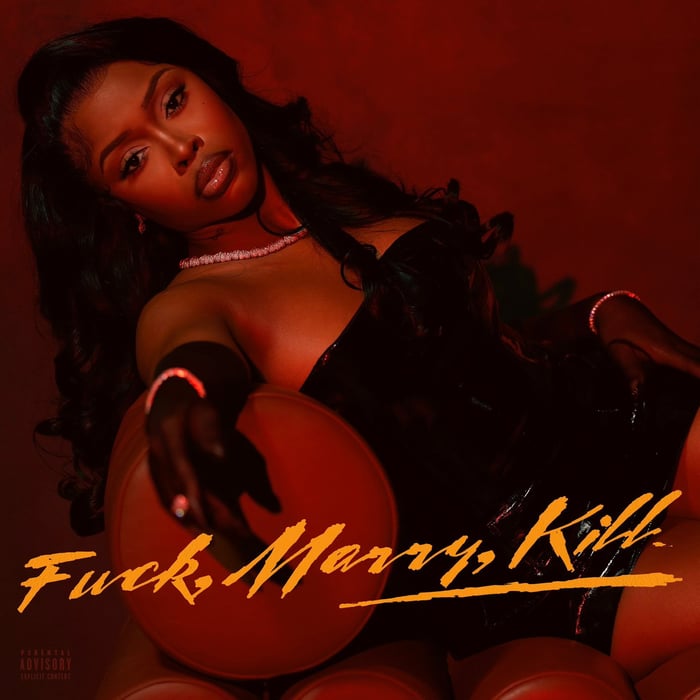
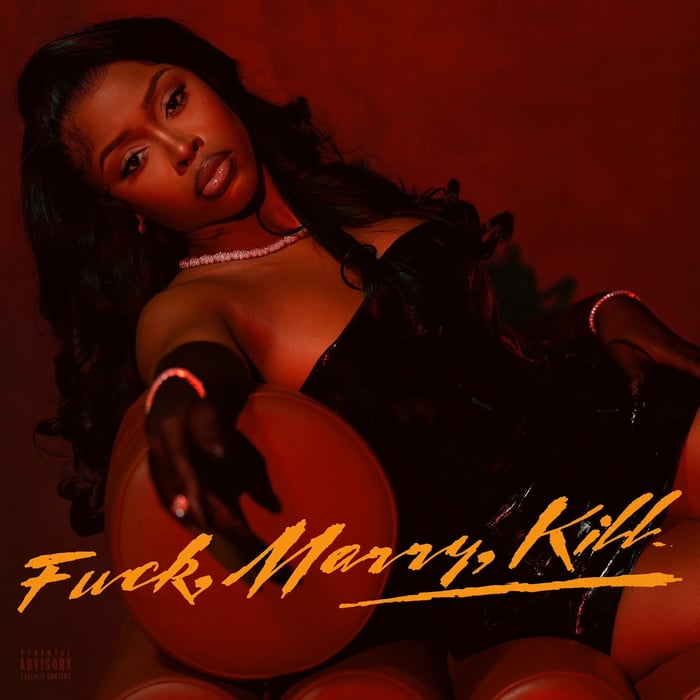
Fuck, Marry, Kill Review: Tink Turns a Party Game Into Paperwork


 See more Architeg Prints stories on Google.
Fuck, Marry, Kill Review: Tink Turns a Party Game Into Paperwork
Fuck, Marry, Kill plays like Tink translating lust into leases, terms, and exit math—then daring you to sing along anyway.
The hook: this isn’t messy—it's organized chaos
Everybody knows the game in the title. Three names, three options, everyone laughs, nobody has to live with the consequences. But listening to Fuck, Marry, Kill, I don’t hear a cute concept album. I hear Tink taking that middle-school nonsense and dragging it into adulthood—where “choices” aren’t jokes, they’re habits, rent agreements, and slow-motion breakups you keep postponing because your life is welded to someone else’s.
And yeah, it’s entertaining. But it’s also kind of… administratively brutal.
How Tink got here: talent, a detour, then independence
Here’s what’s obvious when you sit with this album: Tink has been doing the dual-threat thing—rapping and singing like she means both—for a long time. You can feel that history in how easily she switches posture inside a bar. She doesn’t “try” to be melodic; she just moves that way.
Her early arc is the classic story of momentum meeting the music business and getting swallowed. She put out Winter’s Diary while still finishing school in Calumet City, then got swept into the major-label machine—Timbaland’s Mosley Music Group at Epic—only for the promised debut Think Tink to end up in that sad industry purgatory: finished, then effectively shelved. What followed sounds like the least glamorous part of artistry: years eaten by contracts and attorneys instead of songs.
What matters is what she did after. She walked out a free agent, built Winter’s Diary as her own imprint under EMPIRE in 2019, and started releasing albums on her own schedule—basically dropping a full-length nearly every spring like it’s an annual receipt.
Fuck, Marry, Kill lands inside that independent run, and it’s another deep collaboration with Hitmaka (Christian Ward)—her primary creative partner across the last five years, and the producer with the most fingerprints on this record.
The title isn’t a gimmick—it’s a diagnosis
This record splits itself into emotional categories the way grown people actually do it: not cleanly, not politely, and definitely not in the order they claim. The “fuck” songs aren’t just about sex. They’re about the private logic you use when you’re already bending your own rules. The “marry” songs aren’t wedding fantasies. They’re negotiations. The “kill” songs aren’t dramatic revenge scenes—they’re documentation.
I thought, going in, the title might make the album feel light or themed-out in a corny way. On second listen, I had to admit I was wrong. The title is basically bait. The music is the trapdoor.
Section one: “Fuck” as whispered paranoia and explicit comfort
The early stretch belongs to lust, but not the glossy kind. It’s lust with a lowered voice, like she’s trying not to alert the neighbors.
On “Be with You,” Tink drops into this conspiratorial hush—so intimate it almost triggers that reflex where you check your shoulder, like someone’s about to catch you listening. The pre-chorus feels like a spiral of suspicion and Instagram-comment paranoia, the kind of modern insecurity that doesn’t need proof to feel real. When she ramps up to the point where she basically admits she’d scorch the earth to keep someone, it doesn’t land as romance. It lands as compulsion dressed up as devotion.
Then the album gets flagrantly explicit, and it does it without blinking.
- “B.E.D” (feat. Tee Grizzley) is one of the clearest “we’re not implying anything” moments on the album. The details are pornographic in the way only comfort can make them: not shock, just specificity.
- “Bedrock” (feat. Rob49) keeps that same no-blushing approach—cars with extra leg room, Hellcats treated like Demons, mattresses that sound like they’ve seen too much, towels tossed on the floor like punctuation.
The part that stuck with me—maybe because it’s so casually self-aware—is the way she delivers “rodeo when I ride it.” It lands somewhere between a brag and an inside joke, like she’s grading her own performance mid-line. That’s the tell: this isn’t only sex. It’s control. It’s her narrating her own myth in real time.
If I’ve got a mild gripe here, it’s that the explicit cuts are so comfortable in their details that they sometimes threaten to flatten the emotional stakes—like the scene is vivid but the reason we’re in the scene gets temporarily blurred. Not ruined. Just slightly fogged.
Section two: “Marry” is just contract language with better melodies
Right when the heat starts to cool, the album starts naming terms. Not dreams. Terms.
“Non Negotiables” is basically a list of conditions for staying, read out like a contract at signing. There’s something almost deadpan about it—dependable, accountable, don’t get too friendly with the women who orbit, claim me out loud, fight for my love. No poetry-to-impress. Plain English. That bluntness is the point: she’s not trying to be cute, she’s trying to be clear.
Then “GANG” (feat. G Herbo) takes the same idea and swaps the vocabulary. Instead of marriage talk, it’s loyalty talk—gang language used as romantic structure. And honestly, I think that choice is sharper than the “Non Negotiables” approach. The gang framing makes the devotion feel less like fantasy and more like an oath between people who already understand how loyalty works in their real lives.
“You Deserve” sits like the giving-everything ballad in the middle, with Tink playing the woman who knows exactly what she’d do if you handed her the keys. I kept waiting for it to turn into a standard “I’ll love you right” trope, but it doesn’t feel like she’s begging. It feels like she’s presenting capability. That’s a different energy—and a slightly scary one, because capability implies you’ve been forced to become competent at loving people who don’t deserve it.
The pivot: when the game stops being a game
After the “marry” stretch, the album turns. Not with a dramatic sound effect—more like the room temperature drops and you notice you’ve been sitting with someone who’s already halfway out the door.
“Overrated” reads like a relationship audit. Past tense. Receipts. The cooking and cleaning isn’t romanticized—it’s itemized. The time given away to “the boys” gets recorded like an expense. And then she says the quiet part loud: she’s trading him out, she’s back to being a free agent.
Packed all my shit
Fifty-fifty nigga going half on some rent
Dick was just average
Had a good girl ‘til you turned me to a savage.
That “free agent” line matters. It connects all the way back to her career story—contracts, exits, regaining ownership. The album keeps mirroring her business life inside her love life, whether she means to or not. (I’m not even fully sure she intended that parallel, but it’s hard not to hear it once it clicks.)
On “Diabolical,” the language goes clinical—pathological, narcissistic—and suddenly the breakup isn’t a fight, it’s a removal. Like she’s deleting someone from her ecosystem. Even the group chat isn’t safe.
And then “Plan B” shows up and basically becomes the center of gravity. This is where she stops counting wrongs and starts doing math.
I’ma lose the house if I leave
Sick and tired of taking Plan Bs.
The hook lands with this brutal calm: leaving means losing the house, and she doesn’t dress it up. No cinematic violins. No dramatic moral lesson. Just the kind of truth R&B usually avoids because it’s too unsexy: shared housing is a cage, and the key costs money.
That’s the real punch of the album’s concept. Fuck, Marry, Kill is easy when it’s a party game. It’s not easy when your “kill” option comes with a mortgage and a deed.
Hitmaka’s dominance: one producer, multiple rooms
A record like this lives or dies on its transitions—because the emotional categories change fast, and a sloppy producer would make it feel like a playlist pretending to be an album.
Hitmaka has credits on twelve tracks here, his deepest involvement on a Tink project yet, and the surprising thing is how settled their shared language sounds. Five projects into this partnership, it feels like they’ve built a private shorthand: he knows where her voice likes to sit, she knows how far the beat can flex before it breaks the mood.
The range works better than it has any right to:
- Drill percussion on “GANG” sits next to a ’90s slow-jam feel on “You Deserve” without either track acting like it doesn’t belong.
- “Can We Talk?” brings in Bryson Tiller, and his “sad-boy hook” instinct folds neatly into this idea of being someone’s number-one consolation. I didn’t expect him to fit here, but it clicks.
- “Bedrock” is built like a strip-club banger that waits to earn its bass hit—mid-verse, not at the start—like it’s teasing the room on purpose, even with Rob49 doing the heavy yelling.
And when Hitmaka steps back, the album doesn’t collapse. That’s another quiet flex: a heavily credited producer who still lets other people handle openings and closings is someone who understands pacing, not ego.
Other production slots land with clear roles:
- Dylan Graham handles “Strangers” near the top.
- GUS Corleone runs the mid-album solo “Emergency.”
- Gabe Lucas closes with “Live & Learn.”
That spread helps the album breathe. If anything, I almost wanted one more truly awkward left turn—one beat that risks being ugly—because the flow is so competent it sometimes feels like it’s smoothing over the chaos the lyrics insist is happening.
The features: a map of where she’s been allowed to stand
The guest list isn’t random; it’s like a snapshot of the circles Tink has moved through over the last decade.
- G Herbo shows up carrying Chicago drill lineage—the world Tink’s been adjacent to since the early Winter’s Diary days, back when chatter linked her to other Chicago women in rap.
- Tee Grizzley brings that Detroit storytelling pocket, where verses move with the careful weight of a deposition—slow, deliberate, certain.
- Bryson Tiller is the oddest fit on paper. His lane shaped a whole era, and lately he’s sounded stuck in his own catalog. Here, on “Can We Talk?”, he sounds useful again—like someone gave him a real scene to act in.
- Rob49 gives you streaming-era Southern rap energy—the generation that walked into doors that were already open and decided that was normal.
The arguable take: the features don’t steal the spotlight because Tink doesn’t let them. This is her album in a way a lot of feature-stacked projects aren’t. The guests are furniture, not roommates.
Thirty, stability, and the exhausted laugh that tells the truth
Tink turning thirty hangs over this record even when she’s not talking about age directly. Fuck, Marry, Kill sounds like someone measuring what stability would’ve cost if she’d gotten it earlier. Not in an inspirational way—more like a private calculation done out loud.
The breakup songs don’t feel like heartbreak theatrics. They feel like the notes you keep when you’ve already decided to leave, but your stuff is still in the closet. That in-between state is the album’s real setting: not the beginning, not the end—the uncomfortable middle where you’re still sharing toothpaste with someone you’re mentally replacing.
The moment I can’t shake is in “Plan B,” when she sings “ninety-nine times” and there’s this tired little laugh tucked behind it—like she catches herself counting. That laugh says more than a perfectly written verse could. It turns the math into a bodily thing: exhausted throat, exhausted mind, someone who’s been here before and knows she might be here again.
And retroactively, it rewires the early lust songs. Suddenly “Be with You,” “B.E.D,” and “Bedrock” don’t feel like carefree heat—they feel like earlier chapters spoken by the same person before she finished the arithmetic.
What this run really proves: she stopped asking for permission
There are younger R&B-rap hybrids chasing the exact switch Tink already had years ago: rap competence and real singing in the same body, without sounding like two separate apps running at once. Hearing Fuck, Marry, Kill inside her larger independent streak, the point isn’t that she’s “influential” in a trophy sense. The point is simpler: she survived the major-label detour and stayed productive anyway.
She’s not asking anyone to validate that. She’s just putting out albums in the quiet season, in her own building, with her own producer, on her own time. And the energy across this record is what happens when someone stops waiting to be chosen.
Standout moments I’d actually replay
Not a ranking, just the cuts where the album shows its full hand:
- “Overrated” — the receipt-writing is so specific it feels like someone reading a text thread back to you.
- “Plan B” — the financial truth lands like a weight on the hook and doesn’t move.
- “Live & Learn” — it closes the record with the kind of grown clarity that doesn’t need to shout.
Conclusion: the joke title hides a very adult bill
Fuck, Marry, Kill isn’t trying to be profound. It’s doing something meaner: it’s being honest about the stuff people usually edit out to sound dignified. Tink makes lust sound like strategy, commitment sound like a negotiated agreement, and leaving sound like a spreadsheet you’re scared to open. I’m not convinced every explicit moment earns its screen time, but the album’s core move—turning a party-game premise into real-life consequences—hits harder the longer you sit with it.
Our verdict: People who like R&B that admits love is also logistics will eat this up. If you need romance to stay dreamy and unrealistic—no leases, no terms, no “here’s what it cost me”—you’ll probably call it cold and go back to your fairy tales.
FAQ
- Is Fuck, Marry, Kill more R&B or rap?
It slides between both constantly, and the point is that it doesn’t pick a lane—Tink treats singing and rapping like two tools in the same pocket. - Do the features change the album’s tone?
They color it, but they don’t hijack it. Each guest shows up like they’re stepping into her room, not building their own house. - What’s the emotional center of the album?
“Plan B.” That’s where the album stops flirting and starts telling the truth about what leaving actually costs. - Is the title just a gimmick?
Not really. It’s bait for a record that’s mostly about how those categories blur when adulthood shows up with paperwork. - Which song best shows Tink’s writing style here?
“Overrated,” because it turns relationship resentment into an itemized list instead of a vague rant—and that specificity is her superpower.
If this album’s cover is going to live in your head for a week anyway, you might as well put it on your wall—tastefully. You can shop your favorite album cover poster at our store: https://www.architeg-prints.com
 | DISCOUNTGET 30% OFF*Use code on your next order:
|
* This post may contain affiliate links, meaning we earn a commission if you make a purchase through these links, at no additional cost to you.