Phantom Void Review: Long Distance Calling’s Nightmare Gym Workout


 See more Architeg Prints stories on Google.
Phantom Void Review: Long Distance Calling’s Nightmare Gym Workout
Phantom Void turns post-rock into a sharp-edged bad dream—fast, clean, heavy, and a little too eager to impress. Here’s what it’s really doing.
A record that shows up late, then kicks the door in
LONG DISTANCE CALLING have spent two decades acting like the most reliable machine in post-rock: German four-piece, rarely disappearing for long, always dropping something new. Eight albums and a stack of EPs will do that—you start assuming they’ll release a record the way some people change their oil.
So when Phantom Void arrived after a four-year gap, it didn’t feel like “finally!” so much as “oh, they actually stopped.” And honestly, you can hear that pause paying off: this album doesn’t sound rested, exactly—it sounds like a band that came back with a specific mood to chase, and they weren’t interested in making it pretty.
That said, I’ll admit I went in expecting something more airy and spacious, the usual post-rock fog machine. On first pass I thought, okay, they’ve just gone heavier. On second listen, it clicked: they’ve gone sharper, not just louder. That’s a different kind of intention, and it changes how the whole record lands.
The “dream concept” is really a nightmare with good lighting
This is their ninth record, and it leans hard into a dream concept—though “dream” is being polite. The tone is closer to nightmare: not the surreal, soft-focus kind, but the kind where everything is hyper-detailed and you can’t blur your way out of it.
“Mare” doesn’t introduce the album; it threatens you with it
The opener “Mare” sets that agenda immediately. There’s an ominous voiceover and a countdown into sleep, like the record is walking you to the edge of a trapdoor. The vibe it brings up is weirdly specific: it reminds me of Dream Theater’s Metropolis Pt. 2 concept-theater energy, but restaged with the smug menace of Jigsaw from the Saw movies. Not as a cheap reference—more like the album is admitting it enjoys controlling the room.
And that’s an arguable choice right away: plenty of bands use intros to ease you in. This one uses an intro to tell you you’re not in charge anymore.
“The Spiral” is where the album starts moving like a panic attack
Then “The Spiral” follows and reinforces the feeling instead of releasing it. There’s this sneaky major modulation on the bass—a bright shift that should feel like relief, but it reads like a trick—stacked against intense guitar histrionics that swirl into something genuinely unnerving. It’s a “kaleidoscope of terror” kind of track, but not because it’s chaotic. It’s because it’s controlled.
“The Spiral” isn’t trying to be catchy—it’s trying to make you feel locked into motion. If you wanted a warm hook, it basically laughs and keeps running.
The classic Long Distance Calling blueprint—just weaponized
The familiar framework is still here: extended instrumental rock tracks, usually over six minutes, built from multiple movements, and totally unafraid to speed up when a lot of post-rock bands would rather float.
But calling it straight post-rock feels like pretending a chainsaw is a kitchen tool. This sits closer to the seam between post-rock and post-metal, and the drumming especially carries that modern, muscular, mathy push you hear in heavier instrumental acts.
One thing I’m not 100% sure about—because the mix is so clean it messes with my sense of space—is whether the album is meant to feel “live” in a room or more like a controlled lab environment. I think it’s the second one. The precision is the point.
Arguable claim: This album’s main “hook” is competence pushed to the edge of aggression. If you don’t like that as a central flavor, no amount of pedalboard poetry will save it.
“Nocturnal” and “Shattered” prove the band is addicted to motion
“Nocturnal” moves like it’s late for something
“Nocturnal” goes ripping by at a blistering speed—fast riff work, wah-pedal effects, the whole thing acting like it can’t sit still. Even when it drops into a comparatively calmer middle section, it doesn’t actually rest. There’s a woodwind-like synth that feels ripped straight out of The X-Files, and instead of creating haze, it sits there like a cold light while the guitars keep tracing intricate arpeggiations and the bass throws in glossy fills.
Arguable take: “Nocturnal” is impressive, but it’s almost too busy to be scary. Fear usually needs negative space. This track refuses to leave any.
“Shattered” starts slow, then sprints anyway
“Shattered” begins at a noticeably lower tempo—enough that you might think, okay, here comes the atmospheric section. But it doesn’t stay there. It kicks into a more aggressive gear, with galloping drums that keep getting accented by a sudden doubling or quadrupling of pace. It’s like the band can’t resist tapping the fast-forward button, even when the mood would benefit from lingering.
And I’ll give them this: the transitions mostly feel earned. They’re not just slamming parts together to show off. Still, if you’re the kind of listener who wants a slow section to actually be slow, this record will test your patience.
Arguable claim: The album treats slowness like a temporary inconvenience, not a vibe.
No haze, no hiding: Phantom Void is mixed like a dare
A lot of bands trying to sell “dreamscapes” reach for reverb, fuzz, blur—anything that smears edges into atmosphere. LONG DISTANCE CALLING do the opposite on Phantom Void: they go for distinct, clear edges on nearly everything.
Almost nothing is buried. Every instrument is fighting to be the main character at the same time:
- bass fills that refuse to stay supportive
- rhythm guitar arpeggiations that feel like puzzle-box mechanics
- lead guitar swoops that want to narrate the scene
- drums that just keep insisting on forward motion
Arguable take: The mix is so crystal-clear it becomes part of the “nightmare” concept—like you can’t blur your eyes to escape it. It’s claustrophobic in a weirdly clean way.
“A Secret Place” is where melody finally wins—kind of
You can hear that full approach on “A Secret Place.” The track carries the same dark, mechanistic intensity, and then toward the end the lead guitar line finally starts to win the internal argument. It lands on a melody that’s decent—strong enough to justify repeating—and the band doubles down with a piano reprise that’s honestly a bit cheesy… but it works. It’s like the album briefly admits it knows how to be emotional, then quickly puts the mask back on.
That piano moment is also a quiet confession: they know the album needs a human pulse, not just sharp technique.
The album’s real problem: it stuns you, then evaporates
Here’s the blunt part. Phantom Void is as technically competent as anything in its lane. The playing is tight, the structures are thought-out, the heaviness has weight. But for all that, it often misses the one thing that turns “impressive” into “inescapable”: a melodic earworm or a moment of emotional catharsis that sticks in your teeth.
Arguable claim: This band is better at building machines than building scars.
The title track “Phantom Void” grabs you—then doesn’t follow you home
The title track “Phantom Void” has moments that absolutely force your attention, especially in the drums. There’s a section that manages to nod at Phil Collins’ “In The Air Tonight”—not in a cute way, but in that “oh, I know that shape” rhythmic memory—and then it jolts you awake with unexpected triplet kicks.
There are also big glissando melodies and twisty minor-key turns that feel like stepping through a mirror. While you’re in it, it’s gripping. When it ends, though, I find myself not humming anything—just remembering textures and motion. Maybe that’s intentional. Maybe the “void” part of Phantom Void is the point. But I can’t pretend it doesn’t make some tracks fade faster than they should.
Mild complaint, because I genuinely like a lot of this: sometimes the album confuses constant activity for lasting impact. You can do everything “right” and still not haunt anyone.
“Sinister Companion” is the closer that finally bleeds a little
Then the record ends with “Sinister Companion,” and suddenly the missing piece shows up.
It’s still the same general formula—prog-leaning textures, movement-based writing—but the melody and pacing feel more deliberate. It shares a bit of that late-’90s Dream Theater energy again, but without turning into cosplay. The soaring guitar line in the outro is the closest Phantom Void gets to real catharsis, and it’s not subtle about it either. The album’s high point, no question.
Arguable statement: If “Sinister Companion” energy showed up two tracks earlier, this would feel like a classic instead of a strong niche record.
So what’s The Phantom Void actually doing?
It’s not trying to be one of the great post-rock albums of the decade. It’s trying to be a hard-edged, fast-moving, hyper-clear nightmare ride—a record that refuses the genre’s usual comfort blankets. And as a listening experience, it’s a lot of fun, mostly because it never drags. Poorly executed softer post-rock can sink into muddy dullness; Phantom Void never does. It stays crisp, busy, and forceful.
If I had to slap a number on it, my gut lands around an 8/10 kind of effectiveness for what it’s aiming at—especially if you’re here for precision and heft more than tears and transcendence.
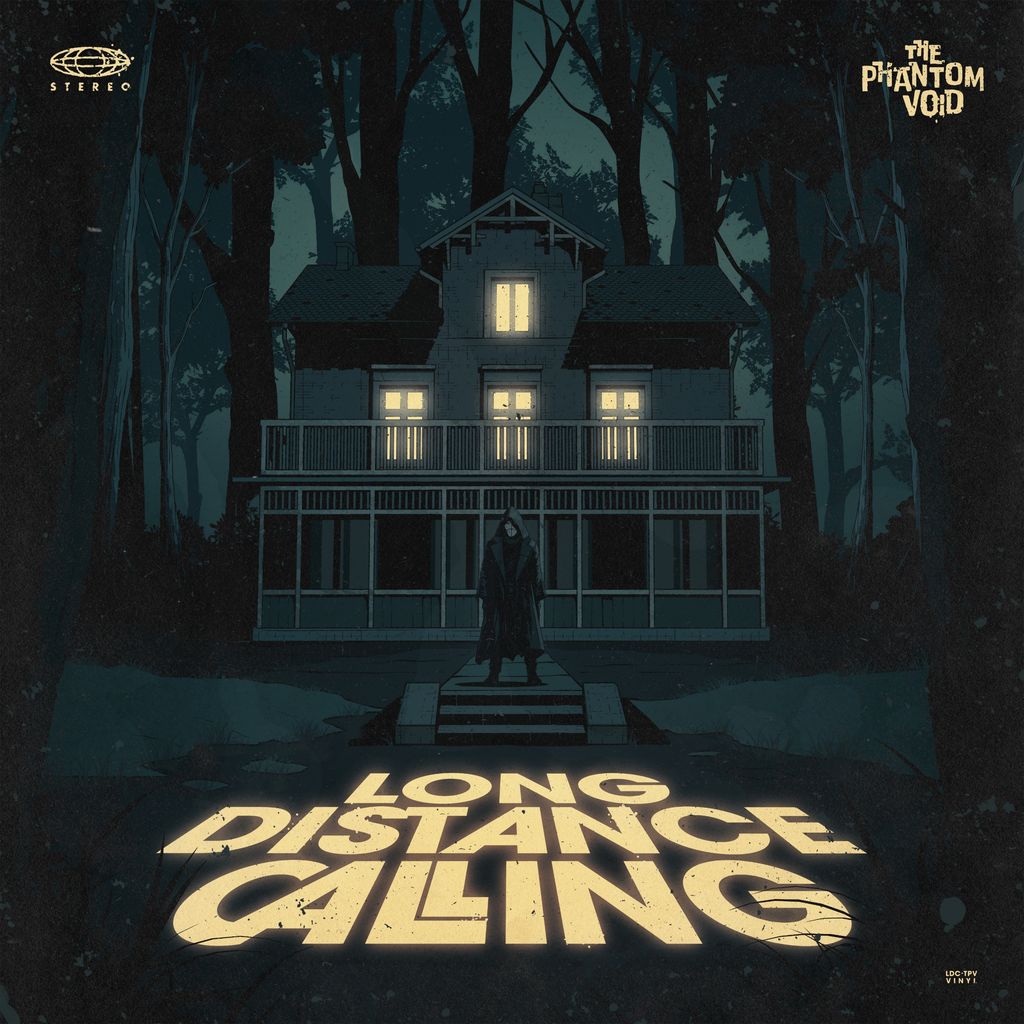
The Phantom Void is out now via earMUSIC. And yes, the band’s active on Facebook if that’s still how you keep track of releases.
Conclusion
Phantom Void is LONG DISTANCE CALLING choosing sharp edges over haze: a nightmare concept executed with clean sound, relentless drumming, and riffs that sprint even when they should stalk. It doesn’t always stick emotionally, but it rarely lets your attention wander—and that’s its real flex.
Our verdict: People who like instrumental heavy music that’s mixed like a blueprint and paced like a chase scene will eat this up. People who come to post-rock for warm fog, big sighs, and melodies that linger will bounce off it—and probably complain it “lacks feeling” while the drums are busy kicking down their door.
FAQ
- Is Phantom Void more post-rock or more metal?
It leans into the post-metal side: heavier riffing, faster tempos, and drumming that pushes aggression rather than ambience. - Does the album actually sound like a “dream concept”?
Yes, but more nightmare than daydream—voiceovers, tension, and a sense of being guided somewhere you didn’t choose. - Which track hits hardest emotionally?
“Sinister Companion,” especially its outro, is where the album finally gives you a cathartic release instead of just more motion. - Is the production muddy like a lot of heavy post-rock?
Not at all. The mix is crystal-clear, with almost nothing buried—every instrument fights to be heard. - Any weak spot?
The title track has standout moments, but some songs don’t leave a melodic imprint after they end. Impressive in the moment, less sticky later.
If the album’s artwork is lodged in your head the way the riffs try to be, you can always grab a favorite album cover poster for your wall over at https://www.architeg-prints.com. It fits the whole “live inside the record” impulse without needing another six-minute outro.
 | DISCOUNTGET 30% OFF*Use code on your next order:
|
* This post may contain affiliate links, meaning we earn a commission if you make a purchase through these links, at no additional cost to you.