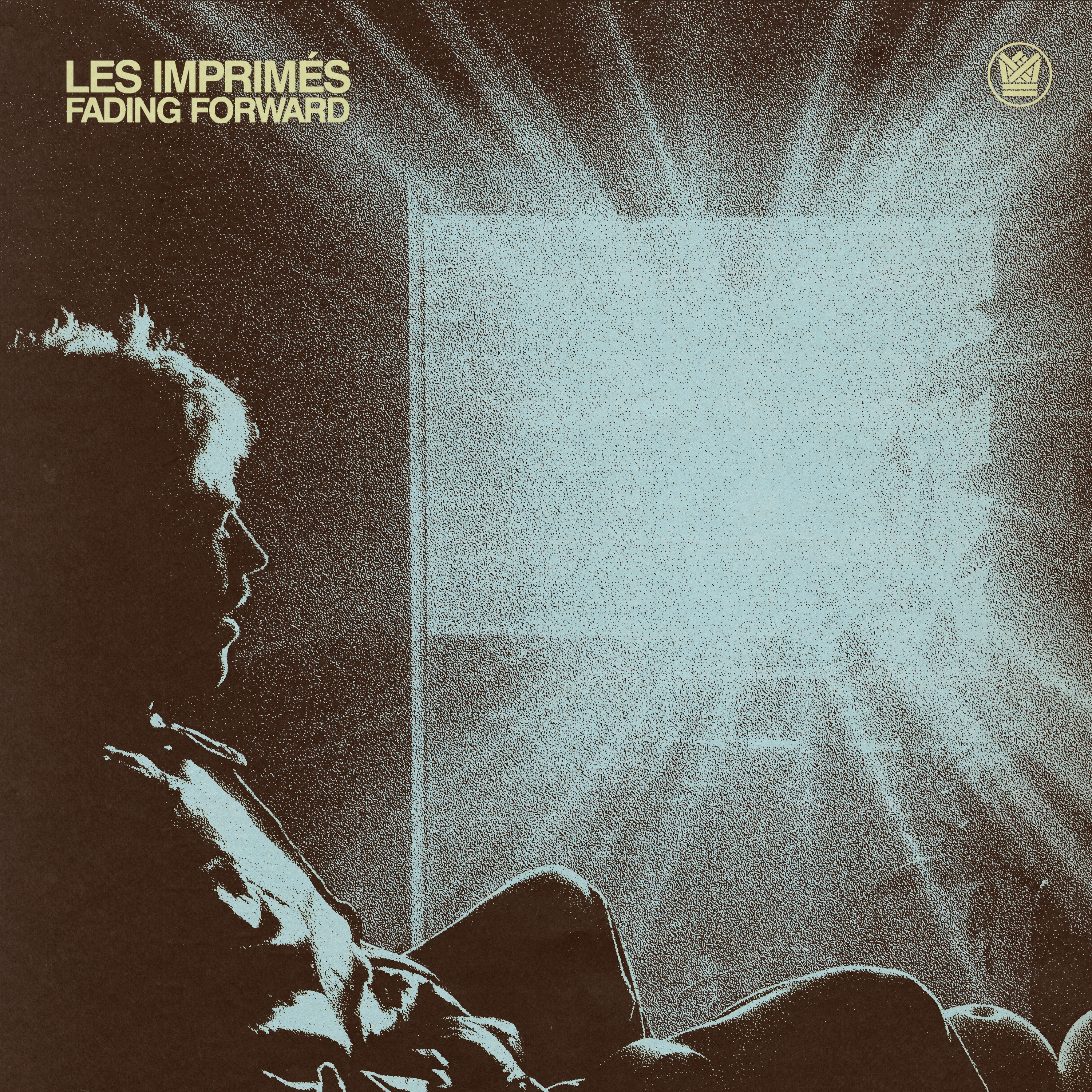
Fading Forward Review: Les Imprimés’ Soul Album That Smiles While It Sinks


 See more Architeg Prints stories on Google.
Fading Forward Review: Les Imprimés’ Soul Album That Smiles While It Sinks
Fading Forward sounds warm enough to hug—until you realize it’s mostly one person, alone, quietly writing around grief and messy love.
The first trick this record pulls
Here’s the sneaky part: Fading Forward plays like a cozy vintage-soul record you could leave on during dinner—then it starts sliding uncomfortable ideas into the room like they belong there.
The whole thing sits near that Big Crown Records orbit: that taped-up, analog-friendly, “musicians in a room” feeling. You can practically hear the label’s usual habits in your head—bands sweating together, parts locking in, the air moving. But this album? It’s a strange fit in the best and weirdest way, because it’s built like a one-person ecosystem. Nobody’s trading glances across the studio. Nobody’s reacting in real time. It’s just one set of ears deciding what “togetherness” should sound like.
And honestly, that’s the point. The album doesn’t accidentally feel intimate. It feels controlled-intimate, like someone dimmed the lights to make the confession easier.
Arguable take: the record’s warmth isn’t “authenticity”—it’s a deliberate disguise.
One guy, one room, and a very specific kind of control
To get this straight: Les Imprimés isn’t a lost French ’60s imprint, even though the name absolutely tries to sell you that fantasy. It’s the alias of Norwegian producer Morten Martens, and he made Fading Forward in Kristiansand on Norway’s southern coast.
He plays nearly everything, engineers the overdubs, and sings lead across the album except for one track where a guest vocalist joins in. The usual way this label gets cohesion—people playing together, hearing each other breathe—Martens gets it by doing the opposite: being the only person in the building, the only taste-maker in the moment, the only one who gets to say “yes” or “no” to every tiny decision.
At first I thought that would make the record feel stiff or overmanaged, like a museum display of soul music. On second listen, I had to admit the control is the thrill. It’s not trying to recreate a room full of players—it’s trying to recreate the illusion of a room full of players, which is a more modern impulse than people like to admit.
Arguable take: this album proves “live in the room” isn’t the only way to sound human—it’s just the most romantic marketing copy.
The rap-to-soul breadcrumb trail is all over the drums
There’s a particular kind of soul revivalist who didn’t arrive through their parents’ records or crate-digging purity myths. They arrived through rap first—through sampled drum breaks, chopped loops, and the forensic hobby of tracing a sound backward to its origin.
That’s the route this album wears in its bones. Martens spent more than twenty years as a producer/engineer before he took his own voice seriously as a front-facing thing, and you can feel that “behind the glass” brain all over the sequencing and textures. His 2023 debut Rêverie was the first full-length under this banner, and it’s wild (and kind of satisfying) that it dragged him onto stages for the first time relatively late in the game.
What makes Fading Forward specifically interesting is how the drum feel lands in a no-man’s-land that’s hard to fake on purpose: not quite 1972 loose, not quite modern-grid perfect. The breaks land just a hair stiff for old-school funk and just a hair sloppy for a DAW quantize world. That in-between is basically the fingerprint of someone who learned “feel” through samplers—someone who hears rhythm like a collage first, and a band second.
I’m not 100% sure whether every listener will hear that same tension, or if I’m projecting because I’ve listened to too many records with obvious MPC DNA. But the timing choices don’t feel accidental.
Arguable take: the drums are the album’s quiet tell that this isn’t cosplay—it’s translation.
“Beware” opens cute… and then shows its teeth
The record makes its first real move on “Beware,” and it does it with finger-snaps like it’s about to flirt with you in black-and-white.
You get a call-and-response doo-wop chorus, a voice that purrs with that too-comfortable charm—the kind that sounds friendly until you replay the words and realize it’s pressure wearing cologne. Martens casts himself as the predator here, and the production never winks to warn you. That’s the scariest part: the sweetness doesn’t tip the trick off.
The song’s tension isn’t in some dramatic chord change or sudden distortion. It’s in the mismatch between the vibe and the intent. A lot of modern soul revival records want to be “timeless.” “Beware” wants to be timeless and morally slippery, like it’s testing how much bad behavior can hide inside a pretty arrangement.
Mild criticism, though: I do think the track gets away with its own creepiness a little too easily. The charm is so effective that the song risks feeling like it’s enjoying itself more than it’s interrogating itself. Maybe that’s the point. Maybe that’s exactly the discomfort it’s aiming for. Still, it’s the one moment where I wanted a sharper consequence—some tiny bruise in the harmony to admit what’s happening.
Arguable take: “Beware” is a doo-wop stalker scene, and the fact it goes down smooth is the whole problem.
“Close My Eyes” is where the mask slips (then slips back on)
If “Beware” is the album smiling too hard, “Close My Eyes” is where it starts admitting things—then immediately trying to regain composure.
The groove leans into that Marvin-ish lane: guitar and organ moving together like they’ve got history. The narrator starts in that annoying place where someone blames their partner for “not understanding” them… and then the song pivots. Verse two finally owns the real issue: maybe the narrator never let anyone in. There’s a line about a closet full of skeletons, and it lands because the track doesn’t dramatize it. It just states it like a fact everybody in the relationship already knows.
That’s a pattern across Fading Forward: the arrangements keep their posture, even when the lyrics are bleeding. Martens keeps the room warm even when the words don’t deserve warmth.
Arguable take: the album’s emotional punch comes from how politely it refuses to raise its voice.
“Paradise” is the calmest gut-punch here
“Paradise” is the track that made me doubt my own listening habits. The first time through, I missed what it was doing. I had it on while I was doing something else, and the arrangement is so calm—so unbothered—that my brain filed it under “love song” without asking questions.
That’s on me, sure. But it’s also the song’s trick.
Musically, it borrows from that old exotica universe—think Martin Denny and Les Baxter vibes: lap steel, vibraphone touches that feel like a tiki bar that doesn’t exist anymore, the kind of “paradise” soundtrack that’s always been a little fake. And then the lyric reveals itself as a farewell to a friend who has died.
When it finally clicks, it’s worse. Not because the song is melodramatic—because it isn’t. It’s calm in the way grief can be calm when it’s already settled in your bones. It doesn’t ask permission. It doesn’t announce itself with a big chorus.
Arguable take: hiding a funeral inside an exotica postcard is either genius or emotionally reckless—and here it works.
Absence keeps showing up, even when the songs pretend it isn’t there
Once you catch what “Paradise” is doing, the rest of the album starts rearranging itself.
Absence runs under a big chunk of this LP without introducing itself formally. It’s there in “Next Summer,” where the idea isn’t “I’ll call you soon,” it’s “I’ll see you next summer”—and the line lands like a calendar turning cold: after love comes winter. That’s not a metaphor that comforts. That’s a metaphor that postpones.
“With You” stings because it asks questions the narrator already knows the answer to—will I ever hear your laugh again, will I ever see you smile again—and then it collapses the chorus down to a single word: you. Held there like a bruise you keep pressing just to confirm it still hurts.
“Again & Again” opens by naming the vibe plainly: alone, mistaken, forsaken, stuck in a static state of mind, a soul breaking slowly. Then it builds a chorus around the word again, repeated the way you say it when you don’t even have fresh language for your own patterns anymore. Not poetic. Just accurate.
And here’s the thing: if the arrangements didn’t stay so warm, these songs could fossilize into mope. They don’t, mostly because Martens keeps them a shade gentler than the lyrics. That contrast is harder than it sounds. Lots of artists make sad songs. Fewer make sad songs that still offer you a chair.
Arguable take: the album’s real subject isn’t heartbreak—it’s repetition, the humiliating kind.
When the album finally lets love be… love
After all that absence and self-implication, the record does something smart: it doesn’t pretend every track is a funeral.
It opens with “You & I,” where the partner isn’t a villain or a ghost—they’re the tether. The relationship is framed as the thing that keeps the narrator from flying apart during his worst stretches. Both people are still there, so the dance keeps happening. It’s not a fairy tale. It’s maintenance.
“Only Love” leans into mantra energy, like the long-awaited collision is finally allowed to happen. The narrator gets to ask about fears, and there’s a tenderness to the specific phrasing—memories as treasures, a mind that’s been stuck on someone for a long time. It’s the album briefly letting devotion be plain instead of complicated.
Then “Untainted Love” flips the old title you already know—Gloria Jones’ “Tainted Love,” later turned into a hit by Soft Cell—and writes the opposite: love not yet ruined. But it only works because the album has spent so long cataloging the ways love does get ruined. When Martens sings about stumbling over words asking someone to come sit beside him, it lands like a rare moment of sincerity that hasn’t been contaminated by defense mechanisms yet.
Arguable take: “Untainted Love” only hits because the record earned it by being messy first.
“Miss the Days” splits nostalgia in two—and one half turns sour
The album’s one guest-vocal moment is “Miss the Days,” featuring Danish-Gambian singer Ama Li, and it’s not a decorative feature. It’s structural.
Martens takes the first verse, playing nostalgia as innocence: hand-in-hand, sometimes wasted—memory as a soft-focus photo. Ama Li takes the second verse and flips the same memory into something sharper, where the sweetness curdles into stress and exhaustion. Same past, different angle, and only one version still tastes good.
That split is one of the album’s best decisions, because it refuses the idea that nostalgia belongs to whoever sings prettiest. Two people can remember the same era and come away with entirely different bruises. Putting those perspectives back-to-back makes the song feel like an argument conducted politely across a table.
Arguable take: the guest vocal isn’t there for variety—it’s there to puncture Martens’ control.
Why this doesn’t sound like 1972 (and why that’s the whole point)
There’s a generational biography embedded in Fading Forward: rap to funk to soul to gospel. Plenty of people are making that journey right now. But not many make the case Martens makes here.
Big Crown’s broader “house” vibe tends to lean on the idea that this sound is collective labor—bodies in a studio, musicians catching each other’s cues. Martens argues the opposite without saying it out loud: one guy alone at a console in Kristiansand can work backward through the same old 45s and still reach the same neighborhood.
But once he gets there, he writes songs that a 1972 studio band wouldn’t have put to tape. A 1972 band wouldn’t park a stalker inside doo-wop. They wouldn’t hide a friend’s death inside an exotica arrangement and trust you to notice. Those are modern instincts—distance-from-the-era instincts. He’s not recreating the past; he’s tugging at its seams.
What surprised me is how personal the record feels despite the solo construction. The solitude doesn’t make it cold. It makes it pointed. The themes keep circling: a partnership that’s weathered long stretches, and a friend who isn’t coming back. You can hear the chair, the late-night decisions, the private insistence that the take is good enough because nobody else is there to argue.
Arguable take: the album’s “vintage” sound isn’t nostalgia—it’s a camouflage net for uncomfortable lyrics.
Where I landed: favorite moments that won’t leave
By the time the record ended, I wasn’t thinking about genre exercise or label aesthetics. I was thinking about specific moments that stick like lint:
- “Again & Again” — for turning a single word into a whole resignation speech.
- “Beware” — for being charming in a way that should probably come with a warning label.
- “Paradise” — for making calmness feel like the most brutal delivery method.
I didn’t love every second. Sometimes the album’s smoothness flirts with sameness, and I caught myself wishing one track would get a little uglier—just to prove it could. But maybe that’s my bias talking. This record isn’t trying to be ugly. It’s trying to be the kind of pretty that lets darkness sit down quietly.
Arguable take: if you want big catharsis, you’ll find this album “too nice”—and that complaint will miss the entire design.
Conclusion
Fading Forward is what happens when a studio lifer steps out from behind the glass and uses softness as a weapon. It’s a warm record that keeps slipping cold truths into your pocket.
Our verdict: People who like soul that sounds friendly but carries subtext like a loaded suitcase will actually love this album. If you need your feelings shouted at you—or you want “retro” music to behave politely—this will annoy you, because it refuses to wave its arms. It just sits there, smiling, while it tells on itself.
FAQ
- Is Fading Forward really a solo-made album?
Yes—Morten Martens (Les Imprimés) handles nearly everything: instruments, overdubs, and lead vocals across the set except for one guest-vocal track. - What’s the core mood of Fading Forward?
Warm arrangements with lyrics that keep circling absence, relationship wear-and-tear, and grief—often without announcing the heavy parts. - Which track is the emotional centerpiece?
“Paradise” is the quiet gut-punch: calm exotica colors hiding a direct goodbye to a friend who has died. - Does the album sound like old-school soul or modern soul?
Both, and that tension feels intentional—especially in the drum feel, which sits between vintage looseness and modern precision. - Where should I start if I’m sampling the album?
Start with “Beware” for the misdirection, “Again & Again” for the mental loop, and “Paradise” once you’re ready to catch the lyric the second time.
If this record put you in a “stare at the wall and rethink the lyrics” mood, it’s probably the right time to put some album art on your wall too. You can shop favorite album cover posters at our store here: https://www.architeg-prints.com.
 | DISCOUNTGET 30% OFF*Use code on your next order:
|
* This post may contain affiliate links, meaning we earn a commission if you make a purchase through these links, at no additional cost to you.