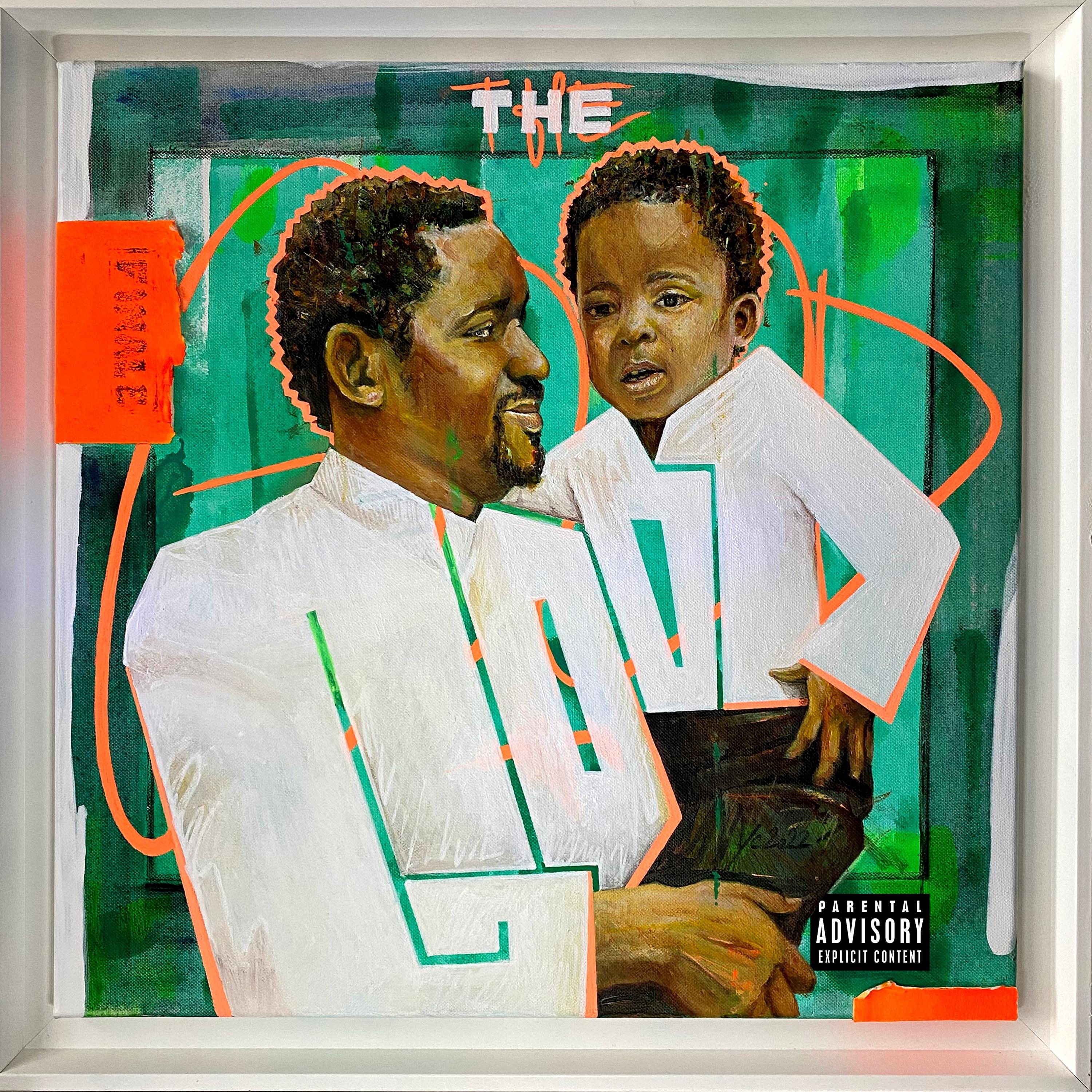
Finale’s The Good Review: Detroit Rap That Refuses to Hurry Up


 See more Architeg Prints stories on Google.
Finale’s The Good Review: Detroit Rap That Refuses to Hurry Up
Finale’s The Good sounds like a veteran MC auditing his own life in real time—grief, craft, and pride threaded through beats that refuse to match.
The hook: this album isn’t trying to impress you
Some records beg for attention. The Good just sits down across from you, folds its hands, and starts telling the truth—whether you asked for it or not.
A crew-built record pretending it’s “just” a solo album
Here’s the unavoidable reality of The Good: everybody on this thing is tangled up with everybody else. It’s not a “producer sends files, rapper shows up” situation. It’s more like a tight local economy where favors, beats, and verses circulate until they harden into an album.
I kept noticing the same underlying flex: each person here has produced a song that somebody else here has rapped over. That’s not trivia. That’s the point. This album is built like a handshake agreement—sixteen tracks of overlapping résumés, with multiple producers spread across the runtime and DJ Manipulator holding down four beats himself.
And the structure loves pairing people up. Beat-switch diptychs run through the tracklist like a compulsion: two producers sharing a single song, forcing contrast, forcing conversation. It’s the sound of Finale saying, I’m not doing this alone, and I don’t need to pretend I am.
That matters because Finale—the Detroit MC who’s been around since the mid-2000s—hasn’t dropped a proper solo LP in over a decade. This album doesn’t hide the gap. It stares at it.
The long gap isn’t a marketing narrative—it’s a bruise
Finale says it out loud on the record: “Who knew I needed six years off to grow?” That line doesn’t land like a triumphant comeback slogan. It lands like someone testing the sentence in their mouth to see if it still tastes true.
What surprised me is how the album frames that time away. It isn’t presented as “I was leveling up.” It’s presented as loss, nerves, drift—like he got bumped off his own route for a while.
The clearest gut-punch comes when Finale places us at a burial—two caskets going into the ground—and then names who he buried. The sequence isn’t cinematic; it’s plain and heavy. No one’s in the booth with him to soften it. That choice matters: this is where a lot of rappers would reach for a feature to “add flavor.” Finale does the opposite. He keeps it solitary so the air stays cold.
And honestly, I wasn’t sure at first if I wanted an album this un-glossy. On the first few minutes I kept waiting for a more obvious “single moment,” something engineered to prove he still has it. On second listen, I realized the lack of shine is the proof. He’s not trying to win the year; he’s trying to finish a sentence he started a long time ago.
“Who knew I needed six years off to grow?
I’m old
For the record, it’s all peace, all good all around,” — Finale
“The Good” isn’t a theme—it’s a verbal tick that turns into a coping tool
Nearly every track on The Good uses the word “good” in some form, and it’s not just cute branding. It starts as vocabulary and turns into something closer to a unit of measurement—like Finale is counting his days in “goods” the way somebody else counts sober months.
Early on, he lists what he’s after with a simple kind of hunger: “One good night with one good crowd and one good mic.” Not luxury. Not domination. Just conditions that make the work feel clean again.
He even credits a woman for a line that stuck with him: being a good man just isn’t enough. That’s one of the quietest but sharpest ideas on the album—because it implies the whole “good” obsession isn’t about morality, it’s about responsibility. The record keeps circling the question: what does “good” cost when your life keeps sending receipts?
“Self Checks and Balances” takes it further and basically turns its chorus into a demand: look deep inside yourself for the good. That’s not feel-good advice; it’s closer to a threat. Like: if you can’t find it in there, don’t expect it to show up in the world.
Later, on “A Good Time to Go,” the phrase returns as a prayer: “I just pray you locate the good.” Which is a wild line because it admits “good” can go missing. Finale even calls himself out for leaning on the word—“I said good a bunch of times”—and then keeps doing it anyway, like repetition is the only way to make it real.
A reasonable listener could say it’s overkill, that he’s hammering the concept too hard. I get that. But I think the overuse is intentional: it’s the sound of someone trying to talk themselves into stability.
The album keeps picking fights with modern rap time
One thing The Good does—sometimes elegantly, sometimes stubbornly—is argue with the current idea that rap should move fast, look new, and refresh itself every nine minutes.
Finale sounds like a working veteran figuring out how to carry himself in a scene that rewards speed over steadiness. “Patience” (produced by DMV MC yU, who also rhymes on it) says the quiet part out loud: beat makers mad at rappers, MCs pissed at producers. That line hits because it’s not theoretical—it’s shop talk. It’s what people say when they’ve been doing this long enough to know where the resentment lives.
Finale’s answer is blunt: you get out what you put in, and what you earn. That’s a principle, sure—but it’s also a self-lecture. Like he’s reminding himself not to chase shortcuts that don’t fit his age or his pride.
“Bread & Butter” pushes harder, reaching for the crown back—specifically from some random fake who’s “missing the ref.” I like that phrasing because it frames modern posturing as a game with no officials. Everybody’s declaring themselves the winner, and the only evidence is volume.
Then “Honor the Code” compresses the whole argument into a nasty little capsule. Marv Won makes the beat and takes first verse; Fatt Father closes. Marv Won opens with a line that sounds like a dare:
“You know what you tell a [guy] this old that’s this good? Absolutely nothing.”
That’s not humility. That’s seniority used as a weapon. Some people will find it too self-satisfied. I hear it as a defensive posture that’s earned—because the album’s whole world is built on people who kept going while the spotlight wandered off.
“Gunna’s Lament” stages the betrayal fantasy like a courtroom drama
“Gunna’s Lament” drops you into a courtroom and refuses to decorate the scene. You’re hearing the defendant’s voice—or at least someone close enough to feel the deal being offered.
The prosecutor wants names. Finale writes it down with weirdly vivid detail: the pen on the table, the paper beside it. That specificity matters because it turns snitching into an object you could touch. Not a concept—an instrument.
Then the offer lands in direct speech: “You get thirty off the top of what you say, so make it good.” That’s one of the best uses of the album’s keyword: “good” twisted into a transactional demand. Make your betrayal efficient. Make it profitable.
Verse two steps out onto the yard and names Gunna, 6ix9ine, and Troy Ave in a single bar—less as gossip, more as a warning label about the machinery that catches rappers and processes them. A reasonable person could argue the name-dropping is too on-the-nose. Maybe. But I think Finale wants it blunt because the system is blunt. Subtlety doesn’t save anyone in that room.
Grief returns, and this time it’s a roll call
“A Good Time to Go” is where the album’s mourning stops being abstract. Eight names come out in the second verse, one after another. One of them is Dilla, who Finale met a few years before Dilla died. Another is Proof, the D12 MC shot outside a bar on 8 Mile.
The rest are family and friends, left unexplained in the song. And that’s the cold beauty of it: the track isn’t built to brief strangers. It’s built for the people who already know. If you don’t, you’re simply not the intended target.
The first verse opens on that same image again—two caskets going into the ground—the album looping back on itself like memory does. Hearing it the first time, I took it as scene-setting. Hearing it again later, it feels more like Finale admitting: I’m still there. I never really left that day.
“4 Rounds” is Detroit/Chicago rap with no interest in selling you anything
“4 Rounds” is a simple premise executed with stubborn purity: four verses, no hook. It’s produced by Mute Won, and it’s basically Finale inviting a few killers into the room and letting them talk.
Finale joins Guilty Simpson, IAMGAWD, and Phat Kat, and the chemistry is less “posse cut for playlisting” and more “barbershop backroom sparring.” None of them sound like they care whether anyone outside Detroit and Chicago is paying attention—and that’s exactly why it works.
IAMGAWD takes the middle verse and claims he’s a mixture of living legends and late greats, with the best flow out of all the Great Lakes. It’s the kind of brag that could sound corny if the performance didn’t carry it. Here, it lands because the track’s format encourages that sort of grand claim.
Phat Kat closes his verse with a vivid, ugly image: a 12-gauge turning a North Face into cinnamon. The line hits partly because it’s so physical—and partly because it sounds like someone returning from their own layoff with the need to remind people what the stakes used to feel like.
If I’ve got a mild complaint, it’s this: the no-hook purity can start to feel like the album refusing to breathe. There were moments I wanted a little more space—something to let the weight settle. But I can’t pretend that’s an accident. This is deliberate claustrophobia.
The “underground bookkeeping” is the whole point—even if it won’t trend
A big chunk of The Good is what I’d call working-underground bookkeeping: maintaining relationships, showing receipts, honoring craft, stacking names, keeping the circuit alive.
And yeah—this kind of record doesn’t generate big streaming numbers or flashy press rollouts. The people on it have been doing this long enough that they don’t seem to expect that world to suddenly reward them.
What it does generate is a twenty-year paper trail where producers like DJ Manipulator, Apollo Brown, Nottz, and Kev Brown have sent beats through friends-of-friends and ended up connected on one album. It’s not about the “current year in rap.” It’s about a network that’s been running on muscle memory for two decades.
“Thanks 2 Hip Hop” says the thesis in a line that sticks:
“The future look different when you don’t pay the past a visit.”
He’s obviously talking about the golden era, but it also boomerangs back onto the album itself. This record is the visit. It’s Finale walking through the rooms that built him, checking what’s still standing.
Later he says, simply: “I call it hip-hop. I love this shit.” It’s almost embarrassingly earnest—which is exactly why I believe it. Cynical people don’t make albums like this. They make content.
Where I landed after living with it
I thought The Good was going to be a “welcome back” lap—solid, respectable, maybe a little safe. But the longer I sat with it, the more it felt like something else: a record that’s less interested in being liked than in being accurate.
It’s not flawless in the way people mean when they want everything streamlined. Sometimes it’s heavy on its own concepts, sometimes the pacing refuses to charm you. But the effectiveness is real: it makes the veteran perspective feel lived-in, not lectured.
And if you’re the type who needs every track to wink at you, this album won’t. It’ll just keep talking.
Conclusion
Finale made The Good like a person stacking bricks in bad weather—slow, intentional, and a little stubborn. The beats and voices crisscross like proof of work, and the repeated “good” turns from a slogan into a survival habit. It doesn’t chase the moment. It documents the cost of staying.
Our verdict: People who actually like Detroit rap craft, grown-man verses, and producer networks that feel like real friendships will click with The Good fast. People who need hooks every two minutes, shiny trends, or “main character” rollout energy will get bored and call it “dated”—and honestly, the album won’t miss them.
FAQ
- Is The Good a solo album or a collaboration-heavy project?
It’s technically Finale’s solo LP, but it moves like a community project—multiple producers, guest verses, and shared creative history baked into the sound. - Why does Finale keep repeating the word “good”?
It doesn’t feel like branding; it feels like self-talk. The repetition turns “good” into a measuring stick for grief, discipline, and peace. - What’s the deal with the beat-switch “diptychs”?
Several tracks pair two producers on one song, creating contrast inside the same track. It’s a structural choice that mirrors the album’s “network” mindset. - What makes “Gunna’s Lament” stand out?
It stages a courtroom negotiation with vivid detail and uses “good” as a transactional threat—“make it good” becomes “sell someone out efficiently.” - If I only play three tracks first, which should I try?
Start with “Take the Time/Mirrors,” “Gunna’s Lament,” and “A Good Time to Go.” Those tracks show the album’s grief, its realism, and its mission statement.
If this album’s mood got under your skin, a clean way to keep it around is hanging a favorite album cover poster where you’ll actually see it. We keep tasteful prints over at https://www.architeg-prints.com.
 | DISCOUNTGET 30% OFF*Use code on your next order:
|
* This post may contain affiliate links, meaning we earn a commission if you make a purchase through these links, at no additional cost to you.