Everything Beautiful Died Early Review: V Don Won’t Let It Breathe (Sorry)


 See more Architeg Prints stories on Google.
Everything Beautiful Died Early Review: V Don Won’t Let It Breathe (Sorry)
Everything Beautiful hits like luxury concrete—ANKHLEJOHN raps deadpan over V Don’s sealed-loop beats, and the tension is the whole point… until it isn’t.

A record that dares you to push back
This album doesn’t “welcome you in.” It squares up. Everything Beautiful is the sound of a rapper trying to stay visible while the production refuses to step aside—even for a second.
I’ve heard ANKHLEJOHN thrive when the beat is a little broken, a little half-erased, like there are missing floorboards and he can choose where to land. Here, V Don gives him the opposite: loops that don’t fray, bass stacked on bass, synths flashing like sirens at the top of the mix. The beats don’t thin out to make room for bars. They sit there, smug and whole. ANKHLEJOHN has two options: shove back or get absorbed.
And to the album’s credit, that friction isn’t an accident. It’s the design.
The new equation: the loops won’t shed a single frequency
The first thing that hits me is how unmoving these beats are. Not “minimal.” Not “grimy.” More like sealed in resin. On tracks like “No Specifics” and “Trauma or Tragedy,” the deadpan click of ANKHLEJOHN’s delivery matches V Don’s loops because both are basically refusing to flinch. Verse and beat stay in the same gear, daring each other to blink first.
That’s an arguable choice, but I think it’s intentional: V Don isn’t scoring ANKHLEJOHN’s stories; he’s boxing him in. If the rapper wants space, he has to take it. If he wants drama, he has to manufacture it with cadence and phrasing, not with the beat tossing him a lifeline.
It works when the writing lands with enough weight to justify the beat’s stubbornness. When it doesn’t, you feel the song sag—not because anything is “wrong,” but because the loop won’t change expression to help.
“Stoneisland” is the album’s thesis, and it actually sticks
The best example of the album’s whole strategy is “Stoneisland.” The beat is pinned to one tempo for four straight minutes, and it doesn’t try to entertain you with switch-ups. Instead, it leans on a Watergate-era kind of sample mood—old-TV gravity—while a looped voice brings in the topic of the Arab–Israeli war. It’s not subtle, and it’s not meant to be.
ANKHLEJOHN doesn’t float above that. He raps right in the sample’s range, like he’s choosing to blur into it. Then he starts stacking the content: Stone Island jackets, trained assassins, brand names, geopolitics—everything piling onto the same four-bar loop like he’s daring the loop to crack under the weight.
It doesn’t crack. That’s the point. Every bar pushes the last one deeper into the concrete, and the beat’s refusal to move turns the verse into a kind of slow-set cement. This is one of those tracks where the stubbornness counts. The whole song feels harder by the end, not louder—harder.
If you’re the kind of listener who needs motion to feel progression, you might call this monotonous. I call it disciplined in a way most rap albums pretend to be.
“Solar Faxx!” hits one line that changes the weather
“Solar Faxx!” is where the album stops being a staring contest and briefly becomes a launch. Most of the verse is pure street-level inventory: bricks, surveillance, sixteen bars of staying on the block. Then ANKHLEJOHN drops one line at a completely different altitude:
“the sun ninety-three million miles away” — ANKHLEJOHN
It’s a middle-school fact, almost comically plain, but the placement is nasty. That single line—ninety-three million miles—sits at the bottom of the verse like a trapdoor. Suddenly the whole song has orbit, not just grime. Coke rocks and cosmic distance share the same breath, and it makes the block feel smaller without making it less real.
Here’s my hot take: that’s the album’s biggest lift-off, because it proves the record can do more than grind in place. It can pivot perspective without changing tempo. It can widen the frame.
The weird part is that the album tries similar altitude shifts elsewhere, and most of them don’t stick the landing the way “Solar Faxx!” does. This one reaches escape velocity. Others just… jump.
The “Harlem visitor” effect: V Don sets the temperature
I kept thinking about how different this feels from ANKHLEJOHN’s usual ecosystem. He’s been running Shaap Records for years like a one-man operation—one pair of hands, one name, no safety net. I even remember seeing those bus-stop billboards around D.C. back in 2021 where his name was misspelled as “AHNKHLEJOHN.” Not exactly the kind of machine polish that suggests an industry push. More like: you’re either paying attention, or you’re not.
V Don changes the room temperature the second he walks in. He doesn’t come from the same Southeast-to-East-Coast underground pocket ANKHLEJOHN was moving through. He’s a Harlem presence with a different resume—platinum credit via A$AP Rocky, and an ear shaped by sessions with Smoke DZA and Dave East. Whether you care about those credentials or not, you can hear the difference: these beats aren’t “laundromat tape-recorder circles.” They’re professional in a way that almost feels rude.
This is the first time I’ve heard ANKHLEJOHN on a full record where someone else’s instincts truly set the thermostat. And I’m not fully sure he always likes the new climate. Sometimes he thrives. Sometimes he sounds like he’s pacing inside it.
When the album goes quiet, the gear keeps turning… without current
The album’s central trick—unmoving loops, stacked frequencies, pressure with no release—creates a problem when the music hits its quieter stretches. The same gear that feels punishing and perfect on “Stoneisland” can start to feel like a car idling in neutral.
I thought on first listen that the restraint was going to make everything feel heavier. But on second listen, I noticed the opposite in a couple places: when the energy drops, the lack of movement can make the track feel less intense, not more, because there’s no change in texture to signal emotional shift. The loop just keeps staring. ANKHLEJOHN keeps talking. Sometimes that deadpan is the art. Sometimes it’s just… dead.
And that’s where the album quietly contradicts itself: it wants the beats to be immovable objects, but it also wants the songs to feel like scenes with stakes. If the beat refuses to react, the rapper has to do all the acting. That’s a high bar for anybody, even someone as naturally unbothered-sounding as ANKHLEJOHN.
“Day One” and the problem with sealed loops
There’s a specific moment where the record’s logic feels like it traps itself: “Day One.” The track sets up a looped voice that basically sits there like a portrait—posed, repeated, watching. Meanwhile the verse “steps away from rap” in a way that feels like it’s intentionally leaving space.
This is where I started thinking about the old-school blueprint the album is flirting with. There’s an obvious lineage to that dry-loop, minimalist tradition—think of a debut like Marcberg, where half-bars were left empty on purpose, where silence was part of the flex.
But V Don doesn’t really do silence. He seals the beats shut. So when the rapper leaves pockets, the beat doesn’t highlight the pocket—it fills the room anyway. The result on “Day One” feels like loop and verse standing in front of the same painting, and neither of them picking up the brush. That stasis might be the point, sure. I’m just not convinced it’s compelling every time.
That’s my mild gripe: the album occasionally confuses refusal to move with having something to say. Not often—but enough that you feel it.
Favorite tracks, and what they reveal about Everything Beautiful
If I had to name the songs where the album’s concept actually cashes out, it’s these:
- “Stoneisland” — the stubborn loop becomes a weapon, not a limitation
- “King, Pawn & Rook” — a title that basically admits the album’s worldview: power games, hierarchy, cold math
- “Solar Faxx!” — the one track that opens a window without breaking the wall
And yeah, I’m comfortable calling this a strong record overall—closer to “great” than “good”—because even when it frustrates me, it’s frustrating in a specific way. It’s not sloppy. It’s not confused. It’s just committed to a pressure system that doesn’t flatter every moment.
Conclusion: the beauty here is how little mercy it shows
Everything Beautiful isn’t trying to be inviting. It’s trying to be airtight—beats that won’t shed frequencies, verses that refuse to perform emotion, and tension that comes from sheer refusal to budge. When it works, it feels like watching concrete cure in real time. When it doesn’t, it feels like being stuck in a room with a very confident loop and no exit sign.
Our verdict: People who like rap that treats atmosphere like a locked door (and takes pride in not finding the key) will love this. If you need choruses, beat switches, or even a hint of the music “smiling,” you’re going to get bored and blame yourself for it.
FAQ
- Is Everything Beautiful more about lyrics or production?
It’s about the collision. The lyrics don’t float above the beats; they wrestle them, and that struggle is the appeal. - What’s the best starting track if I’m new to ANKHLEJOHN?
“Stoneisland.” It shows the album’s whole philosophy in one place: one tempo, heavy details, no compromise. - Does the album ever change pace?
Not in the obvious way. The “switch-up” is usually a line, a detail, or a tonal tilt—“Solar Faxx!” is the cleanest example. - Why do some quieter moments feel less effective?
Because the loops don’t loosen. When the energy dips, the production doesn’t provide contrast, so the song can feel like it’s running without current. - Who’s the real driver here: ANKHLEJOHN or V Don?
V Don sets the temperature; ANKHLEJOHN decides whether to sweat, freeze, or punch a hole in the wall.
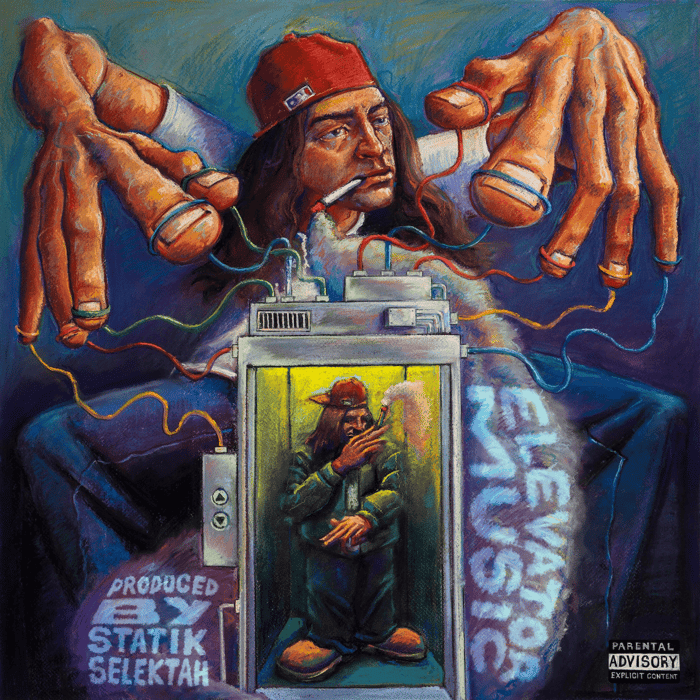
If the album’s cover burned into your brain the way the beats do, you can grab a favorite album cover poster at our store—tastefully, not loudly—over at https://www.architeg-prints.com.
 | DISCOUNTGET 30% OFF*Use code on your next order:
|
* This post may contain affiliate links, meaning we earn a commission if you make a purchase through these links, at no additional cost to you.