Fyne Audio F1-10 Anniversary Uses Hidden Glass to Tame Resonance



Fyne Audio F1-10 Anniversary Uses Hidden Glass to Tame Resonance
Fyne Audio’s F1-10 Anniversary pairs sculptural walnut cabinetry with a hidden glass diaphragm designed to reduce unwanted speaker resonance.
A Furniture-Grade Speaker With a Technical Secret
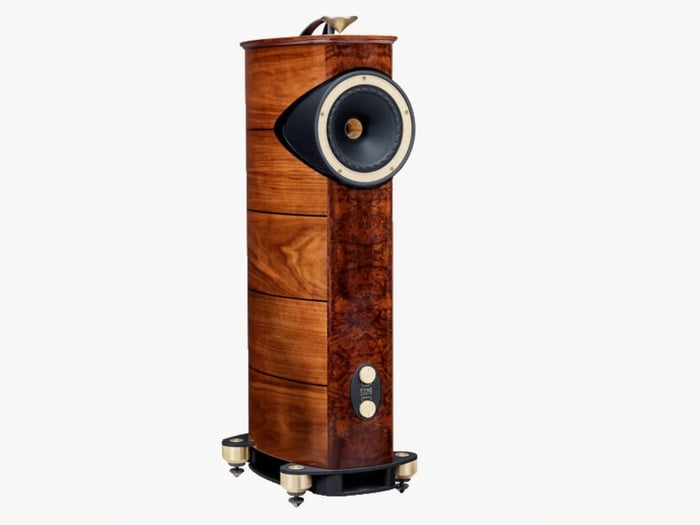
Some speakers announce themselves with sharp angles, exposed hardware, or the visual equivalent of a sci-fi costume. At first glance, the Fyne Audio F1-10 Anniversary takes a different route. It looks more like an heirloom cabinet than a piece of serious audio equipment.
That’s exactly what makes its most unusual feature so intriguing. Hidden beneath the speaker’s elegant walnut exterior is a glass diaphragm designed to address a familiar problem in audio: unwanted vibration. When a speaker’s own components resonate, they can add a sonic fingerprint to the music. The goal here is to hear less of the speaker itself and more of the recording.
The F1-10 Anniversary is a limited-edition passive stereo pair, combining traditional hi-fi engineering with an unmistakably luxurious finish. Fyne Audio is producing only 30 pairs, so this isn’t a mass-market attempt to make high-end sound more accessible. It’s a carefully limited design for listeners who want the engineering and the furniture-like presence in equal measure.
A Familiar Design Revisited in Walnut
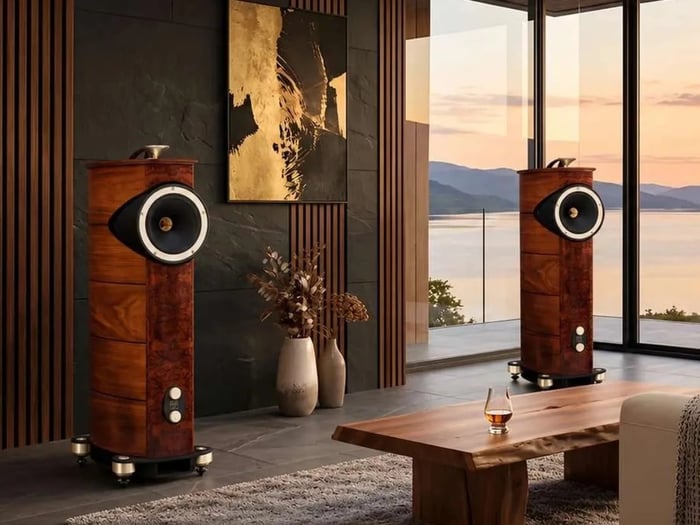
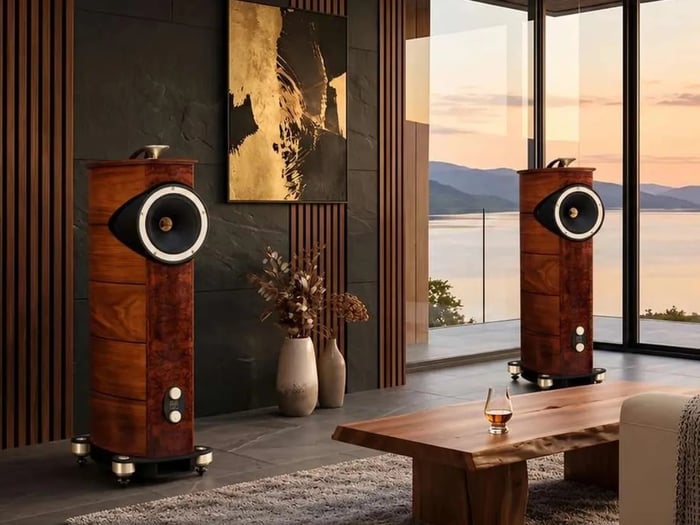
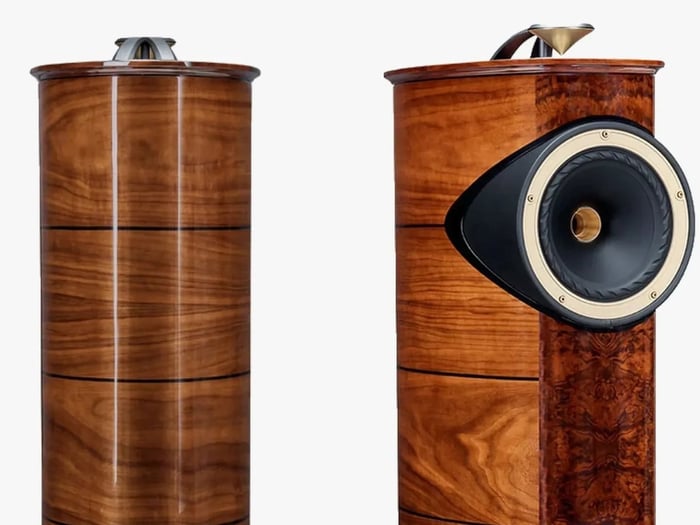
The story begins with the original F1-10, introduced in 2017. For the Anniversary edition, Fyne Audio revisits that foundation with a curved birch-plywood enclosure covered in glossy burr walnut and walnut veneers. Solid-wood trim and champagne-gold accents complete the look.
I’m a sucker for audio equipment that doesn’t apologize for being furniture. The wood grain gets nearly as much attention as the drivers, and that’s intentional. This speaker is meant to live in a room, not hide in a dark equipment rack. Its finish has the kind of visual warmth that can make a large hi-fi system feel less like an appliance and more like part of the home.
Of course, the cabinet isn’t simply a decorative shell. It uses internal bracing as part of its structural design, helping the enclosure remain controlled while the drivers move air. That distinction matters. The F1-10 Anniversary may look like a piece of luxury furniture, but beneath the veneer is a cabinet built around the less glamorous realities of loudspeaker engineering.
There’s a bit of old-school charm in that balance. The speaker looks polished and expensive, but it still makes its construction visible. You can see where the acoustic priorities begin, even when the final result is dressed in high-gloss wood.
The Hidden Glass Diaphragm
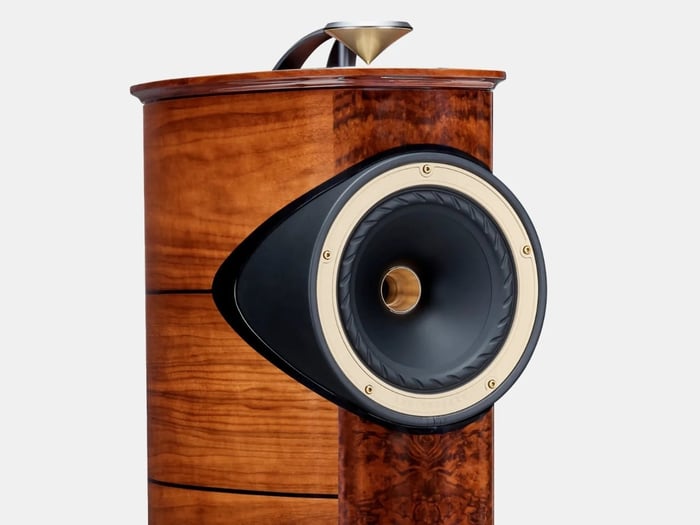
Here’s where the design gets properly unusual. Inside the high-frequency driver sits a 75mm aluminosilicate glass dome. Fyne Audio chemically strengthens the thin glass and uses its damping characteristics to suppress unwanted resonances.
In plain English, the company is trying to keep the diaphragm from ringing after it has reproduced a sound. That ringing can color playback, much like a wine glass continuing to hum after it’s been tapped. The intended result is a cleaner presentation in which the recording takes center stage instead of the driver’s own behavior.
The glass dome also reaches down to the 750 Hz crossover point. That allows it to contribute beyond the very highest frequencies and into part of the vocal range. It’s an interesting choice because voices, guitars, piano, and many other familiar sounds occupy that broad middle territory where coherence can make a system feel especially natural.
Still, a clever materials list isn’t the same thing as a guaranteed listening experience. The practical advantage over other diaphragm materials would need to be judged through independent listening and measurement. That’s not a criticism so much as a useful reality check. In high-end audio, the most exciting technical explanation still has to survive contact with an actual room—and a pair of ears that may not agree with the brochure.
One Acoustic Source Instead of Two
The glass dome is only part of the story. The driver arrangement is just as important.
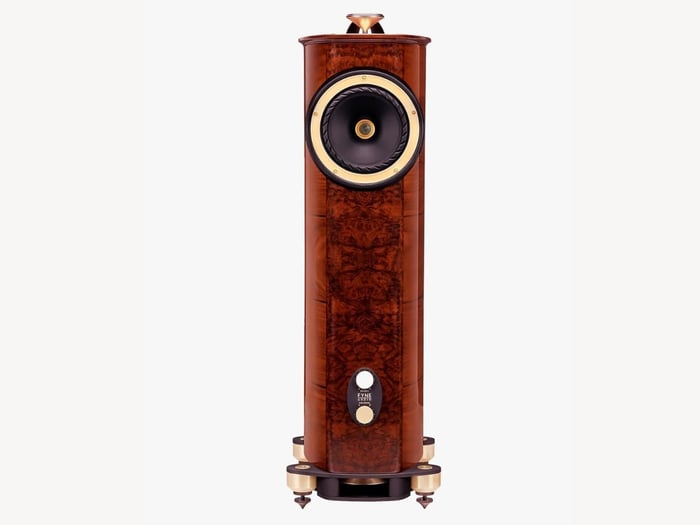
Fyne Audio’s IsoFlare system places the high-frequency unit at the center of the bass and midrange cone. Rather than positioning those drivers separately across the front of the cabinet, the design brings them together around a common axis.
The intended benefit is better integration. Frequencies should behave more like they’re coming from one source, helping vocals and instruments maintain their positions within the stereo image. When a system gets this right, a singer can appear anchored in the center while instruments occupy believable spaces around them. The effect can feel less like sound is coming from two boxes and more like the room has opened into a performance.
That coherence also matters when you move away from the ideal listening position. No speaker can make every seat identical, and the F1-10 Anniversary doesn’t promise that. But its geometry is designed to keep the presentation from collapsing the moment you lean to one side or shift into a nearby chair.
For anyone who has spent an afternoon inching speakers across a floor by tiny amounts, that’s a meaningful goal. Placement still matters, but a design that tries to make the listening window more forgiving is thinking about how people actually use audio equipment.
A Super Tweeter That Fires Into the Room
At the top of the cabinet, the integrated SuperTrax super tweeter fires upward into a shaped diffuser. The diffuser redirects high-frequency output around the room, while the upper driver itself uses a thin carbon diaphragm.
That gives the speaker two very different material approaches to the upper end: aluminosilicate glass in the main high-frequency driver and carbon in the super tweeter. Fyne Audio says the arrangement is intended to add spaciousness and atmosphere to the presentation.
Visually, the assembly looks almost like a small acoustic sculpture perched on the cabinet. It certainly gives the F1-10 Anniversary a distinctive silhouette, but it isn’t there merely to make the speaker easier to recognize. Its purpose is to shape how high frequencies spread through the room.
There is, however, an important boundary to the claim. The 360-degree dispersion applies to this high-frequency system, not to the entire speaker. That doesn’t mean every seat will deliver identical sound. It means the upper-frequency energy is being distributed more broadly, which may help create a more open impression across the listening area.
That nuance is worth keeping in mind. High-end audio descriptions can sometimes make a design sound almost magical. Here, the more grounded interpretation is also the more useful one: the upper assembly has a specific acoustic job, and that job has limits.
BassTrax and the Reality of Room Placement
The lower section takes a similarly practical approach. A downward-firing port works with Fyne Audio’s BassTrax diffuser, spreading the port output around the base of the speaker.
The company says this makes room positioning less critical. I find that aim more compelling than another eye-catching frequency-range statistic. Most people don’t listen in a laboratory. They listen in living rooms, spaces with furniture, walls, rugs, windows, and the occasional coffee table sitting exactly where the speaker would prefer it not to be.
A system that acknowledges the room is therefore addressing a real problem. The diffuser may help distribute bass energy in a more accommodating way, but it shouldn’t be treated as a license to ignore placement altogether. Large floorstanding speakers still interact with nearby walls and furniture, and their position will continue to affect what you hear.
In other words, BassTrax sounds like a helpful tool rather than a magic eraser. You’ll still want to give the speakers some breathing room and spend time finding a position that suits your space.
Useful Controls for Real-World Listening
Another welcome detail is the set of tonal controls. Owners can separately adjust high-frequency energy, presence, and super-tweeter output by up to 3 dB in either direction.
That may sound modest, but small changes can make a noticeable difference depending on the room and the listener. A space with hard floors and lots of glass may benefit from a gentler high-frequency balance, while a heavily furnished room could call for a little more energy. Personal taste matters, too. Some listeners want an airy, forward presentation; others prefer something smoother and more relaxed.
These controls aren’t automatic room correction, and they don’t replace careful setup. What they do provide is choice. I’d much rather see useful adjustment built into a speaker than hear that there’s one universally correct tonal balance for every room, recording, and listener.
A Serious Commitment in Size and Price
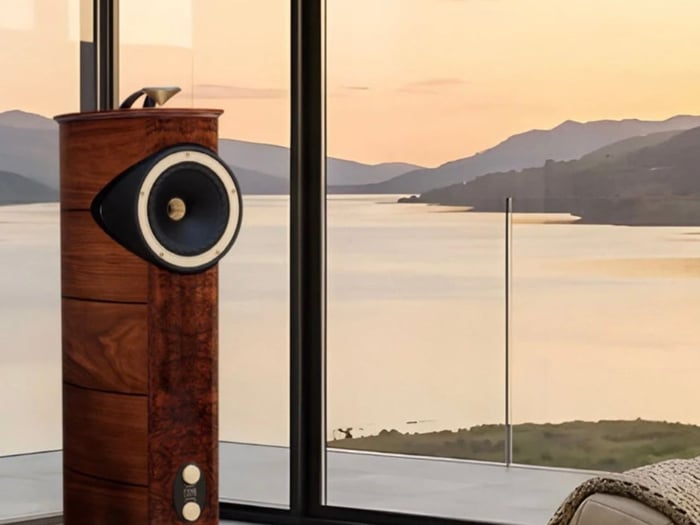
The practical reality arrives when you look at the dimensions. Each cabinet stands about 49 inches tall and weighs nearly 130 pounds. This is not a speaker you casually slide across the room while deciding whether it sounds better near the bookcase.
It’s a deliberate installation. You’ll need to think about delivery, placement, amplification, and the room itself before these speakers ever play a note. The pair is listed at $50,000, and because the F1-10 Anniversary is passive, external amplification is still required.
The walnut finish may help the speakers belong in a living room, but it won’t make them disappear. They’re tall, substantial, and visually confident. That presence will appeal to some listeners and challenge others, especially anyone trying to keep a minimalist space visually quiet.
For that kind of money, the materials and construction are only the opening chapter. The more important question is whether the design delivers a meaningful improvement in the listener’s own room. Beautiful cabinetry can earn a place on the shortlist, but it shouldn’t receive a free pass from the audition process.
Why the F1-10 Anniversary Is Fascinating
What I like most about the Fyne Audio F1-10 Anniversary is that it makes the engineering visible. The central driver, the unusual glass diaphragm hidden inside, the upward-firing super tweeter, and the sculptural top assembly all suggest that the speaker is trying to solve specific acoustic problems rather than simply look expensive.
That doesn’t mean every promise should be accepted without listening. The glass dome may reduce unwanted ringing. The IsoFlare layout may help voices and instruments lock into place. BassTrax may make room positioning more forgiving. The controls may help owners tailor the balance. Those are all sensible goals, but each one deserves to be evaluated in practice.
I’d want to hear the Anniversary in a room that resembles my own before treating any claimed improvement as a reason to buy. That’s the enduring lesson with ambitious hi-fi: specifications can tell you how a product was designed, but only listening tells you how it feels when the music begins.
And when a speaker costs as much as a luxury car, that audition isn’t a formality. It’s the whole point.
FAQ
- What is the Fyne Audio F1-10 Anniversary?
It’s a limited-edition passive floorstanding speaker offered as a stereo pair, revisiting the original F1-10 design with upgraded materials and specialized driver technology. - What does the glass diaphragm do?
The 75mm aluminosilicate glass dome is designed to reduce unwanted resonances in the high-frequency driver, helping minimize coloration caused by diaphragm ringing. - How does the IsoFlare system work?
IsoFlare places the high-frequency driver at the center of the bass and midrange cone so those frequencies can behave more like they originate from a single acoustic source. - Does the speaker include amplification?
No. The F1-10 Anniversary is passive, so owners need separate external amplification to power the pair. - How much does the pair cost?
The pair is listed at $50,000. Each speaker is approximately 49 inches tall and weighs nearly 130 pounds.
If you love the character of iconic audio design, a favorite album cover poster can bring that same listening-room nostalgia to your walls. Browse the collection at Architeg Prints for a warm, tasteful way to frame your musical world.
 | DISCOUNTGET 30% OFF*Use code on your next order:
|
* This post may contain affiliate links, meaning we earn a commission if you make a purchase through these links, at no additional cost to you.