Sony’s Gold-Plated Walkman Reimagines Cassette Nostalgia Without Tapes



Sony’s Gold-Plated Walkman Reimagines Cassette Nostalgia Without Tapes
Sony’s Gold-Plated Walkman pairs cassette-inspired design with digital playback, premium copper construction, 256GB storage, and a nearly $6,000 price tag.
A Walkman Memory, Recast in Gold
Some gadgets stay with you long after they stop working. For me, that old Sony Walkman belongs in that category: a small cassette player, a pocketful of tapes, and the satisfying clunk of pressing play. It probably wouldn’t get much daily use now, but there’s something charming about the ritual. Choose a tape. Turn it over. Hope the batteries hold out.
Sony’s latest premium Walkman takes that nostalgia and sends it through a very different filter. The result is the NW-WM1ZM3, a digital music player wrapped in gold-plated copper. It looks like it could have wandered out of a beautifully preserved hi-fi collection, but there’s one important catch: it doesn’t play cassette tapes.
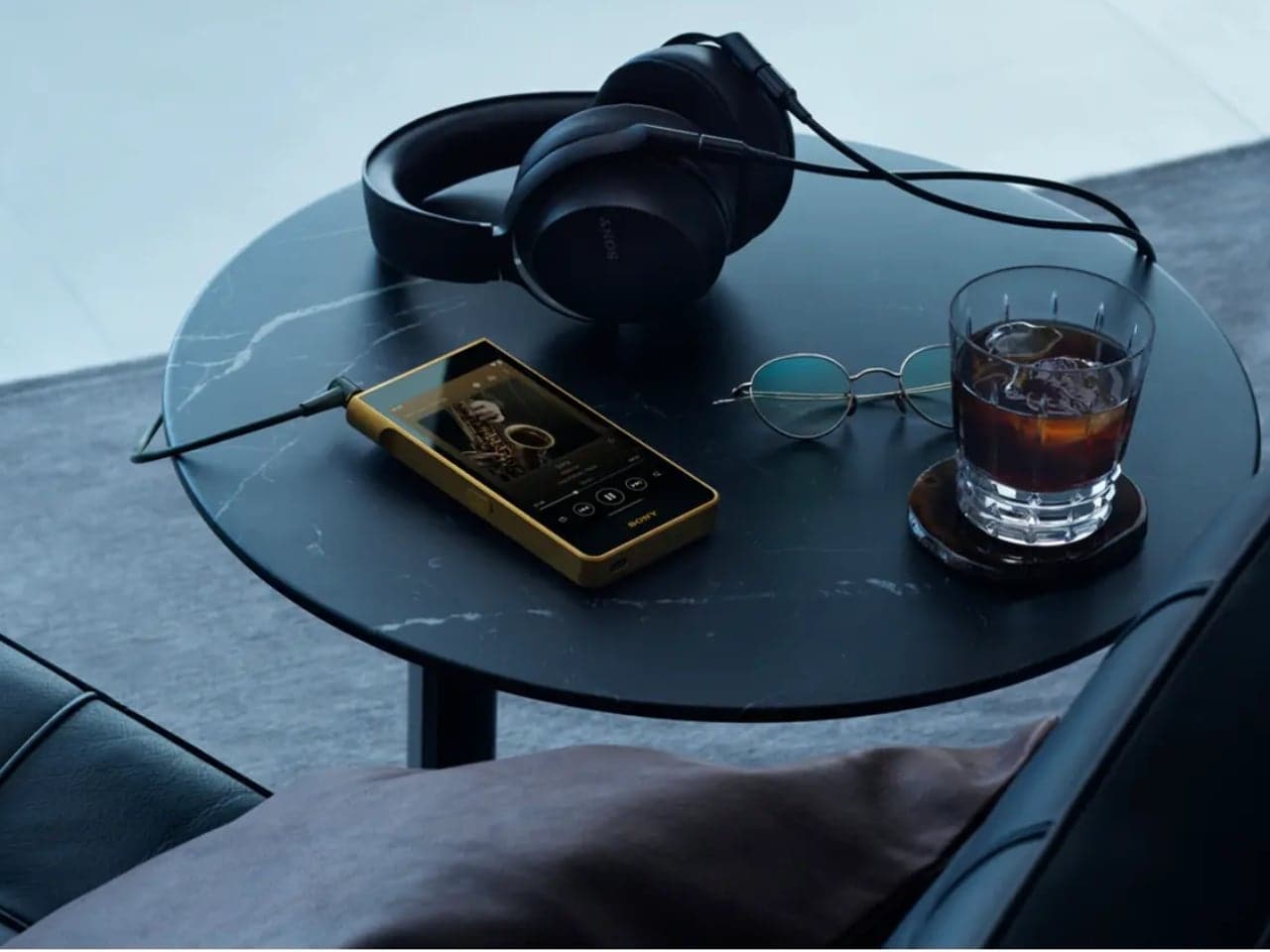
Sony announced its latest premium Walkman lineup on October 15, 2026, positioning this flagship model as a dedicated player for listeners who prefer not to keep every song, notification, and distraction on a smartphone. It supports digital music through wired or wireless headphones and is designed to feel more deliberate than opening an app on a phone.
That luxury comes at a serious price. Sony’s U.S. store lists the NW-WM1ZM3 for preorder at $5,899.99. In other words, this isn’t a casual replacement for the cassette player that might still be hiding in a desk drawer. It’s an extravagant piece of audio hardware for someone who wants their music player to feel like an object of occasion.
Designer: Sony
Copper Beneath the Gold
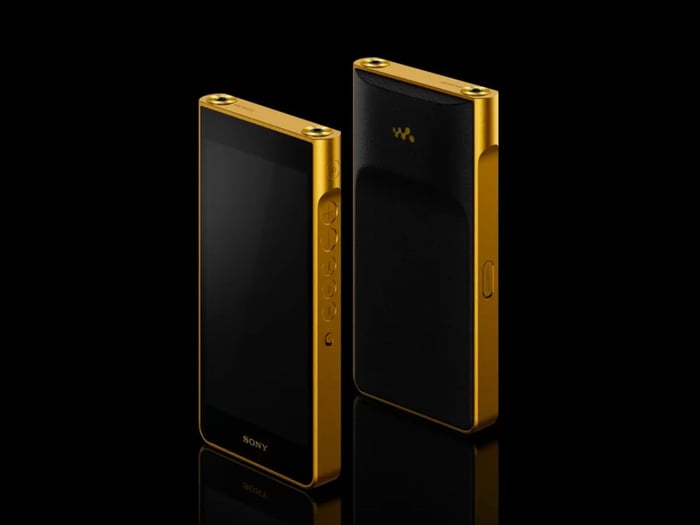
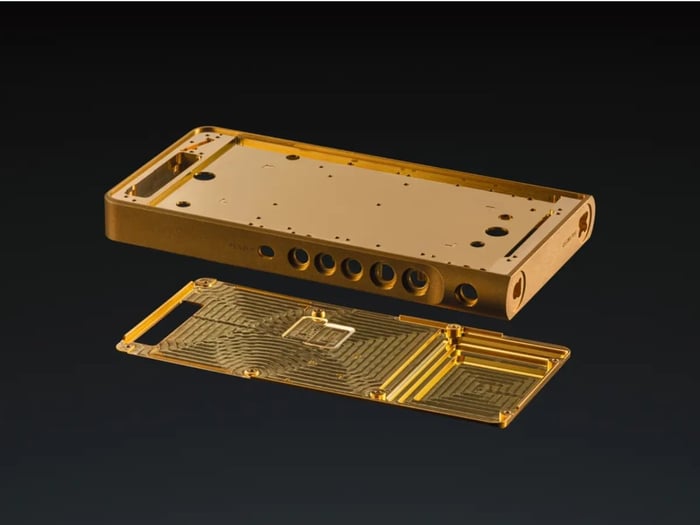
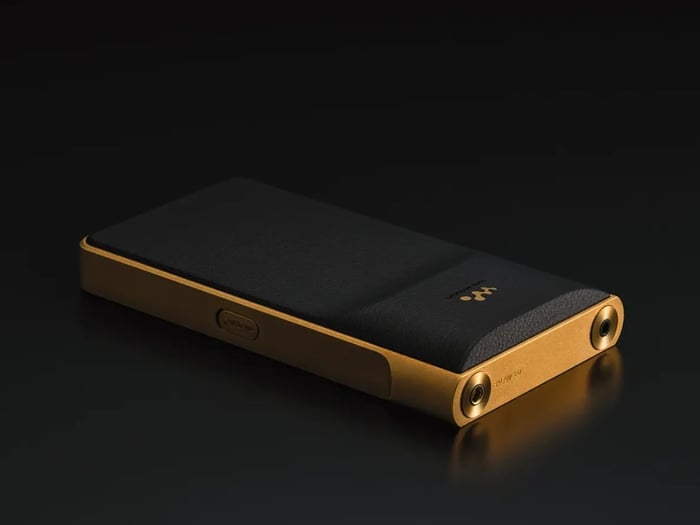
The flashy exterior is only the opening act. Beneath the finish, Sony has built the main chassis from 99.99% pure oxygen-free copper, while the rear chassis uses 99.96% pure copper. Both sections receive gold plating, turning the enclosure into part of the company’s audio-engineering strategy rather than treating it as a decorative shell.
Sony says the copper construction contributes to the player’s audio performance. That claim is presented as part of the device’s design philosophy, though determining whether the material choices create an audible improvement worth the price would require independent testing. For now, the construction certainly gives the Walkman a sense of ceremony. This is not a slab of anonymous black plastic.
Even the screws have been pulled into the performance story. Sony says the gold-plated screws offer low resistance, helping maintain a stable electrical ground connection between the sections of the chassis. Inside, dedicated capacitors serve the digital and audio portions, while a machined copper shielding block is used to help manage electrical noise.
Most of that work disappears once the device is assembled. You won’t see the shielding block while listening to an album, just as you don’t usually think about the wiring behind a vintage stereo. Still, knowing those details are there adds to the sense that every component has been given a job.
A Dark Counterpoint to the Shine
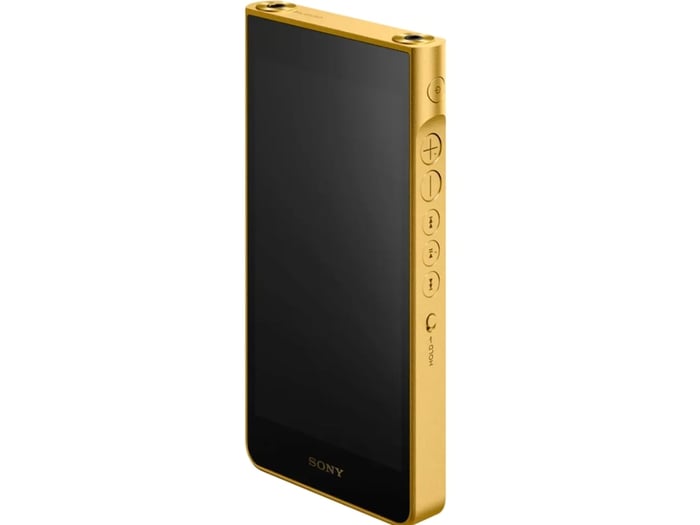
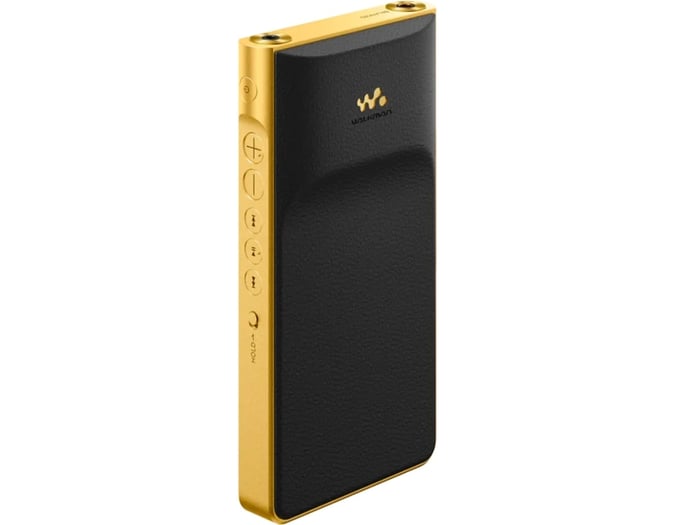
The design becomes more balanced once you look past the gold. Circular machined-metal surrounds frame the headphone sockets, giving those connections a visual emphasis that feels almost mechanical. On the rear, a dark leather-textured pad breaks up the bright metal and creates contrast against the gold frame.
That rear pad also keeps your hand from directly touching the copper chassis. Functionally, it offers a more comfortable grip; visually, it gives the finish room to breathe. Without it, the player might look like one uninterrupted block of precious metal. With it, the design has a little more restraint—although “restraint” is doing some heavy lifting when the device is gold-plated and costs nearly six thousand dollars.
The material language feels intentionally old-school in spirit, even though the technology is thoroughly modern. It recalls the era when high-end audio equipment was meant to be seen in the living room rather than hidden inside a pocket. The difference is that this particular listening object is portable—at least technically.
Buttons Meet the Touchscreen
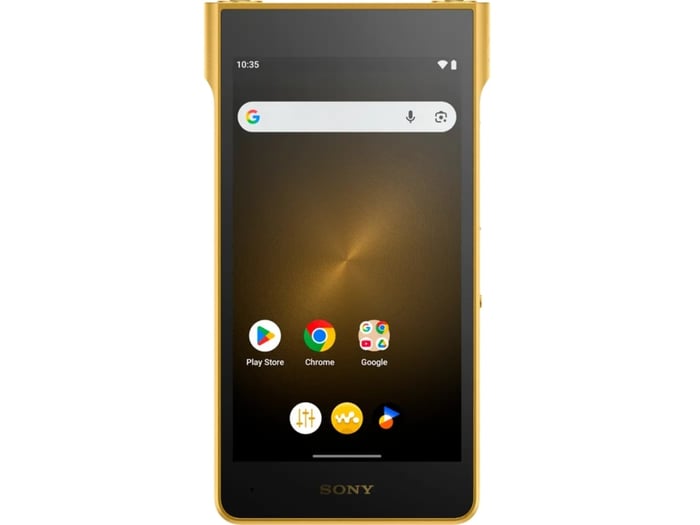
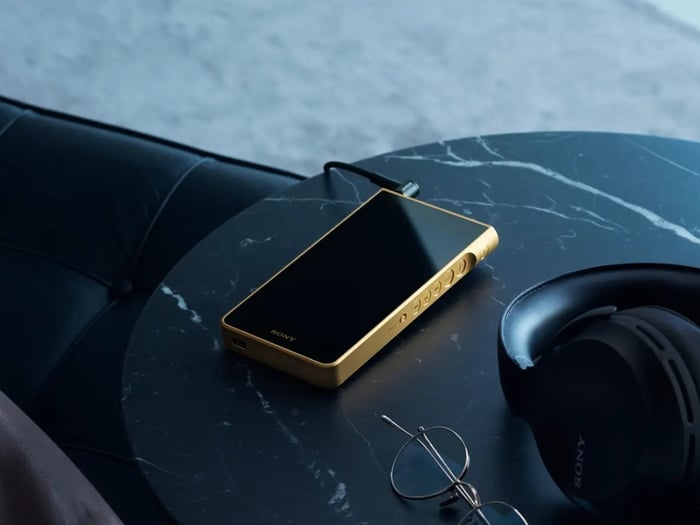
The NW-WM1ZM3 doesn’t make every action dependent on a touchscreen. Physical side buttons provide dedicated controls for playback and volume, working alongside the player’s 5.5-inch touchscreen.
In Sony’s product images, the circular buttons sit inside a recessed strip and carry clearly marked symbols. That creates a recognizable control zone on the side of the player, which should make the hardware feel more like a traditional music device than a miniature tablet.
Whether those controls are easy to operate by touch is another question. The layout looks considered, but photographs can’t tell us how naturally the buttons fall under a finger or whether the substantial body makes one-handed use awkward. That’s the sort of detail that needs hands-on time—not another carefully lit product image.
Still, the decision to include physical buttons makes sense. Dedicated controls bring a little ceremony back to listening. You can adjust volume or pause a song without navigating through a menu, and that small separation from the phone is likely part of the product’s appeal.
The Cassette Lives on the Screen
Here’s the most playful part of the experience: the interface borrows from cassette culture even though the device itself has no tape mechanism.
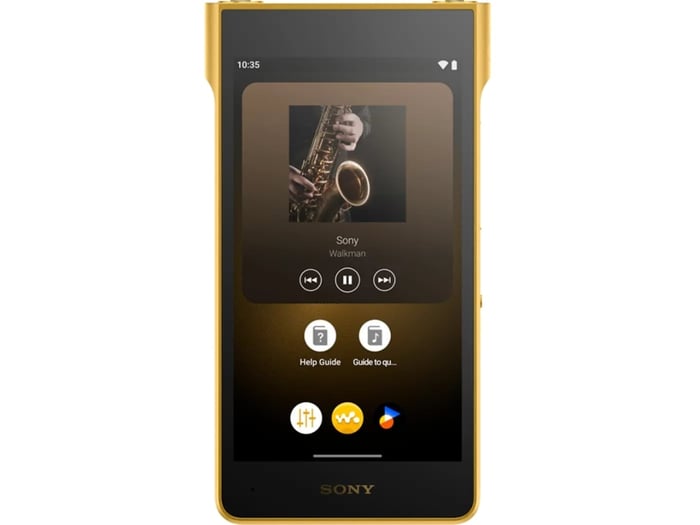
A cassette-style playback display and screensaver place the old format directly on the screen. The cassette graphic changes according to the music’s codec, creating a visual link between the digital file and the analog format that inspired the design. The volume interface also takes cues from analog equipment.
It’s a clever compromise. You don’t get the physical rituals of inserting a tape, flipping it over, or rewinding with a pencil when the player starts acting up. But you do get a visual reminder of that era every time you use the device. For anyone who remembers watching the tape reels turn through a clear cassette shell, that little animation could land with surprising force.
Digital Storage for a Dedicated Listener
The Walkman’s practical argument begins with its storage. It includes 256GB of internal capacity, with approximately 207GB available to the user. That gives a substantial music library its own home without taking space away from photos, apps, videos, or everything else competing for room on a phone.
A microSD card slot provides expansion for listeners whose collections keep growing. Android and Wi-Fi support streaming as well as locally stored music, so the player isn’t limited to files transferred manually from a computer. It can function as a self-contained digital music device while still supporting connected listening habits.
Sony claims approximately 33 hours of 24-bit/96kHz FLAC playback through its music app under specified conditions. That figure shouldn’t be read as a universal promise for every combination of file type, screen use, wireless connection, and listening setup, but it does suggest that the player is built for extended sessions.
There’s a certain appeal in letting a phone return to being a phone. No incoming message needs to interrupt an album. No social feed waits behind the playback screen. The Walkman concept, at least in this modern form, is less about carrying a tape and more about creating a separate space for listening.
A Heavy Companion
The premium materials come with an unavoidable trade-off: weight. At approximately 670 grams, or nearly 1.5 pounds, the NW-WM1ZM3 is a substantial object.
That changes the way you imagine using it. It sounds more natural beside an armchair than tucked into a pocket during a daily commute. You could carry it, of course, but it isn’t the featherweight music player many people expect from a modern portable device. The copper construction gives the Walkman presence, but presence can become baggage after a while.
That heft also reinforces the product’s identity. This isn’t trying to disappear into your routine. It wants to be noticed, handled, and treated as a dedicated object. Whether that feels luxurious or impractical depends on what you want from a music player in the first place.
Nostalgia With a Luxury Price
I understand the idea behind giving music its own device again. There’s something refreshing about stepping away from the all-purpose smartphone and returning to a player with a narrower, more focused job. The physical controls, cassette-inspired interface, and carefully worked metal enclosure all support that idea.
But the NW-WM1ZM3 is a long way from replacing an old tape player. It doesn’t play cassettes, it weighs nearly 1.5 pounds, and its preorder price sits at $5,899.99. The nostalgia is present, but it has been refined, polished, gold-plated, and placed firmly in the luxury-audio category.
For some listeners, that will be exactly the point. For others, the cassette-style screen may feel like a charming nod rather than a genuine return to the past. Either way, Sony has created a Walkman that treats digital listening like a special occasion—and makes sure you can see the price tag from across the room.
The Gold-Plated Walkman turns cassette nostalgia into a premium digital ritual, complete with physical buttons, analog-inspired graphics, copper construction, and serious storage. Would you want a dedicated music player this elaborate, or is the phone still too convenient to beat?
FAQ
- What is the Sony NW-WM1ZM3?
The NW-WM1ZM3 is Sony’s premium digital Walkman music player. It plays digital music through wired or wireless headphones but does not play cassette tapes. - Does the Gold-Plated Walkman actually contain a cassette mechanism?
No. Its cassette connection is visual, appearing through a cassette-style playback display and screensaver rather than a physical tape deck. - How much storage does the device have?
It includes 256GB of internal storage, with approximately 207GB available for the user. A microSD card can expand the capacity. - How heavy is the Sony Walkman?
The player weighs approximately 670 grams, which is nearly 1.5 pounds. - How much does the NW-WM1ZM3 cost?
Sony’s U.S. store lists the device for preorder at $5,899.99.
If this Walkman’s blend of music history and lavish design speaks to you, browse our collection of favorite album cover posters at Architeg Prints. A great music image can bring that same dedicated-listening feeling to your wall.
 | DISCOUNTGET 30% OFF*Use code on your next order:
|
* This post may contain affiliate links, meaning we earn a commission if you make a purchase through these links, at no additional cost to you.