Gorillaz The Mountain Review: Grief in a Party Hat on Purpose


 See more Architeg Prints stories on Google.
Gorillaz The Mountain Review: Grief in a Party Hat on Purpose
Gorillaz The Mountain turns mourning into a crowded, gorgeous collage—then trips over its own concept just to prove it’s human.
A record that refuses to “just be songs”
Gorillaz albums are basically born wearing a concept like it’s a default skin, but Gorillaz The Mountain is different in one blunt way: it actually commits to a specific emotional gravity instead of just touring vibes. I kept thinking, “Oh, this is going to be another scattershot guest parade,” and sure, it is that—but it’s also one of the most thematically pinned-down things Damon Albarn has done in this project’s world since Plastic Beach.
And yes, the album acts like it knows it’s closing a loop. It feels like the third panel of an unofficial triptych that started 16 years ago, and it even drags an old loose thread across the finish line by “finalizing” something that clearly smells like an outtake brought back to life. It doesn’t hit the peak of Plastic Beach—not even close—but it fills a different hole: it replaces the big public-facing concerns of Cracker Island with something more private, more mournful, and honestly more convincing.
The twist is how it gets there. The Mountain pulls from trips Albarn and Jamie Hewlett took to India, but the album’s real fuel is grief—specifically the deaths of both of their fathers. That’s why the guest list isn’t just eclectic for sport; it’s deliberately haunted. You get combinations that shouldn’t make sense on paper (Bizarrap with Kara Jackson, for example), and then you get the gut-punch move: pairing Anoushka Shankar’s sitar with voices of collaborators who aren’t alive anymore—Dennis Hopper, Proof, Mark E. Smith. It’s poignant in a way Gorillaz sometimes dodges by hiding behind cartoons and spectacle.
Still, the album doesn’t always balance its own ambition. Sometimes the big panoramic “Gorillaz-ness” steamrolls the grief instead of framing it. But when it doesn’t, you can hear the group’s universal, borderless dream flicker back on like a lamp you forgot still worked.
1. “The Mountain”: the doorway isn’t subtle, and that’s the point
The album opens with a bansuri line that feels like it’s floating a few feet above the ground—airy, steady, patient. Rippling percussion keeps it from becoming incense music, and then an entire architecture of traditional Indian instrumentation comes in and keeps changing shape just enough to justify the five-minute runtime.
This opener makes a clear statement: the record wants to be entered, not played. And then Dennis Hopper shows up at the end, repeating the album’s name like a half-spell, half-warning. It lands in this strange liminal zone—spiritual tourism on one side, mortality on the other. I’m not totally sure whether it’s meant to feel morbid, but it does, and I think that’s the actual invitation.
Arguable take: this track isn’t “setting the scene”—it’s telling you the scene will never resolve.
2. “The Moon Cave”: too many voices, and yet it’s the whole idea
The instrumentation blooms longer here, and for a moment I thought the album might stay in that transportive, instrumental-first mode. Then Gorillaz’ upbeat spirit kicks the door in—because of course it does.
Albarn sings about exhaustion, and his voice strains in that familiar way: the man can write a melody like he’s trying to out-run his own thoughts. The track piles on voices—Black Thought, disco legend Asha Puthli, a familiar, emotionally loaded presence in Bobby Womack, plus the late Trugoy the Dove orbiting the song’s collaborative history.
It’s muddled. It’s also kind of brave. The whole thing feels like Albarn refusing to “touch ground,” insisting the meaning has to stay symbolic a little longer. I didn’t love it on first listen because it felt crowded; on second listen I realized the crowd is the message—grief as a room full of people talking at once.
Arguable take: the confusion isn’t a flaw here, it’s the album’s most honest texture.
3. “The Happy Dictator” (feat. Sparks): the hook is there, the bite isn’t
Gorillaz plus Sparks should be a perfect match—both thrive on theatrical intelligence and wink-wink pop. Which is why it’s mildly irritating that the actual tune is… kind of weak. Catchy, yes, but in a default way, like it knows it’ll stick whether it earns it or not.
The song’s tongue-in-cheek optimism never commits hard enough to the absurdity it’s hinting at. Lines like “I’ll propagate eternity and seal it with my kiss” want you to laugh and recoil at the same time, but the track plays it safer than that. If you’re going to dress up power like a clown, at least let the makeup smear.
Arguable take: the song wants to satirize autocracy, but it’s too polite to be funny and too bouncy to be scary.
4. “The Hardest Thing” (feat. Tony Allen): sadness that finally stops performing
This one works because it doesn’t posture. The melancholy is earnest—no conceptual smirk, no “look how clever we are” framing device. It feels like Albarn letting the emotional core stand in the center of the room.
And it’s especially effective because it sits right before the next track’s brighter pop shape—like the record quietly saying, “Yes, we can still do the vibrant thing, but it has a shadow now.”
Arguable take: The Mountain is at its best when it stops acting like a world-building project and just admits it’s tired.
5. “Orange County” (feat. Bizarrap, Kara Jackson, Anoushka Shankar): grief as the simplest glue
This is maybe the strangest spin Gorillaz have ever put on their “melancholy pop” template. Bizarrap’s presence is the kind of left-field flex this band lives for, Kara Jackson brings a poet’s plainspoken weight, and Anoushka Shankar’s sitar adds a line of gold through the whole thing.
And the thread connecting them is almost embarrassingly uncomplicated: grief. That’s why it works. The whistling is sticky enough that you’ll catch yourself doing it later, which feels slightly ridiculous given how direct the central line is. Albarn repeats it until it becomes less like a lyric and more like a thought you can’t stop chewing:
“You know the hardest thing is to say goodbye to someone you love.” — Damon Albarn
He beats it to death the way you do with an obvious truth when it suddenly becomes your whole life. The album’s emotional gamble becomes clear here: obvious sentiments are empty unless they land like they’re brand-new. And Kara Jackson—who’s clearly been staring into that particular abyss—can deliver simpler poetry without it sounding like a greeting card.
Arguable take: this track proves the album doesn’t need complex lore; it needs a single sentence you can’t un-hear.
6. “The God of Lying” (feat. IDLES): the concept sputters, even with firepower
The album keeps playing with this cheerful impersonation of autocrats—happy dictators, lying gods—and here it just falls flat. Joe Talbot shows up with real intensity, but the track still can’t land the satire or the menace. It’s like the record thinks the idea is enough.
This is where you can hear the difference between the album’s emotional engine and its conceptual bodywork. The grief feels lived-in. The political caricatures feel like set dressing.
Arguable take: Gorillaz are better at sadness than slogans, and this song accidentally proves it.
7. “The Empty Dream Machine” (feat. Black Thought, Johnny Marr, Anoushka Shankar): dread with no release
This is Albarn’s wistful desperation in its sharpest form. The track captures that nighttime dread where you keep waiting for tomorrow to redeem you, even though you don’t believe it will.
Black Thought drops a line that sounds like a mantra you’d mutter at 3 a.m.: “A heart driven by the drum is what I borrow from in the shadowy light of the night.” The rhythm keeps moving, keeps insisting. But the release never comes. And I think that’s intentional—catharsis is promised, not delivered, because that’s what grief does: it schedules your relief and then doesn’t show up.
Arguable take: the lack of payoff is the payoff, and it’s more brutal because the groove keeps smiling.
8. “The Manifesto” (feat. Trueno, Proof): the bold move is letting a ghost hold the mic
Here Albarn’s multicultural vision goes wide again: Argentine rapper Trueno alongside the late Proof. Trueno could’ve been enough—his flow hits hard and would’ve carried a “normal” track to a neat runtime.
But Albarn doesn’t want neat. The real statement isn’t even Albarn’s own words at the end (though they land with a disarming sincerity). It’s the decision to pull you into Proof’s sobering freestyle and let it loom. The line “You aren’t ready for death until I showed up” hits like a cold hand on the shoulder—because it’s not metaphorical, not really.
Arguable take: the album’s most confident moment is when Albarn steps back and lets absence become presence.
9. “The Plastic Guru” (feat. Johnny Marr, Anoushka Shankar): narrative detail that weirdly says less
This song leans harder into story than most of the record, but it still refuses to give you clarity. You get images—plastic guru, mountain, demon, burning silence, applause—like someone recounting a dream but skipping the parts that would explain it.
And then there’s the mild frustration: Johnny Marr and Shankar are both here, yet their contributions get drowned under a chorus that sits too placidly. It’s one of those Gorillaz choices that feels like intentional flattening, but I’m not convinced it earns the trade-off.
Arguable take: the chorus isn’t calming—it’s sedation, and it smothers the track’s most interesting players.
10. “Delirium” (feat. Delirium): when the mountain starts sounding like the internet
The arrival of a “new god” should spike the narrative, but instead it kind of limps. Albarn delivers the lyric “I’ve been out in the chat rooms waiting for the end to begin,” and suddenly the mountain imagery starts to tilt into something uglier and more contemporary. For a second, the whole “mountain” concept sounds like it’s wandered into online masculinity echo chambers—and I honestly can’t tell if that’s a deliberate jab or an accidental association.
Mark E. Smith shows up with a maniacal chorus that deserves a better vehicle. This is one of the album’s clearest misfires: a great piece of haunting presence stapled to a song that doesn’t give it enough friction.
Arguable take: the track proves that a dead collaborator’s voice can’t save a song that won’t commit to being compelling.
11. “Damascus” (feat. Omar Souleyman, Yasiin Bey): joy as a form of defiance
Yasiin Bey sounds genuinely delighted to be here, and Omar Souleyman matches him with ease. The track feels like surfing in the dark with someone who keeps laughing—directionless, sure, but weirdly freeing.
And then the line comes in—“Turkish coffee, Starbucks, you’re corny”—and the song shrugs like, “Yeah, that’s the point.” This is a rare moment where the album lets itself have uncomplicated fun without pretending it’s shallow.
Arguable take: this is the album’s most necessary detour, because grief without movement becomes a museum.
12. “The Shadowy Light” (feat. Asha Bhosle, Gruff Rhys, Ajay Prasanna, Amaan Ali Bangash, Ayaan Ali Bangash): too bright for its own title
Earlier, “shadowy light” was a phrase that felt like a coping mechanism—hope that doesn’t quite work. Here it becomes a whole song, and the ensemble of voices is genuinely affecting.
But it overbrightens what should’ve been more understated. The track feels like it turns the dim glow into a spotlight, and that shift changes the emotion: what was ambiguous becomes decorative.
Arguable take: the song confuses “more voices” with “more depth,” and those aren’t the same thing.
13. “Casablanca” (feat. Paul Simonon, Johnny Marr): introspection with cinematic pacing
This is Albarn leaning into a plodding, dreamy beat that gives his lyrics room to stretch out. It’s introspection that doesn’t panic; it just walks forward slowly.
I can already tell it’ll hit harder with animated visuals alongside it, because the track is basically storyboarding itself in real time. Also: having members connected to the Clash and the Smiths on the same song is a flex, but the song doesn’t rely on that flex. It would work even if you didn’t recognize the names.
Arguable take: this is where Gorillaz finally sound less like a brand and more like a person staring out a window.
14. “The Sweet Prince” (feat. Ajay Prasanna, Johnny Marr, Anoushka Shankar): the mask slips, and the record gets real
Finally, the fantasy veil breaks. Albarn eulogizes his father by placing himself at the hospital bedside, and it lands because it doesn’t decorate the moment too much. Then the chorus brings in magical swords—sweetly, almost defensively—like he can’t help turning pain into myth, but he’s at least admitting that’s what he’s doing.
“Looking out across the void / I was trying to say I love you / But you just looked the other way.”
That’s not a concept. That’s a memory.
Arguable take: this is the album’s true climax, and everything after it has to justify existing.
15. “The Sad God” (feat. Black Thought, Ajay Prasanna, Anoushka Shankar): not the best closer, but the right exhale
It’s hard to hear “The Sweet Prince” and not think it should’ve been the closer. “The Sad God” doesn’t have much of a tune, and Black Thought—usually razor-precise—turns in his clunkiest verse on the album.
But then something quietly satisfying happens: Ajay Prasanna and Anoushka Shankar’s interweaving instruments finally take up real space. When the words stop being the point, the music starts speaking more clearly. It closes like a long exhale you didn’t realize you were holding.
Arguable take: as a finale, it’s flawed—but as a physical feeling of letting go, it’s exactly the album’s last honest move.
What The Mountain is really doing (when it’s not tripping over itself)
This album isn’t trying to be the most “important” Gorillaz record. It’s trying to be the most felt. The guest list isn’t there to impress you; it’s there to create the sensation of a life full of voices—some living, some not—colliding in one head.
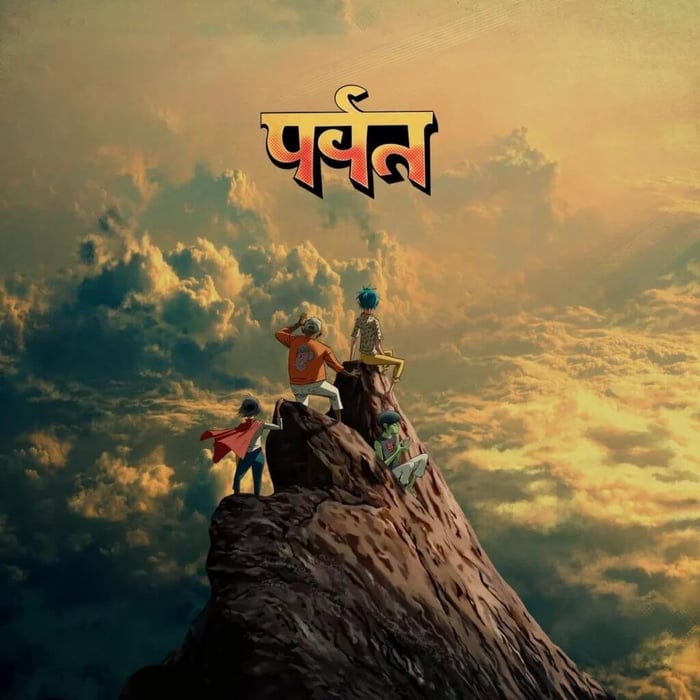
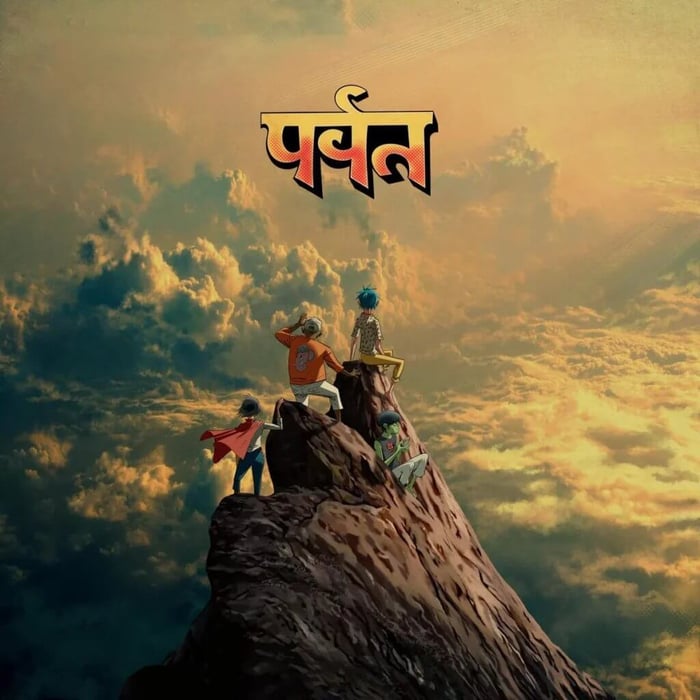
I thought the autocrat caricatures would anchor the concept, but they’re the parts that crumble fastest. The grief is the actual structure. And the mountain, despite all the travel imagery and myth-making, keeps revealing itself as the simplest symbol imaginable: a place you can climb, a thing you can’t move, a silhouette you keep seeing even when you close your eyes.
Conclusion
Gorillaz The Mountain is at its sharpest when it stops being clever and lets mourning sit in the center of the track like an uninvited guest nobody can kick out. The album’s scope sometimes blocks its own emotional signal, but the moments that land—“Orange County,” “The Empty Dream Machine,” “The Sweet Prince”—don’t just sound pretty. They sound like someone trying to keep talking even after the conversation is technically over.
Our verdict: People who like Gorillaz most when Albarn gets painfully direct (and doesn’t hide behind world-building) will actually love this. If you’re here for punchy satire, airtight hooks, and concepts that behave themselves, you’re going to get irritated—then pretend you meant to be. This album isn’t trying to win; it’s trying to cope in public.
FAQ
- Is Gorillaz The Mountain more like Plastic Beach or Cracker Island?
It leans closer to Plastic Beach in thematic grounding, but it swaps shiny social commentary for personal grief. - Do all the guest features feel necessary?
Not always. Some pairings feel profound, others feel like Gorillaz doing the “look who’s here” thing out of habit. - What’s the emotional core of the album?
The passing of Damon Albarn and Jamie Hewlett’s fathers hangs over the whole record, even when the songs dress it up in myth. - Which track feels like the album’s peak?
“The Sweet Prince” hits hardest because it drops the fantasy and speaks from a hospital bedside. - Does the closer work?
“The Sad God” is an imperfect closer melodically, but it ends with a satisfying instrumental exhale when words stop being enough.
If you’re the kind of listener who latches onto album art as part of the memory, it’s worth turning your favorite cover into something physical. You can shop an album cover poster you’ll actually hang up at our store: https://www.architeg-prints.com
 | DISCOUNTGET 30% OFF*Use code on your next order:
|
* This post may contain affiliate links, meaning we earn a commission if you make a purchase through these links, at no additional cost to you.