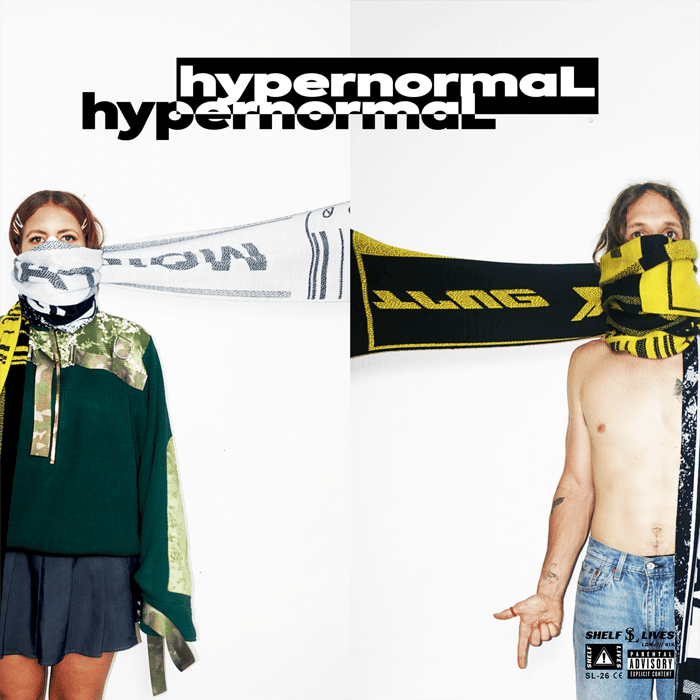
HypernormaL Album Review: Shelf Lives Make Rave-Punk Feel Too Real


 See more Architeg Prints stories on Google.
HypernormaL Album Review: Shelf Lives Make Rave-Punk Feel Too Real
HypernormaL album turns Shelf Lives’ punk-and-electronics fixation into a sweaty, two-person riot that somehow ends with a calm comedown.
Let’s be honest: this record wants to hijack your nervous system
I put on the HypernormaL album expecting another batch of chaotic singles energy stretched into an LP. What I got is more deliberate than that—like Shelf Lives finally decided to stop hinting at their full scale and just press their face against the accelerator until something sparks.
If you’ve kept even one ear on the UK underground the past few years, Shelf Lives haven’t exactly been subtle: modern punk posture, electronic muscle, and the kind of attitude that doesn’t ask permission. This debut feels overdue in the way a storm feels overdue—eventually the pressure has to break. And yeah, it was worth waiting for.
The opener doesn’t “start” so much as it lunges
“2phoneS” kicks the door in immediately. It’s rough-edged punk, but the electronics aren’t decoration—they’re the main lighting rig. Sabrina Di Giulio doesn’t really “sing” at first; she pins you with that near-spoken delivery like she’s reading out evidence. Under it, the bass and synth have this sultry, slightly grimy pulse, and the guitar riff drives like it’s late for something violent.
The first time through, I thought, okay, this is going to be punk with some bleeps. But by the end of the track, it’s obvious the band’s aiming closer to that Prodigy kind of physical menace—music that makes standing still feel socially unacceptable.
“60k” makes the bassline the main character (and it’s kind of gross—in a good way)
Then “60k” comes in and somehow the low-end gets bigger and dirtier. Not “warm.” Not “thick.” Dirty. The rave element takes control and doesn’t give it back. If you’ve ever watched a room move as one organism, this is that, except it’s happening in your kitchen while you pretend you’re just “checking out a track.”
I’m not even convinced this one needs guitars—yet when they’re there, they add that scrape of danger, like a seatbelt that’s already fraying. The song practically dares you not to make the stank face. I failed.
“baby sonG” swerves into rap shape just to prove they can
“baby sonG” is where the album starts flexing its sequencing brain. It shakes up the template early, leaning more like a rap track than a punk track, and that’s the point: it keeps the record from turning into one long “aren’t we intense” victory lap.
It also makes something else obvious: this massive wall of sound is coming from two people, which is still a little ridiculous. The mix feels crowded in a way that should collapse, but instead it lands like a punch that somehow has good timing.
Here’s my first tiny gripe, though: the track’s size is almost too effective. For a second, I wondered if the album was going to confuse loudness for personality. That fear doesn’t totally stick, but it flickers.
“don’t laugH” gets darker, and suddenly the album feels meaner
Right after that early swerve, “don’t laugH” reloads the attitude with a darker tone and bigger beats. It hits with the kind of blunt force that reminds me of Run The Jewels—not because it’s copying their sound, but because it has that same “we’re not here to be liked” stomp.
This is one of those tracks where volume changes the entire meaning. Loud, it’s a head-buzzing pressure chamber. Quiet, it’s like watching a riot through a window. Shelf Lives clearly want the loud version. They’re not making polite headphone music here.
Arguable take: this is where the record actually starts, emotionally. Everything before it is the ignition; this is the engine catching.
“sycophanT” turns structure into suspense (and then blows it up)
“sycophanT” keeps the big-beat obsession going, but the dynamic shifts: Jonny Hillyard takes the front for a stretch while the beat stacks higher and higher, like it’s building scaffolding for something messy.
Then Di Giulio returns, spoken-wording again—except this time it feels like the calm before a controlled detonation. The bassline that follows is absurdly sumptuous, and the track keeps escalating until the distorted guitar swells into this hypnotic, trancey chaos.
It’s an album highlight, no question. Also: it’s the first moment where I caught myself thinking, I need to hear this in a mosh pit, which is funny because half the ingredients are rave, not punk. But that’s Shelf Lives’ trick—they make those scenes overlap whether you want them to or not.
A quick breath, then straight back into the bright lights
After the brief interlude “Gr33bO,” the record snaps back with “frissoN”. And honestly, it’s mega. Bouncy in a way that feels physical, with wall-to-wall synths that don’t shimmer so much as loom. This is Shelf Lives in stride—no hedging, no “maybe we should make this more accessible,” just the full pressure of their sound.
Here’s a specific listening detail that stuck: the way the synth layers pile up makes the room feel smaller, like the walls step inward a few inches. That’s not an accident. This album wants to trap you somewhere and then make that trap feel fun.
Arguable take: HypernormaL works best when you stop treating it like “songs” and let it behave like a continuous sensory run.
The best way to hear it might be the most dramatic way (and I hate that it’s true)
I kept thinking the ideal listen would be in absolute darkness. Not because it’s “cinematic” or whatever, but because the record keeps messing with perception—echoes, bass pressure, sudden density shifts—and darkness makes you stop multitasking.
I’m not 100% sure if that’s what the duo intended or if I’m just projecting my own need to give this thing the right conditions. But the album does feel like it wants your full body, not just your ears. It marches. It doesn’t stroll.
“try harD” is the reset button, and it’s placed smartly
Then “try harD” shows up as a fast-paced little ripper that feels like a deliberate palate cleanser after the massive soundtracks surrounding it. It doesn’t try to out-muscle what came before. Instead, it snaps the tempo, trims the fat, and reminds you the band can do “quick” without losing bite.
At first, I dismissed it as a transition track. On second listen, I realized it’s doing important work: it stops the album from becoming one unbroken slab of maximalism. Without it, the finale stretch would feel like endurance. With it, it feels like pacing.
Arguable take: this is the song that makes the heavier moments hit harder because it refuses to compete with them.
“like heR” feels like an amuse-bouche before the endgame
Paired with “like heR,” “try harD” ends up acting like a little amuse-bouche before the album turns toward its final stretch. “like heR” carries that same sense of forward motion—tight enough to keep the momentum, sharp enough to keep the mood.
I get the sense Shelf Lives are consciously playing with appetite here: give you a taste, make you lean in, then hit you with the darker stuff again.
“psychO” brings the drug-trip haze back—and it actually works
“psychO” is the penultimate track, and it drags the atmosphere back into something broody and echo-smeared. The vocals bounce around your head in a way that does feel like a drug trip—not glamorous, more like chemically uncertain. There’s sludgy bass underneath, heavy enough to feel like it’s sticking to the floor.
The fade-out matters here. It leaves you in the aftermath, that weird ringing calm after too much stimulus, right before the record decides how it wants to end.
Arguable take: the echoes on this track are doing more storytelling than the lyrics ever need to.
“tone deaF” refuses the giant ending—and that’s the real twist
After an LP packed with enormous, pushy tracks, “tone deaF” defies the obvious move. It teases a giant ending, then backs away and finishes softer. It plays like a comedown, not a victory lap—like the album finally lets your pulse slow down and pretends that was the plan all along.
I didn’t love that choice immediately. Part of me wanted the biggest possible final punch, something that left scorch marks. But the more I sat with it, the more the softer ending started to feel like the point: the record spends so long turning you into a live wire that the only honest closing is to let the charge drain out.
Arguable take: if “tone deaF” ended huge, it would’ve been satisfying—but also kind of predictable, which this album clearly hates.
So what’s actually happening on HypernormaL? Control disguised as chaos
As debut albums go, HypernormaL doesn’t feel like a band testing ideas—it feels like a duo finally committing to the world they’ve been building in singles and EPs. Track to track, I stayed encapsulated in their vibe: noise that seduces, teases, and then leaves you reaching for another hit as soon as it stops.
The surprising part is the restraint. For something this loud and confrontational, it doesn’t overindulge. Nothing feels randomly placed. Even the interlude works like a breath instead of filler. That’s not “raw” chaos; that’s control pretending to be reckless.
If I’m being blunt, the album’s biggest risk is that the sheer bigness can sometimes blur the finer details—there were moments I had to replay a section to catch what was actually shifting. But maybe that’s the game: it’s not trying to be neatly understood on pass one.
HypernormaL is out now via Not Sorry Mom Records.
You can also follow Shelf Lives on Facebook: https://www.facebook.com/ShelfLives/
Conclusion
HypernormaL doesn’t politely introduce Shelf Lives—it shoves you into their preferred environment, cranks the bass until your brain reroutes, and then ends by letting you wobble back to reality. It’s a debut that sounds like it already knows what it’s doing, even when it’s pretending to lose control.
Our verdict: People who like punk that flirts with rave grime—and who want their music to feel like a crowded room—will actually love this. If you need clean hooks, tidy genre lines, or endings that explode on cue, you’ll probably call it “too much” and go back to your safe little playlists.
FAQ
- What is the core vibe of the HypernormaL album?
It’s punk energy run through heavy electronic beats and bass pressure—more body-music than background music. - Which tracks hit the hardest right away?
“2phoneS” and “60k” start the record like a sprint, then “don’t laugH” and “sycophanT” turn that intensity into something darker. - Does the album ever slow down?
Briefly—“Gr33bO” acts like a breath, and “tone deaF” ends on a softer comedown rather than a final blast. - Is HypernormaL better loud or on headphones?
Loud. Headphones work, but the low-end and physical drive clearly want a room, not a polite private listen. - What’s the main surprise in the tracklist?
“baby sonG” leaning more rap-shaped than punk, and “tone deaF” refusing the obvious huge ending.
If this album’s aesthetic got under your skin, a good album-cover poster is basically the appropriate aftertaste. You can grab one at our store here: https://www.architeg-prints.com
 | DISCOUNTGET 30% OFF*Use code on your next order:
|
* This post may contain affiliate links, meaning we earn a commission if you make a purchase through these links, at no additional cost to you.