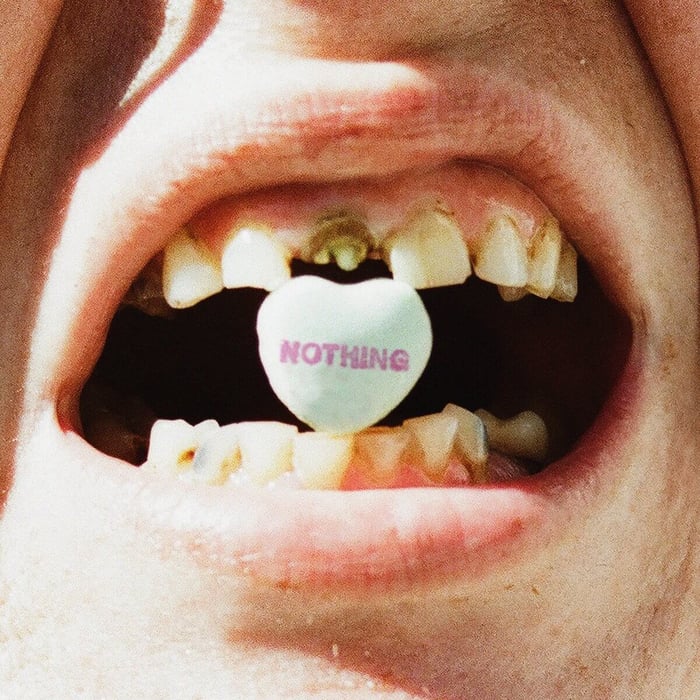
Nothing’s History of Decay Is Shoegaze With Its Teeth Still In


 See more Architeg Prints stories on Google.
Nothing’s History of Decay Is Shoegaze With Its Teeth Still In
History of Decay turns Nothing’s fog into a confession booth: tremoring vocals up front, guitars like tidal pressure, and honesty that’s almost rude.
A hook before the volume hits
Some albums try to sound big. History of Decay sounds like it got big by accident—by carrying around the wrong memories for too long and finally dropping them on the floor.
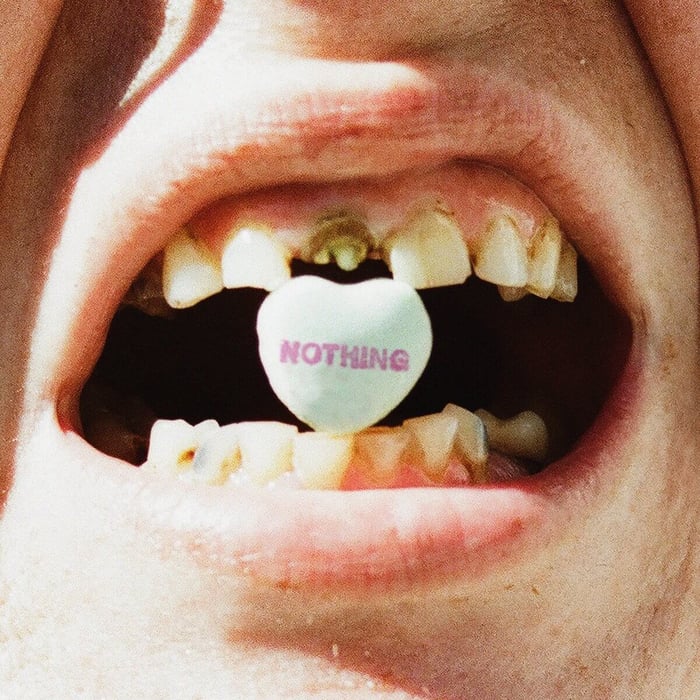
Nothing have always been “shoegaze,” and that label has always been too small
Here’s what I hear: Nothing don’t treat shoegaze like a vibe. They treat it like a blunt object. The guitars aren’t “washy,” they’re bruising—like the genre’s soft-focus reputation personally annoyed them and they decided to fix it with bloodied knuckles.
Domenic “Nicky” Palermo sings like he’s inhaling damage and exhaling whatever’s left. The band keeps flipping between pulverizing volume and that weird, floaty quiet that doesn’t feel peaceful so much as… resigned. Heavy like a tidal surge. Light like the moment after you realize you can’t unsay something.
That’s the point: Nothing have never sounded interested in being pretty for its own sake. They want pretty things to hurt.
The band’s origin story matters because the music still thinks like a loner
I can feel the “bedroom project” DNA in the way these songs lock into a private headspace even when the amps are cathedral-sized. Nothing started in 2010 as a Philly-born solo idea, and even now—five albums deep—the mood still reads like one person trying to survive inside their own skull.
But A Short History Of Decay widens the lens. The anger is louder and the sadness is closer. It’s the most high-definition version of Nothing I’ve heard: more colossal, more intimate, and—this is the key—less protected.
The album doesn’t hide behind haze the way a lot of shoegaze does. It uses haze like a lighting choice, not a disguise.
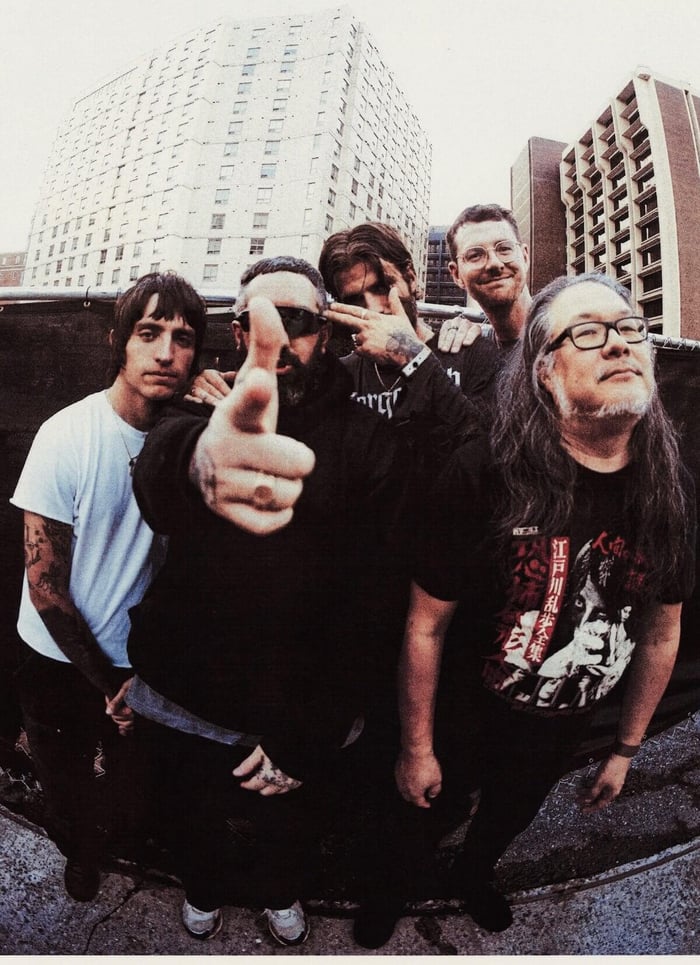
It’s the follow-up to The Great Dismal, but it’s not chasing that record’s shadow
Coming off 2020’s The Great Dismal, I expected another slab of dark, steel-toed shoegaze—more of that mechanized churn they’d sharpened across Dance On The Blacktop (2018), Tired Of Tomorrow (2016), and Guilty Of Everything (2014).
At first listen, I actually thought History of Decay was going to be “just” a bigger version of Dismal. Same seriousness, louder speakers, a little extra polish. But that impression didn’t hold. The longer I sat with it, the more it felt like a different kind of threat: not “look how massive we can get,” but “look what happens when we stop covering things up.”
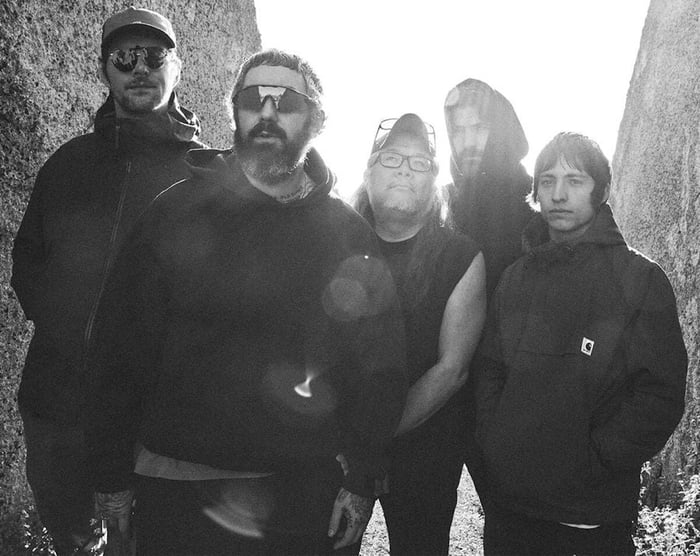
And the lineup helps. You can hear the muscle and the extra texture from having this version of the band locked in: guitarist Doyle Martin (Cloakroom), bassist Bobb Bruno (Best Coast), drummer Zachary Jones (MSC, Manslaughter 777), and third guitarist Cam Smith (Ladder To God, Cloakroom). It sounds like Palermo wrote knowing he had enough hands to make the record do weirder things.
The big step forward comes from an unglamorous move: sitting still
The irony running through History of Decay is that it sounds like a forward leap built from a pause. Between touring, making a collaborative post-metal album with Full Of Hell (When No Birds Sang, 2023), and launching the multi-generational shoegaze festival Slide Away, Palermo finally had room to stop moving.
And when you stop moving, you start hearing yourself. That’s when the record’s real subject creeps out: time—what it stole, what it’s still stealing, and how busy-ness can be a kind of anesthesia.
I’m not pretending this is some tidy “maturity” arc. The album doesn’t feel neat. It feels like someone reluctantly turning on the lights.
Success is in here too, but it’s presented like a bill that finally came due
There’s a version of this story where the highs are the headline: tours, collaborations with Jesu and Prurient, and writing records that helped lay bedrock for the 2020s shoegaze renaissance.
You can sense all that scale in the sound—this band has been places, played loud, built something that other bands now borrow from like it’s public property.
But History of Decay doesn’t brag about it. If anything, it frames success as the thing that made the personal damage easier to ignore until it wasn’t.
The personal cost isn’t subtext; it’s basically the drum hit
Listening to this, I kept thinking about how touring-heavy bands sometimes start sounding like they’re made of bad habits: adrenaline, chaos, and whatever you use to come down.
That’s in the record’s spine. Palermo’s life around the band included regular ER visits, relationships fraying, and excessive substance abuse to cope with the lack of anything grounded. And when he finally had to sit with his own choices—how going all-in on Nothing ate up reality outside the band—the album’s clarity shows up as something scary, not comforting.
“One of the reasons why I like to tour and love to be busy is that I don’t have to look internally.” — Domenic “Nicky” Palermo
The tremor isn’t just a theme—it’s literally audible
Palermo’s age shows up in the onset of essential tremors, a neurological disorder (similar to Parkinson’s) that causes shaking physically and verbally. It runs in his family. He knew it would likely show up eventually. But on this album, it’s not an abstract “mortality” metaphor; it’s a sound.
Since Nothing’s last record, the tremble has become subtly audible in his voice, and History of Decay makes the gutsy choice to leave it there. Part of me expected the usual shoegaze mercy—reverb as a soft blanket—but he doesn’t take it.
That’s the album’s bravest move: it refuses cosmetic fixes. It’s honesty as production.
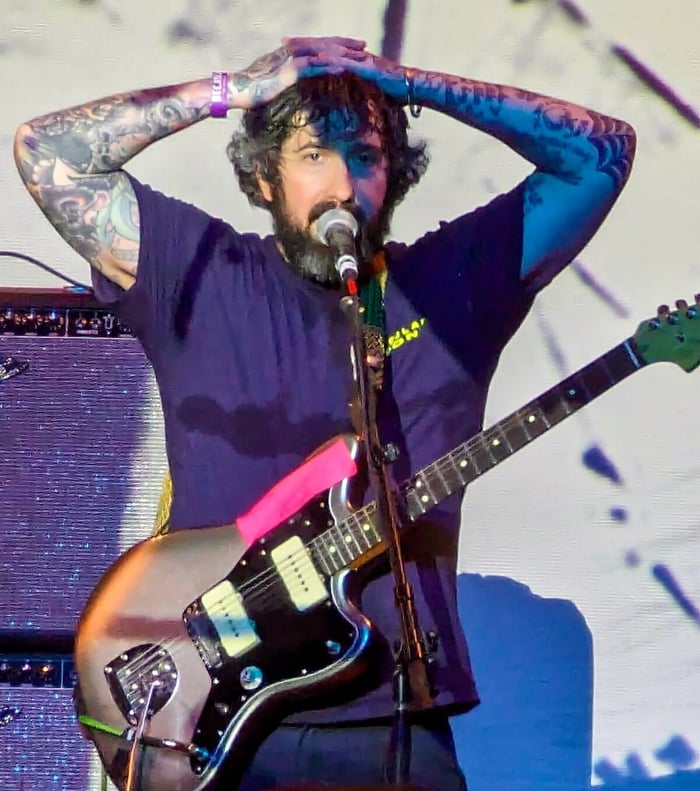
“Never Come Never Morning” opens like a door Palermo avoided for years
The record starts with “Never Come Never Morning,” and it doesn’t feel like a dramatic opener so much as a private admission that accidentally got amplified.
He’s writing about growing up with an abusive father—memories he’d kept tightly wound through Nothing’s career—and here he finally lets them unspool without effects to blur the meaning. The vocal sits exposed enough that you can’t pretend you didn’t hear what he meant.
If you’re looking for escapism, this is where you’ll start sweating.
“Essential Tremors” closes the loop, and it’s not trying to be comforting
At the other end is “Essential Tremors,” and it’s almost offensively plain at first: a dry murmur over a spartan chord progression. You can hear the flutter in his breath. He’s singing about the disorder directly, but he’s also singing about time coming to collect—about “wrestling with myself” and “dissecting the regret.”
Then it swells into a classic Nothing climax—mangled distortion, bashing drums—but the usual “vocals floating somewhere above the wreckage” thing doesn’t happen. Here, he stays right in front of you. It’s intimate in a way that’s slightly uncomfortable, like someone insisting you keep eye contact.
If there’s a mild criticism I can’t shake: I wanted one more left turn in the final stretch—something structurally surprising, not just emotionally naked. The ending works, but it plays a little too perfectly into the band’s established crescendo habit.
The record takes musical risks, not just lyrical ones
Nothing have always swung between extremes—glistening piano-ballad fragility and fuzz-firebomb violence—but these nine songs feel like the widest swing yet: the prettiest things they’ve done, and the most unhinged.
Palermo wrote and co-produced History of Decay closely with Nicholas Bassett (Whirr), and you can hear the benefit in how the songs stack detail without smearing into mud. It’s “grand” without turning glossy. That’s a hard trick, and it’s the kind of collaboration that sounds less like “producer polish” and more like someone helping you translate the thing you already hear in your head.
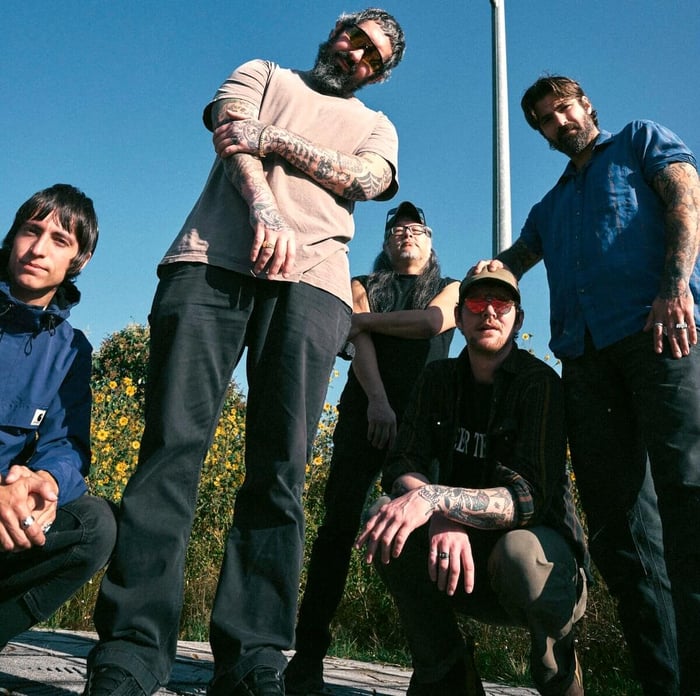
The loud songs aren’t just loud—they’re engineered like machinery
With additional production and mixing work from Sonny Diperri (DIIV, Julie), plus the rest of the band fine-tuning, the album lands as the most evolved statement in Nothing’s catalog.
“Cannibal World” and “Toothless Coal” build on the industrial-gaze edge that The Great Dismal flirted with on “Say Less.” Jones’ own drum loops turn into clobbering breakbeats that rattle like artillery. The guitars don’t “soar”; they howl like chainsaw choirs.
It’s the most My Bloody Valentine they’ve ever sounded—sure—but not in a cosplay way. More like: “we took that vocabulary and wrote our own threats with it.” A reasonable listener could argue it’s homage. I think it’s appropriation in the best sense: they stole the tool and broke a window with it.
The soft songs aren’t relief; they’re the scary part
On the other end, “Purple Strings” brings in a string arrangement with harpist Mary Lattimore (a two-time Nothing contributor). It’s ornate and sad in a way that doesn’t feel “beautiful,” it feels deliberate—like the band wanted elegance specifically because elegance makes dread sound more adult.
That baroque touch bleeds into other highlights:
- “The Rain Don’t Care”: a lilting ballad with worn-down Mojave 3-style grace, like the song already knows how it ends and sings anyway.
- “Nerve Scales”: a pattering bop that hits a Radiohead-ish balance—otherworldly atmosphere paired with almost surgical timing.
And “Never Come Never Morning” even carries a brass section from Jesus Ricardo Ayub Chavira, a Corridos musician the band met during a long night of partying at Sonic Ranch. Brass in a Nothing song sounds like it should be a gimmick. Here it lands like a bruise in a new color.
Sonic Ranch is the kind of place that makes bad ideas sound cinematic
They recorded at Sonic Ranch, a legendary Texas studio on a 1,700-acre pecan orchard about two hours from the Mexican border. The setting matters because it clashes with the band’s usual operating system: heavy drinking, thrill-seeking, and pushing things until they bend.
By Palermo’s own vibe on the record, they were drinking like it was the apocalypse—night and day.
The studio’s owner, Tony Rancich, comes off like a character the album doesn’t even need but got anyway: allegedly keeping a personal book of spells nearby, jogging around the compound with a .357 magnum strapped to his chest to fend off wild dogs, holding the record for most speeding tickets in Texas, and taking the band on a 160 mph desert cruise during a marathon bender.
If that all sounds ridiculous, good. This is a band that thrives on ridiculousness—then writes the hangover down in permanent ink.
For all the talk of decline, the rebellious streak never leaves
What’s funny—quietly funny, not “ha-ha” funny—is that the album stares down aging and deterioration while still acting like rules are optional.
Personnel has shifted. The sound has advanced. The band is objectively different than it was at the start. And yet History of Decay still carries that outlaw energy—like they’re allergic to being well-adjusted.
Palermo frames it as a full-circle moment back to Guilty Of Everything—a record also obsessed with time, regret, and uncomfortable truths. I hear that circle too, but not because the band “returned” to something. It’s more like they finally caught up to the original album’s promises.
It feels like a “final chapter,” but not a goodbye
Palermo calls A Short History Of Decay a “final chapter”—not the end of Nothing, but the closing of the story that started with Guilty Of Everything and now resolves here.
That tracks with what my ears tell me: this album doesn’t sound like a band wrapping up. It sounds like a band finishing one specific argument with itself. A snapshot of Palermo’s past, sure, but it also sounds like the group clearing space for whatever comes next—because you can’t keep writing around the same wounds forever and still call it new.
FAQ
- What is the core idea behind History of Decay?
It keeps returning to time, bodily decline, and the cost of staying busy to avoid looking inward—then it lets those themes leak into the sound itself. - Why do the vocals feel different on this album?
The singing is left more exposed, and the essential tremors are subtly audible rather than masked with reverb. - Which tracks represent the “heaviest” side of the record?
“Cannibal World” and “Toothless Coal” lean into industrial-gaze punch, breakbeat-style drum loops, and sawed-off guitar density. - Which tracks show the softer, more ornate side?
“Purple Strings” (with strings/harp), “The Rain Don’t Care,” and “Nerve Scales” bring in more delicate arrangement choices without turning sentimental. - Does the album feel like an ending for Nothing?
It feels like the end of a particular chapter that started with Guilty Of Everything, not a full stop—more resolution than retirement.
If this record put a specific image in your head—fog, brass, desert-speed madness—you can keep that feeling on your wall with a favorite album-cover poster from our shop.
 | DISCOUNTGET 30% OFF*Use code on your next order:
|
* This post may contain affiliate links, meaning we earn a commission if you make a purchase through these links, at no additional cost to you.