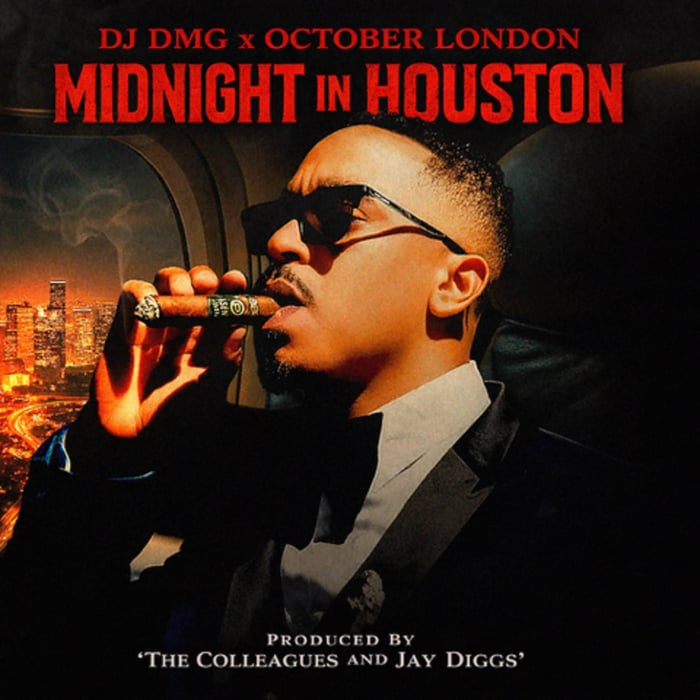
Midnight in Houston Review: Sexy Dice Rolls and One Random Reality Check


 See more Architeg Prints stories on Google.
Midnight in Houston Review: Sexy Dice Rolls and One Random Reality Check
Midnight in Houston tries to turn lust and gambling into a full night story—then swerves into social commentary like it forgot what room it’s in.
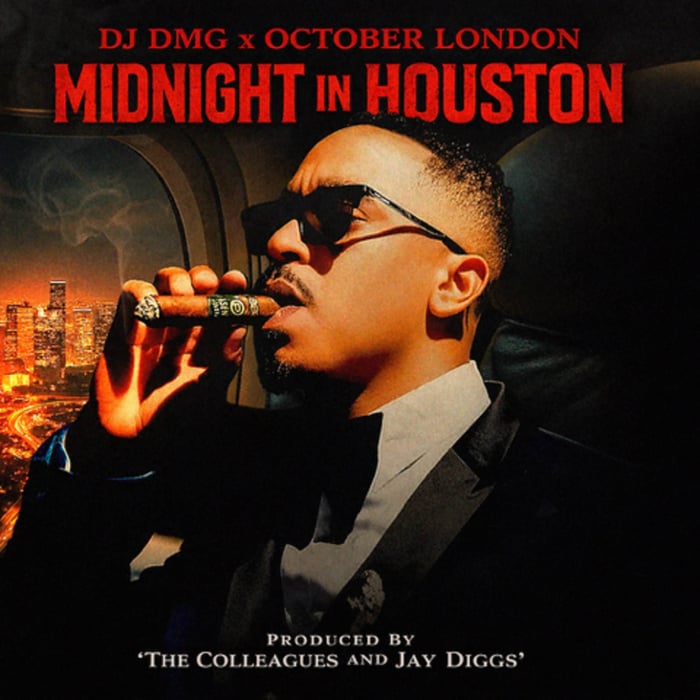
A midnight album that wants to be a whole movie
This is one of those records that clearly isn’t built from a pile of leftover tracks. Midnight in Houston sounds plotted—like a small team sat down and decided, “We’re making a world, not a playlist.”
Karl “KP” Powell and Harrison Johnson (as The Colleagues) have been running that old-school R&B play for years: pair one vocalist with a tight production brain-trust and let them architect the entire project from the floor up. It’s a rarer move now, mostly because it requires patience and a willingness to sound cohesive instead of “versatile.” Here, that approach is the whole point. Jay Diggs is in the mix too, and the sound keeps flashing that specific ‘80s devotion—synth-funk sheen, slap-and-glide bass energy, drums that feel dressed up instead of gritty.
October London has been flirting with something like classic soul impersonation for a while—so convincingly at times that the impression used to eat the person doing it. I went into Midnight in Houston expecting more of that cosplay. On second listen, I had to admit it’s not really chasing that as hard. The album’s trying to push him into “just himself”: a guy narrating gambling and sex in a city that has room for both once the sun’s down. He doesn’t fully escape his old shadows, but he gets close enough that the attempt feels real.
And here’s the blunt truth: the album works best when it lets him look bad.
The gambling run: three songs, one actual argument
The sharpest stretch on Midnight in Houston is the gambling material, mainly because the songs don’t agree with each other. That friction gives the record a pulse.
“Penny Slots” is pure observation—London isn’t even playing. He’s watching someone else slowly lose their life to blinking lights. And he doesn’t romanticize it. The contempt is weirdly specific, like he’s seen the same person sit in the same seat for five hours too many. The casino isn’t glamorous here; it’s fluorescent and predatory, the “cha-ching” basically a drug hit. He performs it with this furrowed, disappointed concern that makes the song feel less like a moral lesson and more like a warning from someone who’s tired of watching the same wreck.
Then “Feeling Lucky” kicks in and trashes that whole sermon on purpose. Suddenly he’s rapping, flexing, floating, talking like the casino is his personal bank. Women blow on his dice. Crown Royal is everywhere. He’s tossing out references like he’s showing off at a table full of strangers. There’s even a line about having yachts off roulette money—said casually, which is exactly how you can tell it’s part fantasy, part self-mythology.
The most revealing moment isn’t any of the bragging, though. It’s the little domestic confession buried in the middle: he won’t even play Uno with his son anymore because he hates losing—and the kid is good enough to hit him with “four plus fours.” It’s funny for half a second, then it just sits there. A father so allergic to losing he opts out of a game with his own child. That’s not a victory story. That’s a personality problem.
“Gambling Man” is where the flex collapses. The song opens on the ugly part: cards in hand, whiskey already doing damage, and a couple grams up his nose like he’s trying to chemically force confidence. He’s seeing double and wishing the chips would do the same. And the writing gets tactile: the climb from a Jackson to a Benjamin to the ATM and back again feels like pacing on patterned carpet, chasing a win that keeps moving the goalpost. He even asks the only honest question gamblers ever ask: who am I fooling?
He says he’s done. He says no more. Then—almost immediately—he leaves himself an escape hatch: unless he hits on black twenty-four. That’s the entire addiction loop in one shrug.
If Midnight in Houston has a center, it’s this three-song run. It’s also the only place the album feels like it’s actually arguing with itself instead of just setting a mood.
The seduction songs: the risk gets replaced by lighting
From there, the record shifts into desire—and not the dangerous, complicated kind. More like the “dim the lights, hit play, let’s do the routine” kind.
“I Need Your Love” paints a scene like a checklist: drink poured, joint rolled, Marvin Gaye on the speakers, clothes coming off. London positions himself as the corrective to every man who disappointed her before. It’s a familiar promise. And that’s the problem: the track doesn’t push past that vow into anything messier or more revealing. It’s smooth, sure—but it’s smooth in a way that makes you forget it while it’s still playing.
Later, the song drops into body-focused lines—key/lock stuff, “feelings you can’t fight.” It does the job a slow jam is supposed to do, but it doesn’t complicate the fantasy. I kept waiting for a detail that would make the situation feel like their situation instead of the genre’s default setting.
“Nose Wide Open” is more interesting, mostly because it can’t stop betraying its own premise. London says he’s open for love, then immediately starts describing lust like it’s a drug reaction—shivering, shaking, feening. He claims he doesn’t want to be caught up in a feeling and then stays caught anyway. The language of addiction keeps swallowing the love-song frame until “can’t get enough of it” lands less like romance and more like compulsion.
Does the song fully cash in on that darker reading? I’m not totally sure. It circles it, flirts with it, lets the vocabulary point toward something nastier—then pulls back before it gets too real. Still, that tension is the whole reason the track sticks.
And I’ll say the mild criticism plainly: for an album supposedly about nights where people lose control, a lot of these bedroom moments feel a little too controlled.
When he uses a gimmick, the romance finally sounds human
Here’s where Midnight in Houston gets smarter: when London stops trying to be universally sexy and starts telling stories with a hook.
“Pretty Thief” is basically a meet-cute told like a stickup. He’s walking to the corner, she tells him freeze, he throws up his hands, and she steals his heart right off his sleeve. That concept could’ve collapsed into cartoonish cute. But he keeps the pacing tight, letting the flirtation turn into something a bit more like negotiation—two people trying to protect themselves while still leaning in.
The best part is that both sides feel scared in the same way. She’s in masks and gloves, he’s surrendering, and underneath the costumes is that shared anxiety: don’t leave me, but also don’t make me look stupid for caring.
The closing pledge gets sentimental—honestly, it’s corny on paper. But the push-and-pull that comes before it earns him the right to go there. It feels like he’s choosing the corny ending because the characters would, not because the genre expects it.
“Heart Strings” is the album’s real tell
“Heart Strings” goes further and gets nastier. London sounds like he’s been waiting to confront this woman for a while, rehearsing speeches in his head, saving the rage. When he finally gets her alone, he almost can’t get the words out. There’s a moment where the lyric cuts off mid-insult—like he chokes on it, or censors himself, or both. That unfinished line is the most believable writing choice on the whole album. Anyone can write a clean breakup speech. Cutting yourself off is what happens when you’re actually boiling.
Then the chorus does something sneakier: the lead vocal says one thing, and another vocal contradicts it underneath—agreeing and disagreeing at the same time. That’s not just a production trick. That’s the character: someone arguing with himself in real time, trying to decide whether to believe her, whether to hate her, whether to take the bait again.
It makes the song feel like another form of gambling—except the currency is self-respect, and the house always wins.
If you only play one “relationship” track from Midnight in Houston, it should be this one. Not because it’s the prettiest, but because it’s the only one that sounds like it might cost him something.
The weird whiplash: roller-rink funk to social crisis
Most of Midnight in Houston stays indoors—bedrooms, casinos, private scenes with controlled lighting. That’s why the last stretch feels like someone opened the wrong door.
“Don’t Stop Me” is a party cut that hits exactly the lane it’s aiming for: Prince by way of Zapp, champagne and disco lights, a groove that could soundtrack a roller rink in 1983. It does its job. It doesn’t pretend to be deeper than dancing. A reasonable listener could argue that’s the most honest thing on the album.
Then “What Is Happening” shows up and clears the room.
Suddenly London’s not singing to a lover or a dealer. He’s looking at a veteran on a street corner with a cardboard sign. He’s naming broken families, substance abuse, incarcerated brothers, inflation, and a healthcare system that poisons poor people. He stops playing characters in a midnight fantasy and starts asking questions the rest of the tracklist never even approaches.
No healthcare for the poor
Whoa, these pills are making us sick.
The details keep it from turning into a generic “we live in a society” moment. But the sequencing is still jarring—because nothing else prepares you for it, and nothing after it follows through. It lands like a hard-cut to a different film.
I can’t decide whether that detour is necessary or whether it’s just London needing to say it while the tape was rolling. Either way, it exposes the album’s main contradiction: this record wants the thrill of vice, but it also wants to be seen as morally awake. Those two goals don’t naturally shake hands here—they just share the same tracklist.
Where this album actually succeeds (and where it ducks out)
The strongest idea in Midnight in Houston isn’t “sex” or “gambling.” It’s the way confidence keeps curdling into confession. The best songs let London look petty, addicted, proud, embarrassed—sometimes all in the same verse.
What doesn’t always work is when the album swaps complexity for smoothness. A few slow jams feel like they’re aiming for “classic” so hard they forget to be specific. It’s not that the sound is wrong. It’s that the writing occasionally settles for vibes when the gambling run proved he can do sharper character work.
If this album has an intent, it’s this: make October London feel less like a tribute act and more like a flawed narrator. Most of the time, it pulls that off—especially when it lets him contradict himself instead of polishing the edges.
Conclusion
Midnight in Houston is at its best when it stops trying to seduce you and starts showing you the ugly little reasons the narrator can’t quit—women, dice, pride, the need to win. It’s not a perfectly unified night out, but the moments where it slips and tells the truth are the ones that actually linger.
Our verdict: People who like slick R&B with character flaws baked into the storytelling will have a great time here—especially if gambling songs don’t scare you off. If you want every track to match one mood (or you can’t stand when an album randomly gets serious for a minute), you’re going to get annoyed and start checking how many songs are left.
FAQ
- Is Midnight in Houston more about gambling or romance?
Gambling hits harder here because it shows real contradiction; the romance leans smoother and safer most of the time. - What’s the most essential run of songs on the album?
The gambling sequence—“Penny Slots,” “Feeling Lucky,” and “Gambling Man”—because it’s the only stretch that truly argues with itself. - Does October London sound like he’s breaking away from heavy classic-soul imitation?
More than I expected. I thought it would be pure throwback cosplay, but the messier writing choices make him feel more like a person than a reenactment. - Which track best captures the album’s emotional tension?
“Heart Strings,” because it lets anger and doubt exist at the same time instead of picking a clean message. - Does the social commentary track fit the album?
Lyrically it earns its place, but sequencing-wise it’s a left turn that the rest of the record doesn’t set up or continue.
If you’re the type who misses when album art felt like part of the statement, it’s worth putting your favorite cover on the wall—quiet proof you actually sat with the music. You can grab an album cover poster at our store here.
 | DISCOUNTGET 30% OFF*Use code on your next order:
|
* This post may contain affiliate links, meaning we earn a commission if you make a purchase through these links, at no additional cost to you.