Water Scores Review: What If Water Started Filing Receipts on Us?


 See more Architeg Prints stories on Google.
Water Scores Review: What If Water Started Filing Receipts on Us?
Water Scores turns ambient drone and spoken poetry into a grim audit of pollution, power, and payback—like the ocean keeping a ledger in real time.
Come for the drones, stay for the accusation
Most albums want your attention. Water Scores wants your conscience—then it wants to sit on it until you stop squirming.
This is A-SUN AMISSA linking up with poet Lauren Mason and basically asking a question that sounds quaint until it isn’t: what if water was keeping score? Not as a metaphor you nod at, but as an active presence tallying every chemical, every spill, every casual act of dumping consequences downstream.
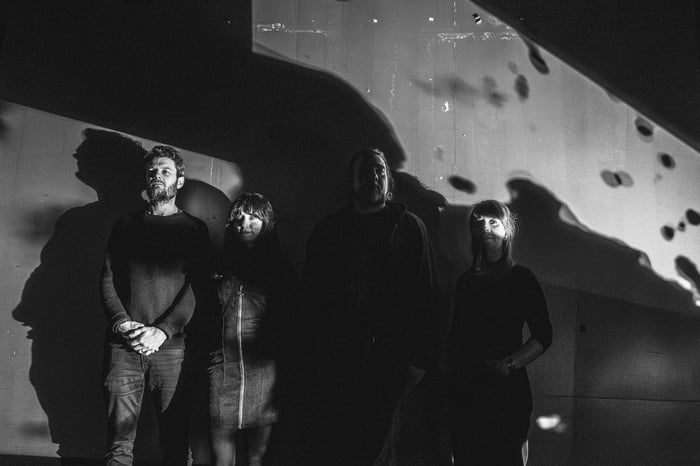
The premise is simple, and that’s why it stings
Here’s the part people like to forget because it’s inconvenient: water isn’t optional. We’re mostly made of it. The planet’s surface is mostly it. Your tough-guy self-reliance routine collapses in a couple of days without it.
And yet, listening to this, I kept thinking about how casually we treat water like a bottomless trash can with good PR. Oceans and rivers getting stuffed with chemicals, waste, oil, litter—just a steady churn of “out of sight, out of mind.” Then the album slides in another ugly modern detail: huge amounts of water getting pumped into data centers that run AI engines, because tech power likes to pretend it’s weightless. This record doesn’t pretend any of that is abstract. It points, and it keeps pointing.
An arguable take? The album isn’t really about “the environment” in a generic way. It’s about accountability—and it’s angry enough to make that feel personal.
Who’s making this, and why the pairing actually clicks
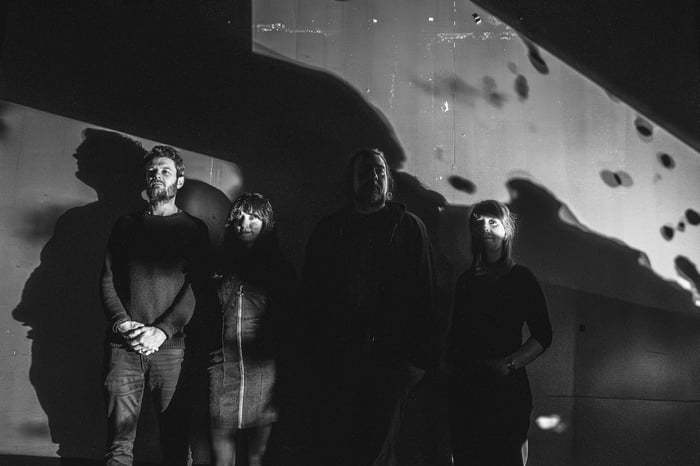
A-SUN AMISSA operates like a slow-moving weather system. It’s the project led by Richard Knox—a Glossop-based musician and artist who also runs Gizeh Records—and the lineup here includes Luke Bhatia (formerly of PROFANE and TUTHERUN) plus Claire Knox on clarinet. Their whole thing is atmospheric sound: sometimes quietly inward, sometimes so oppressive it feels like the room is getting smaller.
If you heard Ruins Era (and especially if you caught the live shows around it), you already know they’ve been building a following among people who like their rock music a little more avant-garde and a little less obedient.
Lauren Mason, meanwhile, comes in as a published poet who also used to play bass in the now-defunct experimental doom band TORPOR. So no, this doesn’t feel like a random “spoken word over ambience” stunt. It feels like two worlds that already share a vocabulary—weight, dread, patience—finally deciding to speak in the same sentence.
Arguable statement: this collaboration works because nobody here is trying to “make poetry cool.” They’re trying to make it unavoidable.
One 37-minute suite that moves like a tide (not a playlist)
Water Scores plays as a single 37-minute suite, and it’s absolutely designed to be taken in one go. It ebbs and flows like the subject it’s personifying. You can hear distinct passages—shifts in tone, focus, and intensity—but chopping it into “tracks” would miss the point. This thing behaves more like a long spell than a set of songs.
My first impression, I’ll admit, was basically: okay, I know what this is going to be—pretty drones, serious words, everyone behaves respectfully. But on second listen I realized it’s not “respectful” at all. It’s confrontational in a very controlled way, like someone who doesn’t raise their voice because they don’t need to.
And yes, I think that’s a deliberate creative decision: make the whole thing feel continuous so the listener can’t easily “skip past” the uncomfortable parts.
The opening question isn’t poetic—it’s an indictment
The first passage lands with Mason’s softly spoken, assured delivery—calm, but not gentle. The question shows up immediately, and it’s the kind that reframes everything after it:
“And what if water was keeping score / Of everything flushed through her, / All she swallowed without agreement. / All that’s been stolen or banished seaward?”
—Lauren Mason
A-SUN AMISSA meet those lines with sound that feels submerged. There are sampled hydrophone textures, and guitars soaked in effects until they stop sounding like “guitars” and start sounding like recordings from someplace deep and indifferent. Haunted, contemplative—sure—but also watchful.
Arguable statement: the most unsettling part here isn’t the noise; it’s how patient the music is, like it can wait longer than we can.
When the clarinet turns into wildlife, it’s not subtle—good
Later, the poem shifts into the impact on sea life—polluted water, collateral damage, creatures paying for human convenience. And that’s where Claire Knox’s clarinet stops being “a melodic instrument” and starts acting like a nervous system.
It genuinely comes off like the pained screeching of dying gulls—an ugly, needed sound.
Mason’s lines here don’t try to charm you; they stack images like evidence:
“She’s tallying fish now outnumbered by glitter / Seabirds bound in oil, each migration damned / Each homecoming swerved.”
—Lauren Mason
There’s a calm rage in her voice that forces attention. Not theatrical rage—more like someone reading a list they’ve had to memorize because nobody else would. The drones and feedback don’t “support” the words so much as weld themselves to them. The message turns serious in multiple directions at once: political, existential, spiritual. Not in a vague incense way—more in a “what have we done and who signed off on it” way.
A moment that stuck: a repeated refrain of “SOS” that starts present and then gets washed out, her voice fading under waves of noise. It’s chilling because it doesn’t sound like drama. It sounds like physics.
I’m not totally sure everyone will read that “SOS” moment the same way—I went back and forth on whether it’s meant to feel like surrender or warning—but either way, it lands like something being swallowed.
Arguable statement: that fade-out is more effective than any screamed protest lyric because it mimics what actually happens—signals get buried.
Midpoint turn: the album stops grieving and starts naming names
Halfway through, the focus swings away from Water as the victim and toward the people and systems doing the damage. The poem basically rejects the comforting lie that catastrophe is “natural” or “inevitable”:
“Now this an act of God. None of this a natural flood, none of this inevitable.”
—Lauren Mason
Right there, the drones swell into something like a long, haunted cry. Tension builds, and when it finally breaks, it’s released with the boom of a distorted guitar—not flashy, not showy, just heavy enough to feel like the floor shifted.
Arguable statement: this is the moment the record stops being “about water” and starts being about power—and it’s stronger for it.
“Redacted” is the album’s nastiest trick, and it works
Mason takes direct aim at governments and corporations—polluters, profiteers, the whole rotating door of “we investigated ourselves and found nothing.” There’s a section built around the repeated word “redacted”, used like a stamp slamming down over truth.
And here’s the weird part: even though this suite was recorded last year, the repeated “redacted” motif feels eerily current, like the poem anticipated the cultural mood of documents blacked out and accountability postponed.
The lines hit like an itemized invoice for harm:
“Causes: production, combustion, carbon, [redacted]. / Predictions data research knowledge [redacted] / Profits [redacted] intent [redacted] harm [redacted] crime [redacted]”
—Lauren Mason
That section is where despair can creep in. Honestly, this far in, it’s easy to feel like you’re being walked down a corridor of bad news with no exit signs. If I have a mild criticism, it’s this: there are moments where the suite risks becoming so unrelenting that a listener’s brain starts trying to protect itself by drifting. Not because it’s boring—because it’s too singular in its pressure.
But the record seems to know that. It doesn’t let you off the hook, yet it does give you a payoff.
Arguable statement: the “redacted” passage is more damning than any explicit naming would be, because it shows how harm hides behind procedure.
Final passage: water doesn’t forgive—she escalates
The closing stretch flips into catharsis, and not the tidy kind. This is Water taking revenge—not as a superhero fantasy, but as a force that finally stops absorbing everything “without agreement.”
“Fluid boiling, wild eyed typhoon, her fever led delirium. The Sea now screaming all the curse words she ever learned.”
—Lauren Mason
Behind it, A-SUN AMISSA go terrifyingly triumphant: deep drones, rumbling percussion, harrowed screeches. It’s not pretty. It’s not meant to be. It sounds like the record finally letting the pressure it’s been holding burst outward.
And in the final moments, something changes—Mason begins to sing, not just speak. The line repeats:
“She’s done with warnings”
—Lauren Mason
Her timbre turns soulful, almost soothing, which is a ridiculous emotional contradiction on paper—comfort delivered alongside an ultimatum—but in the headphones it works. The calm becomes the threat.
Arguable statement: that last sung refrain is the album’s sharpest blade, because it sounds gentle while it says “time’s up.”
So what is Water Scores really doing?
Calling Water Scores “an album” almost undersells it, but calling it “a warning cry” is closer to the truth. It leaves a mark because it doesn’t just tell you what’s happening—it makes you sit inside the consequences long enough to feel implicated.
And yes, I’d go as far as saying it’s a masterpiece in terms of intent meeting execution. Not perfect in every moment, but frighteningly focused.
The release is out now via Gizeh Records. If you want to keep up with A-SUN AMISSA, they’re also on Facebook.
FAQ
- Is Water Scores a normal track-by-track album?
No—Water Scores is presented as one continuous 37-minute suite with distinct passages, meant to be heard in one sitting. - What’s the core idea behind Water Scores?
The piece asks what it would mean if water could remember and tally everything done to it—every pollutant, theft, and dismissal. - What does A-SUN AMISSA sound like here?
Ambient drones, hydrophone-like textures, guitars drenched in effects, feedback, and swelling crescendos that can feel both meditative and crushing. - How does Lauren Mason deliver the poem?
Mostly softly spoken but forceful, with moments of calm rage—and in the closing moments, she shifts into singing. - Is this more political or more atmospheric?
Both, but the politics drive the atmosphere. The sound isn’t background; it’s part of the argument.
If this record lodged in your brain the way it lodged in ours, a simple way to keep that feeling around is hanging the imagery where you’ll actually see it. You can shop a favorite album cover poster at our store: https://www.architeg-prints.com
 | DISCOUNTGET 30% OFF*Use code on your next order:
|
* This post may contain affiliate links, meaning we earn a commission if you make a purchase through these links, at no additional cost to you.