Héréditaire Unverkalt Review: Greece’s New Export, Loudly Overthinking It


 See more Architeg Prints stories on Google.
Héréditaire Unverkalt Review: Greece’s New Export, Loudly Overthinking It
Héréditaire Unverkalt isn’t “just heavy”—it’s a carefully staged argument between beauty and violence, and it mostly wins by brute force.
Greece has this habit of producing metal that sounds older than the people playing it—like it crawled out of a fresco with a torch in its mouth. You can draw a straight line from the country’s most revered extreme bands to the attitude that Unverkalt bring on Héréditaire: the seriousness, the ritual vibe, the “this is bigger than your little playlist” stare.
And yeah, I rolled my eyes at myself for thinking that at first. I thought I was about to get another competent underground record with a dramatic font and a 50-minute runtime. On second listen, it hit me: this band is playing the long game, and Héréditaire is the moment they decide to stop asking for attention and start taking it.
Since 2017, this Athens-by-way-of-Berlin quintet has been quietly stacking credibility in the underground—two full-lengths already behind them, and now, three years after A Lump of Death: A Chaos of Dead Lovers (2023), they drop Héréditaire like it’s supposed to be obvious that you’ll make time for it.
The real trick: it keeps changing shape without feeling messy
Here’s what’s actually happening across these 50 minutes: Unverkalt build a big, shifting tapestry that keeps swerving between two impulses.
- One impulse wants to crush you—explosive heaviness, blackened bite, the kind of volume that feels personal.
- The other impulse wants to hypnotize you—serene passages, slow-burn immersion, that spine-prickle calm that makes you lean closer instead of backing away.
And the arguable part: I think the album’s “heavier direction” isn’t about being heavier for its own sake. It feels like they made the record heavier to make the soft parts mean something. Without the threat of impact, the beauty would just be decoration.
This is where Héréditaire Unverkalt starts to separate itself from post-metal-by-numbers. The heaviness isn’t a blanket; it’s a weapon they pick up and put down.
“Die Auslöschung” opens like a slow uncoiling warning
The opener, “Die Auslöschung,” takes its time like it’s enjoying your discomfort. It unravels gradually—serpentine, patient—until the atmosphere feels haunted rather than merely “dark.” There’s a moment where the air gets thin, and it reminded me of Julie Christmas’s brand of spectral intensity: not fragile, but eerily human.
Then it detonates. Not with a cute little crescendo—with a monstrous, thunderous passage that basically announces: you’re in the heavy part of the ocean now.
What surprised me is how useful that contrast is. The album’s emotional logic is built on that flip.
And the real engine of it is the vocal tug-of-war: Dimitra Kalavrezou against guitarist Eli Mavrychev. It’s a yin/yang setup, but not in a tidy “beauty and the beast” way. It feels more like two narrators describing the same nightmare with different levels of faith in humanity. That duality is the beating heart of Héréditaire, and it’s where the band’s intent becomes obvious: they want tension to be the point, not a side effect.
“Oath Ov Prometheus” is where they stop flirting and start swinging
After the opener sets the mood, “Oath Ov Prometheus” shows what the album is willing to do to keep you inside it. This is the track where the blackened elements step forward and act like they own the room: blastbeats, sharp-edged momentum, and vocals that aren’t trying to be pretty.
Kalavrezou’s performance here is the hook. The screams are piercing, the cleans are bewitching, and the transition between them doesn’t feel like genre tourism—it feels like character switching masks mid-sentence.
There’s also a clever decision that makes this track stick: the use of refrain not as a singalong gimmick, but as a way to let the atmosphere close over your head. It repeats in a way that doesn’t “resolve” so much as tighten the knot. Early highlight, easily.
If you disagree and think it’s too direct, I get it. It’s not subtle. But I’d argue the lack of subtlety is the point: this is where the album flexes its teeth so the later delicate moments don’t read as weakness.
“Ænæ Lithi” proves the band can whisper without losing control
Then “Ænæ Lithi” turns around and does the opposite. If “Oath Ov Prometheus” is a tower, this track is a corridor—narrow, controlled, almost intimate. The band sound measured and calculated, which in metal is often code for “boring,” but here it’s closer to spellwork.
The guitar work is sombre and intricate, threading through gentle percussion instead of trying to dominate it. Kalavrezou’s voice doesn’t just float—she enchants, like she’s narrating something older than the riffs.
And then, because Unverkalt aren’t interested in letting you stay comfortable, the track erupts into a monumental conclusion that lands with sledgehammer weight.
I’ll admit: the first time through, I wasn’t sure the build earned that ending. It felt like they were cashing a check the quiet section hadn’t fully written yet. But the second time, the patience clicked—because the point isn’t “a perfect crescendo.” The point is the emotional whiplash, that ugly-lovely snap that makes you feel something sharp.
The mid-album punch: grief, speed, and a refusal to sit still
From there, Héréditaire Unverkalt keeps feeding you different kinds of intensity.
- “A Lullaby for the Descent” hits with mourning leads that actually tug at you instead of just signaling sadness. It’s not sentimental; it’s tired in a real way. Like grief that doesn’t perform.
- “Introjects” flips into a more aggressive lane—sustained blastbeats and tremolo riffing that feel like someone shaking a chain-link fence until it gives.
The arguable claim: I think “Introjects” is almost too good at being relentless. It’s thrilling, but it risks turning the album into a test of endurance if you’re not in the right headspace. That’s not a dealbreaker—just a moment where the record’s ambition brushes up against the listener’s bandwidth.
Still, the dynamism is real, and it’s helped massively by the production, which holds the chaos together without sanding down the edges. You can feel the impact without losing the atmosphere, which is harder than bands pretend it is.
Late-game dominance: “I, the Deceit” doesn’t break the spell
Near the end, “I, the Deceit” shows off a rare skill: being complicated without feeling scattered. The track twists and turns across nearly six minutes, and somehow it never drops you out of the immersion to admire its own cleverness.
There’s also a guest appearance from Sakis Tolis (of Greek black metal legends Rotting Christ), and it works because the song is already built for that kind of presence. It doesn’t feel like name-dropping or scene-padding. It feels like the album briefly opens a door and lets a familiar shadow step through.
Honestly, this is where Unverkalt sound most like they know exactly what they’re doing. Not “confident for an underground band”—confident, full stop.
And that’s a difficult trait to sustain across an album with this many mood-shifts. Plenty of records can nail one massive track. Héréditaire’s flex is that it keeps the thread tight without turning into one long blur.
What the album is really about: origins, inheritance, and controlled damage
By the time it ends, Héréditaire comes off as an intelligent, carefully crafted piece of post-metal that’s obsessed with the darker corners of where we come from—origins, inheritance, the stuff you didn’t choose but still carry.
And no, it’s not “rarely a dull moment” because every second is exciting. It’s rarely dull because the album keeps asking you to stay present. When it goes serene, it’s not there to give you a break—it’s there to make the next hit feel inevitable.
This is also a record that clearly wants to be consumed as a whole. If you cherry-pick highlights, you’ll still get good songs. But you’ll miss the way its layers stack and wash over you, like waves that look gentle until you notice the undertow.
My only real gripe is a small one: the album’s commitment to immersion can feel a bit self-serious, like it’s daring you to multitask so it can punish you for it. But maybe that’s the point. This thing wants your attention, and it’s not polite about asking.
If I had to put a number on it after living with it, I land around 9/10—not because it’s flawless, but because it’s effective in the way it’s trying to be effective.
Release note (and where it lands in your week)
Héréditaire is out now via Season of Mist. And yeah, it’s one of those albums that rewards giving it a full uninterrupted listen—preferably when you’re not trying to answer texts or pretend you’re “casually” working.
If you want to keep up with the band directly: Unverkalt are on Facebook here: https://www.facebook.com/Unverkalt/
Conclusion
Héréditaire Unverkalt isn’t trying to charm you. It’s trying to occupy your headspace—first with atmosphere, then with force, then with the uneasy feeling that the gentle parts were just another way of tightening the grip.
People who like their post-metal layered, emotionally pointed, and occasionally blackened will eat this up—especially if you enjoy vocals that feel like an argument happening in real time. If you only want riffs, or you treat “50 minutes” like a personal insult, this album will absolutely outlast your patience and then stare at you for leaving early.
FAQ
- Is Héréditaire Unverkalt more post-metal or black metal?
It leans post-metal in structure and mood, but it pulls in blackened intensity—especially on moments like “Oath Ov Prometheus.” - What track shows the album’s contrast best?
“Die Auslöschung” sets the template: haunted patience, then a heavy section that doesn’t ask permission. - Does the album work as individual songs or only as a full listen?
The songs stand up, but the record clearly wants the full-arc experience—its tension makes more sense end-to-end. - Where does the guest vocalist appear?
Sakis Tolis (Rotting Christ) appears on “I, the Deceit,” and it feels integrated rather than tacked on. - Is this a good entry point if I haven’t heard Unverkalt before?
Yes—because it sounds like the band committing to their identity, not experimenting casually.
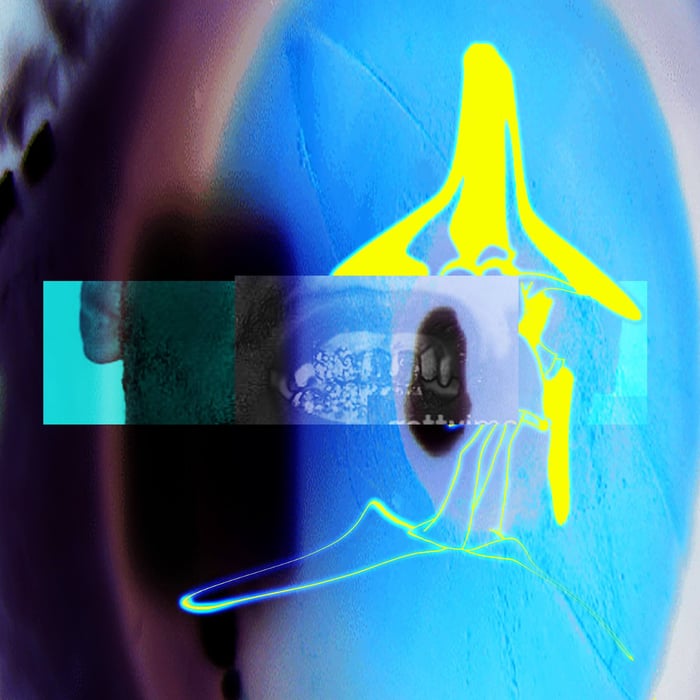
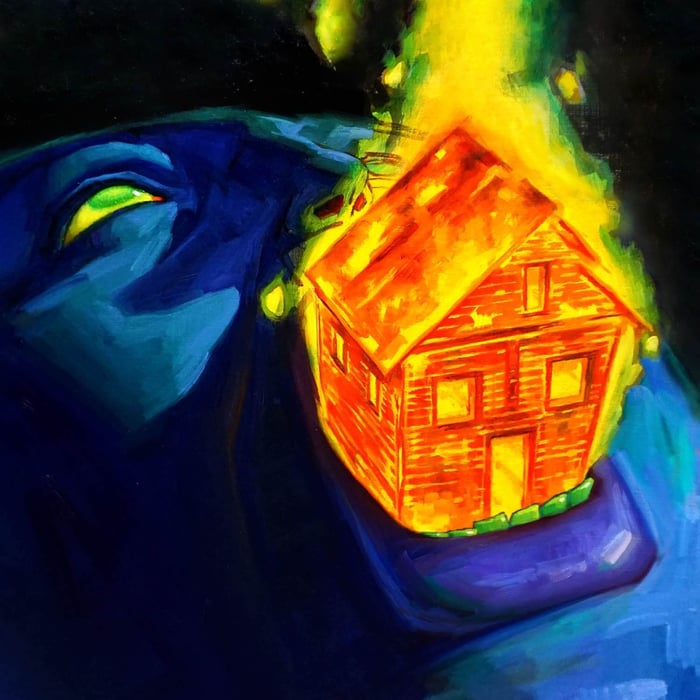
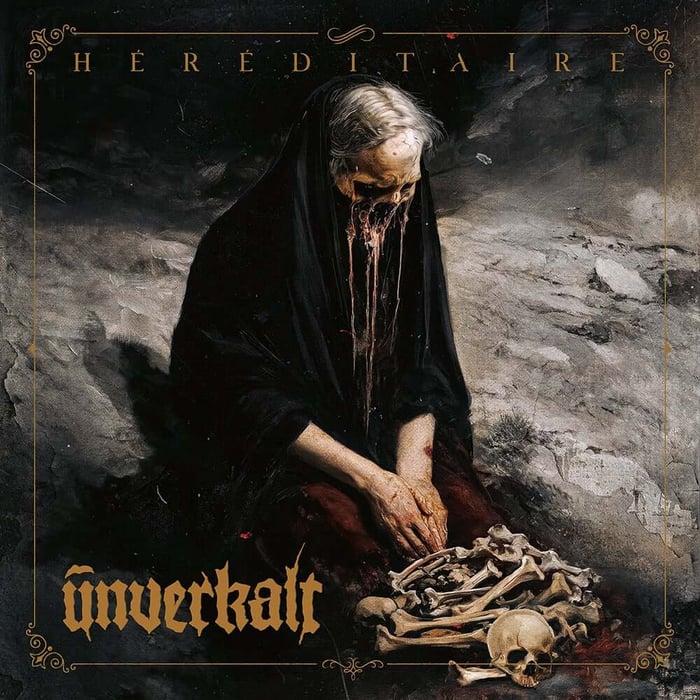
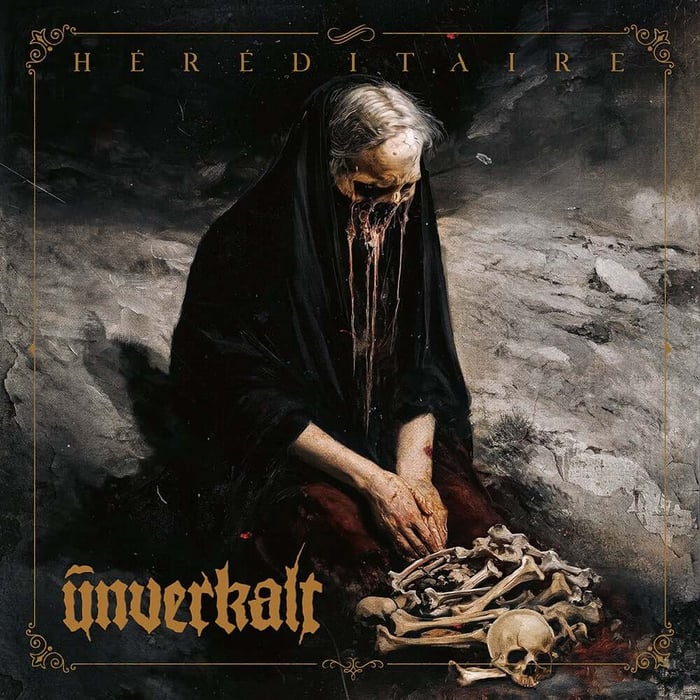
If the cover art (and the mood) stuck with you, grabbing an album-cover poster is a pretty fitting way to keep that atmosphere around—quietly, on your wall. Have a look at https://www.architeg-prints.com.
 | DISCOUNTGET 30% OFF*Use code on your next order:
|
* This post may contain affiliate links, meaning we earn a commission if you make a purchase through these links, at no additional cost to you.