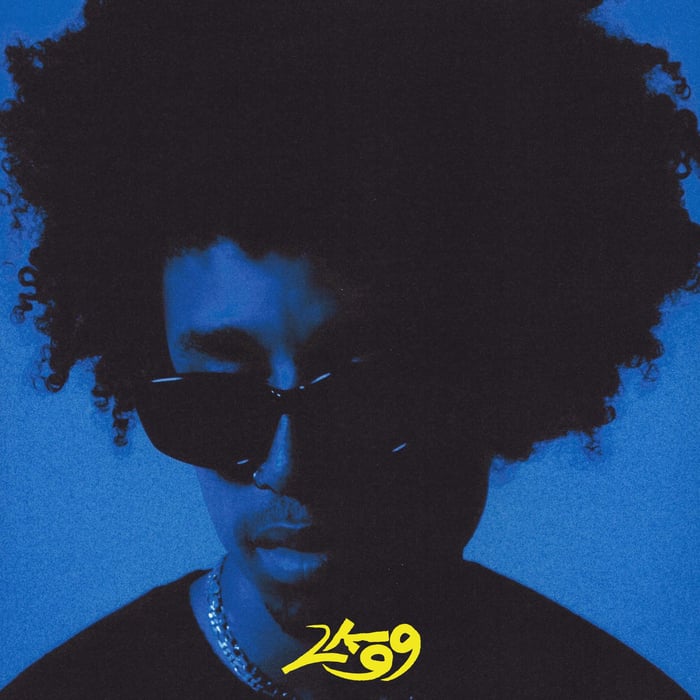
LK99 Review: Leven Kali Finally Steps Front—Then Hides Again


 See more Architeg Prints stories on Google.
LK99 Review: Leven Kali Finally Steps Front—Then Hides Again
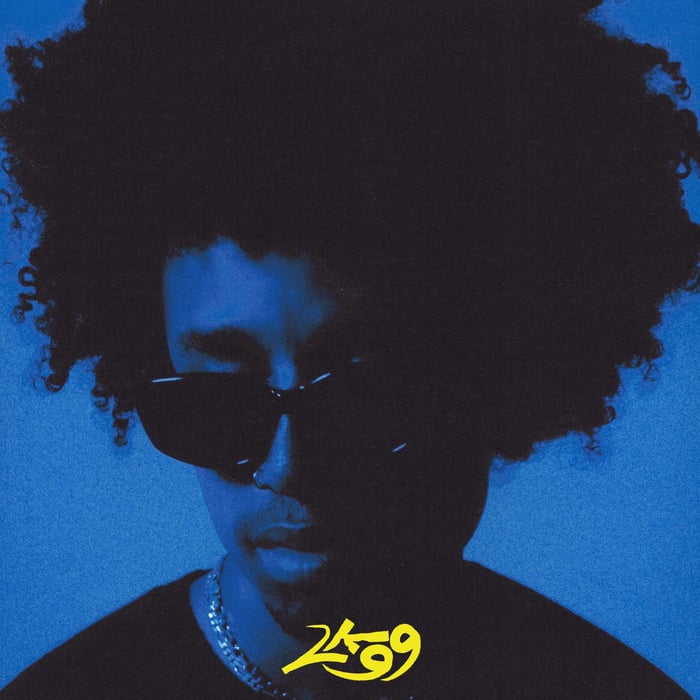
LK99 review of a silky 31-minute flex that keeps begging for love—then refuses to tell you what actually happened.
The setup is wild: you’ve heard him everywhere, you just didn’t know it
Leven Kali is one of those “oh, that guy” artists—except most people never get to the “oh.” I’ve heard his fingerprints in the culture for years: songwriting credits on multiple tracks from Beyoncé’s Renaissance (“Virgo’s Groove,” “Alien Superstar,” “Plastic Off the Sofa,” “Summer Renaissance”) and then “Bodyguard” on Cowboy Carter. Cosigns from Quincy Jones and George Clinton. Even that feature on Playboi Carti’s “Flex” that somehow turned into a streaming monster (north of 240 million plays on Spotify) without turning Kali into a household name.
So LK99 feels like a very intentional move: stop being the guy behind the curtain and walk dead-center into the spotlight. He self-produces it with longtime collaborators Sol Was and Daniel Memmi, and you can hear the confidence of someone who’s spent a decade sharpening other people’s hits. The only real question I kept coming back to wasn’t “can he lead?”—it was “once he’s up front, what does he actually want to say?”
And yeah, I’m not totally sure he knows yet.
The real theme isn’t romance—it’s asking, over and over, for permission
Here’s what LK99 is actually doing: it’s not telling a story about love. It’s rehearsing desire like it’s a speech he keeps rewriting in his head. Almost every track is a version of asking somebody for something—validation, closeness, one more night, one more chance, a sign, a green light.
You can practically map the record by the kind of request it makes:
- “Are U Still” is the classic check-in: are you still in this with me?
- “Jus a Lil’ Bit” tries to negotiate: one kiss, one night—keep it small, keep it safe.
- “Without U” eventually drops the bargaining and just dials the number.
- “Grab It” is the push: stop holding back.
- “Starlet” admits the mess: love and lust are tangled and he’s not cutting the knot.
- “Remedy” offers full-service devotion in record time—sweet in theory, slightly alarming in practice.
Kali sings all of it in a warm tenor that lives somewhere between Miguel’s heat and something more grounded, almost like he’s talking directly at you instead of performing for you. The problem—and it’s not a fatal one—is that “I mean it” isn’t the same thing as “I’m saying something new.” When the album keeps returning to the same emotional posture, it starts to feel less like a diary and more like a loop.
“Are U Still” proves he can build an emotional plot, not just a vibe
This is the longest track here at 3:50, and it earns every extra second by actually moving. It opens with him admitting a hard truth: he told himself the other person was the issue, but he’s the one still clinging. That’s a promising start—self-awareness instead of swagger.
Then it expands. Suddenly he’s planning a future: house, kids, the whole domestic fantasy. And just when you think it’ll settle into that, it veers into something weirder—vibration, ghosts, a howling wolf—like the song’s trying to describe the irrational part of attachment that doesn’t obey logic or “healthy communication.” By the end he’s not reflecting anymore; he’s demanding a response, chanting: “Is you bout it bout it bout it bout it.”
That arc matters. It’s the difference between a track that “sounds good” and a track that feels like a person actually spiraling in real time. A reasonable listener could say the wolf/ghost stuff is just stylistic garnish, but to me it’s the moment the song stops flirting and starts confessing.
“Jus a Lil’ Bit” wins by getting specific, not poetic
I thought “Jus a Lil’ Bit” was going to be another smooth plea floating in the same warm bathwater as everything else. On second listen, it clicked: it’s grounded in a real-world image that does more work than a dozen metaphors.
“It’s New York in August / A lil’ too hot, but I like the weather.”
That line pins the desire to a place and a season, which sounds simple, but it changes the whole song. Now it’s not just “I want you.” It’s “I remember exactly how this felt.” The heat becomes the point—uncomfortable but worth it. That’s the kind of detail that separates writing from wallpaper.
And I’ll say it bluntly: this album needs more lines like that. When Kali stays in generalities, the songs blend. When he chooses one concrete detail, the whole track sharpens.
“Raining Sun” opens the window—briefly—and the outside world rushes in
Most of LK99 takes place in a sealed room with two people and a lot of velvet lighting. “Raining Sun” is the one track that cracks the door and admits the world exists.
In its second verse, there’s mention of bad news happening outside. Then he asks to be told something good—even if it’s a lie. That’s not just romance; that’s escapism with teeth. It’s the closest the album gets to acknowledging why this relationship bubble is so attractive: because reality is loud and ugly and the room feels safer.
Then it lifts into those ultraviolet/pilot lines, and for a moment the album feels bigger than its own bedroom. Not everyone will agree, but I think “Raining Sun” is the record’s most revealing moment because it hints at stakes: the relationship isn’t only about lust or affection; it’s shelter.
The weak spot: a few tracks float by on charm and don’t leave a dent
Here’s the mild criticism I can’t dodge: several songs coast on pleasantness like that’s the same thing as memorability.
- “BREATHE!” stretches a single directive into a whole track. It drifts nicely, sure—but once it ends, I had to actively concentrate to remember what it did besides feel good.
- “Remedy” stacks devotion metaphors so fast they lose weight. He’ll be a lover, a friend, a fighter, a pen, a page, a writer, a pillow, a bed, a blanket, a peace, a pride, a patience… it keeps piling up, but emotionally it stays in one place.
- “Pieces” toggles between wanting sex and wanting to get high, but it doesn’t dig into either impulse enough to make the tension interesting.
None of these tracks are “bad.” Kali’s voice is steady, and the instrumentation stays inviting—funky, warm, played like real musicians are in the room, with a psychedelic tint around the edges. That’s part of the problem: the baseline is so pleasant that the songs don’t have to fight for your attention. And on a short record, three or four numbers that blur together shrink the album even more.
The album’s biggest limitation is also its concept: one feeling, one person, no complications
Every track points at the same person—or at least the same type of person—and there’s almost no narrative friction. No betrayal. No anger. No real sadness. Honestly, I kept waiting for one song to get ugly, or petty, or even just specific about what went wrong. It never really does.
The closest it comes is “Without U,” where he admits something’s missing—but even there, he ends up calling anyway. That’s commitment, sure, but it’s also a dodge: the record would rather reach than reckon.
The one real detour is “Stars, Stripes and Credit Card Swipes,” a spoken-word interlude. It opens with a sharp little satire about consumerism and closes on the idea that love is all we’re looking for. And “Raining Sun” mentions bad news outside. Other than that, LK99 stays locked inside the relationship.
For 31 minutes, that bet mostly pays off. The album doesn’t drag, and the band—Justus West, JJ Scheff, Micah Gordon, Alissia—keeps the sound colorful enough that “same subject” doesn’t always mean “same song.” Still, after a full pass, the warmth starts to feel like a room with no windows: cozy at first, then kind of stale. I wanted one track to tell me who this person is, what actually happened, what would make the asking stop.
What LK99 gets right: it’s a clean introduction with flashes of a sharper artist
As an introduction, this works. Kali can write melody. He can sit in a groove without getting swallowed by it. And he knows exactly how sweet to sound without sliding into soft-focus mush.
A few things stand out as proof he’s capable of more than “vibes”:
- He can build a song that changes shape (“Are U Still” going from confession to fantasy to desperation).
- He can write a line that lands in a real place (“New York in August…” on “Jus a Lil’ Bit”).
- He can stop negotiating and just act (the closer “Without U”).
I’ll admit this: my first impression was that the album was too smooth—like it had been sanded down to avoid any harsh edges. But by the end, I heard a different intent. The smoothness feels chosen. It’s the sound of someone stepping out from behind the scenes and making sure the landing is safe.
Safe… but sometimes a little too safe.
Favorite Track(s)
These are the cuts that actually stuck with me after the last note faded:
- “Are U Still”
- “Jus a Lil’ Bit”
- “Raining Sun”
Conclusion: he’s out front now—next time, bring the mess with you
LK99 feels like Leven Kali proving he can carry a record without hiding behind bigger names. The melodies are there, the groove is there, the voice is there. What’s missing—on purpose or not—is the complication that turns wanting into something sharper than a repeated request. When he finally stops bargaining (“Without U”) the album gets its best jolt of honesty. That’s the lane: less polishing, more specifics, more risk.
Our verdict: People who love sleek, warm R&B-funk that stays emotionally PG-13 will actually love this album—especially if you’re the type who replays a chorus because the tone felt right. If you need plot, conflict, or even one moment of petty human behavior to feel alive, you’ll get restless and start inventing your own backstory by track five.
FAQ
- Is this a good starting point for Leven Kali?
Yes—this is a tight 31-minute introduction that shows he can write, produce, and sing without leaning on anyone else. - What’s the core mood of the album?
It’s intimate and warm, but almost obsessively focused on longing—like the whole record is a series of “you up?” texts rewritten as poetry. - Which track shows the most range?
“Are U Still” covers the most emotional ground and actually evolves instead of circling the same feeling. - Does the album talk about anything beyond the relationship?
Barely. “Stars, Stripes and Credit Card Swipes” nods at consumerism, and “Raining Sun” mentions bad news outside, but most of the record stays in the room. - What’s the main complaint listeners might have?
A few tracks blur together because the writing stays general—pleasant, but not always memorable.
If you want to hang onto that warm, sealed-room feeling, a good album-cover poster does the job without needing headphones. You can shop your favorite album cover poster at our store: https://www.architeg-prints.com/
 | DISCOUNTGET 30% OFF*Use code on your next order:
|
* This post may contain affiliate links, meaning we earn a commission if you make a purchase through these links, at no additional cost to you.